
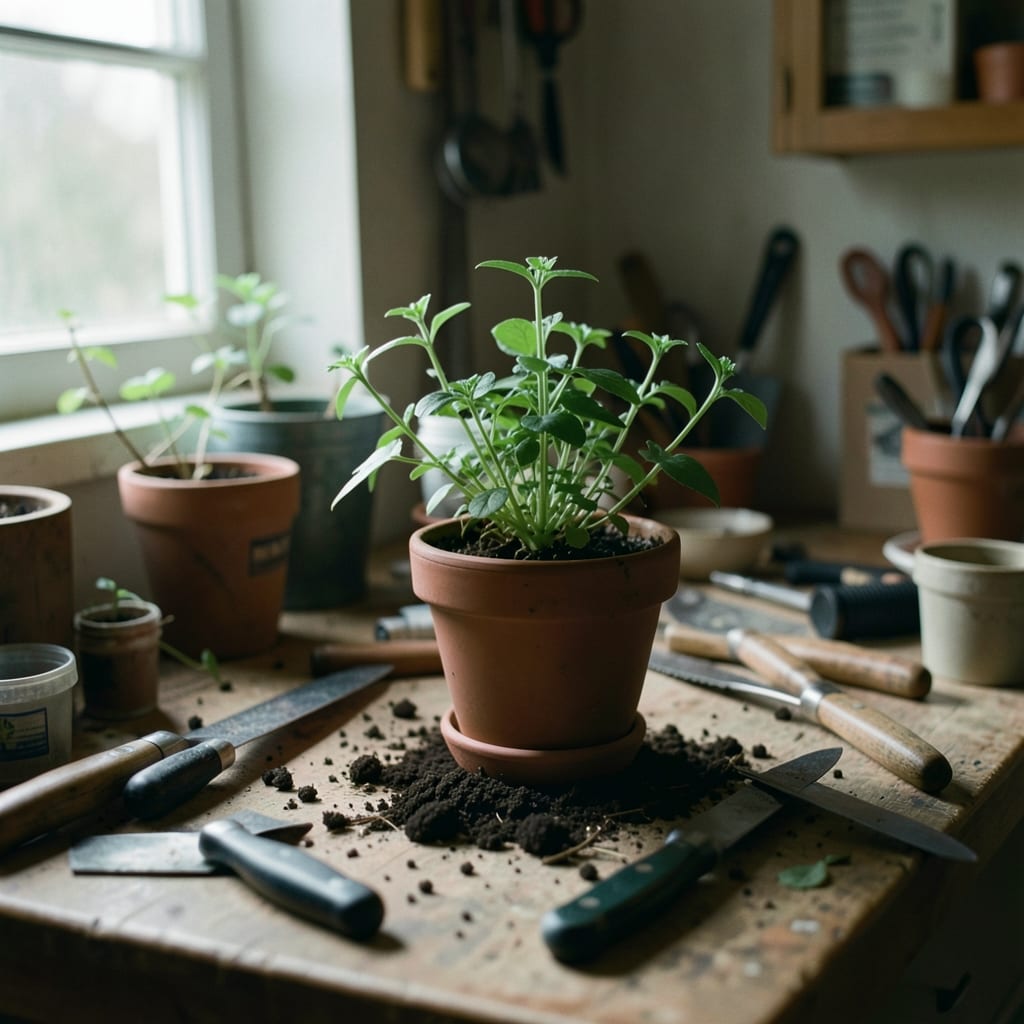
What this site is
This site is for anyone who has ever pressed a seed into soil and wondered if it would break through.
It covers the basics—how to start a seed indoors, how to amend heavy clay, which perennials outlast a drought—and the details that often get skipped: why your tomatoes split, how to prune roses without killing them, what really happens when you overwater.
| What you will find here | What you will not |
|---|---|
| Seasonal planting guides for your hardiness zone | Generic advice that ignores climate |
| Troubleshooting for pests and diseases | Chemical solutions without organic alternatives |
| Step-by-step guides for container gardening | Overly ambitious projects for beginners |
| Lessons from failed plants and what they taught | Perfectionist gardening without flaws |
Meet the cook

Vince Novak is the person who still checks the soil pH after three years of gardening.
A day in the garden
- 15:40 a.m.
The thermometer reads 48°F, but I’m already outside with a flashlight, checking the cold frames. The basil seeds I planted last week have just cracked the surface—tiny green spears poking through the frost. One tray, though, is still bare. I’ll replant it tomorrow, but for now, I’m too excited to wait.
- 2Just after the school run
The kids drop off their backpacks, and I hand them each a handful of dried peas to shell while I fill the compost bin. The pea pods are tougher than last year’s, and my fingers ache by the time we’ve got a cupful. I tell myself it’s good exercise, but really, I just forgot to harvest them sooner.
- 3The hour before dinner
I’m kneeling in the vegetable bed, pulling up the last of the winter radishes—some are bitter, some are still crisp. The dog, who’s been patiently waiting, finally flops onto my lap mid-task. The radishes go into a salad; the dog gets a treat. No one wins this round.
- 4While the kettle boils
I’m inside now, sketching out next week’s planting schedule in a notebook. The lavender I propagated from cuttings has finally rooted, but the mint has taken over the windowsill again. I’ll deal with it tomorrow. Or next week. The kettle whistles, and I put the pen down.
- 59:30 p.m.
The garden is quiet except for the crickets. I water the newly transplanted tomatoes one last time for the day, then sit on the back step with a cup of tea. The soil smells like earth and rain. The mint is still there. I drink my tea anyway.
I keep a trowel in every room of the house. I say ‘soil food web’ instead of ‘compost.’ And I refuse to buy pre-potted herbs—there’s something about pulling a seedling from the ground that feels like winning.
The rules we hold ourselves to
These are the principles that shape what we publish—and what we leave out.
Before we tell you what worked, we tell you what didn’t. The slugs that ate the lettuce. The drought that killed the peppers. The time the compost pile exploded. Because if you don’t know the risks, you’ll repeat them.
This site moves slower than most because we won’t cut corners on the foundation. A rushed soil test or a half-researched amendment leads to years of correcting mistakes. We’d rather wait and get it right the first time.
What we still get wrong
We overcomplicate some tasks—like explaining the nitrogen cycle in a way that doesn’t sound like a chemistry lecture. The fix? More analogies, fewer diagrams. We also underrepresent small spaces: balconies, windowsills, and postage-stamp yards get short shrift. That’s changing with a new ‘urban micro-garden’ series starting this fall.
How to reach us
We love hearing about the plants that surprised you—the ones that grew when you weren’t looking, or the ones that refused to die despite your best efforts.
If you’ve got a question, a photo of a mystery leaf, or just want to vent about the squirrels stealing your sunflower seeds, the contact page is where to start.
The guides are grouped by category: Aphids, Blooming, Companion Plants, Container Gardens, Diseases and Fertilization.