
Shrubs
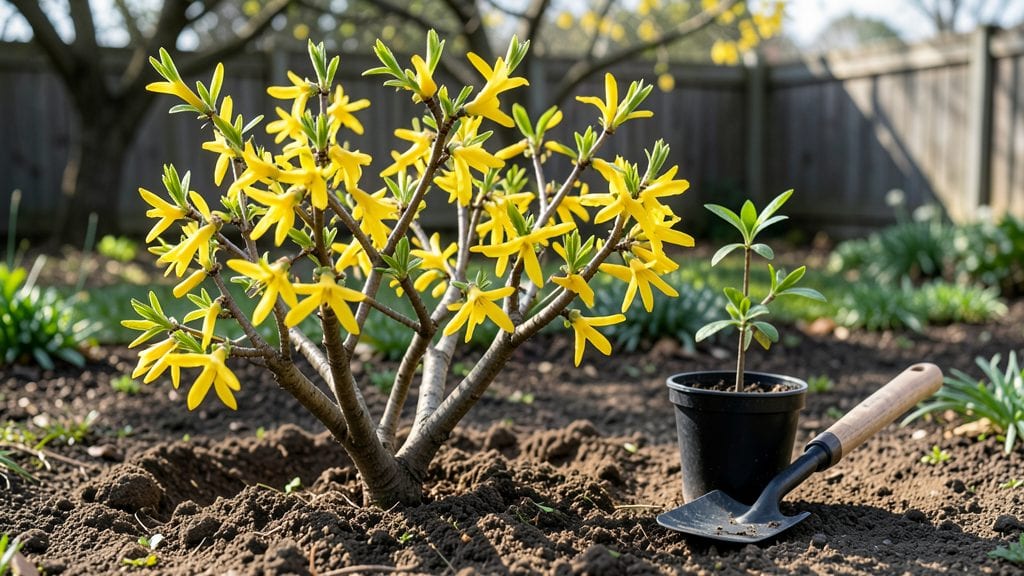
Getting the forsythia planting distance right is key—crowding them means fewer blooms and more mildew battles. ✨ I learned that the hard way when my first two bushes fought for sunlight and ended up scraggly—until I gave them proper room to breathe.
The right spacing turns these shrubs into the bright yellow showstoppers they’re meant to be.
For 3- to 5-foot-tall forsythia, aim for 6 feet apart in full sun. That’s the sweet spot for airflow and sunlight penetration, which keeps branches sturdy and flowers abundant.
If you’re planting in partial shade, you can tighten it to 5 feet, but don’t go smaller—crowding invites disease and weakens growth.
When you get it right, you’ll see vibrant blooms along every stem by early spring, with minimal pruning needed. The bushes will fill out naturally, creating a lush, golden backdrop for perennials or a dramatic focal point.
Just remember: patience pays off—forsythia takes 2-3 years to reach full maturity and bloom potential.
For mixed plantings, pair them with dwarf conifers or low-growing bulbs to fill the gaps until they mature. And if you’re lining a fence or border, stagger plants every 8-10 feet for a continuous, eye-catching display. Trust the process—your future spring garden will thank you.
📚 In This Guide
- What you need
- Instructions
- Tips and common mistakes
- Wrapping up and next steps
What you need
- ● Forsythia plants: Choose 1-3 plants per 5-6 feet of garden space (adjust based on mature size—dwarf varieties need 3-4 feet apart, while standard types require 6-8 feet for optimal airflow and sunlight).
- ● Shovel or trowel: A round-point shovel (for digging holes) and a hand trowel (for delicate root adjustments).
- ● Compost or well-aged manure: 5-10 gallons per plant to enrich soil.
- ○ Mulch (optional but recommended): 2-3 inches of shredded bark or pine needles to retain moisture and suppress weeds.
- ● Garden hose or watering can: With a gentle spray nozzle to avoid disturbing roots.
- ● Pruning shears: For trimming dead or crossing branches post-planting.
- ● Gloves: Heavy-duty work gloves to protect against thorns and rough soil.
- ● Soil test kit: To check pH (forsythia prefers 6.0-7.0) and amend if needed.
- ● Plant support stakes: For young or top-heavy varieties (e.g., ‘Spring Glory’).
- ● Slow-release fertilizer: Balanced 10-10-10 to kickstart growth.
- ● Plant markers: Label plants if mixing varieties (e.g., ‘Knox’ vs. ‘Northern Gold’).
- ● Drip irrigation system: For automated watering in dry climates.
Step-by-Step guide for planting forsythia with perfect spacing
Here’s how to plant forsythia for maximum blooms—spacing matters more than you think.
🌱 Step 1: Choose the Right Planting Site and Prepare the Soil
Forsythia thrives in full sun—select a location with at least 6 hours of direct sunlight daily. The more sun, the more vibrant the yellow blooms. Avoid low-lying areas where cold air settles, as forsythia is sensitive to late frosts.
Before planting, loosen the soil to a depth of 12 inches with a garden fork. Forsythia tolerates a range of soil types but prefers well-draining, slightly acidic to neutral soil (pH 6.0-7.5). If your soil is heavy clay, amend it with 2-3 inches of compost mixed into the top 8 inches of soil. This ensures roots establish quickly and reduces waterlogging.
🪴 Step 2: Dig Holes and Plant at the Correct Depth
For 4 forsythia plants, dig holes twice as wide as the root ball but no deeper than the container’s depth. This prevents root suffocation and encourages outward growth. Space holes 8-10 feet apart—this gives mature plants room to spread without crowding, which reduces air circulation and invites disease.
Gently remove the plant from its container and tease the roots if they’re circling. Place it in the hole so the top of the root ball sits level with the surrounding soil. Press the soil firmly around the roots to eliminate air pockets, then water deeply to settle everything. A soaker hose works best to avoid disturbing the soil surface.
☀️ Step 3: Mulch and Water for Strong Establishment
Spread 2-3 inches of mulch (like shredded bark or wood chips) around each plant, keeping it 2 inches away from the stem to prevent rot. Mulch conserves moisture, regulates soil temperature, and suppresses weeds—critical for forsythia’s first growing season.
Water immediately after planting, then once a week for the first month, providing 1-2 gallons per plant each time. After establishment, forsythia is drought-tolerant, but consistent moisture in the first year ensures robust root development. You’ll know it’s thriving when new shoots emerge in early spring—3-4 weeks after planting—and leaves stay deep green without wilting.
✂️ Step 4: Prune Strategically for Bushier Blooms
Wait until late spring or early summer, after flowering, to prune. Remove 10-20% of the oldest stems at ground level to encourage new growth. This rejuvenates the plant and prevents overcrowding. Avoid heavy pruning in fall or winter, as forsythia blooms on old wood—cutting back then removes next year’s flowers.
For mature plants, thin out crossing or rubbing branches to improve airflow. You’ll see a noticeable difference in next year’s blooms—thicker clusters and fewer bare spots. Prune again in late winter (just before buds swell) to shape the plant and remove any dead or diseased wood.
⏰ Step 5: Monitor and Adjust for Long-Term Health
Check plants monthly for signs of stress—yellowing leaves often mean overwatering, while crispy edges signal underwatering. Forsythia rarely needs fertilizer, but if growth is slow, apply a balanced 10-10-10 fertilizer in early spring at half strength. Over-fertilizing leads to lush foliage but fewer flowers.
By year three, your forsythia should be a bushy, blooming powerhouse. If branches spread unevenly, gently guide them into place while young—they’ll hold their shape better than older wood. With proper spacing and care, these plants will outlive you and keep putting on a springtime show.
Tips & tricks for perfect forsythia planting
Planting forsythia with the right spacing and care sets the stage for years of vibrant blooms. Here's what I've learned to ensure your shrubs thrive from day one.
Sunlight Strategy: The 6 hours of direct sunlight mentioned in Step 1 is non-negotiable for optimal blooming. If your location gets partial shade, position plants where they'll receive the most sun during the day's peak hours (10 AM to 4 PM). I've seen forsythia in shadier spots produce fewer blooms—sometimes as little as 30% of what full sun yields. Consider supplementing with a small patio light if you're in a particularly low-light area, though this should be a last resort.
Root Ball Preparation: When removing forsythia from containers in Step 2, I always take an extra 30 seconds to gently tease the roots if they're circling. This prevents root suffocation that can occur when roots grow in tight circles. For container-grown plants, soak the root ball in water for 10-15 minutes before planting—this helps reduce transplant shock. The extra effort pays off when you see vigorous new growth within those critical 3-4 weeks after planting mentioned in Step 3.
Mulching Mastery: That 2-3 inches of mulch in Step 3 deserves special attention. I recommend using shredded hardwood mulch rather than pine straw, as it breaks down more slowly and provides better insulation. Keep that mulch 2 inches away from the stem to prevent rot—this is where many gardeners make the mistake of piling mulch right against the trunk. Also, refresh the mulch layer annually in early spring to maintain its protective properties.
Pruning Precision: When pruning in Step 4, I focus on removing those 10-20% of oldest stems systematically. Start with the thinnest, oldest branches first—they're the ones that have outlived their usefulness. For mature plants, I make it a habit to prune during late spring when new growth has just begun, as this gives the plant time to recover before winter. The result? Thicker clusters of blooms the following spring that make your neighbors green with envy.
Pro Tips for Forsythia Planting Distance
- Planting forsythia with the right spacing and care sets the stage for years of vibrant blooms.
- Sunlight Strategy: The 6 hours of direct sunlight mentioned in Step 1 is non-negotiable for optimal blooming.
- Root Ball Preparation: When removing forsythia from containers in Step 2, I always take an extra 30 seconds to gently tease the roots if they're circling.
Frequently asked questions
What’s the ideal forsythia planting distance for full, bushy growth?
For standard forsythia bushes, space plants 6 to 10 feet apart in rows, or 8 to 12 feet for a natural, informal look. Dwarf varieties (like ‘Little Gold’) need only 3 to 5 feet of space. Proper spacing ensures airflow, reduces disease, and lets each bush show off its vibrant yellow blooms without competition.
When is the best time to plant forsythia for optimal spacing and root establishment?
Plant forsythia in early spring or fall (4–6 weeks before the first frost) for best results. Spring planting gives roots time to establish before summer heat, while fall allows them to settle before winter. Avoid planting in mid-summer—the heat stresses young shrubs and slows root growth.
Can I plant forsythia too close together? What are the risks?
Yes! Crowding forsythia leads to stunted growth, poor blooms, and increased susceptibility to powdery mildew or fungal diseases. Overcrowded shrubs also compete for nutrients, resulting in weak stems and sparse foliage. If you’ve already planted too close, prune aggressively in early spring to open up the center and thin out competing branches.
What if my yard is small? Are there compact forsythia alternatives?
For tight spaces, try these dwarf or columnar varieties:
- ‘Little Gold’ – 3–4 ft tall, 3–4 ft wide (perfect for containers!)
- ‘Spring Glow’ – 4–5 ft tall, 4–5 ft wide (great for hedges)
- ‘Gold Tassel’ – 3–4 ft tall, 4–5 ft wide (prostrate habit)
My forsythia isn’t blooming well—could spacing be the issue?
Possibly! If bushes are too close, they may struggle with airflow and sunlight, leading to fewer blooms. Check for:
- 6+ feet of space between mature shrubs
- Full sun (6+ hours/day)—forsythia needs light to bloom!
- Well-draining soil (poor drainage = stressed roots)
Wrapping up and next steps
Planting forsythia with the right spacing ensures vibrant blooms and a healthy, thriving shrub—so don’t overlook this key detail! 🌸 Whether you’re tucking them into a sunny border or lining a pathway, 3–6 feet apart is your golden rule for optimal airflow and sunlight.
With proper care, your forsythia will reward you with stunning early spring color year after year.
Ready to transform your garden? Grab your gloves, mark those spots, and dig in! Next, explore pruning tips to keep your forsythia looking its best all season long.