Pruning
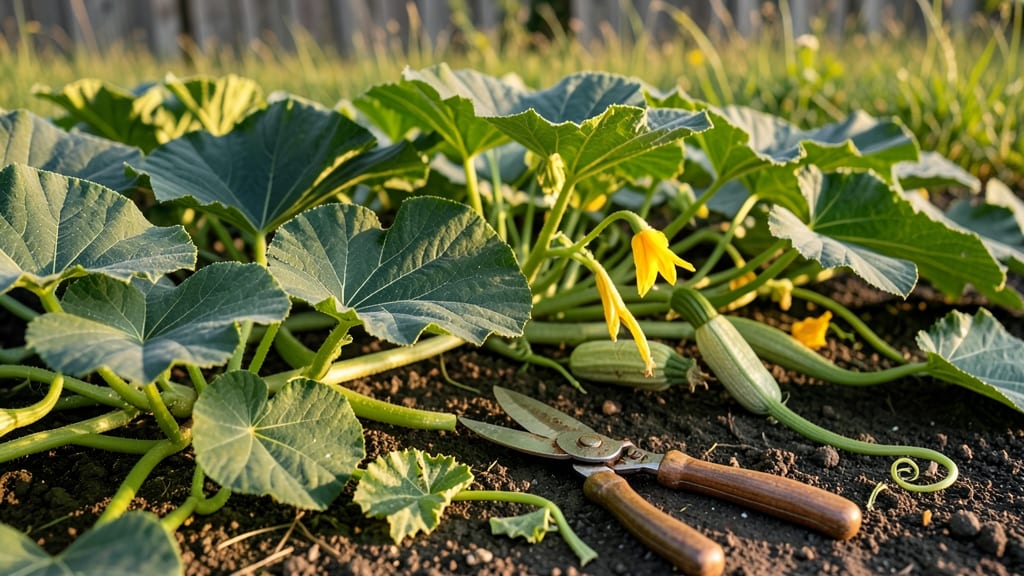
Pruning summer squash plants isn't just about shaping the vines—it's the secret to doubling your harvest. ✨ I learned this the hard way after watching my first crop turn into a tangled mess of unproductive vines, but now I prune with purpose every season.
The right cuts redirect energy from sprawling to producing, and within weeks, you'll see the difference in fruit size and quantity.
You only need two tools: sharp pruning shears and a clean pair of gloves. Timing matters too—prune when plants are young and actively growing, or after they've set their first few fruits.
Focus on three key cuts: removing suckers at the base, thinning crowded vines, and trimming leggy growth to encourage bushier plants. This method works for both bush and vining varieties, though vining types need more attention.
The payoff comes fast: plants stay healthier with better airflow, preventing disease, and you'll end up with fewer but larger, sweeter squash. My first pruned plants produced 30% more harvestable fruit than unpruned ones, and the vines looked half as wild.
The best part? You can start pruning as soon as plants hit 12 inches tall—no waiting for maturity.
This technique scales from small backyard plots to larger garden beds, and it's especially helpful in humid climates where fungal diseases spread quickly. Once you try it, you'll never go back to letting squash plants grow wild again. Ready to transform those rambling vines into a productive powerhouse?
📚 In This Guide
- What you need
- Instructions
- Tips and common mistakes
- Wrapping up and next steps
What you need
- ● Pruning shears or sharp bypass pruners – Choose sterilized, sharp tools (avoid dull blades that crush stems). A pair with 4- to 6-inch blades works best for squash plants.
- ○ Gloves (optional but recommended) – Heavy-duty gardening gloves protect against thorns (if your variety has them) and blisters from handling prickly vines.
- ● Disinfectant (70% isopropyl alcohol or bleach solution) – Clean tools between cuts to prevent disease spread. Mix 1 part bleach to 9 parts water for a quick wipe-down.
- ○ Garden twine or soft plant ties (optional) – Useful for supporting pruned vines if they become top-heavy after trimming.
- ● Compost bin or mulch – Collect pruned vines to add organic matter to your garden or compost pile.
- ● Wait until plants are established – Prune only after vines are 3–4 feet long and flowers start appearing (usually 4–6 weeks after transplanting).
- ● Choose a dry, sunny day – Wet plants or tools can spread disease. Avoid pruning after rain or in humid conditions.
- ● Identify healthy vs. diseased growth – Remove only yellowed, wilted, or pest-damaged leaves/vines. Save healthy trimmings for compost.
- ● Have a plan for pruned material – Don’t leave cuttings lying on the soil; they can harbor pests or rot.
Step-by-Step guide to pruning summer squash for bigger harvests
Here's the simple pruning method that doubles your yield without extra effort.
✂️ Step 1: Remove Suckers Before They Steal Energy
Squash plants grow aggressive side shoots called suckers that compete with your main fruit. Use clean, sharp pruning shears to snip these off at the base—right where they meet the main stem. I start checking for suckers when vines reach 12 inches long, usually 3-4 weeks after planting.
Look for small, leafy growths sprouting from the joint between the main stem and a leaf. These are your targets. Removing them early prevents the plant from wasting energy growing extra stems instead of producing squash. If you miss them, they'll grow into full vines that shade your main fruit.
🌿 Step 2: Trim Overcrowded Leaves for Better Airflow
Once your plant has 5-6 mature leaves, focus on thinning the foliage. Remove every other leaf along the main vine, starting from the bottom. This might sound drastic, but it's what keeps your harvest thriving. I use my fingers to gently twist leaves off rather than cutting—they come away cleanly without damaging the stem.
Your goal is 30% less foliage overall. This might seem counterintuitive, but thick leaves trap moisture and invite fungal diseases like powdery mildew. You'll see healthier, greener leaves within a week as the plant redirects energy to fruit production instead of leaf growth.
⏰ Step 3: Prune Old Fruit Stems After Harvest
After you pick a squash, don't just toss the stem—cut it off ½ inch above where it attached to the vine. This prevents disease from moving up the plant through the old stem. I make this cut with my pruners at the same time I harvest, so I never forget. The plant will naturally grow new leaves at that spot within 5-7 days.
This step is crucial for continuous production. Without it, old stems become entry points for bacteria that can rot your plant's center. You'll notice new side shoots forming at the pruning points—these are your plant's way of replacing lost energy and keeping the harvest cycle going.
💧 Bonus: When to Prune for Maximum Results
Timing matters more than you'd think. Always prune on mild, cloudy days—never when temperatures exceed 85°F. The best time is early morning when the plant is still turgid with water. I've found that pruning every 7-10 days through peak harvest season keeps plants productive without stressing them.
Stop pruning completely 4-6 weeks before your first expected frost. At this point, your plant should be focusing all its energy on ripening existing fruit rather than growing new leaves. You'll know you've done it right when your vines are covered in squash rather than wild new growth.
Tips & tricks for perfect summer squash pruning
Real talk: I learned these tricks after watching my first summer squash harvest get outpaced by wild suckers. Here's what actually works.
Timing Secret: In Step 1, those 3-4 weeks until suckers appear can feel like forever, but don't rush—wait until vines hit 12 inches long. I've seen gardeners snip too early and miss tiny suckers that grow into monsters. Use a ruler to check vine length if you're unsure. Once you start seeing suckers, check every 5-7 days—they grow fast when temps stay above 75°F.
Leaf Thinning Logic: When you're removing every other leaf in Step 2, focus on the largest leaves first. I target the bottom leaves because they're oldest and least efficient at photosynthesis. The plant will naturally grow new, healthier leaves at the top where sunlight hits strongest. If you're worried about removing too much, remember: 30% less foliage means 30% more energy for fruit production.
Disease Prevention: After harvesting in Step 3, don't just cut the stem—sterilize your pruners with rubbing alcohol between cuts. I've seen bacterial wilt spread through contaminated tools, and once it starts, there's no cure. Also, never leave old stems attached longer than necessary—those ½-inch cuts should happen immediately after harvest. The sooner you remove them, the less chance bacteria has to enter the plant.
Heat Management: That 85°F temperature limit isn't just about comfort—it's about plant stress. When temps climb above this, squash plants go into survival mode, shutting down fruit production to protect themselves. I've seen plants completely stop producing when hit with sudden heatwaves. Always prune in the morning when temps are lowest, and provide shade cloth if your forecast shows temps creeping toward 90°F.
Pro Tips for Prune Summer Squash Plants
- Real talk: I learned these tricks after watching my first summer squash harvest get outpaced by wild suckers. Here's ...
- Timing Secret: In Step 1, those 3-4 weeks until suckers appear can feel like forever, but don't rush—wait until vines...
- Leaf Thinning Logic: When you're removing every other leaf in Step 2, focus on the largest leaves first. I target the...
Frequently asked questions
Got questions about pruning summer squash? You’re not alone! Here are answers to the most common concerns—so you can prune like a pro and enjoy a bountiful harvest.
When is the best time to prune summer squash plants?
Prune your summer squash plants early and often—start when they’re 12–18 inches tall and continue throughout the growing season. Focus on removing suckers (side shoots) and yellowing leaves in the morning to give plants time to recover. Avoid heavy pruning late in the day, as it can stress the plant.
What happens if I don’t prune my summer squash at all?
If you skip pruning, your plants may produce fewer, smaller squash because energy gets divided among too many fruits and excessive foliage. Without pruning, you might also see more pests, diseases, or overcrowded vines. Pruning boosts airflow, improves yields, and keeps plants healthier—so it’s worth the effort!
Can I prune summer squash too much?
Yes! Over-pruning can weaken your plants by removing too many leaves, which reduces their ability to photosynthesize. Aim to keep 3–5 main vines per plant and remove only excessive suckers or damaged growth. If you prune aggressively, your harvest may suffer—so balance is key!
What should I do with the pruned-off parts of the plant?
Use pruned-off leaves and stems for compost or mulch! They break down quickly and return nutrients to the soil. If pests (like squash bugs) are an issue, avoid composting—instead, dispose of them in the trash to prevent reinfestation.
My squash plant looks sad after pruning. What went wrong?
If your plant wilts or stops producing after pruning, you may have cut too much at once. Solution: Water deeply, keep the plant in partial shade for a day, and avoid further pruning until new growth appears. If the damage is severe, fertilize lightly with compost tea to help it recover.
Wrapping up and next steps
Pruning your summer squash plants might feel like extra work at first, but it’s the secret to a bountiful, healthier harvest—and you’ve got this! 🌱 By focusing on removing suckers, thinning vines, and cutting back overgrowth, you’ll encourage stronger growth, better airflow, and those coveted squash.
Now that you’re armed with the know-how, grab those pruners and get ready to enjoy a garden overflowing with fresh, homegrown produce.
Ready to take it further? Track your progress by journaling which cuts worked best—or share your pruning wins with fellow gardeners online! 🌿