
Flowers
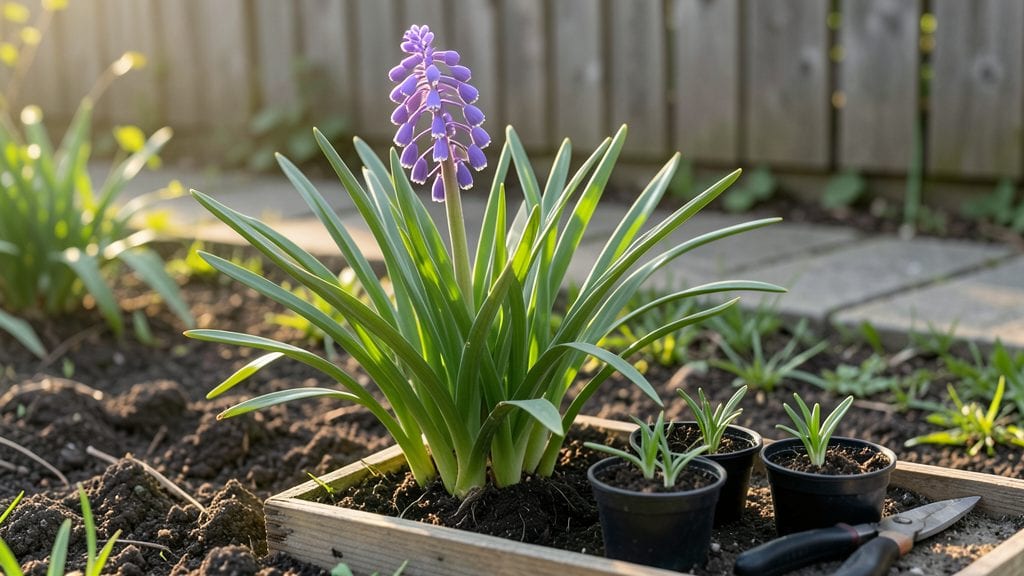
Planting grape hyacinth bulbs is how I turn my spring garden into a sea of purple velvet—no fancy tricks, just bulbs, soil, and a little patience.
The key is timing: plant them in fall when soil temps drop below 50°F, and you’ll get those iconic grape-like clusters blooming by April. I’ve learned the hard way that rushing or planting too deep kills the show before it starts.
You’ll need well-draining soil, a sunny spot (they tolerate partial shade but bloom best with full sun), and bulbs spaced 4 inches apart at 4-6 inches deep. Think of them like tiny purple marbles—plant them too shallow, and they’ll flop; too deep, and they’ll struggle to push through.
A handful of bone meal mixed into the soil gives them a nutrient boost for next year’s blooms.
Once planted, water lightly and let nature take over. By spring, you’ll have a carpet of 2-3 inch tall blooms that hummingbirds adore. The secret to long-term success?
Leave the foliage until it yellows—it’s feeding the bulbs for next season. If slugs or squirrels get greedy, a light mulch of gravel keeps them honest.
Pair them with daffodils or tulips for a layered look, or edge them with creeping thyme for a fragrant border. These bulbs multiply over time, so one planting could turn into a purple sea in just a few years. Now grab those bulbs—spring won’t wait!
📚 In This Guide
- What you need
- Instructions
- Tips and common mistakes
- Wrapping up and next steps
What you need
- ● Grape hyacinth bulbs: 10–20 bulbs per square foot (or 150–200 bulbs for a 10’x10’ bed). Choose Muscari varieties like 'Blue Spike' or 'Grape Ice' for vibrant color.
- ● Garden soil: Well-draining, loose soil (amend with compost if your soil is heavy or clay-like). Aim for a pH of 6.0–7.0.
- ● Garden trowel or bulb planter: A small hand trowel (6–8" deep) works perfectly for planting.
- ○ Organic fertilizer (optional but recommended): A balanced 10-10-10 or bulb-specific fertilizer (e.g., 1 tbsp per 5 sq ft).
- ● Mulch: 1–2 inches of shredded bark, straw, or pine needles to retain moisture and suppress weeds.
- ● Bulb food: A slow-release fertilizer like Osmocote for extra nourishment.
- ● Planting grid or string: To create neat rows (great for borders!).
- ● Garden gloves: To keep your hands clean while handling soil.
- ● Watering can or hose with a gentle spray nozzle: For post-planting hydration.
Instructions for planting grape hyacinth bulbs
Here’s the straightforward method I’ve used to create stunning spring displays—no guesswork, just reliable results.
Prepare the Planting Site
Choose a location with full sun to partial shade—grape hyacinths thrive where they get at least 4-6 hours of sunlight daily. Clear the area of weeds and loosen the soil with a garden fork to a depth of 8-10 inches. This helps roots spread easily without fighting compacted earth.
If your soil drains poorly, mix in 2-3 inches of coarse sand or compost to improve aeration. Grape hyacinths hate soggy roots, so amending heavy clay is worth the effort. Test the soil pH—these bulbs prefer a slightly acidic to neutral range (6.0-7.0). If your soil is alkaline, add sulfur or peat moss to adjust it.
Plant the Bulbs at the Right Depth
Dig holes 3-4 inches deep, spacing them 2-3 inches apart for a lush, carpet-like effect. Place each bulb with the pointy end facing up—this ensures proper growth direction. If you’re planting in rows, space rows 4-6 inches apart to allow for full coverage.
Cover the bulbs with soil and gently firm it around them to eliminate air pockets. Avoid pressing too hard, as this can damage tender roots. Water the area lightly after planting to help settle the soil and encourage root establishment. You’ll see the first signs of growth in 4-6 weeks, once roots have anchored.
Mulch and Water for Establishment
Spread 1-2 inches of mulch (like shredded bark or straw) over the planted area to retain moisture and suppress weeds. Mulch also helps regulate soil temperature, which is especially important in early spring or late fall plantings. Avoid piling mulch directly against the bulbs—keep it 1-2 inches away to prevent rot.
Water the area once a week during the first 4-6 weeks after planting, keeping the soil evenly moist but not soggy. Once the foliage appears, reduce watering to every 2 weeks unless your climate is unusually dry. Overwatering at this stage can lead to bulb rot, so let the top 1-2 inches of soil dry out slightly between waterings.
Maintain Through the Growing Season
After the purple blooms fade, allow the foliage to yellow and die back naturally—this process recharges the bulbs for next year’s display. You can trim the dead leaves once they’ve browned, but avoid cutting them too soon. Fertilize lightly in early spring with a balanced, slow-release bulb fertilizer to support future blooms.
Grape hyacinths are hardy and low-maintenance, but they do best in well-drained soil. If your area gets heavy rainfall, consider planting them on a slight slope or in a raised bed to prevent water pooling. Divide and replant bulbs every 3-4 years to maintain vigor—dig them up in early summer when foliage has died back, then replant immediately or store in a cool, dry place until fall.
Tips & tricks for planting grape hyacinth bulbs
Creating vibrant spring carpets with grape hyacinths is all about paying attention to the little details that make a big difference. These tips will help you avoid common pitfalls and ensure your bulbs thrive for years to come.
Soil Preparation is Key: When loosening soil to a depth of 8-10 inches in Step 1, focus on breaking up compacted layers without creating large clumps. Think of it like fluffing a pillow—you want the roots to sink into soft, airy soil. If your soil is particularly dense, consider adding a layer of coarse sand mixed with compost at the bottom of the planting hole. This creates an ideal root zone right where your bulbs will settle.
Bulb Orientation Matters: In Step 2, placing bulbs with the pointy end up is crucial, but don't overlook the importance of proper spacing. The 2-3 inch spacing between bulbs creates that signature carpet effect, but if you're planting in rows, maintain 4-6 inches between rows to prevent overcrowding as the foliage grows. I've seen beautiful displays ruined by bulbs that were planted too close together, leading to weak stems and fewer blooms.
Watering Wisdom: The first 4-6 weeks after planting are critical for root establishment. When watering once a week, aim for about 1 inch of water each time—enough to moisten the soil to the depth of the bulbs. Use a rain gauge or tuna can to measure if you're unsure. During this period, it's better to underwater slightly than to overwater, as grape hyacinths are particularly susceptible to bulb rot when their roots stay too wet.
Mulching Made Easy: When applying 1-2 inches of mulch in Step 3, choose organic materials like shredded bark or straw that will break down over time. The key is to create a protective layer that maintains moisture without smothering the bulbs. Keep that 1-2 inch clearance around each bulb to prevent rot—this small detail makes a huge difference in bulb health. I've found that mulching also helps regulate soil temperature, which is especially beneficial in early spring or late fall plantings.
Pro Tips for Planting Grape Hyacinth
- Creating vibrant spring carpets with grape hyacinths is all about paying attention to the little details that make a big difference.
- Soil Preparation is Key: When loosening soil to a depth of 8-10 inches in Step 1, focus on breaking up compacted layers without creating large clumps.
- Bulb Orientation Matters: In Step 2, placing bulbs with the pointy end up is crucial, but don't overlook the importance of proper spacing.
Frequently asked questions
Got questions about planting grape hyacinth? You’re not alone! Here are some of the most common concerns—and their easy solutions—to help you grow a stunning spring display with confidence.
When is the best time to plant grape hyacinth bulbs?
Plant them in fall (6–8 weeks before the first frost) for spring blooms. If you miss that window, you can plant in early winter (as long as the ground isn’t frozen). Just ensure they get a chill period to trigger flowering. Bulbs planted too late may bloom later—or not at all!
Can I plant grape hyacinth in cold climates?
These hardy bulbs thrive in USDA Zones 3–9 and handle winter frost like a champ. In colder regions, plant them deeper (6 inches) for extra protection. Mulch lightly after planting to insulate the soil. Just avoid soggy soil—drainage is key to preventing rot.
How close together should I plant grape hyacinth bulbs?
For that classic "carpet of color" look, space bulbs 3–4 inches apart. If you’re mixing with other spring flowers (like tulips or daffodils), keep them 4–6 inches away to avoid overcrowding. Taller varieties (like Grape Hyacinth ‘Blue Giant’) can go up to 6 inches apart.
What should I do if squirrels or rodents dig up my bulbs?
These critters love grape hyacinth bulbs! Try these tricks:
- Plant bulbs deeper (8–10 inches) to deter digging.
- Use mesh cages or chicken wire over the area until spring.
- Scatter hot pepper flakes or castor oil-based repellent around the soil (harmless to plants!).
- Opt for daffodil bulbs nearby—their bitter taste deters pests!
Why aren’t my grape hyacinths blooming?
No blooms? Check these fixes:
- Not enough sunlight? They need full sun to partial shade (6+ hours of light).
- Overcrowded? Thin bulbs if they’re packed too tightly.
- Missing the chill? They need 4–6 weeks of cold temps (40°F or below) to flower.
- Poor soil? Amend with compost for better nutrients.
If they’re still struggling, try fertilizing in early spring with a balanced 10-10-10 formula to encourage blooms!
Wrapping up and next steps
Planting grape hyacinth is a rewarding way to transform your garden into a vibrant springtime masterpiece—one bulb at a time! 🌸 With the right soil, spacing, and care, these cheerful blooms will return year after year, filling your space with purple, blue, or white splendor.
Now that you’re armed with tips and tricks, why not start small? Grab a few bulbs, pick a sunny spot, and let nature do the rest—your future spring garden will thank you!
🌱 Next Steps:
- Order bulbs (if you haven’t already!) from a trusted supplier.
- Mark your calendar for fall planting—timing is everything!
- Sketch a design for your grape hyacinth “carpet” and get digging!