Watering
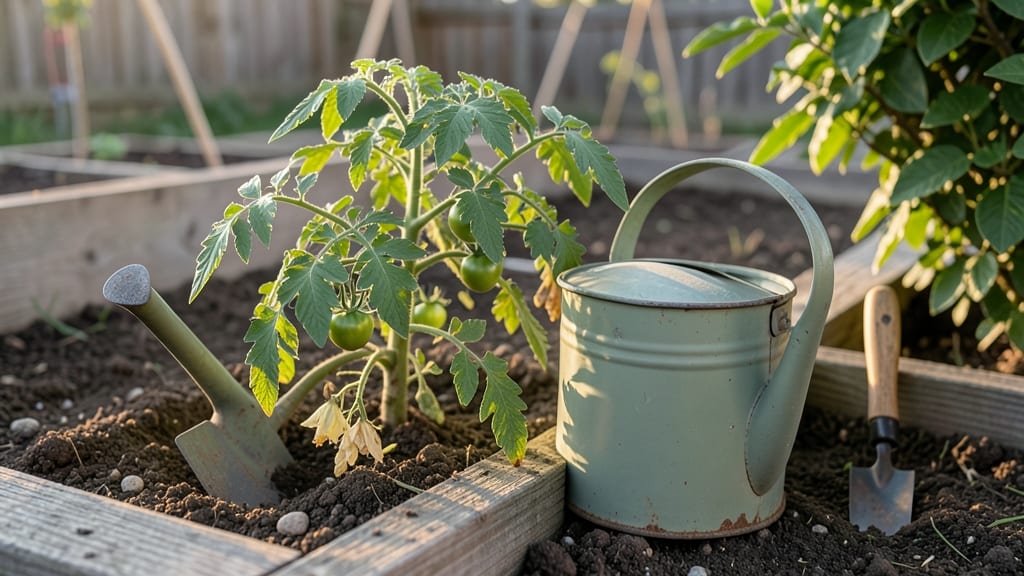
My underwatered tomato plant rescue starts with one simple truth: wilting leaves don’t always mean death—just a cry for water. 🌱 I’ve pulled back plants from the brink with the right technique, and you can too. The key is acting fast before the roots give up completely.
First, confirm the problem by sticking your finger 2 inches into the soil—if it’s bone-dry, that’s your answer. Then, give the plant a deep drink, not just a quick splash.
For containers, water until it drains from the bottom; for ground beds, aim for 1-2 gallons per plant. Mulch afterward to lock in moisture.
Within 24 hours, you’ll see leaves perk up as roots rehydrate. But the real fix comes from adjusting your routine: water deeply every 2-3 days in summer, or when the top inch of soil feels dry. A moisture meter helps avoid guesswork.
This works for containers, raised beds, and even greenhouse tomatoes. The secret? Consistency over quick fixes. Your plants will thank you with stronger stems and heavier fruit by harvest time.
Root Causes of Thirsty Tomatoes
Tomatoes are heavy drinkers—when they don’t get enough water, their leaves droop, fruits split, and growth stalls. But why does this happen? The issue often boils down to soil moisture imbalance, environmental stress, or human error.
Let’s break down the science behind why your tomato plants might be crying out for hydration.
Tomatoes thrive on consistent moisture, not sporadic soaking. When watering is irregular, roots struggle to absorb nutrients efficiently, leading to wilting. Here’s why:
- Shallow root systems: Tomato roots spread horizontally (not deep) in the top 6–12 inches of soil. If you water lightly or only surface-level, roots dry out quickly, triggering osmotic stress—when plant cells lose water faster than they can absorb it.
- Diurnal fluctuations: Watering only in the morning or evening (but not both) causes roots to overwork. During the day, evaporation pulls moisture from leaves, while nighttime cooling can shock roots if soil is dry.
- The "boom-and-bust" cycle: Overwatering followed by drought confuses roots, causing them to shrink (a defense mechanism). This reduces their ability to uptake water, even when soil later appears moist.
💡 Pro Tip: Aim for 1–1.5 inches of water per week (including rainfall). Use a moisture meter or the "squeeze test" (grab a handful of soil—if it crumbles, water more).
If your soil holds water like a sponge but drains like molasses, roots suffocate—or worse, rot. Here’s how drainage issues lead to dehydration:
| Problem | Why It Causes Wilting |
|---|---|
| Clay-heavy soil | Traps water in pockets, starving roots of oxygen. Roots can’t breathe, so they signal the plant to conserve water by wilting leaves. |
| Compacted soil | Reduces pore space, forcing roots to grow in dense layers where they can’t access deep moisture. Compacted zones also block water flow to lower roots. |
| No mulch | Sun bakes the soil surface, creating a "dry crust" that prevents water from seeping down. Roots near the surface dry out first. |
🔥 Fix It: Amend soil with compost or perlite (20% mix) and top with 2–3 inches of mulch (straw or wood chips) to retain moisture and regulate temperature.
Even with perfect watering, heat, wind, and humidity can outpace your plant’s ability to retain water. Here’s how:
- High temperatures: Tomato leaves transpire (release water vapor) up to 10x faster in 90°F+ weather. If roots can’t replenish lost moisture, cells plasmolyze (shrink), causing wilting.
- Dry winds: Act like a desert breeze, stripping moisture from leaves before roots can compensate. This is why container tomatoes wilt faster—their roots have less "real estate" to seek water.
- Low humidity: Air with <10% humidity forces plants to open stomata wider to absorb CO₂, but this accelerates water loss. In arid climates, wilting can happen within hours of sunrise.
🌡️ Beat the Heat:
- Water early morning or late evening to reduce evaporation.
- Use shade cloth (30–50%) for young plants or during heatwaves.
- Group plants together to create microclimates that retain humidity.
Too much fertilizer—especially high-nitrogen or synthetic blends—can burn roots and disrupt their ability to absorb water. Here’s how:
- Salt accumulation: Fertilizers leave behind sodium and chloride, which raise soil osmotic pressure. This makes it harder for roots to pull water from the soil, even when it’s wet.
- Root damage: Excess salts desiccate root tips, reducing their surface area for water uptake. Think of it like drinking through a straw with a clog—water gets "stuck" outside the plant.
- Nutrient imbalance: Too much nitrogen promotes leafy growth over roots, so the plant’s "plumbing system" (roots) can’t support its "branches" (leaves).
✨ Reset the Soil:
- Flush soil with 2–3 gallons of water per plant to leach out salts.
- Switch to organic fertilizers (compost tea, fish emulsion) for slower, safer nutrient release.
- Test soil pH—aim for 6.0–6.8; acidic or alkaline soil worsens salt issues.
Now that you know the real culprits behind your tomato’s thirst, the next step is reviving wilting leaves fast. But first—check your soil! A simple finger test (dig 2 inches deep) can reveal if roots are truly parched or just confused.
Revive Your Tomatoes Fast
Now that you know the signs and causes of an underwatered tomato plant, it’s time to take action! The good news? Most tomato plants bounce back quickly with the right care. Below are targeted solutions based on the most common causes—plus prevention tips to keep your plants thriving long-term.
If your plant’s soil is bone-dry or compacted, roots struggle to absorb water efficiently. Act fast to rehydrate and loosen the soil.
Step 1: Deep Watering (The Right Way)
🔥 Do this first—even if the soil feels damp at the surface, roots may still be thirsty.
- Water slowly at the base (not overhead) for 15–20 minutes until water seeps 6–8 inches deep.
- Use a drip irrigation system or a soaker hose for even moisture—this prevents runoff and encourages deep root growth.
- Test moisture by sticking your finger 2–3 inches down; if it’s dry, water again.
💡 Pro Tip: Water in the early morning (6–9 AM) to reduce evaporation and fungal risks.
Step 2: Fluff & Aerate the Soil
Compacted soil blocks water and oxygen, suffocating roots.
- Gently loosen the top 2–3 inches of soil around the base with a fork or your fingers.
- Mix in 1–2 inches of compost or aged manure to improve water retention and drainage.
- Avoid digging too deep—you don’t want to damage the root system.
Step 3: Mulch to Lock in Moisture
A 2–3 inch layer of organic mulch (straw, shredded leaves, or wood chips) acts like a sponge, slowing evaporation.
- Keep mulch 2 inches away from the stem to prevent rot.
- Replenish after heavy rain or watering.
If leaves are crispy, curled, or drooping, they’re screaming for hydration. Here’s how to bring them back to life.
Step 1: Prune Damaged Foliage
🍳 Trim the sad parts—but don’t overdo it.
- Snip yellow, brown, or crispy leaves with clean pruners (sterilize with rubbing alcohol).
- Focus on larger leaves first; smaller ones can recover faster.
- Avoid pruning flowers/fruit unless they’re already damaged—your plant needs energy to revive!
Step 2: Boost Humidity (Temporarily) Tomato plants love 60–70% humidity.
If your air is dry (common in summer or indoors): - Mist leaves lightly 2–3 times a day (use a spray bottle with room-temperature water). - Place a shallow tray of water near the plant (but not touching the pot). - Group plants together to create a microclimate.
✨ Quick Fix: Cover the plant with a clear plastic bag for 4–6 hours (like a mini greenhouse). Remove when leaves perk up.
Step 3: Fertilize for Recovery
Underwatered plants are nutrient-starved. Give them a gentle boost:
- Use a balanced liquid fertilizer (10-10-10 or 5-5-5) diluted to half strength.
- Water before fertilizing to avoid burning roots.
- Avoid high-nitrogen fertilizers—they promote leafy growth but delay fruiting.
Prevention is key! Follow these watering rules to keep your tomatoes happy.
🔥 Rule 1: Water Consistently (Not Sporadically)
- Stick to a schedule: Water every 2–3 days in hot weather, every 4–5 days in cooler months.
- Check soil daily—if the top inch feels dry, it’s time to water.
- Morning watering > evening (prevents fungal diseases like blight).
👨🍳 Rule 2: Use the Right Tools
- Drip irrigation or soaker hoses > sprinklers (they waste water and encourage disease).
- Self-watering pots or ocotillo bags are game-changers for busy gardeners.
- Moisture meters (like the Xiaomi Mi Flower Care) take the guesswork out.
🥘 Rule 3: Improve Soil for Better Retention
- Amend clay soil with sand or perlite (50/50 mix).
- Add coconut coir or peat moss to sandy soil for water-holding power.
- Avoid over-potting—smaller pots dry out faster.
| Timeframe | Action | Expected Result |
|---|---|---|
| First 6 Hours | Deep water + mulch | Leaves may perk up slightly |
| 12–24 Hours | Prune damaged leaves + humidity boost | Wilting slows; new growth appears |
| 3–5 Days | Fertilize lightly + monitor soil | Roots rehydrate; new leaves emerge |
| 1–2 Weeks | Adjust watering schedule | Plant stabilizes; flowers/fruit saved |
✅ Water deeply, not frequently—aim for 1–1.5 inches per week (adjust for rain). ✅ Mulch religiously—saves time and water. ✅ Group plants together for better humidity. ✅ Upgrade your soil—test pH (6.0–6.8 is ideal) and add compost. ✅ Use a rain gauge—don’t rely on memory!
Remember: Even severely underwatered tomato plants can fully recover in 3–7 days with proper care. Stay patient, and soon you’ll be harvesting juicy, vine-ripened tomatoes! 🍅🔥
Frequently asked questions
How do I know if my tomato plant is truly underwatered and not just wilting from heat?
Check the soil first—stick your finger 2 inches deep. If it's completely dry, that's dehydration. For heat stress, leaves often feel warm to the touch and may have a grayish tint, while underwatered leaves are crispy or limp. Water deeply in the morning and monitor for improvement within 24 hours.
Can I save a tomato plant if the leaves are completely crispy and brown?
Yes, but act fast! Trim the damaged leaves and give the plant a deep watering at the base. Cover it with a plastic bag for 4-6 hours to boost humidity. If the stem is still firm, roots may still be viable. Avoid fertilizing until new growth appears.
Why does my container-grown tomato plant wilt faster than in-ground ones?
Containers dry out 3-5x faster because roots have less soil to access moisture. Use pots with drainage holes and water when the top 1 inch feels dry. Add 2-3 inches of mulch and consider self-watering systems to maintain consistent moisture.
Will underwatering affect my tomato fruit quality or yield?
Underwatered plants produce smaller, misshapen fruits that split easily. Consistent moisture (1-1.5 inches per week) ensures juicy, flavorful tomatoes. If you've missed waterings, focus on reviving the plant first—new growth will produce better quality fruit.
How often should I water tomato plants in extreme heat (90°F+)?
In scorching weather, water every 1-2 days in the early morning. Use drip irrigation and apply 3-4 inches of mulch to lock in moisture. Monitor soil moisture closely—roots can't keep up with evaporation rates during heatwaves.