Pruning
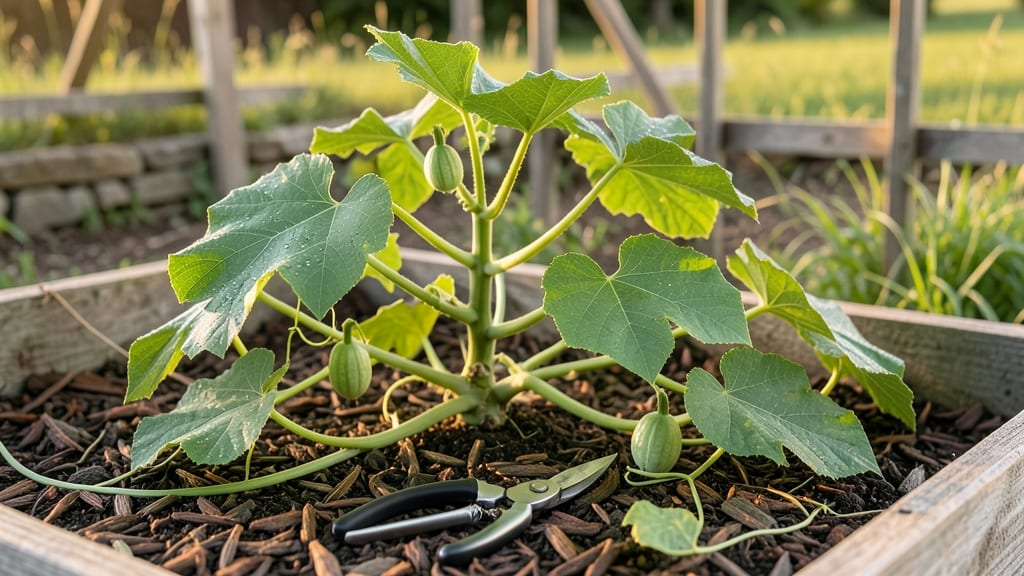
Pruning cantaloupe plants might sound intimidating, but those three strategic cuts can double your harvest. 🌿 I learned this the hard way—my first year, I ignored pruning and ended up with a handful of small melons while my neighbor’s vines sagged under the weight of perfect fruit.
The secret isn’t aggressive trimming; it’s directing energy where it counts.
You’ll need just two tools: sharp pruning shears and a pair of gloves to protect your hands from thorny vines. Timing matters too—wait until vines are 12 inches long before making your first cut, and always prune on a dry morning to reduce disease risk.
The goal is to remove suckers (those small shoots between the main stem and leaves) while keeping the plant’s energy focused on fruit production.
Start by pinching off the first sucker that appears below the first leaf cluster—this encourages the plant to put energy into the main vine. Next, trim any yellowing or diseased leaves immediately to improve airflow.
Finally, when vines hit 3 feet, cut back the oldest growth by 12 inches to rejuvenate the plant. You’ll see thicker vines, more flowers, and melons that grow faster than ever.
This method works for both bush and vining cantaloupe varieties, though bush types need slightly less aggressive pruning. The payoff? A harvest that’s not just bigger, but earlier and more consistent. Now grab those shears—your melons are waiting.
📚 In This Guide
- What you need
- Instructions
- Tips and common mistakes
- Wrapping up and next steps
What you need
- ● Pruning shears or bypass pruners – Choose sharp, sterilized shears with a 4- to 6-inch blade for precision cuts.
- ● Gloves (gardening or cut-resistant) – Protect your hands from thorns and rough stems.
- ● Disinfectant (rubbing alcohol or bleach solution) – Clean tools between cuts to prevent disease spread (1 part bleach to 9 parts water).
- ○ Small pruning saw (optional but helpful) – For thicker stems that shears can’t handle.
- ● Garden twine or plant ties – To support vines if needed (about 10-20 feet per plant).
- ● Compost or mulch – To cover pruned areas and retain moisture.
- ● Hand lens or magnifying glass – For spotting pests or diseases early.
- ● Plant marker or labels – To track pruned sections if testing techniques.
- ● Spray bottle with water – To mist cuts and reduce stress on the plant.
- ○ Pruning sealant (optional) – Helps larger wounds heal faster (e.g., tree wound pruning paste).
Step-by-step guide to pruning cantaloupe plants for bigger harvests
Pruning cantaloupes might seem counterintuitive, but these strategic cuts redirect energy to fruit production instead of foliage.
✂️ Step 1: Remove Suckers for Stronger Vines
Start by identifying the main vine—the thickest stem growing directly from the plant base. Suckers are the small shoots that sprout from the base or leaf joints. These compete with your main vine for nutrients, so pinch them off when they're about 2 inches long using clean pruning shears or your fingers. I always work in the morning so any cuts have time to heal before evening moisture sets in.
Focus on the first 4-6 inches of the vine where suckers appear most aggressively. You'll see them growing at a sharp angle from the main stem. Removing them early prevents the plant from wasting energy on weak side growth. This is the moment that matters: your goal is to keep just one strong main vine per plant to maximize fruit development.
🌿 Step 2: Trim Excess Leaves Near Fruit
Once your cantaloupe begins flowering, shift focus to leaf management. Remove 2-3 leaves directly below each developing fruit when it reaches golf-ball size. This improves air circulation and sunlight penetration to the fruit, which prevents rot and speeds ripening. I use sterilized scissors to make clean cuts just above a leaf node to avoid damaging the stem.
Watch for yellowing or diseased leaves—they're prime candidates for removal. You'll notice better fruit color and fewer cracked melons after this step. Never remove more than one-third of the plant's foliage at once, or you'll shock the vine and reduce overall yield. This ensures the plant still has enough leaves to photosynthesize while directing energy where you want it.
⏰ Step 3: Prune Runner Vines After First Fruit Sets
When your first cantaloupe reaches baseball size, it's time to control the plant's horizontal growth. Cantaloupes produce long runner vines that spread outward—these need pruning to prevent energy drain. Cut back any vines extending beyond 3 feet from the main plant using sharp shears. Make cuts at a 45-degree angle just above a leaf node to encourage healthy regrowth.
Real talk: this step feels drastic, but it's what transforms a bushy mess into a productive plant. You'll see the remaining vines thicken and the fruit swell faster. Limit yourself to 2-3 main vines per plant maximum. If you're growing in containers, be even more aggressive—these plants need their energy focused on fruit, not sprawling.
Tips & tricks for pruning cantaloupe plants
These garden-smart strategies will help you maximize your cantaloupe harvest without stressing your plants.
Timing is Everything: I can't stress this enough—morning is the absolute best time to prune. The cooler temperatures and lower humidity give your cuts time to heal before evening moisture sets in, which drastically reduces the risk of disease. If you must prune later in the day, wait until at least 2 hours before sunset to give those fresh cuts time to dry out. This simple habit has saved me from multiple failed harvests when I was impatient and pruned in the evening.
Tool Prep Matters: Always sterilize your pruning shears or scissors with rubbing alcohol between plants. I keep a small bottle of 70% isopropyl alcohol in my gardening toolkit for this purpose. Clean tools prevent spreading diseases like powdery mildew, which can devastate your cantaloupe plants. For suckers that are only 2 inches long, you can actually pinch them off with your fingers—no tools needed! Just make sure your hands are clean to avoid contaminating the cuts.
Visual Cues for Perfect Pruning: When removing those 2-3 leaves below each golf-ball sized fruit, look for leaves that are touching the developing melon. These are the ones causing shading and poor air circulation. You'll know you've done it right when you can see sunlight reaching all sides of the fruit. For runner vines, imagine a 3-foot radius from your main plant—anything beyond that needs to go. This creates a more manageable plant shape while keeping energy focused on fruit production.
Container Growers, Listen Up: If you're growing cantaloupes in containers, you can be even more aggressive with pruning. Since space is limited, focus on keeping just 1-2 main vines instead of the maximum 2-3. Remove any suckers immediately as they appear—they'll compete fiercely for nutrients in that confined space. I've seen container-grown cantaloupes produce fruit twice as large as their bushy counterparts when pruned this way, because all that energy goes directly to the fruit rather than supporting excessive foliage.
Pro Tips for Prune Cantaloupe Plants
- These garden-smart strategies will help you maximize your cantaloupe harvest without stressing your plants.
- Timing is Everything: I can't stress this enough—morning is the absolute best time to prune. The cooler temperatures ...
- Tool Prep Matters: Always sterilize your pruning shears or scissors with rubbing alcohol between plants. I keep a sma...
Frequently asked questions
Got questions about pruning cantaloupe plants? You’re not alone! Here are some of the most common concerns—plus clear answers to help you grow bigger, sweeter melons with confidence.
When is the best time to prune cantaloupe plants?
Prune cantaloupe plants early in the season—typically when vines are 12–18 inches long—to encourage stronger growth. Avoid pruning after flowering, as this can stress the plant and reduce fruit set. Focus on shaping before the plant puts energy into producing melons.
Do I really need to prune cantaloupe plants? Can’t I just let them grow wild?
While cantaloupe plants can grow without pruning, pruning boosts fruit size, quality, and yield by redirecting energy to fewer, larger melons. It also improves airflow, reducing disease risk. Think of it like giving your plants a spa day—they’ll thank you with juicier, sweeter fruit!
What if I prune too much? Will my cantaloupe plants die?
Over-pruning can stress cantaloupe plants, but they’re resilient! If you’ve already trimmed too aggressively, don’t panic. Focus on removing only healthy vines and leaves, and keep the plant well-watered. With proper care, it’ll bounce back—just give it time to recover before expecting a big harvest.
Can I prune cantaloupe plants after they start flowering?
Pruning after flowering is risky because it can remove potential fruit or stress the plant when it’s already working hard to produce melons. If you must prune, do so lightly—focus on dead or diseased foliage only. Save heavy pruning for the early growth stage.
What’s the difference between pruning cantaloupe and pruning cucumbers?
Cantaloupes are vining plants that benefit from selective pruning to shape growth and improve fruit quality, while cucumbers (especially bush types) often need minimal pruning. Cantaloupes also produce fruit on male and female flowers, so pruning focuses on balancing vine growth—not just removing leaves like with some cucumber varieties.
Wrapping up and next steps
Pruning your cantaloupe plants might seem like extra work, but it’s a game-changer for bigger, sweeter fruit!
By focusing on the three key cuts—removing suckers, thinning vines, and pruning runners—you’ll encourage healthier growth and maximize your harvest. 🌱 With the right tools and timing, you’re well on your way to a bountiful cantaloupe patch.
Now that you’re armed with the know-how, roll up your sleeves and give your plants the care they deserve. Next, check out our guide on fertilizing cantaloupes to keep them thriving from seed to sweet, ripe fruit!