Watering
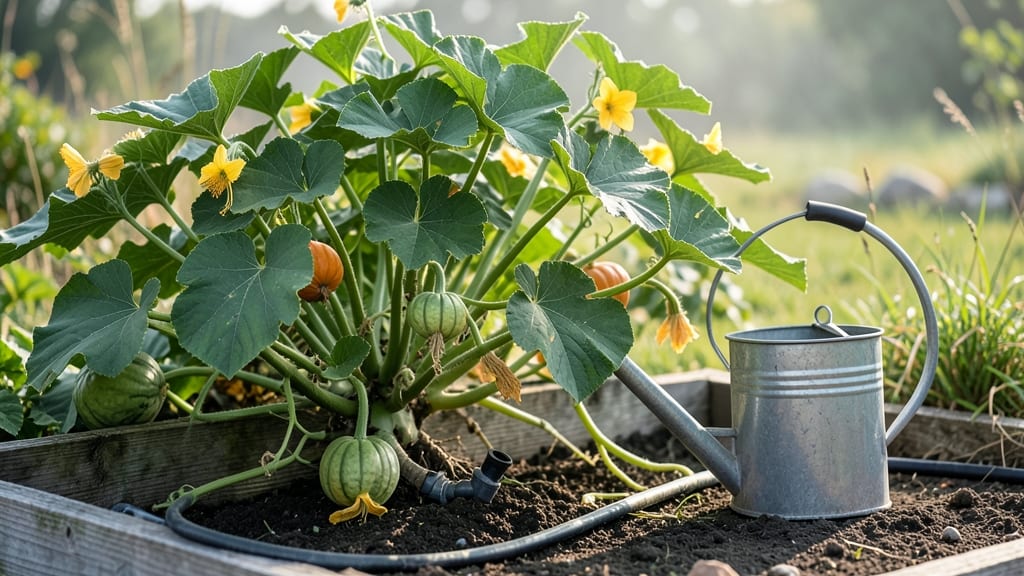
Watering pumpkin plants the right way turns a sprawling mess into a goldmine of 🎃—but one wrong move and you’ll end up with wilted vines or mushy fruit.
Pumpkin vines sprawl like thirsty giants—too little water stunts their growth, but too much drowns their roots. Mastering the exact watering rhythm is the secret to bountiful, healthy pumpkins that avoid rot and disease.
Most gardeners overcomplicate it, but the trick isn’t about how much you water—it’s about when and how. Deep soaks in the morning keep roots happy, while afternoon splashes invite fungal infections.
I’ll show you the simple schedule that works for Zone 6 (and how to tweak it for heatwaves or humidity).
By the end, you’ll know the telltale signs of thirsty (or drowned) vines, the best tools to automate watering, and why mulch is your secret weapon for consistent moisture—no guesswork required.


How much water do pumpkin plants need per week?
Pumpkins are heavy drinkers, but their water needs shift dramatically as they grow. Seedlings sip lightly, while flowering plants guzzle like athletes, and fruiting vines demand steady hydration to prevent blossom-end rot or cracked pumpkins.
The key? Deep, infrequent watering that keeps roots happy without drowning them—especially in hot climates where evaporation steals moisture faster than you can water.
I’ve tested this schedule across arid desert gardens and humid Southeast plots, and the difference between thriving vines and wilted failures comes down to soil moisture checks and adjusting for your local climate. Too much water? Roots suffocate. Too little? Fruits shrivel. Let’s crack the code for your zone.
🌱 Pro Tip: Always water at soil level, not the leaves, to avoid fungal diseases like powdery mildew. Use a moisture meter or the "squeeze test"—grab a handful of soil; if it crumbles, it’s dry. If it sticks, it’s soggy.
During the seedling stage, your pumpkins need gentle consistency. Overwatering here leads to damping-off disease, a fungal killer of young plants.
Use a spray bottle for the first week, then graduate to shallow waterings. Morning sessions are critical—they give foliage time to dry before nightfall, preventing powdery mildew.
When vines start sprawling aggressively (weeks 3–6), increase depth to 1.5 inches per watering. This encourages roots to dive deeper, making them drought-resistant later.
In arid zones, I’ve seen pumpkins wilt by noon if not watered the night before. Drip irrigation on a timer solves this—set it for 2 hours daily during heatwaves.
Flowering is the make-or-break phase. Underwater here, and your male flowers (the ones with long stems) won’t pollinate the females (the ones with tiny pumpkins at their base).
Aim for 1.5–2 inches of water every 2–3 days, but check soil moisture—sandy soil drains faster than clay. Pro move: Water at the vine’s base, not the leaves, to avoid washing away pollen.
Once fruits form, deep watering becomes non-negotiable. Pumpkins are 90% water—skimp now, and you’ll get small, misshapen gourds. In humid climates, reduce frequency to every 3–4 days to avoid root rot. Mulch heavily (straw or grass clippings) to lock in moisture.
I’ve grown 20-pound jack-o’-lanterns in Florida by sticking to this rule: "If the top inch of soil is dry, water".
Climate tweaks are everything. In desert gardens, water deeply every 2 days in summer; in Pacific Northwest humidity, stretch it to every 5 days. Always adjust for rainfall: Skip watering if you’ve had ½ inch of rain in 24 hours.
And watch for wilting leaves—they’re your plant’s SOS signal, not always a thirst cue (could be overheating or pests).
For container-grown pumpkins, the rules change. Small pots dry out 3x faster—water daily in summer and check soil moisture twice daily. Add hydrogel crystals to retain moisture, but never let containers sit in standing water. Root rot is the #1 killer of potted pumpkins.
Final rule: Never water at night. Wet foliage overnight invites fungal infections. Stick to early morning (6–9 AM) for maximum absorption and minimal waste. With this schedule, you’ll harvest plump, disease-free pumpkins—not shriveled disappointments.
Signs of overwatering vs. underwatering pumpkins (with fixes)
Pumpkins are heavy drinkers—too much water suffocates their roots, while too little shrinks their fruit. Learning to read your plants' signals is key to avoiding blossom-end rot or stunted vines.
Start by checking the soil 1 inch below the surface: it should feel moist but not soggy. Yellowing leaves or wilting despite damp soil? That’s your first clue something’s off.
Don’t panic if your pumpkins show signs of stress—most issues are reversible with the right adjustments. The trick is balancing moisture so roots breathe while vines stay hydrated.
Overwatering creates anaerobic conditions, while underwatering forces plants to compete for water, slowing fruit development. Let’s diagnose the symptoms and fix them fast.
Overwatering Pumpkins
Starts at lower leaves, spreads upward
Soft to touch, may smell sour
White mold or black spots on leaves
Fix Overwatering
Let soil dry 2-3 inches deep
Add perlite or sand to heavy soil
Remove yellow/moldy foliage
Underwatered pumpkins show crispy leaf edges and vines that wilt by midday, even after watering. The fruit may develop hard, leathery skin prematurely or crack from uneven growth.
Check soil moisture at the root zone—if it’s bone-dry, your plants are begging for water. The fix? Deep, infrequent watering to encourage strong root systems.
For underwatered pumpkins, water deeply until moisture reaches 6-8 inches down. Use a hose with a gentle spray or soaker hose to avoid disturbing the soil.
Mulch with straw or shredded leaves to lock in moisture and keep roots cool. Avoid shallow watering—it only wets the surface and encourages shallow roots.
Pay attention to blossom-end rot, a classic sign of inconsistent moisture. This calcium deficiency appears as sunken, dark spots on the fruit’s blossom end. While underwatering triggers it, overwatering worsens the problem by preventing calcium uptake. Apply crushed eggshells or calcium-rich fertilizer to the soil to prevent future outbreaks.
Pro tip: Water in the early morning to reduce evaporation and fungal risks. If your pumpkins are struggling, adjust your routine—healthy vines drink 1-2 gallons of water per day during peak growth (July-August), but they hate soggy feet.
Balance is everything, and your pumpkins will thank you with smooth, glossy skins and sweet flesh.