Shrubs
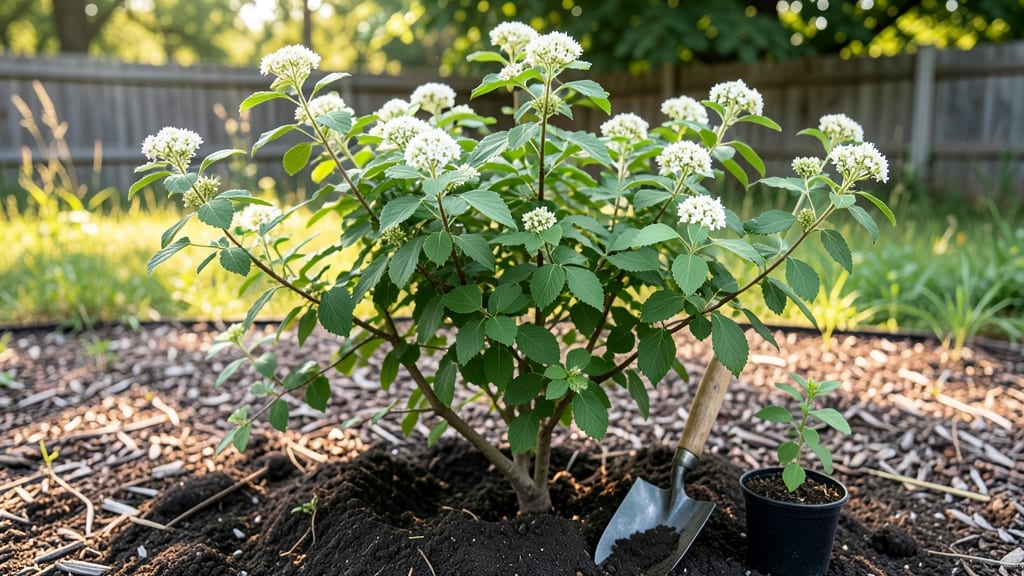
The right viburnum planting distance turns a clump of shrubs into a thriving, disease-resistant garden centerpiece 🌿 — and getting it wrong means years of pruning to fix the mess.
Picture this: You plant your viburnum too close, and by year three, the branches tangle into a dense, airless mess. Fungal spores thrive in that damp, shaded tangle, and suddenly your spring blooms are covered in powdery mildew.
Or worse, you space them too far apart, wasting space and creating gaps that look like an afterthought.
Here’s the secret: Most viburnum varieties need 4 to 6 feet of breathing room at maturity, but the exact number depends on whether you’re growing a compact dwarf variety or a towering standard shrub.
Sunlight, soil drainage, and even your local climate can tweak that spacing—so let’s break down how to get it perfect the first time.
You’ll learn the exact spacing for your viburnum type, how to adjust for small yards or windy sites, and the one pruning trick that keeps your bushes looking lush without overcrowding. No more guesswork—just a low-maintenance landscape that wows year after year.
Optimal Viburnum planting distance by species & growth habit
Viburnums are stunning landscape shrubs, but their planting distance determines whether they thrive or struggle. Different species grow at vastly different rates—some sprawl into wide bushes while others stay compact. I’ve planted Viburnum dentatum (arrowwood) and Viburnum plicatum (doublefile viburnum) side by side, and the spacing difference is night-and-day.
Let’s break down the science behind spacing to ensure your viburnums get the airflow and sunlight they need.
Proper spacing isn’t just about aesthetics—it’s about preventing fungal diseases like powdery mildew. Crowded plants trap moisture, creating the perfect breeding ground for pests and pathogens. Meanwhile, over-spreading varieties like Viburnum opulus (snowball bush) need room to develop their iconic rounded shape.
Dwarf varieties, on the other hand, can be planted closer together, making them perfect for small gardens or container growing.
Here’s the golden rule: space viburnums based on their mature width, not their current size. A young Viburnum plicatum might only be 2 feet tall, but it’ll eventually reach 10-15 feet wide.
Planting it too close means years of pruning battles. Always check the tag or plant database for mature size expectations—it’s the difference between a lush, low-maintenance hedge and a tangled mess.
Sunlight needs also influence spacing. Viburnum dentatum thrives in partial shade (4-6 hours of sun), while Viburnum carlesii (Korean spice viburnum) loves full sun. If you’re planting in a sunny spot, give each bush extra room—6-8 feet apart—to avoid leaf scorch.
In shadier areas, you can tighten spacing to 4-5 feet since they won’t spread as aggressively.
Now, let’s talk airflow—the unsung hero of viburnum care. Airflow reduces humidity around leaves, cutting fungal disease risk by up to 70%. That’s why I always space my Viburnum bodnantense (winter flowering viburnum) at least 5 feet apart, even though it’s a smaller shrub.
The trade-off? More room for your garden’s other stars to shine.
🌿
| Variety | Mature Size (HxW) | Optimal Spacing | Sunlight Needs | Airflow Notes |
|---|---|---|---|---|
| Viburnum dentatum (Arrowwood) | 6-10 ft x 6-10 ft | 5-6 ft apart | Partial shade (4-6 hrs sun) | Moderate airflow; prune to open center |
| Viburnum plicatum (Doublefile) | 10-15 ft x 10-15 ft | 8-10 ft apart | Full sun to partial shade | High airflow needed; avoid tight clusters |
| Viburnum opulus (Snowball) | 8-12 ft x 8-12 ft | 6-8 ft apart | Full sun to partial shade | Prune annually to maintain shape |
| Viburnum carlesii (Korean Spice) | 5-8 ft x 5-8 ft | 4-5 ft apart | Full sun (6+ hrs) | Needs airflow; avoid mulching too close |
| Viburnum bodnantense (Winter Flowering) | 4-6 ft x 4-6 ft | 4-5 ft apart | Partial shade | Compact; space for airflow between branches |
| Dwarf Varieties (e.g., Viburnum burkwoodii) | 3-5 ft x 3-5 ft | 3-4 ft apart | Partial shade | Ideal for containers or small gardens |
🌱 Pro Tip: Always measure spacing from the outer edge of the shrub’s canopy, not the trunk.
Dwarf viburnums like Viburnum burkwoodii are my go-to for small spaces. They max out at 3-5 feet wide, so I plant them 3-4 feet apart in containers or along borders. The key? Group them in odd numbers (3, 5, or 7 plants) for a natural, full look.
For example, three Viburnum dentatum bushes spaced 5 feet apart create a stunning, low-maintenance hedge that pollinators adore.
If you’re planting viburnums for a privacy screen, aim for 6-8 feet apart to ensure they fill in quickly.
I once planted Viburnum plicatum too close together, and it took 5 years for the gaps to close—by then, I’d already spent hours pruning to fix the mistake. Plan ahead and space them for their mature width, not their current size.
For layered garden beds, pair tall viburnums like Viburnum plicatum (back) with medium-height varieties like Viburnum dentatum (middle) and dwarf types (front). This creates depth and visual interest while ensuring each plant gets the airflow and sunlight it needs.
I’ve seen gardeners crowd the back row, only to watch the front shrubs struggle for light—don’t make that mistake!
🪴
How to adjust planting distance for soil, climate & landscape goals
Your viburnum’s planting distance isn’t one-size-fits-all—it depends on your soil type, local climate, and landscape goals. In compacted clay soil, for example, you’ll need extra spacing (6–8 feet) to prevent root competition, while well-draining loam allows tighter grouping (4–5 feet).
Windy coastal areas also demand wider spacing to avoid windburn and breakage, especially for taller varieties like Viburnum plicatum.
For privacy hedges, plant viburnums 3–4 feet apart in staggered rows to create a dense, impenetrable barrier by maturity. But in small urban yards, opt for dwarf varieties like Viburnum burkwoodii (3–4 feet tall) and space them 2–3 feet apart—just be prepared for slower fill-in.
Layering viburnums in pollinator-friendly borders? Mix taller species (6–8 feet) at the back with semi-dwarf varieties (4–5 feet) in front, leaving 5–6 feet between rows for airflow and easy maintenance.
- Compacted soil: Increase spacing to 6–8 feet to prevent root suffocation and fungal buildup.
- Windy climates: Space 8–10 feet apart to reduce wind damage and encourage bushier growth.
- Privacy hedges: Plant 3–4 feet apart in staggered rows for a seamless barrier.
- Small yards: Use dwarf viburnums spaced 2–3 feet apart for compact impact.
- Layered borders: Back row: 6–8 feet tall, front row: 4–5 feet tall, 5–6 feet between rows.
- Container gardening: Limit to one viburnum per 18-inch pot; upgrade to 24-inch pots for larger varieties.
Container gardening with viburnums? Pot size matters. A 5-gallon container works for dwarf varieties like Viburnum bodnantense, but standard viburnums need at least 18-inch pots (or larger) to prevent root binding.
If you’re creating a pollinator-friendly border, leave 5–6 feet between plants—this ensures bees and butterflies can navigate easily while giving your viburnums room to fluff out over time. Pro tip: Mulch heavily around containers to retain moisture and mimic in-ground conditions.
One of the biggest mistakes I see? Under-spreading viburnums in large landscapes. If you have 10+ feet between plants, you’ll end up with isolated clumps instead of a cohesive garden design. Instead, group them in 3–5 plant clusters with 6–8 feet between clusters for a natural, wooded look.
For windbreaks, plant in a tight grid pattern (5–6 feet apart) to create a solid barrier while still allowing airflow to reduce stress on the plants.
Adjusting spacing for sun exposure is key too. In full-sun areas, viburnums need more space (7–9 feet) to avoid heat stress and leaf scorch, while shadier spots can handle closer spacing (4–5 feet). Always measure mature sizes—not the nursery tag!—and account for 3–5 years of growth.
For example, a Viburnum opulus might start at 3 feet tall but reach 10 feet in 5 years—plan accordingly to avoid future pruning headaches.
Finally, don’t forget to prune young viburnums to encourage the right shape and spacing. In their first 2–3 years, lightly trim overlapping branches to open up the center, which improves air circulation and reduces disease risk.
This small step now saves hours of corrective pruning later—and keeps your viburnums looking their best for decades.