Watering
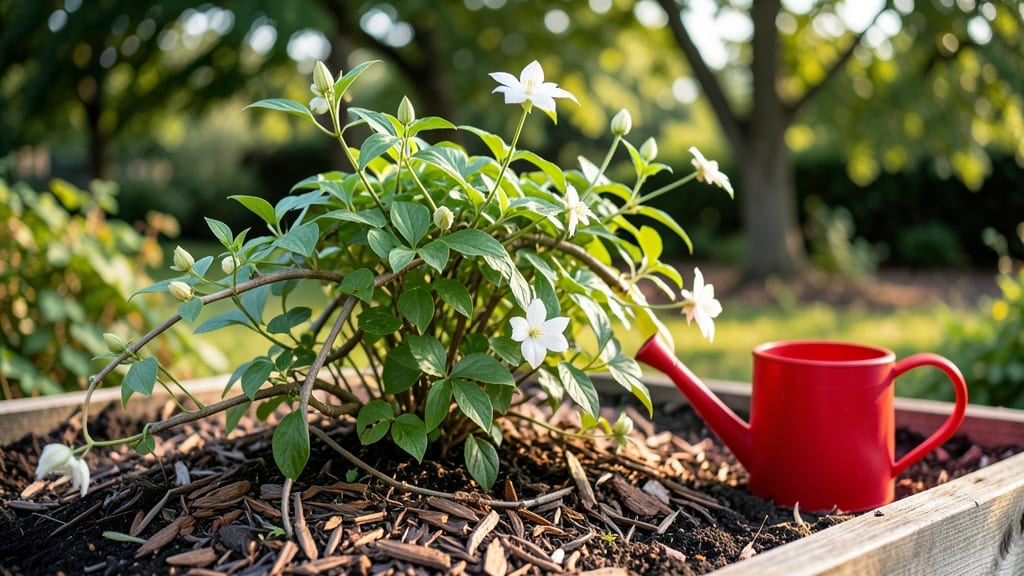
Watering clematis plants 🌸 the right way is the difference between a vine bursting with blooms and one that struggles to survive.
Ever watched your clematis wilt despite your best efforts, only to discover the problem was watering it at the wrong time or with the wrong amount? Too much or too little can turn your dream vine into a sad, leggy shadow of its potential.
Clematis roots thrive with consistent moisture but hate soggy soil—so timing matters just as much as technique. Whether you're a new gardener or a seasoned pro, mastering this balance will keep your clematis lush and flowering season after season.
Below, I’ll break down the exact watering schedule by season, the best methods to use, and how to spot when you’re over- or under-doing it. Your clematis will thank you with vibrant blooms all summer long.


Optimal watering schedule for clematis by season and growth stage
Clematis thrives when you match its watering needs to its growth stage and seasonal demands. Unlike many plants, clematis has a deep root system that requires consistent moisture but hates soggy soil.
The key is understanding when to water deeply and when to let the roots rest—especially during dormancy or peak flowering.
Your clematis’s watering routine should shift with the seasons: light and frequent in spring, deep and regular in summer, and reduced but not eliminated in fall. Soil type plays a huge role too—sandy soil drains faster, while clay soil holds moisture longer.
Adjust your schedule based on what your clematis’s roots are telling you through the soil’s moisture level.
| Season/Growth Stage | Watering Frequency | Depth | Key Notes |
|---|---|---|---|
| Dormancy (Winter) | Bi-weekly (every 10-14 days) | Light (1-2 inches) | Prevent soil from drying completely; avoid overwatering |
| Early Spring (New Growth) | Every 3-4 days | 6-8 inches deep | Increase gradually as leaves emerge; mulch to retain moisture |
| Summer (Peak Bloom) | Every 2-3 days (daily in heatwaves) | 8-12 inches deep | Morning watering preferred; check soil 2 inches down |
| Late Summer (Post-Bloom) | Every 4-5 days | 6-8 inches deep | Reduce frequency to prepare for dormancy |
| Fall (Pre-Dormancy) | Every 5-7 days | 4-6 inches deep | Encourage root strengthening; avoid wet foliage |
In early spring, when your clematis is waking from dormancy, focus on gradual hydration. The goal is to encourage new growth without shocking the roots. Water deeply every 3-4 days, ensuring moisture reaches 6-8 inches down.
Use a soil moisture meter or your finger to check—if the top 2 inches are dry, it’s time to water.
Summer is when your clematis demands the most attention. During peak flowering, water every 2-3 days—or daily during heatwaves—to prevent buds from dropping. Aim for 8-12 inches of depth per watering session.
The best time to water is early morning, as this reduces fungal risks and allows foliage to dry quickly. Avoid wetting the leaves to prevent powdery mildew, a common issue for clematis.
As summer transitions to fall, your clematis begins preparing for dormancy. Reduce watering to every 5-7 days and shallow the depth to 4-6 inches. This tapering approach helps the plant harden off naturally.
Mulch with organic matter like shredded bark to insulate roots and retain moisture without over-saturating the soil.
Winter watering is often misunderstood. While your clematis is dormant, you still need to keep the soil slightly moist—but never soggy. Water every 10-14 days with just 1-2 inches of depth.
This prevents the roots from drying out completely, which can stress the plant when it wakes in spring. If your region experiences freezing temperatures, reduce watering further to avoid root rot.
Soil type dramatically affects your watering schedule. In sandy soil, which drains quickly, you may need to water daily in summer, while clay soil can hold moisture for 5-7 days between waterings.
To test your soil’s moisture retention, dig a 6-inch hole near the base of your clematis. If it’s dry at that depth, it’s time to water regardless of the season.
One of the biggest mistakes gardeners make is overhead
Common watering mistakes that kill clematis blooms (and how to fix them)
If your clematis vine looks healthy but refuses to bloom, your watering routine might be the culprit. Clematis plants are surprisingly sensitive to watering inconsistencies, and even small mistakes can lead to stunted growth or root rot.
The key is understanding how much water your clematis truly needs—and when. Many gardeners unknowingly make these critical errors that sabotage their blooms.
For example, I once had a clematis that thrived in every way except flowering—until I realized I was watering it at the wrong time of day. A simple adjustment transformed it into a bloom machine within weeks.
Let’s diagnose the most common watering mistakes and how to fix them before your clematis gives up on you.
⚠️ Warning: Overwatering During Dormancy Is a Death Sentence
Clematis enter dormancy in winter, and their roots need minimal moisture to survive. Overwatering during this period suffocates the roots, leading to rot and death. If your clematis looks wilted or mushy in late fall/winter, you’re likely overdoing it. Fix it: Reduce watering to once every 2-3 weeks and only when the soil is bone-dry.
Another frequent mistake is overhead watering, which soaks the foliage and invites fungal diseases like powdery mildew. I’ve seen clematis vines develop unsightly white patches because of this habit. The solution?
Use a soaker hose or drip irrigation to deliver water directly to the root zone. This keeps the leaves dry while ensuring the roots get the hydration they need.
Inconsistent moisture is another silent bloom killer. Clematis roots thrive in evenly moist soil, but many gardeners swing between drought stress and waterlogging. To fix this, I recommend deep watering—soaking the soil 6-8 inches down—every 3-5 days during the growing season.
Use your finger to check moisture: if the top 2 inches of soil feel dry, it’s time to water.
Let’s not forget watering at the wrong time of day. Evening watering leaves clematis foliage damp overnight, creating the perfect conditions for fungal infections. Always water in the early morning (before 10 AM) to allow leaves to dry quickly.
Pro tip: If you must water in the evening, avoid the foliage entirely and focus on the base of the plant.
Finally, ignoring soil drainage can turn your clematis into a soggy mess. Clematis roots hate sitting in water, and poor drainage leads to root rot. If your plant’s soil feels compacted or water pools after rain, amend it with organic matter like compost or perlite.
A well-draining soil mix ensures excess water flows away, keeping roots happy and blooms abundant.
Take a moment to assess your current watering routine. Are you guilty of any of these mistakes? With these fixes, your clematis will thank you with vibrant blooms all season long. 🌸