Watering
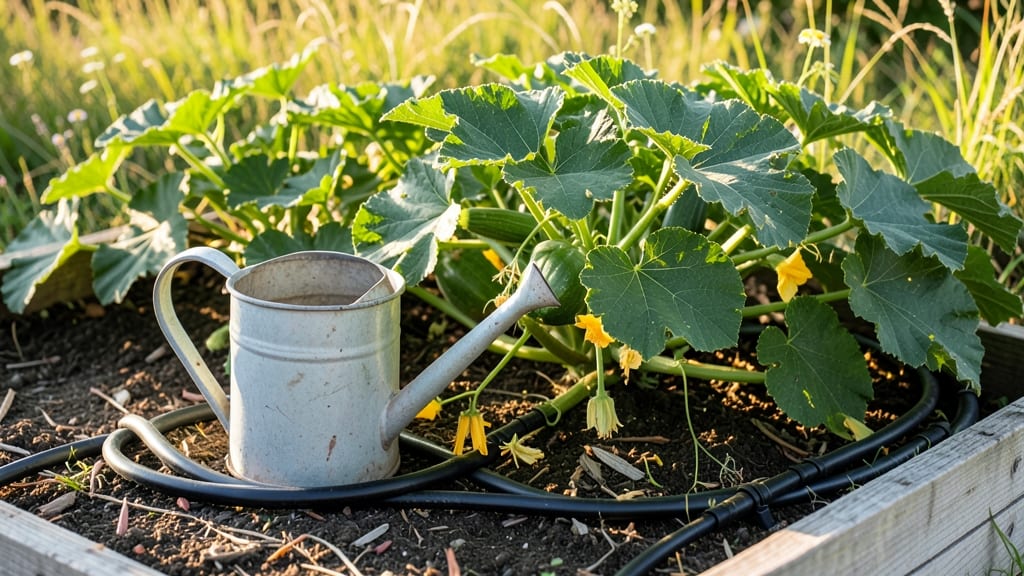
Watering squash plants properly is the secret weapon behind those 10-pound zucchinis and sprawling pumpkins—because inconsistent moisture turns vines into sad, wilted shadows instead of productive powerhouses. 🌱 I’ve watched squash plants go from thriving to giving up in a week just because of watering mistakes, and the fix is simpler than you’d think.
The golden rule? Deep watering—soaking the soil 6-8 inches down twice a week instead of light sprinkles every day. Squash roots need that deep drink to stay strong, especially when fruits start forming.
Overhead watering wets the leaves (and invites disease), while drip irrigation keeps the soil consistently moist without wasting water. Mulch is your best friend here—it locks in moisture and keeps soil temps steady.
You’ll know you’re doing it right when the vines stay firm and glossy, not limp or yellowing. Too little water? Flowers drop off. Too much? Roots rot and fruits develop bitter spots.
The key is balance—adjust based on your squash type (zucchini needs more frequent water than butternut squash) and weather. A quick finger test in the soil tells you everything you need to know.
This method works for every squash variety, from bush types to sprawling vines, and cuts down on pests and diseases by keeping plants healthy. Once you master it, your harvest will be the envy of the neighborhood—and your dinner table. Let’s get those roots drinking deep!
📚 In This Guide
- What you need
- Instructions
- Tips and common mistakes
- Wrapping up and next steps
What you need
- ● Water source: Garden hose with adjustable nozzle (or a watering can for smaller gardens) 💦
- ○ Drip irrigation kit (optional but recommended): Soaker hoses or micro-sprinklers (10–20 ft. per row) for even moisture.
- ● Mulch: Straw, grass clippings, or wood chips (2–3 inches thick) to retain soil moisture.
- ○ Soil moisture meter (optional): Helps track root-zone hydration without guesswork.
- ● Timer (for automation): A programmable sprinkler or drip system timer to schedule watering.
- ● Well-draining soil (amend with compost if needed).
- ● Sunny spot (6–8+ hours of direct sunlight daily).
- ● Established squash plants (or seeds sown 1 inch deep, 2–3 feet apart).
- ● Morning watering routine (best to avoid evening dampness).
Step-by-Step guide to watering squash plants for healthy growth
Here's the foolproof method I use to keep squash vines thriving and producing all season.
💧 Step 1: Water Deeply at Planting and After Transplanting
When you first plant squash seedlings or transplant mature plants, give them a deep watering that soaks the soil to a depth of 12-15 inches. This establishes strong root systems right away. I use a garden hose with a gentle spray nozzle to avoid disturbing the soil surface. Water until you see moisture emerge from the drainage holes at the bottom of the pot or container.
Squash roots are shallow but spread wide, so this initial deep watering encourages them to grow outward quickly. The key is patience—don't rush. Let the water penetrate slowly, and avoid puddling around the stems. You'll know it's enough when the top 6 inches of soil feel uniformly moist.
💧 Step 2: Maintain Consistent Moisture During Flowering
Once your squash plants start flowering, they need 1-1.5 inches of water per week, delivered consistently. I water mine every 2-3 days during hot, dry weather, but I always check the soil first. Stick your finger 2 inches deep—if it feels dry, it's time to water. If it's still damp, wait another day.
This is the most critical phase for fruit set. Inconsistent moisture causes blossoms to drop before they can form squash. Water in the early morning to let foliage dry during the day, which prevents fungal diseases like powdery mildew. A soaker hose or drip irrigation system works best—it delivers water directly to the roots without wetting the leaves.
💧 Step 3: Increase Water During Fruit Development
When squash begin to form and grow, they demand even more moisture. Aim for 1.5-2 inches of water per week, increasing to 2-3 inches during extreme heat or drought. I monitor my plants daily during this stage. If the soil feels dry just 1 inch below the surface, it's time to water again.
Focus on watering at the base of the plant, avoiding the leaves to prevent disease. A good rule of thumb is to water until the soil is saturated to a depth of 8-10 inches. You'll see the vines perk up and leaves stay turgid—these are signs your plants are getting the right amount. Mulching with 2-3 inches of straw or grass clippings helps retain moisture and keeps the soil cool.
⏰ Step 4: Adjust for Weather and Soil Conditions
Watch the weather forecast and adjust your watering schedule accordingly. After heavy rain, skip watering entirely—soggy soil can suffocate roots. On the other hand, during heatwaves, you might need to water daily. I always check the forecast and adjust my routine to match the conditions. For example, if rain is predicted, I reduce watering the day before to avoid over-saturation.
Different soils hold moisture differently. Sandy soil drains quickly and may need watering every 1-2 days, while clay soil holds moisture longer and might only need watering every 4-5 days. Amend your soil with compost to improve its water-retention capabilities. This helps maintain a consistent moisture level, which is crucial for squash plants.
🌿 Step 5: Taper Off as Harvest Season Approaches
As your squash plants near the end of their productive season, you can gradually reduce watering. Once you start harvesting regularly, cut back to 1 inch of water per week. This helps the plants focus their energy on producing fruit rather than growing new foliage. I usually stop watering entirely 1-2 weeks before the first frost, allowing the plants to mature and prepare for dormancy.
Pay attention to the plants themselves—they'll tell you what they need. If leaves start to wilt slightly in the afternoon but perk up in the morning, your watering is likely just right. Overwatering at this stage can lead to rot, so it's better to err on the side of slightly less water. Proper watering now ensures your squash plants will give you a bountiful harvest before the season ends.
Tips & tricks for healthy squash vines
These simple strategies will help you avoid common watering mistakes and keep your squash plants thriving all season long.
Soil Depth Matters: When you're doing that initial deep watering in Step 1, don't just water until the top feels moist. Use a long screwdriver or soil probe to check that moisture reaches all the way down to 12-15 inches. I've seen gardeners water for 20 minutes thinking they've soaked the soil, only to find it's still dry 6 inches down. The key is patience—let the water penetrate slowly rather than rushing through.
Morning Watering is Non-Negotiable: In Step 2, when you're maintaining consistent moisture, watering in the early morning is absolutely critical. I've learned this the hard way after watching plants develop powdery mildew from water sitting on leaves all day. Water by 8 AM at the latest, and avoid evening watering entirely. This simple habit dramatically reduces disease risk while giving foliage time to dry completely.
Visual Cues Over Guesswork: Instead of relying solely on the 1-1.5 inch weekly measurement in Step 2, develop your own visual cues. Healthy squash leaves should be firm and upright—if they start wilting by midday, it's time to water. I also check the soil color: dark, moist soil means you're good; pale, dry soil means it's time to water again. This helps you adjust for your specific microclimate and soil type.
Mulch is Your Best Friend: The 2-3 inches of mulch mentioned in Step 3 isn't just decorative—it's essential. I've seen squash yields double in the same garden just by adding straw mulch. The mulch locks in moisture, keeps roots cool, and prevents soil-borne diseases from splashing onto leaves. Plus, it saves you time by reducing how often you need to water during hot spells.
Pro Tips for Watering Squash Plants
- These simple strategies will help you avoid common watering mistakes and keep your squash plants thriving all season ...
- Soil Depth Matters: When you're doing that initial deep watering in Step 1, don't just water until the top feels mois...
- Morning Watering is Non-Negotiable: In Step 2, when you're maintaining consistent moisture, watering in the early mor...
Frequently asked questions
Got questions about keeping your squash plants thriving with the perfect watering routine? Here are some of the most common concerns—and their answers—to help you grow a lush, productive harvest.
How often should I water squash plants?
Squash plants need 1 to 2 inches of water per week, especially during flowering and fruiting. Water deeply 2-3 times per week (or daily in extreme heat) to encourage strong root growth. Morning watering is best to reduce evaporation and fungal risks.
What’s the best way to water squash plants to prevent disease?
Avoid overhead watering—it can spread fungal diseases like powdery mildew. Instead, use drip irrigation or soaker hoses to deliver water directly to the soil. Keep foliage dry, and water at the base to minimize moisture on leaves.
Can I water squash plants too much?
Yes! Overwatering can lead to root rot, blossom-end rot, or weak vines. Always check soil moisture by sticking your finger 1-2 inches deep—water only if it’s dry. Well-draining soil and mulch help prevent soggy roots.
Should I adjust watering during extreme heat or drought?
During heatwaves, increase watering to daily deep soakings (early morning). In droughts, use mulch to retain moisture and consider shade cloth to protect plants. Watch for wilting leaves—they’re a sign to water immediately.
What if my squash plants look wilted even after watering?
Wilting can mean underwatering, overwatering, or pest stress. Check soil moisture, inspect roots for rot, and look for pests like squash vine borers. If roots are healthy but soil is dry, water deeply again and monitor for improvement.
Can I use rainwater or collected water for squash plants?
Rainwater is ideal—it’s chemical-free and mimics natural hydration. Just avoid water with high salt or pesticide runoff. If using collected water, let it sit for 24 hours to settle debris before watering.
Wrapping up and next steps
Mastering the art of watering squash plants is your secret weapon for a thriving garden! 🌱 By keeping roots deep-soaked and consistent, you’ll reward yourself with robust vines, plump fruits, and fewer pests. Remember: morning watering and mulching are your best friends—now go show those squash some love!
Ready to take it further? Experiment with drip irrigation or try companion planting (like marigolds!) to boost your harvest even more. Happy gardening! 🌿