
Diseases
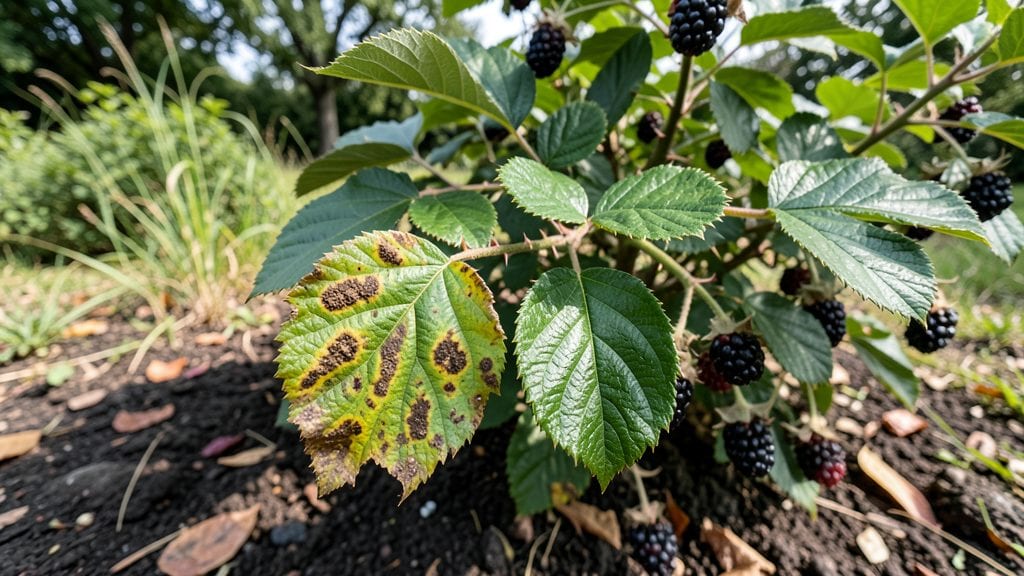
Blackberry plant diseases can turn your thriving brambles into a sad, spotted mess if you don’t catch them early.
I’ve seen anthracnose turn lush canes black in weeks, and rust leave my berries looking like they’d been dusted with orange powder—both disasters that spread faster than weeds in a spring rain. The good news? Most of these problems have simple fixes if you know what to look for.
Cultural practices like proper spacing, air circulation, and removing old canes after harvest cut down on 80% of disease risks. I’ve found that pruning in late winter—when the plant’s dormant—keeps fungal spores from overwintering on dead growth.
Organic sprays like neem oil or copper fungicide work well for early signs, but the real secret is stopping problems before they start with clean tools and healthy soil.
You’ll spot the difference in just a few weeks: no more wilting leaves, no mysterious holes in berries, and plants that keep producing sweet, juicy fruit all season. The key is acting fast—once those spots or pustules appear, it’s already too late for half the battle.
Let’s get your blackberries back to their best before next year’s harvest.
This works for both wild and cultivated varieties, whether you’re growing in a backyard patch or a small urban garden. The same principles apply no matter your setup—just adjust the scale. Here’s how to keep those canes strong and your berries bountiful.
Root Causes Of Blackberry Ailments
Blackberry plants, like any living organism, are susceptible to diseases when their balance is disrupted. Understanding why these issues arise is the first step toward prevention and effective treatment. Below, we break down the key factors that make blackberry plants vulnerable to pathogens, environmental stress, or pests—often working in combination.
Fungal diseases like anthracnose (caused by Colletotrichum spp.) and botrytis fruit rot (caused by Botrytis cinerea) thrive in environments where moisture lingers. Here’s why:
- High Humidity: Blackberries grow best in warm, humid climates, but excessive moisture—especially on leaves and fruit—creates the perfect breeding ground for fungal spores. Spores germinate and infect plants when surfaces remain wet for more than 6–12 hours.
- Poor Air Circulation: Dense canopies or overcrowded plants trap humidity, preventing airflow. Without circulation, spores can’t disperse, but they also can’t dry out, leading to rapid spread.
- Warm, Wet Seasons: Fungal growth peaks in temperatures between 60–85°F (15–29°C). If your region experiences prolonged rain or morning dew without drying periods, fungal pressure skyrockets.
💡 Pro Tip: Prune plants to improve airflow and avoid overhead watering. If fungal diseases are recurrent, consider resistant cultivars like 'Chester' or 'Natchez,' which tolerate humidity better.
Bacterial diseases such as bacterial canker (Pseudomonas syringae) and bacterial leaf scorch exploit weaknesses in the plant’s defenses. The primary triggers include:
- Physical Damage: Pruning cuts, thorn injuries, or hail wounds create entry points for bacteria. Even minor abrasions can let pathogens invade, especially if tools aren’t sterilized between cuts.
- Splashed Water: Rain or irrigation water can carry bacterial cells from infected plant debris (like fallen leaves) and splash them onto healthy tissue.
- Stress from Other Factors: Drought, nutrient deficiencies, or extreme temperatures weaken the plant’s cuticle (its protective skin), making it easier for bacteria to colonize.
🔥 Actionable Fix: Always sterilize pruners with a 10% bleach solution (1 part bleach to 9 parts water) between cuts. Remove and destroy (don’t compost) infected plant material immediately to prevent reinfection.
Blackberries require a precise balance of nutrients to stay healthy. When deficiencies or excesses occur, the plant becomes more susceptible to diseases. Common culprits:
| Nutrient Issue | How It Affects Disease Risk | Signs to Watch For |
|---|---|---|
| Nitrogen Deficiency | Reduces plant vigor, making it harder to fight off pathogens. Weak stems and leaves are easier targets for fungi and bacteria. | Yellowing lower leaves, stunted growth, sparse foliage. |
| Potassium Deficiency | Potassium strengthens cell walls, which act as a barrier against invaders. A deficiency leaves plants more prone to root rot and fungal infections. | Brown leaf edges, weak stems, poor fruit set. |
| Excess Moisture + Poor Drainage | Leads to root rot (Phytophthora spp.), where roots suffocate and become prime targets for soil-borne pathogens. | Wilting despite moist soil, blackened roots, foul-smelling soil. |
🌡️ Soil Test Solution: Conduct a soil test every 2–3 years to check pH (ideal: 5.5–6.5) and nutrient levels. Amend soil with compost or balanced fertilizer (e.g., 10-10-10) to correct imbalances before planting or pruning season.
While pests like Japanese beetles, spider mites, or thrips don’t cause diseases directly, their feeding habits damage plant tissue, creating perfect entry points for pathogens. For example:
- Japanese Beetles: Their voracious appetite for leaves and fruit leaves behind chewed tissue, which can trap moisture and invite fungal growth like anthracnose.
- Spider Mites: They suck plant sap, weakening cells and making them more susceptible to bacterial infections. Their webbing also traps humidity against leaves.
- Thrips: These tiny insects transmit virus diseases (e.g., blackberry yellow mottle virus) while feeding, which can’t be cured—only managed.
🎯 Prevention Strategy: Monitor plants weekly for pests, especially during peak seasons (late spring to summer). Use neem oil or insecticidal soap for mild infestations, and introduce beneficial predators like ladybugs or lacewings to control populations naturally.
By addressing these root causes—humidity, wounds, nutrient gaps, and pests—you’ll dramatically reduce your blackberry plants’ susceptibility to diseases. The key is proactive care: healthy plants are resilient plants!
Quick Fixes for Common Blackberry Ailments
Blackberry plants are tough, but they’re not invincible—fungal infections, pests, and environmental stress can turn your thriving bramble into a sad, wilted mess. The good news? Most issues have simple, actionable solutions if you catch them early.
Below, we’ll map out exact fixes for the most common blackberry diseases and pests, along with prevention tips to keep your plants healthy long-term.
Fungal infections thrive in damp, humid conditions, so speed is key—act fast to prevent them from jumping to other plants.
🔥 Anthracnose: Prune and Protect
Fix:
- Remove infected leaves and canes 🔪—cut them off at the base and dispose of them in the trash (not compost).
- Apply a fungicide (copper-based or neem oil) to healthy canes and soil around the plant. Reapply every 7–10 days until new growth appears.
- Thin out canes to improve airflow—crowded plants stay damp longer, fueling fungus.
Prevention Tips: ✅ Water at the base (avoid overhead sprinkling). ✅ Space plants 3–4 feet apart for better airflow. ✅ Clean pruners with rubbing alcohol between cuts to avoid spreading spores.
🌡️ Powdery Mildew: Scrub and Shield
Fix:
- Wipe down leaves with a mild soap solution (1 tsp dish soap + 1 gallon water) using a soft cloth or sponge. Do this on a dry, sunny day to help leaves dry faster.
- Spray with neem oil or baking soda mix (1 tsp baking soda + 1 quart water + a few drops of soap) every 5–7 days until mildew disappears.
- Remove heavily infected canes—if powdery mildew covers more than 30% of a cane, prune it out.
Prevention Tips: ✅ Plant in full sun (6+ hours daily)—powdery mildew loves shade. ✅ Avoid late-season nitrogen fertilizers—too much leafy growth = more mildew targets. ✅ Mulch with straw (not wood chips) to keep soil dry.
💀 Root Rot: Save Your Roots Fast
Fix:
- Stop watering immediately—let the soil dry out completely for 3–5 days.
- Improve drainage—amend the soil with compost or perlite to loosen heavy clay.
- Repot or transplant if the plant is in a container—use a well-draining mix (50% potting soil, 30% perlite, 20% compost).
- Apply a fungicide (like Mycorrhizal fungi or hydrogen peroxide spray) to stimulate root recovery.
Prevention Tips: ✅ Use raised beds or containers if your soil drains poorly. ✅ Water deeply but infrequently—blackberries hate soggy roots! ✅ Avoid over-fertilizing—too much nitrogen = weaker roots.
Pests like Japanese beetles, spider mites, and aphids can defoliate blackberries in days. Manual removal + natural repellents work best.
👨🍳 Japanese Beetles: Handpick and Trap
Fix:
- Handpick beetles in the early morning (they’re sluggish then) and drop them in soapy water.
- Set up traps (commercial or DIY—use a bucket of soapy water with a funnel baited with grape or berry scent).
- Spray with neem oil or kaolin clay (a natural barrier that beetles hate).
Prevention Tips: ✅ Plant trap crops (like marigolds or roses) nearby to lure beetles away. ✅ Prune and clean up debris—beetles overwinter in leaf litter. ✅ Apply milky spore bacteria (a natural soil treatment) to reduce grubs long-term.
🕷️ Spider Mites: Blast Them Away
Fix:
- Spray plants with water (a strong stream from the hose) to knock off mites and webs.
- Use insecticidal soap or neem oil—spray both sides of leaves and repeat every 3–5 days.
- Introduce predator mites (like Phytoseiulus persimilis) for a natural solution.
Prevention Tips: ✅ Keep plants well-watered—mites thrive in drought stress. ✅ Use reflective mulch (aluminum foil or silver plastic) to disorient mites. ✅ Inspect new plants before bringing them home—mites spread fast!
Even after treating diseases or pests, proactive care ensures your blackberries stay strong.
💡 Boost Immunity with These Tricks
- Fertilize right—use a balanced 10-10-10 fertilizer in early spring, then switch to low-nitrogen (5-10-10) in summer to avoid weak growth.
- Prune properly—remove dead, diseased, or crossing canes in late winter to improve airflow.
- Mulch correctly—use straw or pine needles (not wood chips) to keep soil moist but not soggy.
⏰ Seasonal Checklist for Healthy Blackberries
| Season | Task | Why It Matters |
|---|---|---|
| Early Spring | Prune old canes, apply fungicide | Removes winter-damaged growth, prevents early infections |
| Late Spring | Monitor for pests, thin fruit | Reduces overcrowding, deters beetles |
| Summer | Water deeply, check leaves weekly | Prevents drought stress and fungal outbreaks |
| Fall | Clean up debris, fertilize lightly | Reduces overwintering pests and diseases |
Final Pro Tip: 🎯 When in doubt, isolate infected plants—quarantine them for a week while treating to stop the spread. Most blackberry diseases are 100% preventable with consistent care, so don’t wait until it’s too late!
Frequently asked questions about blackberry plant diseases
What are the first signs that my blackberries are infected with a disease?
Look for dark spots on leaves (anthracnose), white powdery coatings (mildew), or blackened canes (root rot). Berries may develop rust-colored patches or moldy growth—these are clear red flags. Check both leaves and fruit regularly, especially after rain, as moisture accelerates spread.
Can I save my blackberry plants if they already have fungal diseases like anthracnose?
Yes, but act fast! Prune infected canes immediately and dispose of them in the trash (not compost). Apply a copper fungicide or neem oil every 7–10 days and thin out crowded growth to improve airflow. With early treatment, you can often recover 80% of your plant’s health.
Why do my blackberries keep getting powdery mildew even after treatment?
Powdery mildew thrives in shady, humid conditions and overcrowded plants. Move your blackberries to full sun (6+ hours daily) and avoid late-season nitrogen fertilizers, which encourage leafy growth. Mulch with straw (not wood chips) to keep soil dry, and space plants 3–4 feet apart for better airflow.
Is it safe to compost blackberry leaves with disease spots?
No—never compost infected plant material. Fungal spores and bacteria can survive composting and reinfect your garden. Instead, bag and trash diseased leaves or burn them (if local regulations allow). This prevents the cycle of reinfection next season.
How can I prevent blackberry diseases before they start?
Focus on proactive care: sterilize pruners with rubbing alcohol, water at the base (avoid overhead sprinkling), and remove old canes after harvest. Use resistant varieties like 'Chester' or 'Natchez,' and apply a preventative fungicide (like neem oil) in early spring before spores spread.