
Planting
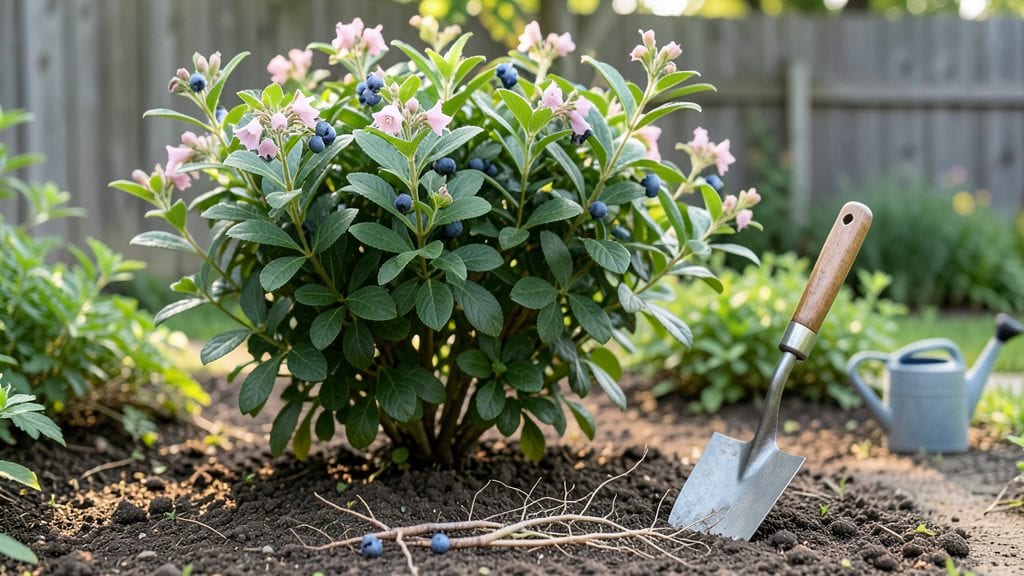
Here are blueberry planting tips you won’t want to skip—three pruning seasons and a harvest that lasts from summer into fall. 🌿 I learned the hard way—skipping those trims means fewer berries and more tangled branches, but once you get the rhythm, your bushes become the most productive plants in the yard.
The secret starts with soil so acidic your coffee grounds won't cut it—you need a pH between 4.5 and 5.5, and the right spot that gets at least six hours of sun daily.
Northern highbush varieties like 'Bluecrop' thrive in cooler climates, while southern types such as 'Climax' handle heat better. Rabbit-eye blueberries need even more warmth but reward you with bigger berries.
Plant in late fall or early spring when the soil is workable but not soggy, and space bushes 4 to 6 feet apart—crowding leads to disease and smaller yields.
Bare-root plants establish faster than potted ones, but both need a mound of soil to keep roots from rotting in wet weather.
📚 In This Guide
- What you need
- Instructions
- Tips and common mistakes
- Wrapping up and next steps
What you need
- ● Blueberry plants: 3–5 dwarf or semi-dwarf bushes (choose southern-highbush, northern-highbush, or rabbiteye varieties based on your climate zone).
- ● Well-draining soil: Acidic soil (pH 4.5–5.5). Test your soil with a blank">home test kit or send a sample to a local extension office.
- ● Organic matter: Peat moss, pine bark fines, or compost (mix 2–3 inches into the top 12 inches of soil).
- ● Fertilizer: Acid-loving plant fertilizer (e.g., blank">Espoma Azalea, Rhododendron & Holly) or cottonseed meal (follow package instructions).
- ● Mulch: Pine needles, wood chips, or shredded bark (2–4 inches thick to retain moisture and acidity).
- ● Watering system: Drip irrigation or soaker hoses (blueberries need 1–1.5 inches of water per week).
- ● Pruning tools: Bypass pruners (for clean cuts).
- ● Loppers (for thicker branches).
- ● Garden shears (for shaping).
- ● Gloves & protective gear: Long sleeves and gloves (blueberry bushes have thorns!).
- ● Soil pH adjusters: Aluminum sulfate or sulfur (if your soil is too alkaline).
- ● Blueberry plant cages or trellises: For support as bushes grow (especially for trailing varieties).
- ● Bird netting: To protect ripening berries from hungry birds. 🐦
- ● Mulch volcano blocker: A small ring of stones or metal to keep mulch from piling around the trunk (prevents rot).
- ● Plant markers: Labels to track varieties and pruning schedules.
Step-by-Step instructions for planting blueberries
Here's how to plant blueberries for a bountiful harvest—focus on soil prep and spacing first.
🌱 Step 1: Choose the Right Location and Soil
Blueberries thrive in acidic soil (pH 4.5-5.5) and need 6-8 hours of sunlight daily. Test your soil first—if it's alkaline, mix in sulfur or peat moss to lower the pH. I dig a hole twice as wide as the root ball but only as deep as the container it came in. This prevents burying the graft union if you're planting a named variety.
Work in 2-3 inches of compost at the bottom of the hole to give roots a nutrient boost. Blueberries hate soggy roots, so if your area drains poorly, raise the planting mound by adding a layer of gravel at the bottom before adding soil. The goal is well-draining soil that stays moist but never waterlogged.
🪴 Step 2: Plant Blueberry Bushes at the Right Depth
Place the plant in the hole so the top of the root ball sits 1-2 inches above ground level. This prevents soil from washing into the graft union during watering. Fill the hole with soil, pressing gently to remove air pockets but not compacting too tightly. The roots need room to spread.
Water deeply right after planting to settle the soil and remove any air gaps. You'll see the soil sink slightly—this is normal. Mulch around the base with 3-4 inches of pine needles or wood chips to keep roots cool and maintain acidity. Keep mulch 3 inches away from the stem to prevent rot.
☀️ Step 3: Water and Fertilize for Strong Growth
Water 2-3 times per week for the first month, keeping the soil evenly moist but not soggy. Blueberries are drought-tolerant once established, but young plants need consistent moisture. I check by sticking my finger 1 inch into the soil—if it feels dry, it's time to water.
Wait 6-8 weeks before fertilizing. Use a slow-release acid-loving plant fertilizer in early spring and again after harvest. Avoid high-nitrogen fertilizers—they encourage leafy growth at the expense of fruit. You'll know you're doing it right when new growth appears within 3-4 weeks.
✂️ Step 4: Prune for Shape and Fruit Production
Prune in late winter or early spring before new growth starts. Remove dead, diseased, or crossing branches first. Then cut back 1/3 of the oldest wood to encourage new growth. This keeps the bush productive and prevents overcrowding. You'll see new buds forming along the remaining branches within 2-3 weeks.
After harvest, do a light pruning to shape the bush and remove any suckers growing from the base. These compete with the main plant for nutrients. Prune in stages—never remove more than 1/3 of the bush in one season. This ensures steady fruit production year after year.
Tips & tricks for perfect blueberry planting
Planting blueberries for a bountiful harvest takes more than just digging a hole—these key tricks will help you avoid common pitfalls and set your bushes up for success from day one.
Soil pH is Non-Negotiable: Don't skip the soil test! Blueberries absolutely refuse to thrive in alkaline soil. If your test shows pH above 5.5, mix in sulfur or peat moss until you reach that perfect 4.5-5.5 range. I've seen gardeners skip this step and wonder why their bushes produce tiny, tart berries instead of sweet, plump ones. The pH affects everything from root health to flavor development.
Planting Depth Matters More Than You Think: That 1-2 inch elevation above ground level in Step 2 isn't just a suggestion—it's crucial. When you bury the graft union (the bump where the rootstock meets the scion), you're essentially cutting off the plant's future growth potential. I once planted a bush too deep and spent two years waiting for it to produce while my neighbor's properly planted bushes fruited annually. Mark the graft union with a ribbon if you're unsure where it is.
Watering Wisdom for Young Plants: The 2-3 times per week guideline in Step 3 is your baseline, but timing matters just as much as frequency. Water in the morning so leaves have all day to dry, preventing fungal diseases. I've seen blueberry bushes develop powdery mildew from evening watering—don't make my mistake! And when you water, soak the soil 6 inches deep to encourage deep root growth. Shallow watering keeps roots near the surface where they dry out quickly.
Pruning Payoff: That 1/3 of oldest wood you're removing in Step 4 might seem drastic, but it's what keeps your bush productive for decades. I've had gardeners tell me they're too scared to prune, and their bushes end up with tangled branches and poor fruit production. The key is consistency—prune the same amount each year, and you'll maintain that perfect balance between old wood (which bears fruit) and new growth (which becomes next year's fruit wood).
Pro Tips for Blueberry Planting Tips
- Planting blueberries for a bountiful harvest takes more than just digging a hole—these key tricks will help you avoid common pitfalls and set your bushes up for success from day one.
- Soil pH is Non-Negotiable: Don't skip the soil test!
- Planting Depth Matters More Than You Think: That 1-2 inch elevation above ground level in Step 2 isn't just a suggestion—it's crucial.
Frequently asked questions
Got questions about growing your own blueberry patch? You’re not alone! Here are answers to the most common queries to help you plant with confidence and avoid pitfalls.
When is the best time to plant blueberries?
Plant blueberries in early spring (just as new growth begins) or late fall (at least 6 weeks before the first frost). This gives roots time to establish before extreme temperatures. Southern climates can plant in winter, but avoid summer—heat stress slows root growth.
How long does it take for blueberry bushes to produce fruit?
Patience pays off! Most blueberry varieties take 2–3 years to bear fruit after planting. Dwarf varieties may fruit sooner (1–2 years), while larger bushes can take up to 4 years. Keep soil healthy and prune regularly to speed up fruiting.
Can I grow blueberries in containers or small spaces?
Dwarf varieties (like ‘Top Hat’ or ‘Peach Sorbet’) thrive in 5-gallon pots or raised beds. Use well-draining, acidic soil (pH 4.5–5.5) and fertilize with organic matter like peat moss. Containers need winter protection in cold climates—wrap pots in burlap or move them indoors.
What pests or diseases should I watch for, and how do I prevent them?
Common threats include blueberry maggots, aphids, and fungal diseases like botrytis. Prevent pests with row covers (for maggots) and neem oil (for aphids). Prevent disease by spacing plants for airflow, avoiding overhead watering, and mulching with pine needles (natural acidifier + fungal deterrent).
Do blueberry bushes need winter care?
Yes! In Zone 5 or colder, protect young bushes with mulch (straw or leaves) and wrap the crown in burlap. Established bushes handle cold well, but evergreen varieties (like ‘Duke’) may need winter sun protection to prevent sunscald. Avoid heavy snow buildup—gently brush it off branches.
Still stumped? Drop your question in the comments—we’re happy to help you troubleshoot!
Wrapping up and next steps
Planting blueberries is a rewarding journey that blends patience with delicious results! 🌱 By choosing the right variety, preparing the soil with acidity in mind, and mastering the three key trims (spring, summer, and fall), you’ll set the stage for a thriving, year-round harvest.
Remember, healthy plants start with proper care—soil, spacing, and timing matter most.
Ready to dive in? Start small—whether it’s a single bush or a full patch—and let your green thumb grow with each season. Happy planting, and may your blueberry bushes flourish as abundantly as your joy for gardening! 🍇✨