Diseases
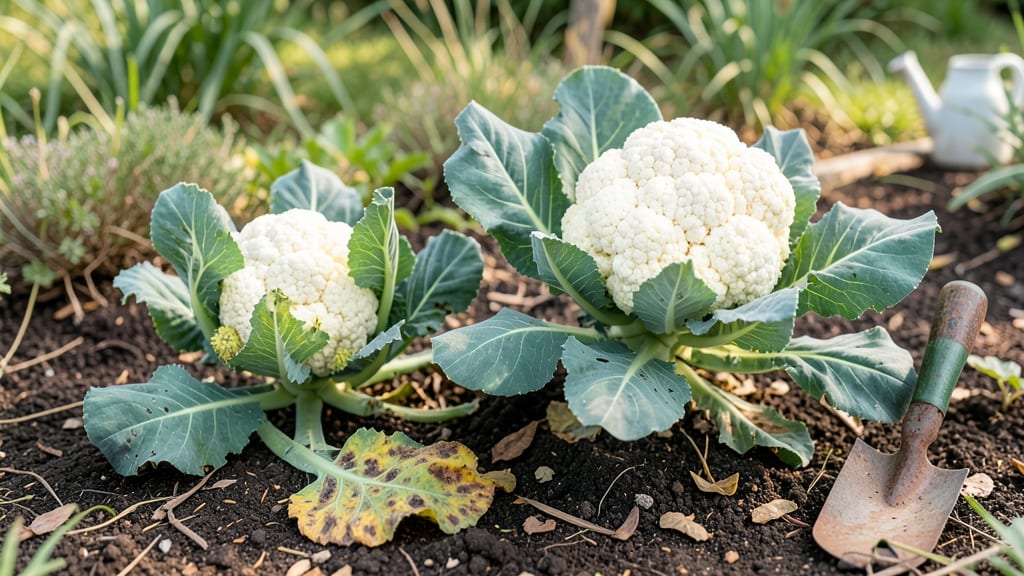
Cauliflower plant diseases can turn your crisp white heads into sad, yellowing messes—unless you catch them early. 🌿 I’ve watched my own plants go from sturdy and proud to wilted in days, and I learned the hard way that prevention is the real game-changer here.
The key is spotting those first weird spots or stunted growth before they spread.
Most problems start with too much moisture, poor airflow, or last year’s leftover pathogens in the soil. Black rot, clubroot, and downy mildew are the usual villains, but even powdery mildew can steal your harvest if you ignore it.
The good news? Organic fixes like copper spray, neem oil, and proper spacing work better than you’d think—once you know what to look for.
You’ll save your crop by rotating crops, pulling weeds religiously, and choosing disease-resistant varieties like ‘Snowball Y Improved’ or ‘Purple of Sicily.’ A few minutes of inspection now means no heartbreak at harvest time. Let’s get those plants back to their best.
This works for home gardens, raised beds, or even container growing—just adjust your watering and spacing. The right approach keeps your cauliflower thriving, not struggling. Here’s how to spot trouble before it starts.
Why it happens
Cauliflower plants may seem sturdy, but they’re surprisingly vulnerable to diseases when certain conditions align—like a perfect storm for pathogens. Understanding why these issues arise helps you prevent them before they strike. Let’s break down the root causes, from sneaky soil invaders to environmental missteps.
🌱 Pathogen Overload: Fungal, Bacterial, and Viral Invaders
Most cauliflower diseases start when harmful microbes get the upper hand. Fungi like Plasmodiophora brassicae (clubroot) or Alternaria brassicae thrive in damp, cool conditions, while bacteria such as Xanthomonas campestris spread via contaminated water or tools. Viruses, like Turnip mosaic virus, hitch rides on infected seedlings or pests.
- How it happens: Poor sanitation (reusing infected soil or tools) or planting near cruciferous crop remnants leaves pathogens in waiting.
- Actionable fix: Rotate crops annually, sterilize tools with 70% isopropyl alcohol, and avoid overhead watering to reduce splashing.
💦 Water Woes: Too Much or Too Little
Cauliflower’s thick leaves create a humid microclimate—ideal for fungal spores. Overwatering saturates roots, while drought stress weakens defenses. Botrytis cinerea (gray mold) and Pythium (damping-off) exploit these conditions.
| Issue | Cause | Solution |
|---|---|---|
| Stem rot | Compacted, waterlogged soil | Improve drainage with compost or raised beds |
| Leaf spots | Frequent leaf wetness (overhead irrigation) | Water at soil level; harvest in morning for airflow |
🌡️ Temperature and Humidity: The Perfect Petri Dish
Diseases like Black rot (caused by Xanthomonas) spread fastest in 60–75°F (15–24°C) with high humidity (>80%). Cool nights and warm days create condensation on leaves, giving fungi a foothold.
- Red flags: Yellow V-shaped lesions on leaves (black rot) or white mold on stems (downy mildew).
- Prevention: Space plants for airflow, use shade cloth in peak heat, and avoid late-day watering.
🌿 Nutrient Imbalances: Weak Plants Attract Trouble
Cauliflower needs balanced NPK (nitrogen, phosphorus, potassium) to build disease resistance. Too much nitrogen? Lush foliage but weak stems—inviting Alternaria. Too little calcium? Blossom-end rot (yes, even in plants!).
Quick test: Yellowing lower leaves? Likely nitrogen deficiency. Brown edges on leaves? Calcium or magnesium shortage.
Fix: Soil test before planting; amend with compost or kelp meal for micronutrients.
🐛 Pests as Disease Carriers: The Unseen Helpers
Cabbage loopers, aphids, and flea beetles don’t just munch—they spread viruses and bacteria between plants. For example, Cabbage maggots tunnel into roots, creating entry points for Fusarium wilt.
- Break the cycle:
- Use row covers early in the season.
- Introduce beneficial nematodes (Steinernema feltiae) to target larvae.
- Remove heavily infested plants immediately.
Quick Fixes for Common Cauliflower Ailments
Cauliflower plants are tough, but they’re not invincible. When diseases strike, acting fast with the right organic solutions can save your crop. Below, we’ve mapped out practical fixes for the most common cauliflower diseases—plus prevention tips to keep your plants thriving long-term.
Cause: Plasmodiophora brassicae thrives in acidic, waterlogged soil, stunting roots and turning them brown or black.
How to Fix It: 🔥 Step 1: Isolate & Remove Infected Plants
- Pull up severely affected plants (including roots) and dispose of them in a sealed trash bag—do not compost them.
- If possible, rotate crops in this spot for 3–4 years (cauliflower’s family loves the same soil, and the pathogen lingers).
🍳 Step 2: Adjust Soil pH (The Big Fix) - Test your soil’s pH (ideal for cauliflower: 6.0–7.0). - Raise pH with lime (calcium carbonate) if below 6.0.
Follow package instructions—too much lime can burn roots! - Lower pH with elemental sulfur if above 7.0 (but this is rare for club root).
👨🍳 Step 3: Improve Drainage & Fertility
- Amend soil with compost (well-aged!) and sand to break up clay.
- Avoid fresh manure—it can worsen the problem by lowering pH further.
🌡️ Step 4: Prevent Future Outbreaks
- Plant resistant varieties like ‘Snowball Y Improved’ or ‘Purple of Sicily’.
- Mulch heavily with straw to keep soil moist but not soggy.
- Water deeply but less often—club root hates dry spells.
Cause: Hyaloperonospora brassicae causes yellow spots on leaves, followed by purple fuzz (the "downy" part).
How to Fix It: 🔥 Step 1: Prune & Toss Infected Foliage
- Snip off yellow or spotted leaves and dispose of them (don’t compost).
- Space plants 18–24 inches apart to improve airflow—fungi love humidity!
🥘 Step 2: Spray with Organic Fungicides
- Neem oil (1 tbsp per gallon of water + a drop of dish soap as a surfactant) – spray every 5–7 days until symptoms fade.
- Baking soda spray (1 tsp baking soda + 1 tbsp oil + 1 gallon water) – prevents spores from germinating.
💡 Pro Tip: Spray early morning or evening to avoid burning leaves in the sun.
✨ Step 3: Boost Plant Immunity
- Side-dress with compost tea (rich in beneficial microbes).
- Interplant with marigolds or nasturtiums—they repel pests that stress cauliflower.
Cause: Xanthomonas campestris bacteria causes V-shaped yellow leaf edges and blackened veins.
How to Fix It: 🔪 Step 1: Cull & Clean Up
- Remove ALL infected plants (burn or bag them—this bacterium spreads via sap and tools).
- Sterilize pruners with 70% rubbing alcohol or a 10% bleach solution between cuts.
⏰ Step 2: Rotate Crops & Avoid Overwatering
- Don’t plant brassicas (cauliflower, cabbage, broccoli) in the same spot for 3 years.
- Water at the base (avoid wetting leaves) and space plants to reduce humidity.
🌡️ Step 3: Copper Spray (The Heavy Hitter)
- Use copper fungicide (like Bonide Copper Fungicide) every 7–10 days to kill bacteria.
- Preventative spray before symptoms appear if black rot is common in your area.
Want to avoid these problems in the first place?
Follow these easy habits: - Buy disease-resistant seeds (check seed packets for labels like "club root resistant"). - Start seeds indoors (young plants are less stressed when transplanted). - Test soil before planting—pH and nutrient imbalances invite trouble. - Rotate crops religiously (no brassicas in the same spot for 3+ years). - Keep the garden tidy—remove debris where pathogens hide.
Final Thought: Most cauliflower diseases are preventable with good hygiene and smart gardening. If you spot trouble early, act fast—your plants will thank you with big, beautiful heads! 🥬✨
Frequently asked questions
Why do my cauliflower leaves turn yellow with black veins?
Those are classic signs of black rot, caused by the bacterium Xanthomonas campestris. The disease spreads through contaminated water or tools, thriving in warm, humid conditions. Remove infected plants immediately, sterilize your tools with rubbing alcohol, and avoid overhead watering to prevent further spread.
Can I still harvest cauliflower if it has white mold on the leaves?
Yes, but only the heads if they’re unaffected. The white mold (likely downy mildew) won’t make the cauliflower inedible, but it’s best to remove infected leaves and improve airflow between plants. Spray with neem oil or baking soda solution to prevent it from spreading to the heads.
How do I know if my cauliflower has clubroot disease?
Look for swollen, distorted roots and stunted growth above ground. The soil may appear puffy or gnarled where roots are. Clubroot thrives in acidic soil—test your pH and amend with lime if it’s below 6.0. Plant resistant varieties like ‘Snowball Y Improved’ in future seasons.
Will compost help prevent cauliflower diseases?
Well-aged compost improves soil structure and adds beneficial microbes that outcompete pathogens. Just avoid fresh manure—it can introduce new diseases. Mix compost into the soil before planting and use it as mulch to keep soil moist without creating soggy conditions.
Can I save my cauliflower plants if they’re already infected?
It depends on the disease. For fungal issues like downy mildew, prune infected leaves and apply neem oil or copper spray. For bacterial diseases like black rot, removal is often the only option—don’t compost infected plants. Act fast, and you might still salvage some heads or prevent further spread.