Diseases
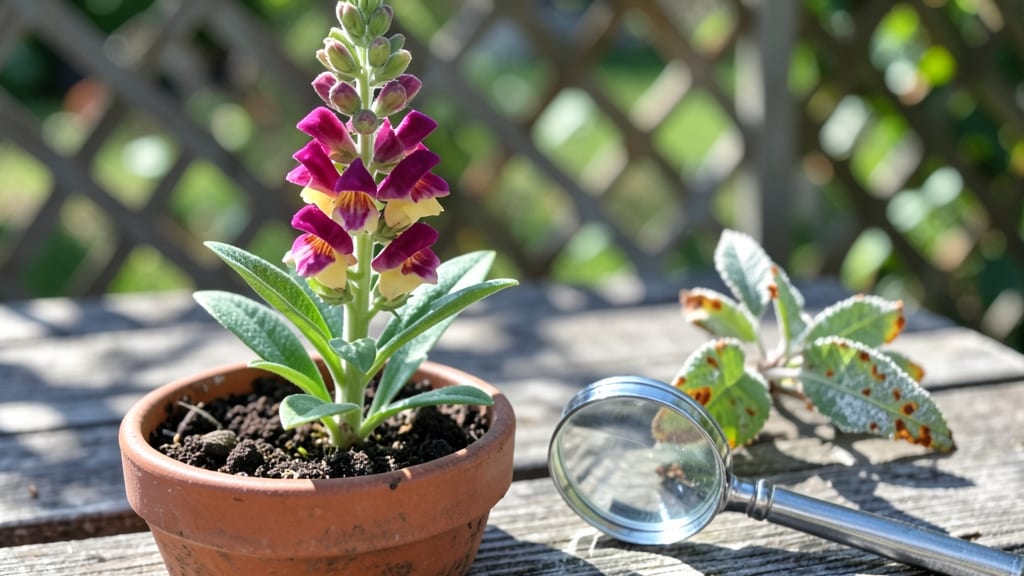
Snapdragon plant diseases can turn vibrant blooms into a sad, spotted mess if you don’t catch them early. ✨ I’ve seen powdery mildew turn my snapdragons into ghostly white skeletons, and bacterial spot leave them looking like they’ve been peppered with freckles.
The good news? Most of these issues are preventable with the right care—and treatable without harsh chemicals.
These diseases thrive when snapdragons get too crowded, stay wet too long, or don’t get enough airflow. Powdery mildew loves humid mornings, while bacterial spot spreads when water splashes onto leaves. Spacing plants 12-18 inches apart and watering at the base (not overhead) cuts the risk dramatically.
A simple 3% hydrogen peroxide spray (1 part peroxide to 3 parts water) can stop mildew in its tracks before it takes hold.
Once you spot the first signs—white powder, yellow spots, or wilting leaves—act fast. Prune infected stems ½ inch below the damage to prevent spread, and boost airflow with stakes or a fan.
With these steps, your snapdragons will bounce back stronger, and you’ll avoid the heartbreak of a ruined summer display.
Works for both garden beds and containers, and the same principles apply whether you’re growing Antique Mixed snapdragons or compact Rocket series. Let’s get your plants back to their best before the next bloom cycle!
Root Causes Of Snapdragon Struggles
Snapdragons (Antirrhinum majus) are stunning, but their health can take a nosedive due to a mix of environmental stressors, microbial invaders, and cultural oversights. Understanding why these diseases strike is the first step to stopping them in their tracks.
Below, we break down the key culprits—from fungal spores lurking in damp soil to pests that weaken defenses—and how they exploit your plants.
Fungal diseases like powdery mildew and downy mildew thrive when snapdragons sit in soggy soil or face prolonged leaf wetness. Here’s why:
- Poor Drainage 💦: Snapdragons hate "wet feet." If their roots suffocate in compacted or clay-heavy soil, water pools around roots, creating the perfect breeding ground for Peronospora (downy mildew) and Erysiphe (powdery mildew) spores. Actionable fix: Amend soil with perlite or compost to improve aeration.
- High Humidity + Stagnant Air 🌫️: Fungal spores spread via wind and water splashes. In greenhouses or shaded gardens, humidity lingers, while poor airflow traps spores on leaves. Pro tip: Space plants 12–18 inches apart and use a fan to circulate air.
- Overhead Watering 💦🚫: Wet foliage for hours? You’re basically inviting fungal buffets. Botrytis cinerea (gray mold) loves damp leaves, especially in cool evenings. Solution: Water at the base early in the day so leaves dry by nightfall.
Aphids, whiteflies, and spider mites don’t just suck sap—they injure plant tissues, creating entry points for secondary infections like bacterial blight (Pseudomonas) or sooty mold (a fungal hitchhiker on honeydew).
- Sap-Sucking Pests 🐜: Aphids excrete sticky honeydew, which attracts sooty mold (Capnodium). This black, velvety fungus clogs leaf pores, reducing photosynthesis. Combat it: Spray with neem oil or introduce ladybugs.
- Root-Knot Nematodes 🐛🌱: These microscopic worms burrow into roots, causing galls that stunt growth and invite fungal rot. Test your soil: A nematode assay can confirm infestations before symptoms appear.
- Caterpillar Chewing 🐛🍃: Cabbage loopers or hornworms can defoliate snapdragons, leaving wounds prone to bacterial infections. Prevent it: Handpick pests or use row covers early in the season.
Snapdragons are resilient, but extreme heat, cold snaps, or transplant shock lower their resistance to pathogens.
- Heat Stress + Poor Airflow 🔥: Temperatures above 85°F (29°C) weaken cell walls, making plants susceptible to alternaria leaf spot (Alternaria alternata). Fix: Provide afternoon shade in hot climates.
- Cold Damage ❄️: Frozen foliage or sudden chills (below 50°F/10°C) can crack stems, inviting Botrytis to feast on damaged tissue. Solution: Use row covers in fall or mulch to insulate roots.
- Transplant Shock 🌱💔: Moving snapdragons—especially from nursery pots—can stress roots, making them vulnerable to Pythium (a water mold). Ease the transition: Harden off seedlings for 7–10 days before planting and avoid transplanting in extreme heat.
Unbalanced soil pH or nutrient deficiencies create the perfect storm for diseases.
- Nitrogen Deficiency 🌱💚: Yellowing lower leaves signal nitrogen starvation, weakening the plant’s immune response. Boost it: Side-dress with compost or a balanced fertilizer (10-10-10).
- Alkaline Soil (pH > 7.0) 🧪: High pH locks out micronutrients like iron and manganese, stressing plants and making them prone to rust diseases (Puccinia). Test and adjust: Aim for pH 6.0–7.0 with sulfur or peat moss.
- Compacted or Salty Soil 🏗️: Poor structure limits root growth, while salt buildup (from tap water or fertilizers) burns roots, inviting Phytophthora (a deadly water mold). Flush soil: Water heavily to leach excess salts, then amend with organic matter.
Diseases don’t always arrive via the air—they hitchhike on your tools or seeds.
- Dirty Pruners or Gloves ⚔️: Cutting infected stems without sterilizing tools spreads Botrytis or bacterial wilt (Ralstonia) to healthy plants. Sterilize: Wipe blades with 70% rubbing alcohol between cuts.
- Infected Seed or Transplants 🌱🚨: Some diseases, like tomato spotted wilt virus (TSWV), are seed-borne. Buy from reputable suppliers and inspect seedlings for unusual spots before planting.
- Cross-Contamination in Greenhouses 🏠🌿: Reusing pots or benches without cleaning can transfer Fusarium or Verticillium wilt. Sanitize: Soak containers in a 10% bleach solution (1 part bleach to 9 parts water) before reuse.
How to Fix Snapdragon Woes
Seeing your snapdragons wilting or covered in spots can be heartbreaking, but don’t panic! With the right approach, you can nurse them back to health—or even prevent future problems.
Below, we’ve mapped out practical, step-by-step solutions tailored to the most common snapdragon diseases, plus prevention tips to keep your flowers thriving. Think of this as your emergency care guide for sickly snapdragons!
If your snapdragons are dusted with white, powdery patches (especially on leaves), powdery mildew is likely the culprit. This fungal disease thrives in humid, crowded conditions and can weaken plants quickly if left unchecked.
🔥 Step 1: Isolate the Problem
- Move affected plants at least 3–6 feet away from healthy ones to prevent spores from spreading via air or water.
- Avoid pruning infected leaves—toss them in the trash (not compost!), as spores can linger in compost piles.
🍳 Step 2: Clean Up the Area
- Remove all debris (fallen leaves, spent blooms) from the soil surface.
- Disinfect pruners with 70% isopropyl alcohol or a 1:10 bleach-water solution (1 part bleach to 10 parts water) between cuts.
👨🍳 Step 3: Treat with Fungicides
- Baking soda spray: Mix 1 tsp baking soda + 1 tsp horticultural oil + 1 tsp soap (like Castile) + 1 gallon water. Spray early in the morning on both leaf surfaces. Reapply every 7–10 days until symptoms fade.
- Neem oil: A natural fungicide that also deters pests. Spray weekly (follow label instructions for dilution).
- Chemical fungicides: For severe cases, use sulfur-based or copper fungicides (e.g., copper soap). Apply every 10–14 days until the plant recovers.
🌡️ Prevention Tips
- Space plants 12–18 inches apart for better airflow.
- Water at the base (avoid overhead sprinkling) and water early in the day so foliage dries quickly.
- Avoid nitrogen-heavy fertilizers, which promote lush, mildew-loving growth. Opt for a balanced 10-10-10 or low-nitrogen formula instead.
Brown or black spots with yellow halos? Leaf spot diseases (like Alternaria or Septoria) are likely to blame. These fungal infections thrive in wet, warm conditions and can cause leaves to drop prematurely.
🔪 Step 1: Prune and Remove
- Snip off infected leaves with clean pruners, cutting ½ inch below the spot to ensure you remove the entire infected area.
- Dispose of clippings in a sealed bag or trash—do not compost.
⏰ Step 2: Improve Airflow and Light
- Thin out crowded plants or stake them to encourage airflow.
- Ensure snapdragons get at least 6–8 hours of sunlight daily—shady spots encourage fungal growth.
💡 Step 3: Apply Fungicidal Sprays
- Copper fungicide: Effective against many leaf spot diseases. Spray every 7–10 days until symptoms disappear.
- Chitosan spray: A natural, plant-based fungicide that strengthens cell walls. Use weekly as a preventative.
- Hydrogen peroxide (3%): Mix 1 tbsp per gallon of water and spray every 5–7 days for mild cases.
✨ Prevention Tips
- Water in the morning to allow foliage to dry by evening.
- Rotate crops: Avoid planting snapdragons in the same spot year after year (fungi can persist in the soil).
- Use mulch: Apply 2–3 inches of organic mulch (like straw) to keep soil moist but reduce splashing water onto leaves.
If your snapdragons look wilted or yellow despite adequate water, root rot (caused by overwatering or poor drainage) may be the issue. This disease is often fatal if ignored, so act fast!
🌧️ Step 1: Check the Roots
- Gently dig up the plant and inspect the roots. Healthy roots are firm and white; rotten roots are mushy, brown, or black.
- If roots are severely damaged, the plant may not recover—consider propagating from healthy cuttings if possible.
💧 Step 2: Adjust Watering Habits
- Stop watering immediately and let the soil dry out completely.
- Repot the plant in fresh, well-draining soil (mix potting soil with perlite or sand for better aeration).
- Use a pot with drainage holes—if repotting isn’t an option, poke holes in the bottom of the container.
🌱 Step 3: Revive the Plant
- Trim any black/mushy roots with sterilized scissors.
- Apply a fungicide (like mycorrhizal fungi or copper-based treatment) to the roots before replanting.
- Water lightly only when the top 1–2 inches of soil are dry.
🎯 Prevention Tips
- Never let snapdragons sit in soggy soil—water only when the top inch is dry.
- Avoid saucers that trap excess water; opt for self-watering pots with drainage.
- Improve soil drainage by amending garden beds with compost and coarse sand.
An ounce of prevention is worth a pound of cure! Follow these year-round tips to keep your snapdragons disease-free:
- ✅ Rotate crops: Plant snapdragons in a different spot each year to prevent soil-borne diseases.
- ✅ Choose disease-resistant varieties: Look for snapdragons labeled "resistant to mildew" or "leaf spot tolerant."
- ✅ Inspect regularly: Check undersides of leaves and new growth weekly for early signs of trouble.
- ✅ Boost plant health: Healthy snapdragons fight diseases better! Feed with a balanced fertilizer (like 10-10-10) every 4–6 weeks during the growing season.
- ✅ Clean tools: Sterilize pruners and tools with rubbing alcohol or bleach water between uses.
With these targeted fixes and preventative habits, your snapdragons will bounce back stronger—and stay that way! 🌸💪 Remember, the key is acting fast and creating an unfriendly environment for fungi**. Happy gardening!
Frequently asked questions
What are the first signs of powdery mildew on snapdragons?
Look for white, powdery patches on leaves—especially on the undersides—and a slight grayish cast on stems. These spots start small but spread quickly in humid conditions, often appearing first on lower leaves where airflow is poor.
Can I save a snapdragon with bacterial spot disease?
Early intervention helps! Prune infected leaves ½ inch below the spot and apply a copper fungicide. For severe cases, remove the entire plant to prevent spread, as bacterial infections often can't be fully reversed.
Why do my snapdragons get diseases even with proper care?
Disease outbreaks can still happen due to hidden stressors like root-knot nematodes or soil-borne pathogens from last year's plants. Test your soil and rotate crops annually to break disease cycles.
How often should I spray preventative fungicides?
For mildew-prone areas, apply a baking soda spray (1 tsp baking soda + 1 gallon water) every 2 weeks during humid seasons. Neem oil or copper fungicides work well when used every 4-6 weeks as maintenance.
Are there snapdragon varieties that resist diseases better?
Yes! Look for Antirrhinum 'Rocket' series or 'Monarch' hybrids, which are bred for mildew resistance. These varieties often have better airflow between stems, reducing fungal risk.