
Diseases
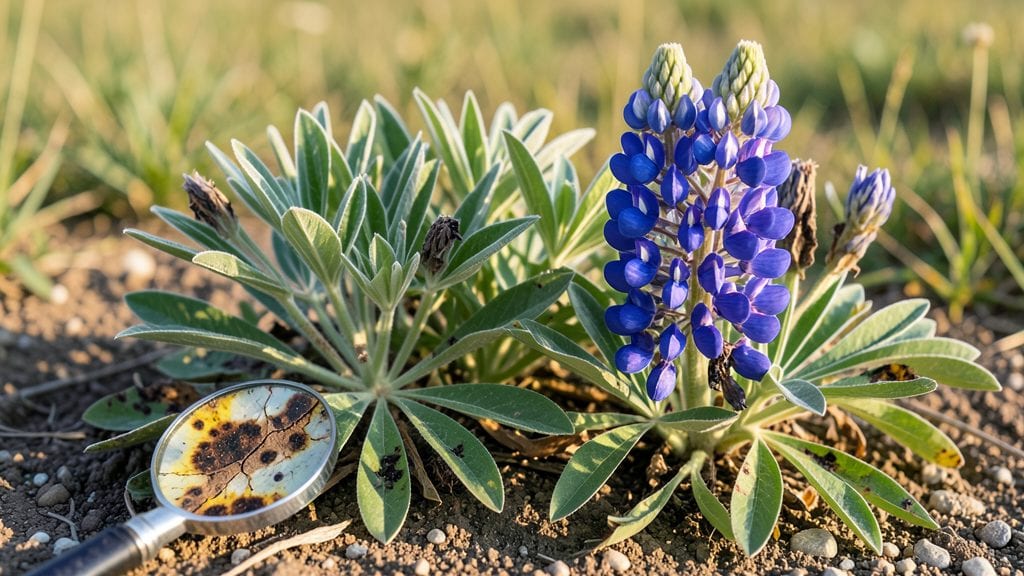
Lupine plant diseases can turn vibrant blue spikes into sad, wilting messes if you don’t catch them early. 🌿 I’ve seen healthy lupines go from showstoppers to sickly within weeks—until I learned to spot the warning signs.
The five fungal threats I’ll cover here show up as strange spots, moldy growth, or sudden wilting, and knowing what to look for saves your plants.
Most of these problems start with too much moisture or poor air circulation—common mistakes even experienced gardeners make. My lupines thrived until I moved them too close together, and suddenly powdery mildew took over.
The good news? Fixing these issues is simpler than you’d think, with organic sprays and a few smart cultural tweaks that work every time.
You’ll learn to recognize each disease by its unique symptoms—from rust-colored pustules to blackened stems—and how to treat them before they spread. By the end, your lupines will stay bold, blue, and disease-free, with fewer headaches and more blooms. Let’s get those plants back to their best.
Whether you’re dealing with a single plant or a whole border, these solutions work for container lupines, in-ground beds, or even cut flowers. Early action is everything—so don’t wait until the damage is done.
Root Causes of Lupine Illnesses
Lupine plants, with their striking blue-purple blooms and nitrogen-fixing superpowers, are a gardener’s dream—until disease strikes. Understanding why these fungal threats take hold is the first step to protecting your lupines. Below, we break down the science behind the most common causes, from environmental factors to plant vulnerabilities.
Fungal spores thrive in stagnant, humid conditions, and lupines grown too closely together create the perfect breeding ground. When plants are packed in, air doesn’t circulate well, leading to:
- High humidity: Fungal spores like Phytophthora and Botrytis love moisture and will latch onto leaves or stems in damp environments.
- Reduced sunlight penetration: Shady, crowded spots slow drying, keeping foliage wet longer—ideal for powdery mildew (caused by Erysiphe species).
- Increased stress: Competing for nutrients weakens lupines, making them more susceptible to infections.
Actionable fix: Space lupines 12–18 inches apart and prune neighboring plants to improve airflow. Avoid overhead watering, and water at the base in the morning for faster evaporation. 💡 Pro tip: Mulch with gravel or bark to keep soil dry without smothering roots.
Lupines are drought-tolerant once established, but soggy soil is a fungal magnet. Waterlogged conditions trigger:
- Root rot (Phytophthora): Waterlogged roots suffocate, creating entry points for this soil-borne pathogen.
- Foliage diseases (Alternaria, Septoria): Splashed water from heavy irrigation or rain spreads spores from soil to leaves.
- Weakened defenses: Overwatered lupines can’t absorb nutrients efficiently, leaving them vulnerable to secondary infections.
Actionable fix:
- Amend heavy clay soil with compost or perlite to improve drainage.
- Use drip irrigation or soaker hoses to deliver water directly to roots.
- Ensure containers have drainage holes if growing lupines in pots.
🌡️ Watch for: Yellowing leaves or mushy stems—signs of root rot. Act fast by trimming affected areas and repotting if needed.
Lupines prefer moderate climates, but sudden temperature shifts—especially cold snaps followed by warm, humid days—disrupt their natural defenses. This stress opens doors for:
- Powdery mildew: Thrives in temperatures between 60–80°F (15–27°C) with high humidity, often after a cold night.
- Rust (Uromyces): Spores germinate faster in cool, wet conditions, causing orange pustules on leaves.
- Canker diseases: Cold damage weakens stems, making them susceptible to Leptosphaeria infections.
Actionable fix:
- Choose disease-resistant varieties like Lupinus polyphyllus ‘Russell Hybrid’ for cooler climates.
- Apply a reflective mulch (like aluminum foil) around plants to moderate soil temps.
- Provide afternoon shade in hot climates to reduce stress.
✨ Pro tip: Avoid late-season fertilizing, which can promote tender new growth vulnerable to frost damage.
Lupines fix nitrogen in the soil, but they still need balanced nutrition. Deficiencies—especially of phosphorus, potassium, or micronutrients—weaken their immune response, making them prime targets for:
- Bacterial or fungal blights: Weak plants can’t produce protective compounds like phytoalexins, which fight off pathogens.
- Chlorosis (yellowing): Often linked to manganese or iron deficiencies, which also reduce disease resistance.
- Slow recovery: Stressed lupines take longer to heal from minor damage, giving fungi time to establish.
Actionable fix:
- Test soil pH (ideal: 6.0–7.0 for lupines) and amend with lime or sulfur as needed.
- Use a balanced fertilizer (10-10-10) in early spring, avoiding high-nitrogen blends that promote leafy growth over roots.
- Apply compost tea or seaweed extract to boost natural defenses.
🎯 Target these signs: Purplish stems or slow growth? It’s time to feed with a phosphorus-rich supplement (like bone meal).
Insects like aphids, beetles, or slugs don’t just eat lupines—they create wounds that serve as entry points for fungal invaders. Common culprits include:
- Aphids: Their honeydew attracts sooty mold (Capnodium), which smothers leaves.
- Caterpillars or slugs: Chewed leaves expose tissue to Botrytis (gray mold).
- Mechanical damage: Hail or rough handling can bruise stems, inviting Sclerotinia (white mold).
Actionable fix:
- Inspect plants weekly for pests; use neem oil or insecticidal soap for aphids.
- Set up beer traps or copper barriers for slugs.
- Prune damaged foliage immediately, sterilizing shears with rubbing alcohol between cuts.
🔥 Hot tip: Encourage beneficial insects like ladybugs by planting companion flowers (e.g., marigolds or yarrow).
Quick Fixes for Lupine Fungal Woes
Fungal diseases can turn your thriving lupine plants into a sad, wilted sight—but don’t panic! With the right approach, you can nurse them back to health and prevent future outbreaks. Below are practical, step-by-step solutions tailored to each common fungal threat, plus prevention tips to keep your lupines flourishing.
Cause: Alternaria or Septoria fungi thrive in damp, humid conditions, creating dark spots with yellow halos.
How to Fix It: ✅ 🍄 Prune & Remove Infected Foliage
- Snip off yellowed or spotted leaves (don’t compost them—dispose in a sealed bag).
- Sterilize pruners with 70% isopropyl alcohol between cuts to avoid spreading spores.
✅ 💦 Improve Airflow & Reduce Moisture
- Space plants 12–18 inches apart to allow airflow.
- Water early in the day (before 10 AM) so leaves dry quickly.
- Avoid overhead watering—use drip irrigation or a watering can with a narrow spout.
✅ 🧴 Apply Fungicide (Organic or Chemical) - Baking soda spray: Mix 1 tsp baking soda + 1 tbsp vegetable oil + 1 tsp mild soap per quart of water.
Spray every 7–10 days. - Copper fungicide: Follow label instructions for preventive sprays (e.g., Bonide Copper Fungicide). - Neem oil: A natural antifungal—spray weekly until symptoms fade.
💡 Pro Tip: Mulch with straw (not wood chips) to reduce soil splashing onto leaves.
Cause: Erysiphe fungi create white, powdery patches on leaves, stunting growth.
How to Fix It: ✅ 🌬️ Boost Circulation & Sunlight
- Thin out crowded plants or prune lower branches to improve airflow.
- Ensure 6+ hours of sunlight daily—powdery mildew loves shade.
✅ 🚿 Cleanse with Hydrogen Peroxide Spray
- Mix 1 tbsp 3% hydrogen peroxide + 1 quart water in a spray bottle.
- Apply every 3–4 days until mildew disappears.
✅ 🛡️ Prevent with Reflective Mulch or Row Covers
- Lay white plastic mulch around plants to reflect sunlight (reduces humidity).
- Use floating row covers in early spring to deter spores.
💡 Pro Tip: Resistant varieties like Lupinus polyphyllus ‘Russell Hybrid’ tolerate mildew better.
Cause: Phytophthora or Pythium fungi rot roots in overwatered, soggy soil.
How to Fix It: ⏳ 🚨 Act Fast—Stop Watering Immediately!
- Let soil dry out completely before watering again.
- If possible, transplant to well-draining soil (add perlite or sand).
✂️ 🌿 Trim Damaged Roots & Replant
- Gently remove the plant, trim black/mushy roots with sterilized scissors.
- Dip healthy roots in 1:10 hydrogen peroxide solution (30 sec) before replanting.
💧 🔄 Fix Soil Drainage for Good
- Amend soil with compost + coarse sand (50/50 mix).
- Plant in raised beds if your yard stays waterlogged.
💡 Pro Tip: Ditch the saucer under pots—ensure containers have drainage holes.
Cause: Puccinia fungi create bright orange spores on undersides of leaves.
How to Fix It: 🔥 🔥 Burn or Bag Infected Leaves
- Remove all rust-covered leaves and do not compost—burn or trash them.
🍅 🍅 Use Sulfur or Potassium Bicarbonate
- Wettable sulfur spray (1–2 tbsp/gallon) applied weekly until rust clears.
- Potassium bicarbonate (1.5 tbsp/gallon + mild soap) works as a preventive spray.
🌿 🌿 Rotate Plant Locations
- Rust spores linger in soil—move lupines to a new spot next season.
💡 Pro Tip: Copper-based fungicides (like Cupric Hydroxide) are highly effective against rust.
To avoid future fungal battles, follow this year-round routine:
| Season | Task | How Often |
|---|---|---|
| Spring | Apply neem oil spray | Every 2 weeks |
| Summer | Mulch with straw (not wood chips) | Once, then refresh |
| Fall | Clean up debris (leaves, stems) | After first frost |
| Winter | Aerate soil (if compacted) | Once |
💡 Bonus Tip: Interplant with garlic or chives—their scent naturally repels fungi!
By tackling fungal issues early and adjusting care habits, your lupines will bounce back stronger. Healthy plants = happy garden! 🌟
Frequently asked questions
What are the first signs my lupines might have a fungal disease?
Watch for unusual spots on leaves—powdery white patches (powdery mildew), dark brown/yellow rings (leaf spot), or rust-colored pustules (rust fungus). Wilting stems or yellowing foliage can also signal root rot or systemic infections. Check undersides of leaves first—they often show symptoms before the top surfaces.
Can I still save my lupines if they already have fungal spots?
Yes, but act fast! Prune infected leaves immediately (don’t compost them) and apply a fungicide like neem oil or baking soda spray. For severe cases, isolate affected plants and improve airflow by spacing them 12–18 inches apart. Root rot may require replanting in well-draining soil—trim blackened roots before transplanting.
Why does my lupine keep getting powdery mildew even after treatment?
Mildew thrives in shady, humid conditions—check if nearby plants are blocking sunlight or if you’re watering overhead (keep water at the base). Use reflective mulch or row covers to reduce humidity. Also, avoid high-nitrogen fertilizers, which promote tender growth that mildew loves. Try resistant varieties like 'Russell Hybrid' for future plantings.
Is it safe to use chemical fungicides on lupines?
Most chemical fungicides (like copper-based sprays) are safe for lupines when used as directed, but always test a small area first. Organic options like neem oil or potassium bicarbonate work well too. Avoid systemic fungicides unless absolutely necessary—lupines are nitrogen-fixers, and some chemicals can disrupt their beneficial soil bacteria.
How can I prevent fungal diseases in lupines before they start?
Focus on prevention: Space plants properly, water at the base in the morning, and ensure good airflow. Mulch with straw (not wood chips) and rotate crops—don’t plant lupines in the same spot yearly. Apply a preventive spray like neem oil every 2 weeks during humid seasons, and remove garden debris where spores hide.