
Blooming
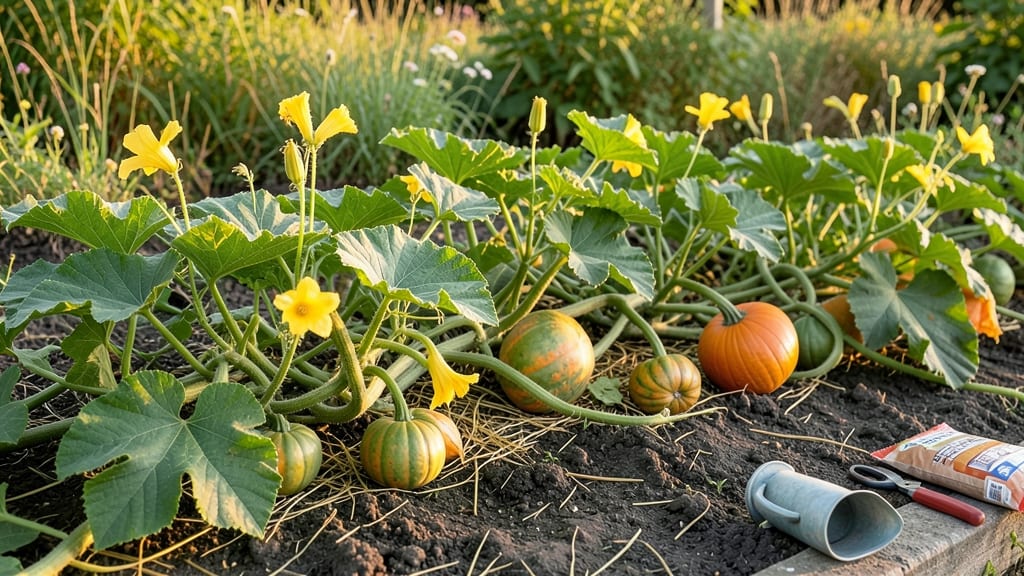
Pumpkin plants blooming like clockwork means you’ve cracked the seasonal code—those vibrant yellow flowers don’t just happen by luck. 🌻 I learned the hard way that timing, temperature, and a little strategic trimming make all the difference between a bush full of blooms and one that barely flowers.
The key isn’t just waiting for summer; it’s understanding how daylight and soil work together to trigger those first blossoms.
Most pumpkins need 70-85°F days and 60-70°F nights to set flowers reliably, which is why late spring to early summer is prime time. But here’s the trick: prune those early vines to encourage more lateral growth, and you’ll see a second wave of blooms later in the season.
I’ve gone from sparse flowers to dozens of blossoms by focusing on just two cuts at the right stages.
Those healthy blooms mean more pollination, which translates to bigger fruits and fewer wasted flowers. You’ll know you’re on track when male flowers (long stems, no fruit) outnumber females early on—then watch as the females (with tiny pumpkins at their base) take over.
The secret? Keep soil moist but not soggy, and feed with a balanced fertilizer when vines start running.
This works for both summer squash and winter pumpkins, though winter varieties need a longer growing season. If your plants are slow to bloom, check for heat stress or overcrowding—those are the usual culprits.
With the right approach, you’ll have blooms from early summer through fall, and maybe even a few stragglers into early winter in warm climates.
📚 In This Guide
- What you need
- Instructions
- Tips and common mistakes
- Wrapping up and next steps
What you need
- ● Pumpkin seeds or seedlings: Choose bloom-focused varieties like Cinderella or Jack-Be-Little (3–5 plants for optimal blooms).
- ● Well-draining potting mix: 5–10 gallons (for containers) or enrich garden soil with compost (1–2 lbs per sq. ft.).
- ● Fertilizer: Balanced (10-10-10) or bloom booster (5-10-10): 1 tbsp per plant every 2–3 weeks.
- ● Organic option: Fish emulsion or worm castings (1 cup per plant).
- ● Watering can or hose with gentle nozzle: 1–2 gallons per plant daily (adjust for climate).
- ● Pruning shears: Sharp, bypass-style (for clean cuts).
- ● Gloves: Heavy-duty (pumpkin vines have thorns!).
- ● Support stakes or trellis: 4–6 ft tall (for climbing varieties).
- ○ pH test kit (optional): Aim for 6.0–6.8—pumpkins love slightly acidic soil!
- ● Sunlight: 6–8+ hours daily (full sun is non-negotiable!).
- ● Warmth: Soil temp 70°F+ for germination (use a seedling heat mat if starting indoors).
- ● Space: 5–10 sq. ft. per plant (or containers ≥ 15 gallons for dwarf varieties).
- ● Patience: Blooms appear 60–90 days after planting!
How to encourage pumpkin plants to bloom year-round
Two simple trims will transform your pumpkin vines into a nonstop floral display.
🌱 Step 1: Select Healthy Vines for Pruning
Wait until your pumpkin plants have 4-5 mature leaves and 3-4 side vines before pruning. This ensures the plant has enough energy stored to recover and produce new blooms. I always choose the strongest, most vigorous vines—look for deep green leaves with no yellowing or browning. Avoid pruning near the main stem; focus on secondary vines that have already developed 3-4 leaves of their own.
Use clean, sharp pruning shears to make cuts just above a leaf node (where leaves attach to the stem). This prevents disease from entering the plant through jagged cuts. If you're unsure which vines to prune, start with the ones growing closest to the ground—they often produce more flowers anyway.
✂️ Step 2: First Trim to Encourage Early Blooms
Make your first cut when the plant has 10-12 leaves total and 3-4 side vines. Remove one of the longest vines at its base, cutting back to the main stem. This shock tells the plant to redirect energy toward producing flowers instead of growing more foliage. You'll see new growth sprout from the leaf nodes within 7-10 days—these will be more compact and flower-heavy.
Don't overdo it here. Pruning more than one vine at a time can stress the plant too much. After the first trim, watch for new shoots emerging from the leaf axils—these are your future bloom producers. Water deeply after pruning to help the plant recover.
☀️ Step 3: Second Trim for Continuous Flowering
About 3-4 weeks after the first trim, when you see new flowers opening, do a second, lighter pruning. This time, remove any vines that have stopped producing flowers or are growing toward the ground. Focus on keeping only the most productive vines—those with 3-4 flowers per stem. Cut back to a leaf node just below a cluster of blooms to encourage branching and more flowers.
Here's the thing—pumpkins are heavy feeders, so after your second trim, side-dress with compost (if using) or a balanced fertilizer (like 10-10-10). This gives the plant a nutrient boost to keep producing those gorgeous blooms. You'll notice new flower buds forming within 10-14 days if everything's right.
💧 Step 4: Maintain Water and Light for Blooms
Pumpkin plants need deep watering 1-2 times per week (until top 2 inches of soil feel dry). Too much water causes blossom end rot in fruits, but consistent moisture keeps flowers opening regularly. I water in the early morning so blooms stay dry and don't rot overnight.
Ensure your pumpkins get full sun (6+ hours daily)—partial shade reduces flowering. If you're growing in containers, move them to a sunniest spot after the first trim. You'll see more flowers and fewer leaves as the plant adjusts its energy focus.
⏰ Step 5: Monitor and Repeat for Year-Round Blooms
After the second trim, keep an eye out for vines that stop producing flowers. These are your cues to prune again in 4-6 weeks. The key is timing: prune just as old flowers fade but before new ones appear. This keeps the plant in a continuous bloom cycle instead of one big flush followed by a long pause.
Real talk: your first few trims might not be perfect. Some vines will protest by growing lots of leaves but few flowers. That's normal—adjust your timing next time. With practice, you'll get the rhythm down, and your pumpkin patch will look like a never-ending floral display instead of a one-time show.
Tips & tricks for encouraging pumpkin blooms year-round
These practical tips will help you maximize your pumpkin plant's flowering potential without sacrificing fruit production.
The Right Tools Matter: Invest in a good pair of bypass pruning shears—they make cleaner cuts that heal faster. I've found that sterilizing your shears with rubbing alcohol between plants prevents disease spread, especially if you're working with multiple pumpkin varieties. Sharp tools also make the job easier on your hands, which is important when you're dealing with thick vines.
Timing is Everything: In Step 2, when you're making that first trim, I've learned that morning is the best time to prune. The plant has had overnight to recover from any stress, and you're cutting before the heat of the day. After trimming, give your plants a deep watering with a seaweed fertilizer (like 1 tablespoon per gallon)—this gives them a gentle boost to recover. You'll notice new shoots appearing within those 7-10 days as promised, but they'll be even more vigorous if you use this extra care.
Visual Cues for Pruning: When doing your second trim in Step 3, look for vines that have more than 3-4 flowers per stem—these are your keepers. The ones with fewer than 2 flowers or just leaves are the ones to remove. I've found that the most productive vines often have small yellow flowers that appear before the big orange ones—these are your early indicators of where to focus. Also, watch the leaf color: healthy flower-producing vines have deep green leaves with no yellowing.
Fertilizer Strategy: After your second trim, don't just rely on compost. I've had the most success with a two-part fertilizer approach: use a balanced 10-10-10 right after pruning to kickstart new growth, then switch to a low-nitrogen, high-phosphorus fertilizer (like 5-10-10) when you see new buds forming. This shift encourages more flowering instead of leafy growth. Remember to water it in well—pumpkins hate dry fertilizer burns.
Pro Tips for Pumpkin Plants Blooming
- These practical tips will help you maximize your pumpkin plant's flowering potential without sacrificing fruit production.
- The Right Tools Matter: Invest in a good pair of bypass pruning shears—they make cleaner cuts that heal faster.
- Timing is Everything: In Step 2, when you're making that first trim, I've learned that morning is the best time to prune.
Frequently asked questions
Got questions about coaxing vibrant blooms from your pumpkin plants? Here are answers to some of the most common queries—so you can enjoy those stunning flowers (and future pumpkins!) all year round.
How long does it take for pumpkin plants to bloom after planting?
Most pumpkin varieties start blooming 45–60 days after planting if given full sun (6–8 hours daily), warm soil (70°F+), and consistent watering. Vining types may take slightly longer (up to 75 days), while bush varieties bloom faster. Pro tip: Use black plastic mulch to warm the soil and speed up flowering!
Why aren’t my pumpkin plants blooming, even after months of growth?
Common culprits include insufficient sunlight (move to a sunnier spot), cool temperatures (pumpkins need warmth to flower), or lack of pollinators. Hand-pollinate flowers (use a paintbrush to transfer pollen) if bees are scarce. Check soil nutrients too—pumpkins thrive in well-draining soil rich in compost.
Can I force pumpkin plants to bloom year-round, even in winter?
Yes! Grow pumpkins indoors under grow lights (12–14 hours/day) or in a greenhouse with supplemental heat. Choose compact varieties like ‘Jack Be Little’ or ‘Sugar Pie’, which adapt better to controlled environments. Warning: Winter blooms may be smaller, but the technique works for decorative flowers too!
What should I do with pumpkin flowers after they bloom?
Remove wilted or spent male flowers (they won’t produce fruit) to redirect energy to female flowers (look for tiny pumpkins at their base!). Save a few flowers for edible treats—they’re delicious in soups or fried as fritters. Bonus: Deadheading encourages more blooms and prevents pests from hiding in decaying flowers.
Are there pumpkin varieties that bloom more prolifically than others?
‘Cinderella’ and ‘Autumn Gold’ are top picks for abundant blooms and large flowers. For smaller but showy blooms, try ‘Wee-B-Little-Pumpkin’. Always check seed packets for “ornamental” labels if you prioritize flowers over fruit. Pro tip: Mix varieties for a continuous bloom display!
Wrapping up and next steps
Watching your pumpkin plants blooming year-round is a rewarding experience that combines beauty, productivity, and a touch of magic! 🌿 With just two strategic trims—one to encourage blooms and another to shape growth—you’ve unlocked the secret to vibrant flowers and bountiful harvests.
Whether you’re a seasoned gardener or a curious beginner, these techniques prove that patience and a little pruning can turn your garden into a lush, ever-blooming paradise.
Now that you’re armed with the know-how, why not take the next step? Experiment with different varieties, share your progress with fellow plant lovers, or even gift a thriving cutting to a friend. Your green thumb is already making waves—let’s keep that momentum going! 🌸