
Plants
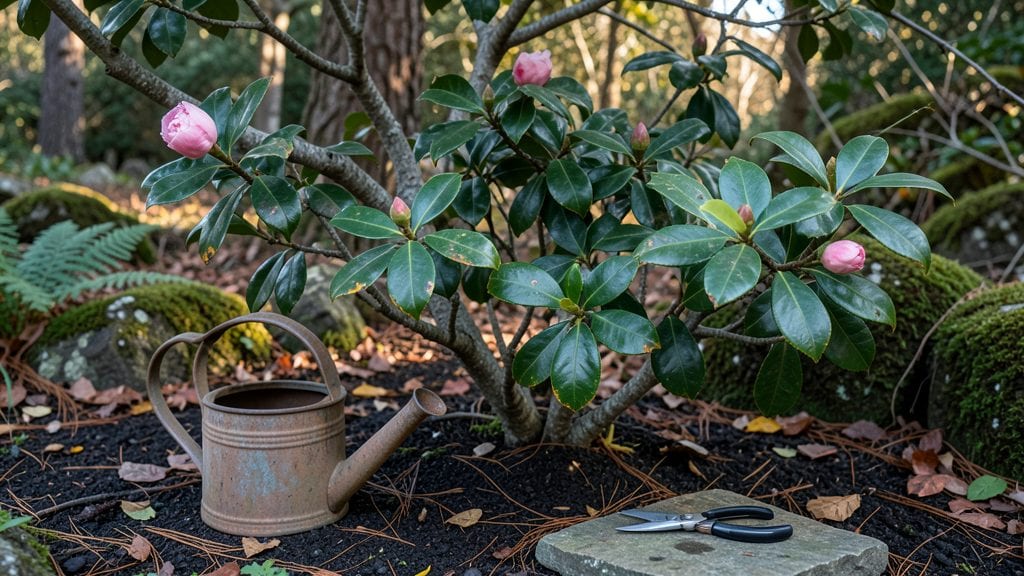
When your camellia leaves turn yellow or buds drop before opening, it’s not just a plant problem—it’s a cry for help. 🌿 I’ve seen this happen with my own camellias, and the good news is most issues have fast fixes once you know what to look for.
The key is acting quickly before the plant stresses further.
Yellowing leaves usually mean overwatering or nutrient deficiencies, while bud drop often signals fungal infections or sudden temperature swings. My camellias bounced back in just a few weeks once I adjusted watering and added a balanced fertilizer. The trick is checking the soil moisture first—fingers work better than guesswork.
You’ll restore your camellia’s health by pruning dead growth, applying copper fungicide for petal blight, and keeping the roots consistently moist but never soggy. Within a month, you’ll see fresh green leaves and buds ready to bloom. Let’s get your camellia back to its showstopping self.
Works for all camellia varieties, whether you’re dealing with a mature shrub or a young plant. The same principles apply year-round, though spring and fall are the best times for preventative care. Let’s troubleshoot step by step!
Why it happens
Camellias are stunning evergreens, but they’re not invincible. When their leaves yellow, buds drop, or growth stalls, the issue almost always traces back to a few key environmental or care-related triggers.
Understanding why these problems occur is half the battle—because once you know the root cause, you can fix it fast. Let’s break down the science behind the most common camellia woes.
🌱 Overwatering And Poor Drainage
Camellias thrive in acidic, well-draining soil, but too much water—especially in heavy clay or compacted ground—drowns their roots. When roots sit in soggy conditions, they suffocate, starving the plant of oxygen and nutrients. This leads to:
- Yellowing leaves (chlorosis) from nutrient uptake failure
- Bud drop as the plant redirects energy to survive
- Root rot (often caused by Phytophthora fungi in waterlogged soil)
💡 Why it happens: Camellias prefer moist but not soggy soil. Their native habitats in East Asia receive regular rainfall but also have porous, humus-rich soil that drains quickly. If your garden holds water for more than a few hours after rain, that’s a red flag.
Overwatering—especially in winter—is also a culprit, as cooler temps slow root activity, making roots more vulnerable to rot.
🌡️ Extreme Temperature Swings
Camellias are tender to cold (most varieties tolerate down to 10–15°F with protection) but also heat-stressed when temps soar above 90°F. Sudden shifts—like a late frost after buds form or a heatwave—disrupt their metabolic processes, leading to:
- Bud blast (buds blacken and drop when exposed to 32°F or below)
- Leaf scorch (brown, crispy edges from dehydration in high heat)
- Stunted growth as the plant conserves energy
💡 Why it happens: Camellias are adapted to humid, subtropical climates with moderate temperature swings. Their buds form in late summer/fall, making them highly sensitive to late-season frosts. Heat stress, meanwhile, causes transpirational pull—water evaporates faster than roots can replace it, leading to cellular damage.
Urban areas with heat islands (where pavement retains heat) can push temps even higher, accelerating stress.
🍄 Fungal And Bacterial Infections
Camellias are prone to pathogen attacks, especially when stressed by poor care. The most damaging offenders include:
- Petal blight (Colletotrichum): Causes buds to rot before opening, leaving a sticky, blackened mess.
- Root rot (Phytophthora): Thrives in waterlogged soil, turning roots mushy and leaves yellow.
- Anthracnose (Glomerella): Creates sunken, dark spots on leaves and stems, often after rainy periods.
💡 Why it happens: Fungi and bacteria love moisture—whether from overwatering, poor airflow, or humidity. Damaged tissue (from pruning cuts, hail, or pests) also acts as entry points. Overhead watering spreads spores like wildfire, while dense foliage traps humidity against leaves, creating the perfect petri dish.
Even well-intentioned mulch piled too high can suffocate roots, inviting rot.
🍽️ Nutrient Deficiencies Or Imbalances
Yellowing leaves aren’t always a water issue—they can signal nutrient starvation. Camellias need a balanced diet, but common deficiencies include:
| Symptom | Likely Cause | Why It Happens |
|---|---|---|
| Yellow lower leaves with green veins | Nitrogen deficiency | Nitrogen fuels leaf growth; without it, older leaves remobilize nutrients, turning yellow first. |
| Yellow upper leaves with green veins | Iron or manganese deficiency (chlorosis) | These micronutrients are critical for chlorophyll. In alkaline soil (pH > 6.0), iron becomes unavailable to roots. |
| Purple-tinged leaves | Phosphorus deficiency | Phosphorus aids energy transfer; stress (like drought) forces plants to recycle phosphorus from leaves, turning them purple. |
💡 Why it happens: Camellias prefer acidic soil (pH 5.0–6.5). When soil pH rises (from lime, compost tea, or aged manure), iron and manganese lock up, even if they’re present.
Over-fertilizing with high-nitrogen products (like lawn fertilizer) can also burn roots, preventing nutrient uptake. Competition from aggressive roots or weeds further starves your camellia of essentials.
🐛 Pest Pressure And Physical Damage
Pests like camellia scale, aphids, and spider mites don’t just sap sap—they stress the plant, triggering leaf drop and poor bud set. Even physical trauma (like hail, strong winds, or improper pruning) can shock the plant into shedding buds or leaves.
💡 Why it happens: Pests thrive in dry, hot conditions (they desiccate faster in humidity). Scale insects, for example, secrete honeydew, which attracts sooty mold—a secondary fungus that blocks sunlight, further weakening the plant. Pruning wounds left too large or too rough create open gates for infections.
Even over-zealous shaking (to dislodge pests) can harm tender buds.
Quick Fixes for Common Camellia Issues
Revive your camellia’s health with these targeted solutions—each tailored to the root cause of your plant’s distress. From nutrient deficiencies to pests, we’ll walk you through step-by-step fixes and long-term prevention tips to keep your camellia thriving.
H3: 💧 Fix Overwatering & Poor Drainage Yellowing leaves often signal soggy roots or nutrient washout. Camellias hate "wet feet," so act fast:
- Step 1: Let the soil dry out completely between waterings. Stick your finger 2 inches deep—if it’s damp, wait.
- Step 2: Improve drainage by amending the soil with perlite or sand (20% mix). For container plants, repot into a pot with drainage holes.
- Step 3: Elevate the pot on a saucer or stand to prevent water pooling.
- Prevention: Water deeply but only when the top 1–2 inches of soil are dry. Mulch with pine bark (2–3 inches) to retain moisture without suffocating roots.
H3: 🍃 Address Nutrient Deficiencies Yellowing leaves with green veins? It’s likely iron deficiency (chlorosis) or nitrogen lack:
- For chlorosis (yellow leaves with green veins):
- Apply an iron chelate (like Iron Sulfate) every 4–6 weeks during growing season (spring–fall).
- Use acid-loving fertilizer (e.g., Miracle-Gro Azalea/Camellia) monthly in spring/summer.
- For nitrogen deficiency (pale yellow leaves):
- Feed with a balanced acid fertilizer (10-10-10 or 16-4-8) in early spring.
- Prevention: Test soil pH (ideal: 5.5–6.5). If too alkaline, add sulfur or peat moss to lower pH.
H3: 🌡️ Stabilize Temperature & Humidity Camellias drop buds when shocked by cold drafts, heat stress, or sudden changes:
- Step 1: Move potted camellias indoors or to a sheltered spot if temperatures dip below 40°F (4°C) or rise above 90°F (32°C).
- Step 2: Increase humidity with a pebble tray (fill a tray with water and pebbles, place pot on top) or a humidifier near the plant.
- Step 3: Avoid placing near AC vents, heaters, or direct sunlight in summer.
- Prevention: Acclimate plants gradually to temperature changes. In winter, cover with burlap if frost is forecasted.
H3: 🚰 Check for Overwatering or Underwatering Bud drop can also mean root stress from inconsistent moisture:
- If soil is soggy: Let it dry out and reduce watering. Add orchid bark to improve aeration.
- If soil is bone-dry: Water deeply until it drains from the bottom, then let excess water escape.
- Prevention: Use a moisture meter to monitor soil conditions. Camellias prefer consistently moist but not waterlogged soil.
H3: 🐛 Rule Out Pests & Disease Bud drop can signal hidden pests or fungal infections:
- Inspect for pests: Look for spider mites, scale, or aphids on buds/leaves. Wipe off with a soapy water cloth (1 tsp mild soap + 1 quart water).
- Treat fungal issues: If buds are mushy or blackened, prune affected areas and spray with neem oil (1 tbsp per gallon of water).
- Prevention: Prune regularly to improve airflow. Apply copper fungicide preventatively in humid climates.
H3: ☀️ Shield from Harsh Sun & Wind Brown edges or crispy leaves often mean sunburn or wind damage:
- Step 1: Move camellias to partial shade (morning sun, afternoon shade) if leaves scorch easily.
- Step 2: Protect from drying winds with a windbreak (e.g., lattice fence or shrub barrier).
- Prevention: Gradually introduce plants to full sun over 2–3 weeks. Use anti-desiccant spray (like Wilt-Pruf) in winter.
H3: 🐜 Treat Pest Infestations Brown spots or sticky residue? Pests are likely culprits:
- For spider mites (tiny webs): Spray with water + neem oil (repeat every 5 days).
- For scale insects (bumps on stems): Scrape off with a soft brush, then apply horticultural oil.
- Prevention: Encourage beneficial insects (like ladybugs) by planting marigolds or dill nearby.
- 💡 Mulch Matters: Use pine bark or wood chips (3–4 inches deep) to retain moisture and regulate soil temperature. - 🌡️ Monitor pH: Test soil annually.
Camellias thrive in acidic soil (pH 5.5–6.5)—add sulfur if needed. - 🔪 Prune Smart: Trim dead or crossing branches in late winter/early spring to encourage new growth. - 🌱 Feed Right: Use slow-release acid fertilizer in spring, then switch to low-nitrogen in summer to support blooms.
Remember: Camellias are resilient! With the right care, they’ll bounce back—and reward you with lush foliage and stunning blooms for years. 🌸💚
Frequently asked questions about camellia care
Why are my camellia leaves turning yellow?
Yellowing leaves usually mean either overwatering or nutrient deficiencies. Check soil moisture first—roots need air, not soggy conditions. If leaves stay green along veins but yellow elsewhere, it's likely iron deficiency from alkaline soil (pH >6.5). Test your soil and amend with sulfur or iron chelate if needed.
What causes camellia buds to drop before opening?
Bud drop happens from temperature stress (frost or heatwaves), fungal infections (like petal blight), or inconsistent watering. Protect buds with burlap wraps in winter, and avoid overhead watering. If buds turn black and mushy, prune them off and apply copper fungicide to prevent spread.
How do I know if my camellia has pests?
Look for sticky residue (honeydew from aphids/scale), tiny webs (spider mites), or bumpy growths on stems (scale insects). Wipe leaves with soapy water (1 tsp mild soap per quart) for light infestations. For severe cases, use neem oil or horticultural oil—apply when temps are above 60°F for best results.
Can I prune my camellia at any time?
Prune only in late winter or early spring (just before new growth starts). Avoid pruning in fall—it removes next year's flower buds! Use clean, sharp shears to make 45-degree cuts just above a leaf node. Never remove more than 25% of the plant in one season to avoid shocking it.
What's the best fertilizer for camellias?
Use a slow-release, acid-loving fertilizer (like 8-3-9 or 10-10-10) in early spring. Switch to a low-nitrogen formula (like 4-8-8) during bloom season to support flowers. Avoid high-nitrogen lawn fertilizers—they burn roots. Always water thoroughly after applying to prevent salt buildup.