
Plants
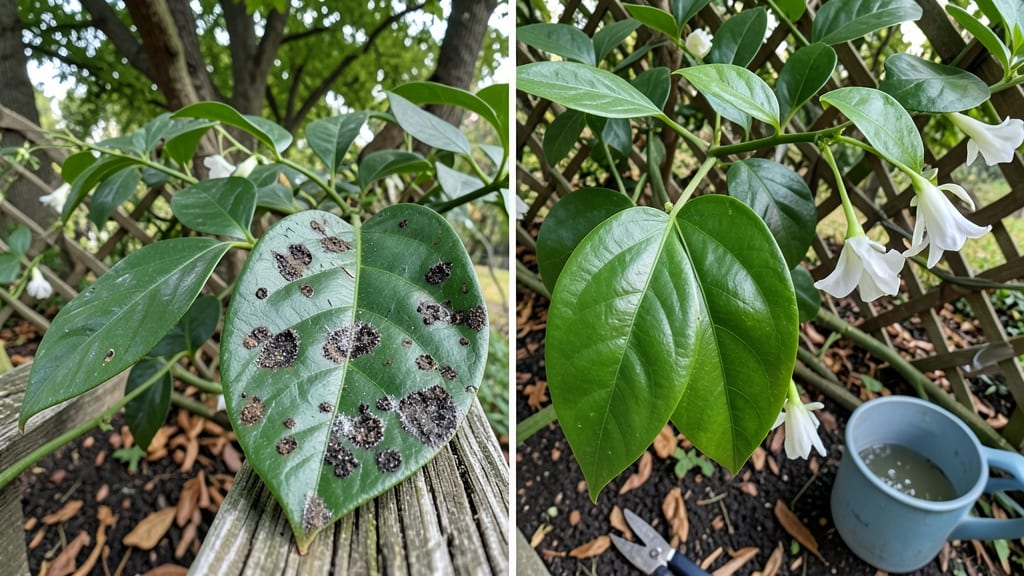
Jasmine plants battling fungus can go from fragrant to failing fast if you don’t act quick. 🌿 I’ve seen powdery white dust or black spots turn lush vines into sad shadows—until I learned the early signs and fixes.
The key is catching it before it spreads to every leaf or root.
Most jasmine fungus starts with powdery mildew or root rot, both thriving in damp, crowded spots. Indoor plants suffer from poor airflow, while outdoor varieties take hits from overhead watering or humidity.
The good news? Neem oil, copper spray, and proper spacing can turn things around before you lose the plant.
You’ll spot the difference within days of treatment—new growth stays clean, leaves stop yellowing, and that sweet jasmine scent returns. The secret is acting fast: wipe leaves, improve airflow, and apply fungicide at the first sign of trouble. No more guessing what’s wrong.
Works for both indoor pots and outdoor trellises—just adjust watering and airflow for your setup. Let’s get those vines back to their best before the fungus wins.
Root Causes Of Fungal Issues
Fungal infections in jasmine plants—like powdery mildew, root rot, or leaf spot—don’t appear out of nowhere. They thrive when specific conditions align, often tied to environmental stress or poor care practices.
Understanding these triggers helps you prevent outbreaks before they take hold. Here’s why fungi target your jasmine and how to spot the warning signs early.
Fungi love moisture, and jasmine plants are especially vulnerable when their roots sit in soggy soil for too long. Root rot (often caused by Phytophthora or Pythium fungi) thrives in waterlogged conditions, cutting off oxygen to roots and leading to yellowing leaves, wilting, and a foul smell.
Why it happens:
- Compacted or heavy soil (like clay) traps excess water, preventing drainage.
- Overzealous watering—jasmines prefer slightly dry soil between waterings, not soggy roots.
- Lack of drainage holes in pots forces water to pool at the bottom.
Actionable fix: Use well-draining soil mixes (add perlite or sand) and water only when the top 1–2 inches of soil are dry. Elevate pots to improve airflow.
Powdery mildew (Erysiphe or Sphaerotheca species) appears as white, powdery patches on leaves, stunting growth and weakening the plant. This fungus spreads rapidly in humid, stagnant air, especially in greenhouses or shaded areas where airflow is limited.
Why it happens:
- Poor ventilation—crowded plants or enclosed spaces trap moisture.
- Sudden temperature drops (e.g., nighttime dew) create ideal fungal conditions.
- Overhead watering leaves leaves damp for extended periods, inviting spores.
Actionable fix: Space plants 12–18 inches apart, use a fan for circulation, and water at the base (never overhead). Prune for better airflow and avoid mulching too close to the stem.
Jasmine plants stressed by extreme heat or cold become immunocompromised, making them easy targets for fungal pathogens like leaf spot (Alternaria or Septoria). Sudden shifts disrupt the plant’s natural defenses, allowing fungi to colonize damaged tissue.
Why it happens:
- Cold snaps weaken cell walls, creating entry points for spores.
- Heat stress (above 90°F) reduces chlorophyll production, leaving leaves vulnerable.
- Drafts or AC vents create microclimates that shock the plant.
Actionable fix: Gradually acclimate jasmine to temperature changes (harden off seedlings). In hot climates, provide afternoon shade, and in cold areas, use row covers or move pots indoors before frost.
Fungal spores lurk in old potting mix, gardening tools, or infected plant debris, hitching a ride to healthy jasmine. Even a single contaminated leaf or pruner can introduce pathogens like Botrytis blight (gray mold), which thrives on dead tissue but spreads to living plants.
Why it happens:
- Reusing dirty pots or soil without sterilization.
- Sharing tools between infected and healthy plants.
- Composting diseased plant material without proper heat treatment.
Actionable fix: Sterilize tools with rubbing alcohol (70%+), use fresh potting mix, and remove fallen leaves/debris promptly. Solarize soil in raised beds by covering it with clear plastic for 4–6 weeks to kill spores.
Insects like aphids, spider mites, or scale damage jasmine leaves and stems, leaving open wounds where fungi like Anthracnose (Colletotrichum) can invade. These pests also excrete honeydew, a sticky substance that promotes sooty mold—a secondary fungal infection.
Why it happens:
- Weakened plants attract pests, which then create fungal entry points.
- Over-fertilizing (especially nitrogen) encourages soft, pest-prone growth.
Actionable fix: Inspect plants weekly for pests. Use neem oil or insecticidal soap for mild infestations, and introduce beneficial insects like ladybugs. Prune heavily damaged foliage and dispose of it in sealed bags.
Jasmine plants deprived of magnesium, calcium, or nitrogen develop weak cell structures, making them susceptible to fungal infections. For example, magnesium deficiency (yellowing between leaf veins) can mimic fungal stress, while calcium deficiency weakens cell walls, inviting pathogens.
Why it happens:
- Poor soil quality lacking essential minerals.
- Overwatering leaches nutrients away before roots can absorb them.
- Improper pH (jasmine prefers 6.0–7.0; acidic soil locks out nutrients).
Actionable fix: Test soil pH and amend with lime (to raise pH) or sulfur (to lower it). Use a balanced fertilizer (10-10-10) or foliar sprays with magnesium (Epsom salt) or calcium (calcium nitrate). Mulch with compost to slowly release nutrients.
Fixing Fungal Issues in Jasmine Plants
Fungal infections can turn your fragrant jasmine plant from a lush beauty into a sad, wilted mess—but don’t panic! With the right approach, you can reverse the damage and keep your plant thriving.
Below, we break down practical solutions tailored to the most common causes of jasmine plant fungus, from powdery mildew to root rot, plus prevention tips to stop future outbreaks.
Cause: High humidity, poor airflow, or overcrowded plants create the perfect breeding ground for this pesky fungus.
How to Fix It: ✅ Prune for Airflow 🌬️
- Trim back dense foliage to improve circulation. Focus on the inner branches where moisture lingers.
- Remove severely infected leaves (sterilize pruners with rubbing alcohol between cuts).
✅ Fungicide Spray (Natural or Chemical) 💦 - Baking soda spray: Mix 1 tsp baking soda + 1 tsp horticultural oil + 1 tsp soap in 1 quart of water.
Spray every 7–10 days until cleared. - Neem oil solution: Combine 1 tbsp neem oil + 1 tsp mild soap in 1 quart of water. Spray early morning or evening to avoid leaf burn. - Store-bought fungicides (like copper-based sprays) work fast but follow label instructions.
✅ Adjust Growing Conditions ☀️💨
- Water in the morning so leaves dry quickly.
- Space plants 12+ inches apart or move to a sunnier spot (powdery mildew thrives in shade).
- Use a fan on low setting near plants to boost airflow.
💡 Prevention Tip: Reflective mulch (like white gravel) under pots can reduce humidity near the soil.
Cause: Overwatering, poor drainage, or soggy soil suffocates roots, inviting fungal pathogens like Phytophthora.
How to Fix It: ✅ Stop Watering Immediately 🚰
- Let the top 1–2 inches of soil dry out before watering again.
- Check drainage: If water pools in the saucer, empty it after 10 minutes.
✅ Repot in Fresh Soil 🏺
- Gently remove the plant and trim mushy, black roots with sterilized scissors.
- Repot in a container with drainage holes using a well-draining mix (cactus/succulent soil + perlite).
- Add fungicide (like mycorrhizal powder) to the new soil for extra protection.
✅ Adjust Watering Habits 💧
- Water only when the top inch is dry (stick your finger in to test).
- Bottom-water occasionally by placing the pot in a tray of water for 10 minutes, then draining.
💡 Prevention Tip: Terracotta pots dry out faster than plastic—consider switching if your jasmine is prone to rot.
Cause: Fungal spores splash onto leaves from overhead watering or contaminated tools.
How to Fix It: ✅ Remove Infected Leaves ✂️
- Snip off spotted leaves at the base and dispose of them in the trash (not compost).
- Sterilize pruners with 70% isopropyl alcohol between cuts.
✅ Targeted Fungicide Treatment 🎯
- Copper fungicide (like Bonide Copper Fungicide) kills leaf spot spores on contact.
- Hydrogen peroxide spray (3% solution, diluted 1:9 with water) can also help as a natural disinfectant.
✅ Water at the Base 🌊
- Avoid wetting leaves—use a soaker hose or water at the soil line.
- Water early in the day so leaves dry before nightfall.
💡 Prevention Tip: Space plants 18+ inches apart to reduce humidity and improve airflow between foliage.
A strong jasmine plant resists fungus better. Try these preventive power moves:
🔥 Fertilize Right 🌱
- Use a balanced, water-soluble fertilizer (like 10-10-10) every 4–6 weeks in growing season.
- Avoid over-fertilizing—too much nitrogen weakens defenses.
🌡️ Monitor Humidity 💦
- Ideal humidity: 40–60%. Use a hygrometer to track levels.
- Dehumidifier or air purifier near plants can help in damp climates.
✨ Beneficial Microbes 🦠
- Mycorrhizal fungi (like MycoApply) form a protective layer around roots.
- Compost tea (homemade or store-bought) boosts soil microbes that outcompete bad fungi.
Final Pro Tip: Quarantine new plants for 2–4 weeks before adding them to your jasmine collection to prevent spreading spores! 🚫🍄
Frequently asked questions
What does jasmine fungus look like on leaves?
Jasmine fungus typically appears as white powdery spots (powdery mildew), dark brown/black patches (leaf spot), or yellowing leaves with mushy stems (root rot). Powdery mildew looks like flour dust, while leaf spot creates irregular brown marks with yellow halos. Root rot shows as blackened, smelly roots and wilting despite moist soil.
Can I save a jasmine plant with root rot?
Yes, but act fast! Trim all blackened roots with sterilized scissors, repot in fresh, well-draining soil, and stop watering until the top 2 inches are dry. Use a fungicide like copper spray to prevent reinfection. Keep the plant in bright, indirect light and avoid overwatering for 2-3 weeks to recover.
Is neem oil safe for treating jasmine fungus?
Mix 1 tablespoon neem oil with 1 teaspoon mild soap in 1 quart of water and spray both sides of leaves. Apply in the evening to prevent leaf burn. Repeat every 7-10 days until symptoms clear. Neem oil disrupts fungal spores while being safe for jasmine plants when used correctly.
Why does my indoor jasmine keep getting fungus?
Indoor jasmine fungus usually stems from poor airflow and high humidity. Place a small fan nearby to improve circulation, reduce watering frequency, and avoid misting leaves. Keep humidity between 40-60% with a hygrometer, and space plants 12+ inches apart to allow air movement through the foliage.
How long does it take to see improvement after treatment?
With proper care, you should see new growth within 5-7 days and noticeable improvement in 2-3 weeks. Powdery mildew may disappear faster (within 10 days) if you prune infected leaves and improve airflow. Root rot recovery takes longer (3-4 weeks) because roots need time to regenerate in fresh soil.