
Pests and Diseases
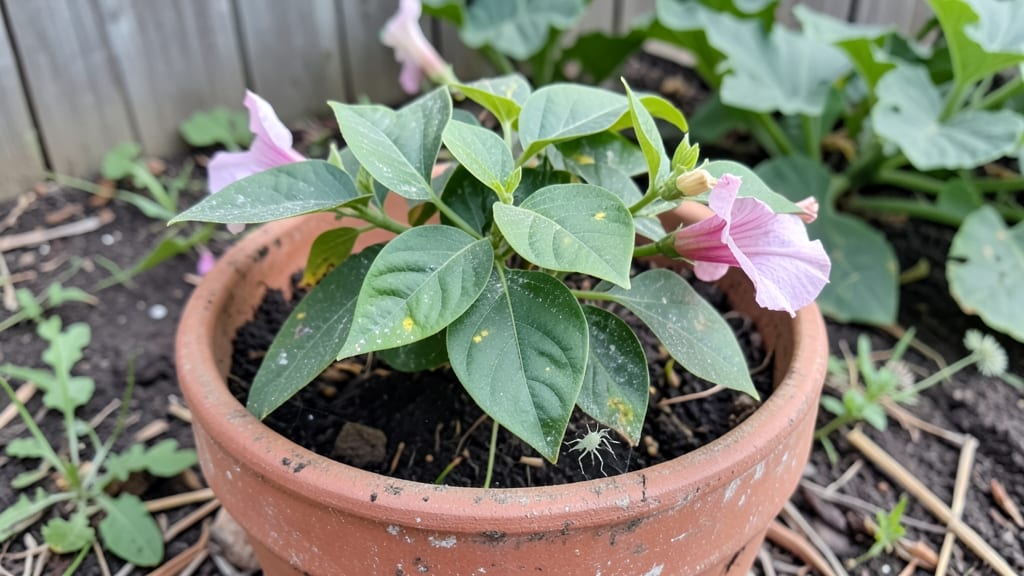
Mandevilla plant diseases can turn your vibrant vines into a sad, spotted mess if you don’t catch them early. I’ve seen powdery mildew turn glossy leaves into dusty ghosts and leaf spots create unsightly holes—both signs your plant’s struggling.
The good news? Most issues start with simple fixes like better airflow or targeted sprays. You’ll learn to spot the warning signs before they spread, so your mandevilla stays lush and blooming all season.
Powdery mildew loves humidity and crowded plants, while leaf spots thrive when leaves stay wet too long. Bacterial infections often show up as yellowing or oozing spots, and environmental stress—like too much sun or poor drainage—can weaken your plant, making it an easy target.
The key is acting fast: prune infected areas, adjust watering, and treat with organic sprays like neem oil or baking soda mix before the problem takes over.
Once you recognize the symptoms, fixing them is straightforward. For fungal issues, a weekly spray of diluted neem oil keeps spores at bay, while bacterial problems might need a copper-based fungicide.
Preventative care—like spacing plants properly and watering at the base—cuts down on future outbreaks. Your mandevilla will bounce back stronger, with fewer spots and more flowers.
This works for both potted and in-ground mandevillas, whether you’re dealing with a single plant or a full garden bed. The same principles apply year-round, so you’ll always know how to keep your vines healthy. Let’s get those plants thriving again—no more wilting or spots in sight.
Root Causes Behind Mandevilla Ailments
Mandevilla plants, with their stunning blooms and lush foliage, can quickly become a garden favorite—but they’re not immune to disease. Understanding why these issues arise is the first step to preventing them. Let’s break down the science behind the most common culprits and how they trigger problems in your Mandevilla.
Mandevilla thrives in well-draining soil, but when roots sit in soggy conditions, they suffocate. Here’s what happens:
- Fungal infections: Excess moisture creates the perfect breeding ground for pathogens like Phytophthora and Pythium. These fungi attack roots, causing root rot—a silent killer that weakens the plant before visible symptoms appear.
- Oxygen deprivation: Waterlogged roots can’t absorb oxygen, leading to anaerobic conditions. This stresses the plant, making it more susceptible to secondary infections.
- Nutrient imbalance: Overwatering leaches essential nutrients (like nitrogen and potassium) from the soil, further weakening the plant’s defenses.
💡 Pro Tip: Use pots with drainage holes and a cactus/succulent mix to prevent waterlogging. Only water when the top 1–2 inches of soil are dry!
Mandevilla’s tropical origins love humidity—but too much moisture in the air (especially above 70% for prolonged periods) turns it into a disease magnet. Here’s how:
- Leaf spot diseases: Fungi like Alternaria or Cercospora latch onto damp foliage, creating dark, circular spots with yellow halos. These spores spread via wind or splashing water.
- Powdery mildew: While less common in Mandevilla, high humidity + poor airflow can trigger this fungal film, coating leaves and blocking sunlight (which the plant needs for photosynthesis).
- Stem rot: Excess moisture on stems (from overhead watering or crowded foliage) invites Botrytis, causing brown, mushy lesions that girdle the plant.
🌡️ Key Factor: Fungi thrive in warm, stagnant air. Improve airflow with strategic pruning and avoid evening watering.
Pests don’t just feed on Mandevilla—they create wounds that let diseases in. Here’s the chain reaction:
- Sap-sucking insects (aphids, mealybugs, scale): Their sticky honeydew attracts sooty mold, a fungal growth that coats leaves and stunts growth. Worse, their saliva introduces bacteria like Erwinia, causing bacterial leaf blight.
- Chewy pests (slugs, caterpillars): Ragged leaf edges and holes reduce the plant’s ability to photosynthesize, making it stress-vulnerable to opportunistic pathogens.
- Root feeders (nematodes): Microscopic worms burrow into roots, creating entry points for Fusarium wilt, a vascular disease that clogs the plant’s water transport system.
🔍 Early Warning: Yellowing leaves or stunted growth? Check for pests before treating for disease—you might be addressing symptoms, not the root cause.
Mandevilla loves warmth (ideal temps: 65–85°F), but extreme conditions throw its immune system off balance:
- Sun scorch: Sudden exposure to intense afternoon sun (especially after cold nights) causes oxidative stress, leading to crispy, brown leaf edges. Weakened cells become easy targets for bacterial leaf spot.
- Cold shock: Temperatures below 50°F disrupt cellular membranes, making the plant more permeable to pathogens. Fungal infections like Septoria exploit this vulnerability.
- Temperature swings: Rapid changes (e.g., moving from indoors to outdoors) confuse the plant’s defenses, leaving it metabolically exhausted.
✨ Solution: Acclimate Mandevilla gradually to outdoor conditions (a process called hardening off) and protect it from frost with frost cloth.
Too little or too much fertilizer throws Mandevilla’s biology out of whack:
- Nitrogen deficiency: Pale yellow leaves signal poor chlorophyll production, weakening the plant’s ability to fight off foliar diseases like powdery mildew.
- Phosphorus/potassium imbalance: Without enough P (for root growth) or K (for disease resistance), Mandevilla’s cell walls become leaky, inviting fungal invasions.
- Salt buildup from over-fertilizing: Excess salts in soil disrupt osmosis, causing physiological drought—even with moist soil. This stress makes roots more susceptible to rot.
📊 Fertilizer Rule: Use a balanced 10-10-10 or 20-20-20 formula sparingly (every 4–6 weeks in growing season). Flush soil annually with water to prevent salt buildup.
Fixing Mandevilla Plant Troubles
Now that you’ve identified the issue plaguing your Mandevilla, it’s time to roll up your sleeves and get to work! Each problem requires a targeted approach—some need quick fixes, while others demand a little extra TLC.
Below, we’ll break down practical, step-by-step solutions for the most common Mandevilla plant diseases, along with prevention tips to keep your vines thriving.
Fix: Fungal diseases thrive in damp, poorly ventilated conditions, so act fast to stop the spread.
🔥 Remove Infected Parts
- 👨🍳 Prune away any yellowing, spotted, or moldy leaves immediately using sterilized pruners (wipe with rubbing alcohol between cuts).
- ⏰ Do this in the morning so the plant has time to dry before evening moisture sets in.
🌡️ Apply Fungicide
- 💡 Use a copper-based or neem oil fungicide (follow label instructions).
- ✨ For severe cases, try a baking soda spray (1 tsp baking soda + 1 quart water + a drop of dish soap) as a natural remedy.
- 🎯 Spray both sides of leaves and the soil surface (but avoid overwatering afterward).
🌬️ Improve Airflow & Light
- 🔪 Thin out dense foliage to allow sunlight and air to circulate.
- 🌞 Move the plant to a spot with bright, indirect light (avoid deep shade).
- ⚡ Use a small fan on low setting near the plant (if indoors) to keep humidity in check.
Prevention Tips: ✅ Water at the base (avoid wetting leaves). ✅ Space plants 12+ inches apart for airflow. ✅ Avoid overhead watering—use drip irrigation or a watering can with a narrow spout.
Fix: Bacteria spread quickly, so sanitation is key.
🔪 Cut Out the Problem Zones
- 👨🍳 Snip off infected leaves (don’t compost them—dispose of them in the trash).
- 🔪 For stem infections, prune 1 inch below the affected area with sterilized tools.
🧼 Clean Everything
- 🧼 Wipe down leaves with a 70% isopropyl alcohol solution (1 part alcohol, 3 parts water).
- 🧼 Sterilize pruners between cuts to prevent cross-contamination.
🌿 Boost Plant Health
- 💪 Apply a beneficial bacteria spray (like Bacillus subtilis) to outcompete harmful microbes.
- 🌱 Feed with a balanced fertilizer (10-10-10) to strengthen the plant’s defenses.
Prevention Tips: ✅ Avoid splashing water when watering. ✅ Rotate plants occasionally to prevent water buildup. ✅ Remove fallen leaves promptly to reduce bacterial reservoirs.
Fix: Pests weaken plants, making them more susceptible to diseases. Knock them out before they cause major harm.
🔥 Blast Off Pests with Water
- 👨🍳 Spray leaves with a strong stream of water (aphids and mealybugs hate this!).
- 🌧️ Do this in the morning so the plant dries quickly.
🧴 Use Insecticidal Soap or Neem Oil
- 💡 Mix 1 tbsp mild castile soap or neem oil with 1 quart water, then spray thoroughly.
- ✨ Reapply every 5-7 days until pests are gone.
- 🎯 For stubborn infestations, try horticultural oil (follow label rates).
🕷️ Introduce Beneficial Predators
- 🐞 Release ladybugs or lacewings (available at garden centers) to eat aphids naturally.
- 🕸️ Encourage spider mites’ predators (like predatory mites) if spider mites are the issue.
Prevention Tips: ✅ Inspect new plants before bringing them home (quarantine for a week if possible). ✅ Avoid over-fertilizing (soft new growth attracts pests). ✅ Use reflective mulch (like aluminum foil) to deter whiteflies.
Fix: If your Mandevilla is struggling from too much sun or heat, adjust its care immediately.
🌿 Move to Partial Shade
- 👨🍳 Gradually acclimate the plant to morning sun + afternoon shade (avoid harsh afternoon rays).
- 🌳 Use a sheer curtain if indoors to filter direct sunlight.
💦 Increase Humidity (Indoors)
- 🌡️ Place a humidifier nearby or mist leaves lightly (avoid soggy soil).
- 🌿 Group plants together to create a microclimate.
🌱 Adjust Watering
- 💧 Water deeply but less frequently (let the top 1-2 inches of soil dry out between waterings).
- 🌧️ Use rainwater or distilled water if your tap water is harsh (high chlorine/salts).
Prevention Tips: ✅ Avoid sudden temperature swings (keep indoors between 60-85°F). ✅ Use light-colored pots to reflect heat (if outdoors). ✅ Mulch the soil to retain moisture and regulate temperature.
Final Pro Tip: 💡 Always sterilize tools before and after pruning to prevent spreading diseases! A little prevention now saves hours of cleanup later. Your Mandevilla will be back to blooming beautifully in no time! 🌸
Frequently asked questions about Mandevilla plant diseases
What are the most common signs of fungal infections in Mandevilla plants?
Look for powdery white patches (powdery mildew), dark circular spots with yellow halos (leaf spot), or fuzzy gray mold (Botrytis). These often appear on leaves first, especially in humid conditions. Check undersides of leaves where spores love to hide.
Can I save my Mandevilla if it has bacterial leaf spot?
Yes, but act fast! Prune infected leaves immediately with sterilized tools, then spray with a copper fungicide. Remove fallen leaves and avoid overhead watering. The key is stopping the spread before it reaches the stems.
Why does my Mandevilla get diseases more often in summer?
Summer brings perfect conditions for pathogens: warm temperatures, high humidity, and frequent rain. The combination creates ideal breeding grounds for fungi and bacteria. Improve airflow, water at the base, and avoid evening watering to reduce risk.
Is neem oil safe to use on flowering Mandevilla plants?
Yes, neem oil is plant-safe when used correctly. Dilute it properly (1 tbsp per quart of water) and apply in the evening to avoid sunburn. It won't harm blooms but will help prevent fungal and bacterial issues. Just avoid spraying directly on open flowers.
How can I prevent diseases when growing Mandevilla in containers?
Use well-draining soil mix, ensure pots have drainage holes, and space plants properly for airflow. Water only when the top inch of soil is dry, and avoid wetting leaves. Sterilize tools between plants and remove any yellowing leaves promptly.