
Diseases
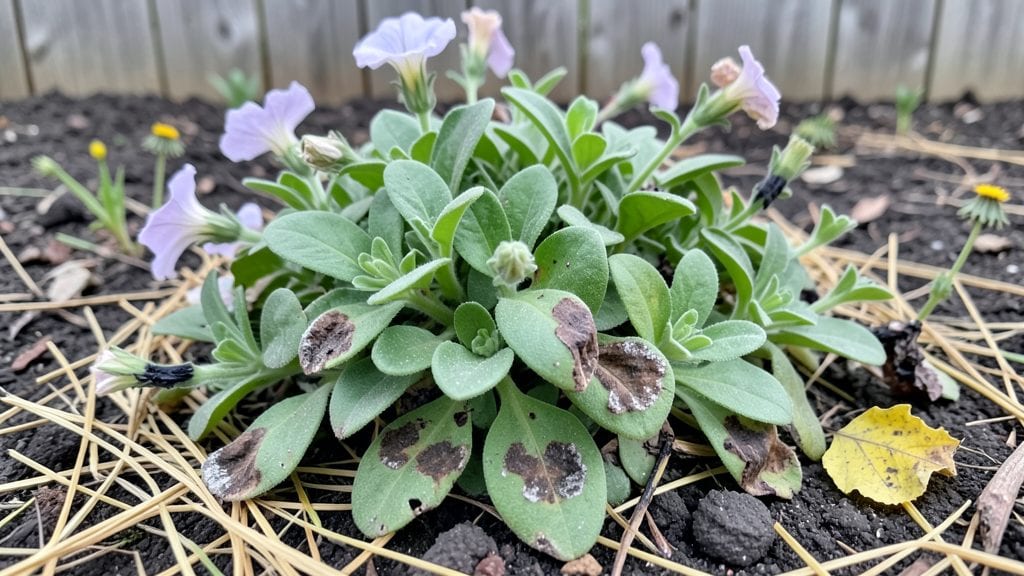
Petunia plant diseases can turn vibrant blooms into sad, spotted messes faster than you’d expect. 🌿 I’ve seen healthy petunias go from showstopper to sad sack in a week—usually from fungal infections or pests hiding in plain sight.
The good news? Most problems have simple fixes if you catch them early.
Powdery mildew, leaf spots, and aphids are the usual suspects, each leaving telltale signs like white dust, brown patches, or sticky residue. The key is acting fast: prune infected leaves, improve airflow, and use organic sprays like neem oil or baking soda mix before the problem spreads.
My petunias bounce back every time I do this.
You’ll end up with petunias that stay lush and bloom nonstop—no more wilting or discoloration ruining your summer display. The secret is prevention: water at the base, avoid overhead spraying, and rotate crops if you garden in the same spot yearly. Trust me, your future self will thank you.
Works for container gardens, hanging baskets, or in-ground plantings—just adjust spacing to keep air circulating. Here’s how to spot the issues before they take over and keep your petunias thriving all season.
Root Causes Of Petunia Ailments
Petunias are stunning, vibrant flowers that brighten up gardens—but they’re not immune to trouble. Understanding why these diseases strike is the first step to prevention. Let’s break down the science behind the most common culprits.
Petunias thrive when their roots have space to breathe. When plants are too close together, humidity rises, and airflow stalls—creating the perfect breeding ground for fungal diseases like Botrytis blight and powdery mildew.
- Why it happens: Dense foliage traps moisture, slowing evaporation. Fungal spores latch onto damp leaves, spreading rapidly in warm, stagnant air.
- Science behind it: Fungi thrive in high humidity (above 70%) and poor ventilation. Without airflow, spores can’t dry out, leading to infection.
- Actionable fix: Space petunias 12–18 inches apart and prune crowded stems to improve circulation.
Petunias hate soggy feet. Overwatering or containers without drainage holes create waterlogged soil, inviting root rot (caused by Phytophthora or Pythium fungi).
- Why it happens: Roots need oxygen. When soil stays waterlogged, beneficial microbes die, and pathogens take over.
- Science behind it: Anaerobic (oxygen-deprived) conditions weaken roots, making them 3x more susceptible to fungal invasion.
- Actionable fix:
- Use well-draining soil (mix in perlite or sand).
- Water only when the top inch is dry—never on a schedule.
- Add gravel or raised beds if drainage is poor.
Dirty pruners, trowels, or even infected neighboring plants can transfer spores like Alternaria or Septoria leaf spot to your petunias. One contaminated cut can spread disease across your entire garden.
- Why it happens: Fungal spores are lightweight and airborne, but they also hitchhike on tools, shoes, or even rain splashes.
- Science behind it: Spores germinate in 24–48 hours when conditions are moist and warm (60–80°F).
- Actionable fix:
- Sterilize tools with 70% isopropyl alcohol or a 10% bleach solution between uses.
- Remove infected leaves immediately and dispose of them in the trash (not compost).
- Avoid overhead watering—use drip irrigation instead.
Petunias are tender annuals—too much sun or sudden temperature drops weaken their defenses, making them vulnerable to bacterial wilt or viruses like Tobacco Mosaic Virus (TMV).
- Why it happens:
- Heat stress: Temperatures above 90°F cause wilting, slowing nutrient uptake and reducing disease resistance.
- Cold shock: Frost or chilly nights (below 50°F) disrupt cellular function, leaving plants open to infections.
- Science behind it: Stress triggers ethylene production, a plant hormone that accelerates decay when pathogens are present.
- Actionable fix:
- Provide afternoon shade in hot climates (use shade cloth if needed).
- Mulch with straw or wood chips to regulate soil temperature.
- Avoid planting in low-lying areas where cold air pools.
Chewing insects like aphids, thrips, or spider mites don’t just damage leaves—they inject toxins and create entry points for diseases.
- Why it happens:
- Aphids: Their honeydew attracts sooty mold, blocking sunlight and suffocating leaves.
- Thrips: They scrape plant cells, leaving wounds where bacterial spot can invade.
- Science behind it: Pests disrupt the cuticle layer (the plant’s protective skin), making it 10x easier for pathogens to penetrate.
- Actionable fix:
- Spray with neem oil or insecticidal soap weekly as prevention.
- Introduce beneficial insects like ladybugs or lacewings.
- Remove heavily infested leaves immediately.
💡 Pro Tip: Most petunia diseases start with one of these four factors—moisture, crowding, stress, or pests. Addressing them early can prevent 90% of infections before they spread!
Fixing Petunia Problems Naturally
Ailing petunias don’t have to mean a total loss—with the right care, you can nurse them back to health (or even prevent issues entirely!). Below, we’ve matched common petunia diseases and pests to practical, organic solutions so your blooms bounce back stronger.
Think of this as your petunia first-aid kit, minus the harsh chemicals.
🔥 Cause: Too much moisture, poor airflow, or damp foliage. 👨🍳 Fix It Fast:
- Prune & Space Out Plants 🌿
- Snip off infected leaves (sterilize scissors with rubbing alcohol).
- Space petunias 12–18 inches apart to improve airflow.
- Baking Soda Spray 🧂 Mix 1 tsp baking soda + 1 quart water + a drop of dish soap (as a surfactant). Spray undersides of leaves every 7–10 days. Why it works: Raises leaf pH, making it inhospitable for fungi.
- Neem Oil Treatment 🌿 Blend 1 tbsp neem oil + 1 tsp mild soap + 1 quart water. Spray at dusk to avoid sunburn. Repeat weekly until symptoms fade.
💡 Prevention Tip:
- Water early in the morning so leaves dry by evening.
- Avoid overhead watering—use drip irrigation or a watering can with a narrow spout.
🍳 Cause: Weak plants attract pests; crowded gardens spread them fast. 🔪 Treat Like a Pro:
- Blast Them Off 💦
- Spray plants with soapy water (1 tsp castile soap per quart of water). Focus on undersides where pests hide.
- Introduce Beneficial Bugs 🐞
- Release ladybugs (aphids’ natural predators) or lacewings (eat spider mites). Buy them online or from garden centers.
- Diatomaceous Earth Dust 🏖️ Lightly dust plants (especially leaf undersides) with food-grade DE. It’s non-toxic but deadly to soft-bodied pests. Reapply after rain.
🎯 Prevention Tip:
- Interplant with herbs like basil or marigolds—their scents repel pests.
- Sticky traps near plants catch whiteflies before they multiply.
⏰ Cause: Too much sun, dehydration, or root damage. 🥘 Cool Them Down:
- Shade Cloth ☀️
- Drape 30–50% shade cloth over petunias if temps hit 90°F+. Check for wilting at midday.
- Deep Watering 💦
- Water slowly at the base (1–2 inches deep) rather than shallow sprinkles. Use a moisture meter to check soil—it should stay slightly damp but not soggy.
- Mulch Like a Boss 🌱
- Spread 2–3 inches of organic mulch (straw or shredded leaves) to retain moisture and protect roots.
✨ Prevention Tip:
- Choose heat-tolerant varieties like Petunia ‘Wave’ or ‘Mitchell’—they handle sun better.
- Avoid transplant shock: Harden off seedlings before planting outdoors.
🔥 Cause: Soggy soil, poor drainage, or compacted roots. 👨🍳 Dig In & Revive:
- Check the Roots 🌱
- Gently remove the plant and inspect roots. Healthy roots are firm and white; rotten roots are mushy and brown. Trim away the bad bits with sterilized scissors.
- Repot in Fresh Soil 🏺
- Use a well-draining potting mix (add perlite or sand if your soil is heavy). Ensure the pot has drainage holes.
- Fungicide Tea 🍵
- Brew compost tea (steep compost in water for 24 hours, strain) and water the plant. Why? Boosts beneficial microbes that outcompete rot-causing fungi.
💡 Prevention Tip:
- Test your soil—petunias prefer slightly acidic to neutral pH (6.0–7.0).
- Raise containers on pot feet to prevent water pooling.
🌟 Pro Tip for All Issues: Keep a garden journal! Note when symptoms appear, weather conditions, and treatments. Patterns will help you prevent future outbreaks like a detective.
Remember: Petunias are resilient—with these fixes, they’ll often recover in 2–4 weeks. Stay consistent, and your garden will thank you with bold blooms all season! 🌸
Frequently asked questions
Why do my petunia leaves develop white powdery spots?
That’s likely powdery mildew, a common fungal disease caused by poor airflow and excess moisture. The white dusty coating blocks sunlight and weakens the plant. To fix it, space plants 12–18 inches apart, prune crowded stems, and spray with a baking soda solution (1 tsp baking soda + 1 quart water + a drop of dish soap) every 7–10 days.
Can I save my petunias if the stems turn brown and mushy?
Brown, mushy stems signal root rot or Botrytis blight, often from overwatering or poor drainage. First, remove the plant and trim away rotted roots with sterilized scissors. Repot in fresh, well-draining soil with perlite or sand and water only when the top inch is dry. For extra protection, water with compost tea to boost beneficial microbes.
What’s the best way to prevent pests like aphids from attacking petunias?
Pests thrive on weak plants, so focus on prevention. Start by planting marigolds or basil nearby—their scents repel aphids. Spray plants weekly with neem oil (1 tbsp neem oil + 1 tsp mild soap + 1 quart water) or introduce ladybugs (natural predators). Also, avoid over-fertilizing, as soft new growth attracts pests.
How do I know if my petunias have a viral infection?
Viruses like Tobacco Mosaic Virus (TMV) cause yellowing, mottling, or stunted growth, and there’s no cure—only prevention. If you suspect a virus, remove infected plants immediately (don’t compost them) and sterilize tools with 70% isopropyl alcohol. Strengthen healthy plants by ensuring they get 6–8 hours of sunlight and proper spacing for airflow.
Is it safe to use chemical fungicides on petunias?
Chemical fungicides can work, but they often harm beneficial insects and may leave residues. For organic solutions, try copper fungicide (like copper sulfate) or hydrogen peroxide spray (3% solution, diluted 1:1 with water). Always follow label instructions, and prioritize prevention—like watering at the base and avoiding overhead spraying—to keep diseases at bay.