
Watering
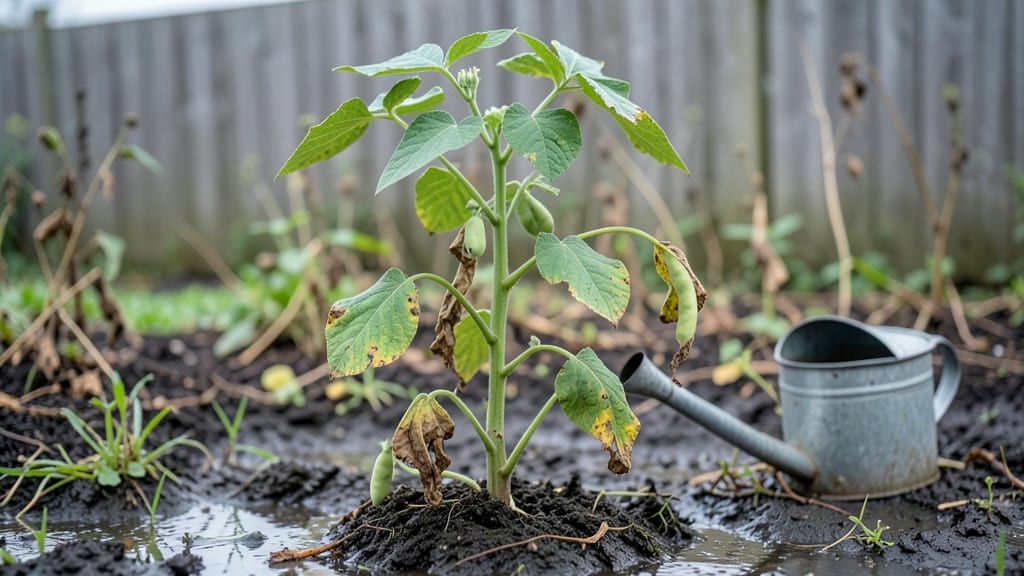
Overwatered bean plants can look like a death sentence—yellowing leaves, limp vines, and that dreaded mushy stem—but I’ve pulled back more than a few from the brink.
The key isn’t just cutting back water; it’s fixing the root of the problem (literally) so your plants bounce back stronger than ever. 🌱
First, stop watering until the top inch of soil feels dry. Then, check for root rot by gently tugging on the plant—if it slides out easily, the roots are already damaged.
Good drainage is your best friend here: mix in perlite or compost to loosen heavy soil, and consider elevating containers if you’re growing in pots.
Within a week, you’ll see new growth as the roots recover. The leaves might turn brown at first, but that’s just the plant shedding damaged tissue to focus on fresh, healthy vines. By the time your beans start flowering again, you’ll be watering with confidence—no more guesswork.
Long-term, space your plants properly (6–8 inches apart) and water deeply but less often. A simple moisture meter can save you from overdoing it again. Trust me, once you’ve seen beans recover, you’ll never treat them the same way.
Root Causes Of Bean Plant Stress
Overwatering bean plants isn’t just a gardening mistake—it’s a silent killer that disrupts their very survival. The problem often stems from a mix of environmental factors, human habits, and even the soil’s behavior.
Understanding these root causes helps you adjust your approach and save your plants before it’s too late. Let’s break down the science behind why your beans might be drowning in their own downfall.
Beans thrive in well-draining soil, but when water pools around their roots, it creates an oxygen-deprived environment. Here’s why this happens:
- Compacted Soil: Heavy clay or tightly packed soil prevents water from seeping away. Roots suffocate because they can’t access the oxygen they need to absorb nutrients.
- No Raised Beds or Containers: Planting directly in ground soil without elevation traps excess moisture, especially in low-lying areas or after heavy rain.
- Lack of Organic Matter: Soil rich in compost or perlite improves aeration, but if your soil is mostly hardpan or sand, water lingers instead of draining.
Pro Tip: 💡 Test your soil’s drainage by digging a hole, filling it with water, and timing how long it takes to drain. If it takes more than 30 minutes, your soil is too dense.
Beans don’t need constant hydration—they prefer consistency. Overwatering often happens when gardeners:
- Water on a Fixed Schedule: Ignoring weather conditions (like rain) and sticking to a rigid routine leads to soggy soil.
- Use the "Finger Test" Incorrectly: Sticking your finger 1-2 inches into the soil and watering if it’s dry is smart—but if you’re checking too shallowly or watering at the wrong time (like evening), moisture doesn’t evaporate properly.
- Rely on Sprinklers: Overhead watering wets leaves, encouraging fungal diseases while oversaturating the roots.
Pro Tip: ✨ Water deeply but infrequently—aim for 1-1.5 inches of water per week, adjusting for rain. Early morning is best to allow foliage to dry quickly.
Heat and humidity play a sneaky role in overwatering. Here’s how:
- High Humidity Traps Moisture: In tropical or rainy climates, air already holds excess water vapor, so soil stays damp longer than it should.
- Cold Nights Slow Evaporation: Cool temperatures reduce the soil’s ability to dry out, leaving roots in a perpetually wet state.
- Greenhouse or Container Heat: Plastic pots or glass greenhouses act like saunas, increasing evaporation from leaves but not necessarily drying the soil.
Pro Tip: 🌡️ Monitor humidity levels—if your area is consistently above 70%, reduce watering frequency and improve airflow with fans or spacing.
Not all beans are created equal when it comes to water tolerance. Some varieties, like:
- Dwarf Beans: Have shallow roots and dry out faster but also struggle in consistently wet soil.
- Bush Beans: Prefer slightly drier conditions than pole beans, which have deeper roots to access moisture.
- Tropical Beans: May wilt if exposed to sudden temperature drops or waterlogged soil.
If you’re growing beans in an environment they’re not adapted to, their roots can’t regulate moisture efficiently, leading to overwatering symptoms.
Pro Tip: 🎯 Pick varieties suited to your USDA hardiness zone—check seed packets for "drought-tolerant" labels if you’re in a dry climate.
Now that you know the culprits, the next step is diagnosing your specific situation. Check your soil, watering habits, and plant variety to pinpoint the exact issue—and then, we’ll show you how to fix it! 🚀
Revive and Prevent Overwatered Beans
Now that you know the signs and causes of overwatered bean plants, it’s time to take action! The good news? Bean plants are resilient, and with the right steps, you can nurse them back to health—even if they’re looking a little sad.
Below, we’ll break down practical fixes for each common cause, plus prevention tips to keep your beans thriving.
Overly wet soil cuts off oxygen to roots, leading to rot and wilting. Here’s how to fix it:
- 🔥 Stop Watering Immediately Let the soil dry out completely before watering again. Check moisture by sticking your finger 1–2 inches deep—if it’s damp, wait another day.
- 🍳 Improve Drainage Fast
- Raise containers (if potted) by placing them on bricks or saucers with drainage holes.
- Add perlite or sand (1 part to 3 parts soil) to loosen compacted soil and improve airflow.
- For garden beds, consider mounding soil around plants to encourage better drainage.
- ⏰ Monitor Recovery Yellowing leaves may persist for a few days, but new growth should appear within a week if roots aren’t severely damaged.
💡 Pro Tip: If roots smell foul or look mushy, trim the affected parts with sterilized scissors and repot in fresh, dry soil.
Yellowing leaves (especially lower ones) signal overwatering or nutrient leaching. Reset your plant’s health with these steps:
- 👨🍳 Prune Damaged Foliage Snip off yellow or brown leaves with clean pruners to redirect energy to healthy growth.
- 🥘 Adjust Your Watering Routine
- Water deeply but less often: Aim for 1–1.5 inches per week (check rainfall + irrigation).
- Water at the base (not overhead) to prevent fungal issues.
- Use the "finger test": Water only when the top 1–2 inches of soil feel dry.
- 🌡️ Boost Nutrients Overwatering flushes out nitrogen. Feed your plants with a balanced fertilizer (10-10-10) or compost tea to restore vigor.
✨ Prevention Hack: Mulch around plants with straw or wood chips to retain even moisture and reduce evaporation.
Black spots, white fuzz, or a musty smell mean fungus has taken hold. Act fast to save your beans:
- 🔪 Remove Infected Parts Cut off moldy leaves and stems immediately. Dispose of them in the trash (not compost).
- 🌿 Treat with Fungicide
- Natural option: Spray with a baking soda solution (1 tsp baking soda + 1 quart water + a drop of dish soap).
- Store-bought: Use copper fungicide or neem oil for severe cases.
- 🌬️ Improve Airflow
- Space plants 12–18 inches apart for better circulation.
- Prune nearby foliage blocking airflow.
- Avoid watering in the evening to let leaves dry quickly.
🎯 Long-Term Fix: Rotate crops next season—don’t plant beans in the same spot if fungus was an issue.
Use this table to track progress:
| Symptom | Action Taken | Expected Recovery Time |
|---|---|---|
| Soggy soil | Improved drainage + less water | 3–7 days |
| Yellow leaves | Pruned + fertilized | 1–2 weeks |
| Mold/fungus | Treated + airflow boost | 5–10 days |
| Wilting stems | Reduced water + support stakes | 1 week |
💡 Final Prevention Tip: Keep a watering journal! Note when and how much you water—this helps you spot patterns (like overwatering after rain) and adjust before problems start.
With these steps, your bean plants should bounce back stronger than ever. Stay patient, and soon you’ll be harvesting lush, healthy vines! 🌱💚
Frequently asked questions
Why do my bean plant leaves turn yellow when I water them?
Yellowing leaves are a classic sign of overwatering because roots suffocate when deprived of oxygen. Check the soil—if it stays soggy for more than a day, you're watering too often. Beans prefer the top inch of soil to dry out between waterings. Try the "finger test" by sticking your finger 1-2 inches deep before watering again.
Can I save my bean plants if the stems feel mushy?
Mushy stems indicate severe root rot, but don't give up yet! First, stop watering immediately and let the soil dry completely. Gently remove the plant and trim away any black, mushy roots with sterilized scissors. Repot in fresh, well-draining soil with perlite or sand mixed in. If the roots are mostly healthy, it should recover within 1-2 weeks.
How often should I really water my bean plants?
Beans need about 1-1.5 inches of water per week, including rainfall. The key is deep, infrequent watering rather than daily light sprinkles. Water at the base in the morning, and avoid wetting the leaves. In containers, check soil moisture daily—small pots dry out faster than garden beds. Mulching with straw helps maintain even moisture levels.
What's the difference between overwatered and underwatered beans?
Overwatered beans show yellowing leaves (especially lower ones), mushy stems, and a foul smell from roots. Underwatered beans have crispy, brown edges on leaves and dry, brittle stems. The soil test is key: Stick your finger 1-2 inches deep—if it's bone dry, you're underwatering; if it's damp, you're overwatering. Beans prefer slightly dry soil between waterings.
Will my beans still produce pods if they've been overwatered?
With proper care, most beans will recover and still produce pods, though yields may be smaller initially. Focus on improving drainage and reducing water first. Once new green growth appears (usually within 1-2 weeks), the plant will redirect energy to flowering and pod development. For best results, support vines with stakes and feed with a balanced fertilizer once recovery is underway.