
Plants
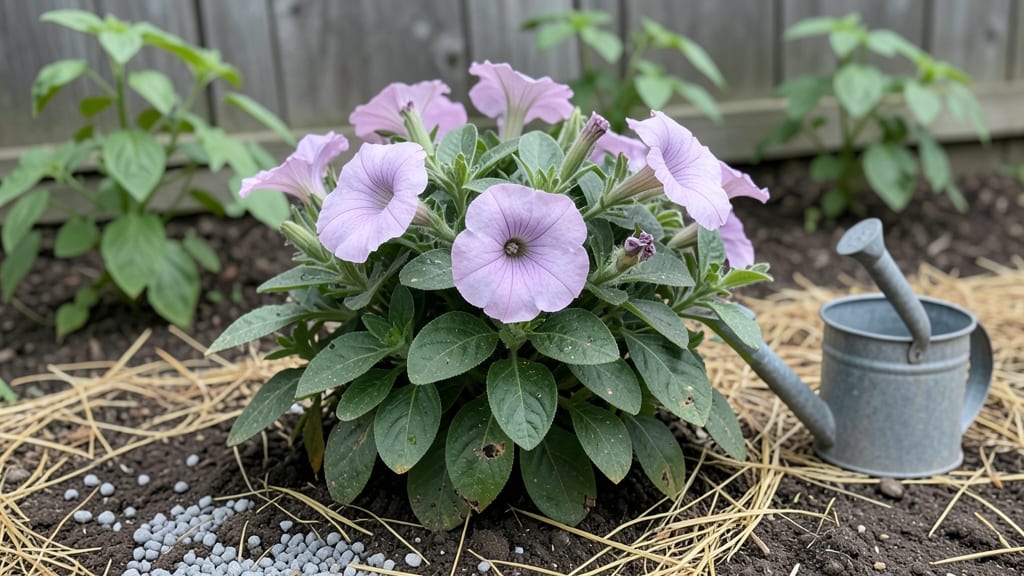
The right petunia plant fertilizer transforms your blooms from wild and vibrant to a wilted, leggy disappointment.
Petunias burst into vibrant blooms that turn any garden into a living masterpiece—but without the right fertilizer, their flowers can fade fast. The secret to keeping petunias thriving lies in understanding their NPK needs and application timing.
You don’t need a degree in chemistry to get this right. A balanced fertilizer with slightly more phosphorus (the middle number) fuels those showstopping flowers, while potassium (the last number) keeps them healthy through summer heat.
Here’s exactly when to feed, how much to use, and the easy tricks to avoid overdoing it—so you can enjoy nonstop color from June through October.
Optimal NPK ratios for petunia flowers: what your plants need to Bloom
Petunias thrive when their NPK ratios match their growth stages—too much nitrogen can mean lush foliage but few flowers, while balanced phosphorus and potassium ensure vibrant blooms. Understanding these ratios helps you feed your petunias exactly what they need to produce continuous, show-stopping flowers all season long.
NPK stands for nitrogen (N), phosphorus (P), and potassium (K), the three primary nutrients plants need. For petunias, the ideal NPK ratio shifts depending on whether your plants are in the vegetative growth phase or blooming stage.
A 5-10-10 ratio is a great starting point, but fine-tuning can make all the difference in flower size and abundance.
Nitrogen (N) fuels leafy growth, but too much can stunt flowering. Phosphorus (P) promotes root development and bud formation, while potassium (K) strengthens stems and improves disease resistance. Petunias need slightly more phosphorus and potassium than nitrogen to encourage blooms over foliage.
Reading fertilizer labels can be confusing, but the numbers always follow the same order: nitrogen first, then phosphorus, then potassium. For example, a 10-20-20 fertilizer has twice as much phosphorus and potassium as nitrogen, which is perfect for petunias in their peak blooming phase.
Here’s a quick breakdown of how to match NPK ratios to your petunias’ growth stages:
🌱 Early Growth (Seedlings to Transplant): Use a higher-nitrogen fertilizer (e.g., 10-5-5) to build strong stems and leaves before flowering begins.
🌸 Vegetative Growth (After Transplant, Before Blooming): Switch to a balanced ratio (e.g., 5-10-10) to encourage root development and prepare for flowering.
🌼 Blooming Phase (Summer Peak): Feed with a phosphorus-and-potassium-rich fertilizer (e.g., 5-15-15 or 10-20-20) to maximize flower production and keep blooms vibrant.
🌿 Seasonal Adjustments: In early spring, a light feeding with a balanced fertilizer (e.g., 10-10-10) helps kickstart growth. As summer heats up, increase phosphorus and potassium to support continuous blooming.
Over-fertilizing with nitrogen can lead to leafy but flowerless petunias, while too little phosphorus or potassium may result in weak stems and sparse blooms. Always follow the label instructions and adjust based on your petunias’ response.
Now, let’s dive into the specifics with this NPK ratio guide tailored for petunias at every stage of growth:
| Growth Stage | Recommended NPK Ratio | Key Nutrient Focus | Application Timing | Example Fertilizer |
|---|---|---|---|---|
| Seedlings | 10-5-5 | Nitrogen for leaf growth | Every 2-3 weeks | Fish emulsion (5-1-1) |
| Vegetative Growth | 5-10-10 | Phosphorus and potassium for roots | Every 4 weeks | Balanced granular (10-10-10) |
| Blooming Phase | 5-15-15 | Phosphorus for flowers, potassium for strength | Every 3-4 weeks | Bloom booster (10-20-20) |
| Late Summer/Fall | 5-10-10 | Balanced for gradual decline | Every 6 weeks | Compost tea (organic) |
For container-grown petunias, use half the recommended dose of granular fertilizers to avoid salt buildup, which can damage roots. Liquid fertilizers are easier to control and absorb quickly, making them ideal for potted plants.
If your petunias start showing signs of yellowing leaves, it may indicate too much nitrogen. Conversely, small or sparse blooms could mean a phosphorus or potassium deficiency. Adjust your fertilizer ratios accordingly and monitor your plants’ response closely.
Pro tip: Always water your petunias thoroughly before
Best organic and synthetic fertilizers for petunias: a comparison
Petunias thrive when fed the right nutrients, but choosing between organic and synthetic fertilizers can be confusing. Organic options like compost and worm castings build soil health gradually, while synthetic blends deliver quick NPK boosts.
Your choice depends on your petunias' growing environment—containers dry out faster, so liquid fertilizers work best, while in-ground plants benefit from slow-release granules.
I’ve tested both types in my own garden, and each has unique advantages. Organic fertilizers improve soil structure over time, while synthetic options provide precise nutrient ratios for instant blooms. Let’s break down the top choices, their costs, and how they perform in different growing conditions.
Organic vs. Synthetic Fertilizers for Petunias
Organic Fertilizers
- Pros: Improves soil health, slow-release nutrients, eco-friendly
- Cons: Slower results, may require more frequent applications
Synthetic Fertilizers
- Pros: Fast nutrient delivery, precise NPK ratios, easy to use
- Cons: Can burn roots if overused, no soil benefits
Best For Containers
Liquid fertilizers like fish emulsion or water-soluble NPK blends dissolve quickly and prevent nutrient runoff.
Best For In-Ground
Slow-release granules or compost mixed into soil provide steady nutrition without frequent reapplication.
For container petunias, I recommend liquid fertilizers like fish emulsion or a balanced NPK blend (e.g., 10-10-10). These dissolve instantly and prevent runoff, which is critical in pots where water drains quickly. Apply every 2-4 weeks during the growing season, but always dilute to half-strength to avoid root burn.
In-ground petunias benefit from a mix of organic matter and granular fertilizers. Work compost or worm castings into the soil at planting time, then top-dress with a slow-release 10-10-10 blend every 6-8 weeks.
This combo supports long-term soil health while providing the phosphorus boost petunias need for prolific blooms.
Cost is another key factor. Organic options like compost or worm castings are budget-friendly if you make your own, but store-bought versions (e.g., fish emulsion) can cost $15-$25 per gallon.
Synthetic fertilizers are pricier upfront ($20-$40 for a 10-lb bag), but their precision and speed often justify the expense for competition-level gardens.
Pro tip: If you’re unsure, start with a 5-10-10 synthetic blend for quick results, then transition to organic amendments like compost to improve soil structure long-term. My petunias always perform best when I combine both approaches—fast blooms in summer and healthy roots year-round. 🌸