
Trees
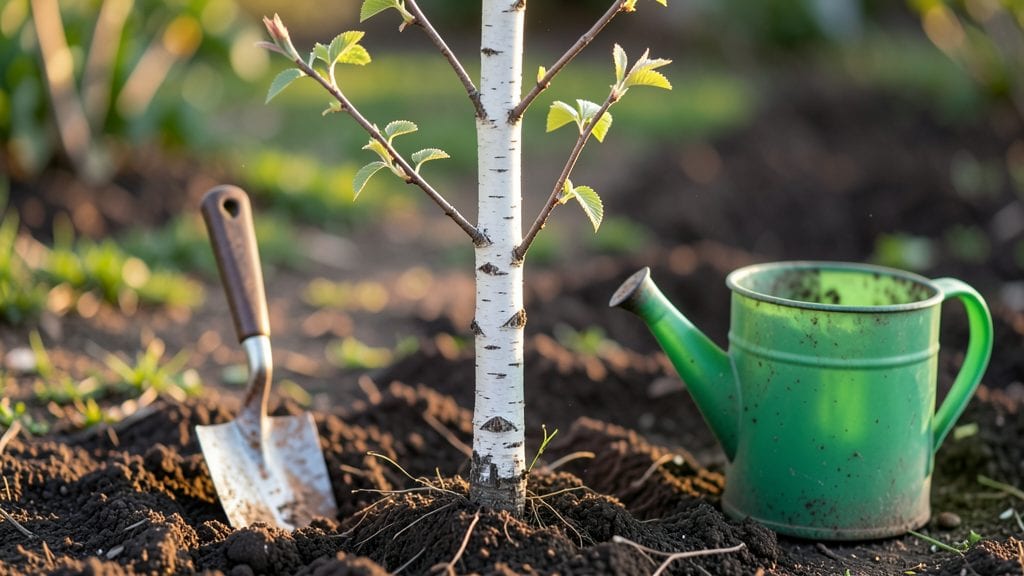
Planting birch trees transforms bare spots into elegant, year-round conversation pieces with almost no upkeep. 🌿 I planted my first birch sapling three years ago, and its delicate branches now dance in the breeze while requiring less pruning than my neighbor’s meticulously trimmed shrubs.
The secret lies in the right timing, soil prep, and a few simple aftercare steps that keep them thriving without the fuss.
You’ll need healthy saplings from a reputable nursery, a sunny spot with well-draining soil, and basic tools like a shovel, gloves, and mulch. Birches tolerate partial shade but shine brightest in full sun—just avoid low-lying areas where water pools.
Spacing matters too: plant them 15-20 feet apart to prevent root competition and give their striking bark room to show off. The best time to plant is early spring or fall when temperatures are mild.
After planting, water deeply to settle the soil and keep it moist for the first 2-3 weeks. A 3-inch layer of mulch around the base locks in moisture and blocks weeds, but avoid piling it against the trunk.
Birches are tough once established, but young trees need consistent watering during dry spells. Within a year, you’ll see that signature white bark emerging, and by year three, it’ll be a standout feature of your landscape.
Here’s the best part: birches handle neglect better than most trees. Once rooted, they need minimal pruning—just remove dead branches in late winter. Their graceful form and golden fall foliage make them a low-maintenance star for any yard.
Ready to add some effortless elegance? Let’s get those saplings in the ground.
📚 In This Guide
- What you need
- Instructions
- Tips and common mistakes
- Wrapping up and next steps
What you need
- ● Birch tree seedlings or saplings: Choose Betula papyrifera (paper birch) or Betula pendula (European white birch) from a reputable nursery. Quantity: 1–3 trees (depending on spacing needs).
- ● Shovel or spade: A heavy-duty garden shovel (16–18 inches wide) for digging holes.
- ● Compost or organic fertilizer: 5–10 lbs of well-aged compost or a balanced 10-10-10 fertilizer to enrich the soil.
- ○ Mulch (optional but recommended): 2–3 inches of wood chips or pine straw to retain moisture and suppress weeds.
- ● Watering can or hose with a gentle spray nozzle: For deep watering (1–2 gallons per tree initially).
- ● Garden gloves: To protect your hands from thorns or rough bark.
- ○ Tree stakes (optional): 2–4 stakes (5–6 feet tall) and soft ties if planting in windy areas.
- ● Sunlight: Full sun to partial shade (6+ hours of sunlight daily for optimal growth).
- ● Soil type: Well-draining, slightly acidic soil (pH 5.0–7.0). Birch trees hate soggy roots—avoid low-lying areas!
- ● Spacing: Tree Size at Maturity Recommended Spacing Small (15–25 ft) 10–15 feet apart Medium (30–40 ft) 20–30 feet apart
- ● Water source: Easy access to water for the first 2–3 years (birch trees need consistent moisture).
- ● Local regulations: Check if your area requires a permit for planting large trees.
Step-by-Step instructions for planting birch trees
Here's how to plant birch trees for stunning year-round interest with almost no fuss.
🌱 Step 1: Choose the Right Location and Prepare the Soil
Birch trees thrive in full sun to partial shade—at least 6 hours of sunlight daily—but tolerate light shade if summers are scorching. I always check the mature height of the variety (some reach 40 feet, while others stay under 20 feet) to ensure enough overhead space. Avoid low-lying areas where water pools, as birches hate soggy roots.
Test the soil by digging a 12-inch-deep hole—birches prefer slightly acidic to neutral pH (6.0-7.0) and well-draining soil. If your soil is heavy clay, amend it with 2 inches of compost mixed into the top 6 inches. Birches aren’t picky, but they’ll grow faster and healthier in loose, fertile soil. Use a soil test kit if you’re unsure about pH.
🪴 Step 2: Dig the Planting Hole and Remove the Tree from Its Container
Dig a hole twice as wide as the root ball but no deeper—birches dislike being planted too deep, which can suffocate their roots. The top of the root ball should sit 1-2 inches above ground level to prevent waterlogging. Gently loosen the roots if they’re circling tightly in the container (I use my fingers to tease them apart).
If planting bare-root trees, soak the roots in lukewarm water for 1-2 hours before planting to rehydrate them. For container-grown trees, remove it carefully, keeping as much soil intact as possible. Place the tree in the hole and fill the gap with native soil, pressing lightly to eliminate air pockets. Water deeply to settle the soil around the roots.
☀️ Step 3: Mulch and Water for Establishment
Spread 2-3 inches of mulch (like wood chips or shredded bark) in a 3-foot-wide ring around the tree, keeping it 6 inches away from the trunk to prevent rot. Mulch helps retain moisture and regulates soil temperature, which is especially helpful in the first 2 years as the tree establishes. Avoid piling mulch against the trunk—this creates a moist environment that invites pests.
Water deeply once a week during the first growing season, providing 10-15 gallons depending on the tree’s size. You’ll know it’s enough when water drains 6-8 inches deep into the soil. Birches are drought-tolerant once established, but young trees need consistent moisture. After watering, check the soil—it should feel damp but not soggy 2 inches below the surface.
✂️ Step 4: Protect and Monitor for the First Year
Young birch trees are vulnerable to deer, rabbits, and voles, so I wrap the trunk with tree guard (available at garden centers) for the first 12-18 months. Stake the tree only if necessary—birches have strong root systems and usually don’t need support unless in windy areas. If staking, use 2-3 stakes and a soft tie to avoid girdling the trunk as it grows.
Watch for yellowing leaves in the first year—this is normal as the tree adjusts. However, if leaves turn brown or crispy, it’s a sign of underwatering or sunburn (common if planted in hot, exposed areas). Birches are low-maintenance, but a little attention in their first year ensures they thrive for decades. Avoid fertilizing unless the soil is very poor—birches grow well in lean conditions.
Tips & tricks for planting birch trees
These simple strategies will help your birch trees thrive from day one with minimal effort.
Soil Preparation Secret: If your soil test reveals a pH outside the 6.0-7.0 range, you can adjust it naturally. For acidic soil, mix in elemental sulfur at the rate of 1 pound per 100 square feet and water thoroughly. For alkaline soil, work in peat moss at a 2-inch layer in the planting hole. Birches are adaptable, but perfecting the pH gives them that extra growth boost in their first two years.
Root Care Technique: When loosening circling roots in Step 2, don't be afraid to be gentle but thorough. Use your fingers to carefully separate roots all around the root ball—this prevents root girdling as the tree grows. For bare-root trees, that 1-2 hour soak is crucial. I like to add a rooting hormone (like a powder or gel) to the water for even better establishment. This simple step can make the difference between a struggling tree and one that takes off quickly.
Mulching Mastery: The 2-3 inch mulch layer in Step 3 serves multiple purposes beyond moisture retention. I recommend using wood chips or shredded bark because they break down slowly, improving soil structure over time. Pro tip: Refresh the mulch layer annually in spring—this maintains the 3-foot-wide ring and prevents that mulch volcano effect against the trunk. A fresh layer also helps deter weeds that compete with your young tree.
Watering Wisdom: That 10-15 gallon weekly watering might seem like a lot, but it's essential for the first growing season. I use a soaker hose placed at the drip line (edge of the canopy) to deliver water slowly and deeply. This encourages deep root growth rather than shallow roots that dry out quickly. After watering, stick your finger 2 inches into the soil—it should feel damp but not soggy. This check prevents both underwatering and overwatering, both of which stress young birches.
Pro Tips for Planting Birch Trees
- These simple strategies will help your birch trees thrive from day one with minimal effort.
- Soil Preparation Secret: If your soil test reveals a pH outside the 6.0-7.0 range, you can adjust it naturally.
- Root Care Technique: When loosening circling roots in Step 2, don't be afraid to be gentle but thorough.
Frequently asked questions
Got questions about planting birch trees? You’re not alone! Here are some of the most common concerns—and straightforward answers—to help you get started with confidence.
When is the best time to plant birch trees?
Birch trees thrive when planted in early spring (just as new leaves emerge) or fall (4-6 weeks before the first frost). Avoid planting in extreme heat or cold—root systems need time to establish without stress. Pro tip: If you must plant in summer, water deeply 2-3 times a week!
How far apart should I space birch trees?
Spacing depends on the variety: Paper birch (Betula papyrifera) needs 15–25 feet, while Yellow birch (Betula alleghaniensis) can handle 20–30 feet. For smaller varieties like River birch, 10–15 feet works. Check your local climate—windy areas may require wider gaps to prevent damage.
Why are my birch tree leaves turning yellow?
Yellowing leaves can signal overwatering, nutrient deficiency (like iron or nitrogen), or fungal issues (e.g., birch leaf spot). Start by checking soil moisture—birches prefer well-draining soil. If the problem persists, test soil pH (ideal: 4.5–6.0) or consult a local arborist for targeted solutions.
Can I plant birch trees in containers?
Yes! Dwarf varieties (like Heritage birch) adapt well to large containers (15+ gallons). Use a fast-draining mix (60% potting soil, 30% perlite, 10% compost) and repot every 2–3 years. Place containers in partial shade and water when the top inch of soil feels dry. Warning: Container birches may need winter protection in cold climates.
Are birch trees prone to pests or diseases?
Birches attract bronze birch borers (a wood-boring beetle) and leaf-eating caterpillars, but healthy trees resist damage. Prevent pests by keeping trees watered and mulched (2–3 inches of organic mulch). If borers appear, prune infested branches and apply beneficial nematodes or insecticidal soap early in the season.
Wrapping up and next steps
Planting birch trees is a rewarding way to add year-round elegance and low-maintenance beauty to your landscape. Their striking bark, delicate foliage, and adaptability make them a standout choice for any garden—whether you’re a seasoned gardener or just starting out.
With the right preparation and care, these trees will thrive and become a stunning focal point for decades to come.
Ready to transform your outdoor space? Start by selecting the perfect spot, gathering your supplies, and following the steps we’ve shared. Then, grab your gloves and get planting—your future shimmering birch grove is waiting! 🌿✨