
Pruning
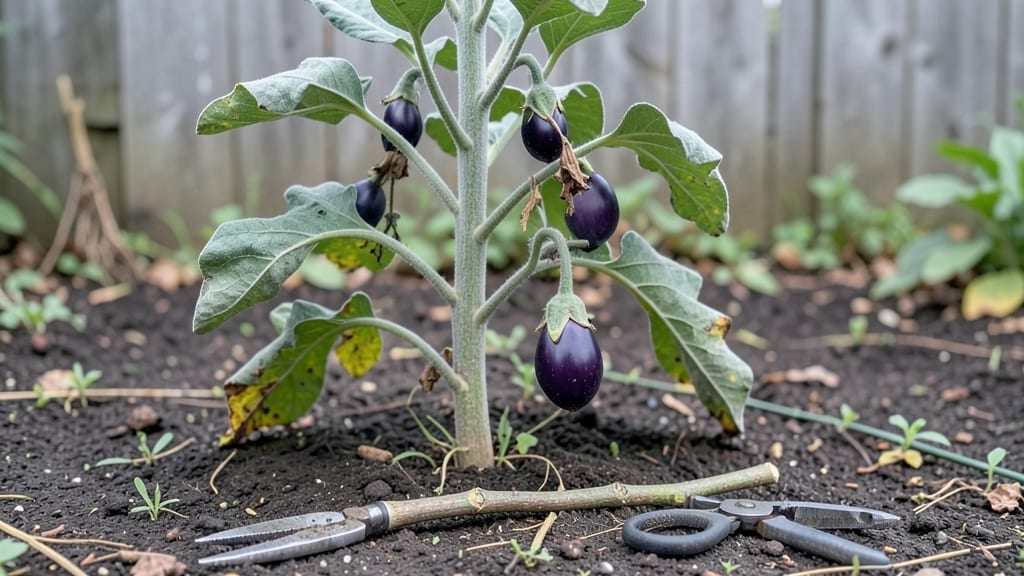
Pruning aubergine plants transforms your harvest from a handful of fruits to a steady supply all season long—something I learned after my first overgrown plant produced just three tiny eggplants. The key isn’t just cutting branches; it’s redirecting energy where it matters most.
I used to think pruning would stress the plant, but now I know it’s the secret to bushier growth and bigger yields.
You’ll need sharp pruning shears, a clean towel to wipe tools between cuts, and about 30 minutes on a dry morning. Focus on removing suckers—the little shoots that form where stems meet branches—and thinning crowded leaves to improve airflow.
This isn’t rocket science, but it does require patience. Start when plants are 6-8 inches tall, and repeat every 2-3 weeks during active growth.
The payoff comes in 4-6 weeks with thicker stems, more flowers, and fruit that’s larger and more uniform. My plants now produce 2-3 times what they did before pruning, and the flavor is richer too.
The trick is balancing cuts—never take more than one-third of the foliage at once, or you’ll shock the plant. After pruning, give them a light feeding with compost tea to recover faster.
This works for both container-grown and in-ground aubergines, though potted plants need slightly more frequent checks. If you’re in a hot climate, prune early in the morning to avoid stressing the plant. Once you’ve mastered the technique, you’ll wonder why you didn’t start sooner—your harvest will thank you.
📚 In This Guide
- What you need
- Instructions
- Tips and common mistakes
- Wrapping up and next steps
What you need
- ● Sharp pruning shears or secateurs – Choose bypass-style (not anvil) to avoid crushing stems. Size: 5-7 inches, with ergonomic handles for comfort.
- ● Clean, sterilized cutting tool (e.g., a disinfectant spray like 70% isopropyl alcohol or bleach solution) – Prevents disease spread between cuts.
- ● Gloves – Nitrile or leather gloves to protect against thorns (some varieties have them!) and dirt.
- ○ Pruning saw (optional but helpful) – For thicker stems 1+ inch in diameter (rare in eggplants but useful for older plants).
- ● Gardening twine or soft ties – Jute or plastic-coated, ¼-inch wide, to support pruned branches if needed.
- ● Compost or mulch – To cover cut stems and reduce moisture loss.
- ● Watering can or hose with a gentle nozzle – For post-pruning hydration.
- ● Plant growth regulator (e.g., seaweed extract) – Apply after pruning to encourage bushier growth.
- ● Labeled markers or tags – If pruning for grafting or specific training (e.g., staking varieties like 'Ichiban').
- ● Knee pad or small stool – For comfort when pruning larger plants.
- ● Disposable plastic bag – To collect pruned debris for composting.
Step-by-Step instructions for pruning aubergine plants
Here’s how to shape your aubergine plants for bigger yields and healthier growth—without stressing the plant.
Identify and Remove Damaged or Diseased Growth
Start by inspecting your aubergine plants for any yellowed, wilted, or spotted leaves, as well as stems that look weak or discolored. These are signs of disease or pest damage that can spread if left unchecked. Using clean, sharp pruning shears, snip away any affected parts just above a healthy leaf node or branch junction. This ensures the plant isn’t left with unsightly stubs that could invite further infection.
I always sterilize my shears with rubbing alcohol between cuts to prevent transferring pathogens. If you notice any blackened or mushy stems, remove those immediately—they won’t recover, and they’ll drain energy from the rest of the plant. Focus on the lower branches first, as these are more prone to touching the soil and contracting rot.
Prune for Better Airflow and Light Penetration
The key to bushier aubergine plants is encouraging airflow and sunlight to reach the inner branches. Start by thinning out crowded stems—look for areas where branches overlap or grow too closely together. Remove any stems that are growing inward, as these will compete for light and nutrients. Aim to leave only the strongest, most outward-facing branches, which will produce more fruit.
I like to step back and visually assess the plant’s shape after each cut. The goal is an open, airy structure where sunlight can hit all sides. Avoid over-pruning, though—never remove more than one-third of the plant’s foliage at once. Aubergines are sensitive to drastic changes, and too much pruning can shock the plant and reduce fruit production.
Encourage Bushier Growth by Pinching Back New Shoots
Once your aubergine plant has established a strong framework, focus on pinching back new shoots to promote bushier growth. Look for the small, undeveloped shoots that form in the leaf axils (the point where a leaf meets the stem). These shoots, if left unchecked, will grow into long, leggy stems that produce fewer flowers and fruit. Using your fingers or shears, pinch them off just above the leaf node.
This technique redirects the plant’s energy toward stronger, more productive branches. I usually do this every 2-3 weeks during the growing season, especially when the plant is actively producing new growth. Watch for the first signs of flower buds—once they appear, stop pinching back to allow the plant to focus on fruit development. The result? A fuller, more productive plant with fewer wasted resources.
Prune for Fruit Production and Plant Health
As your aubergine plant matures, you’ll notice clusters of flowers developing into small fruit. To maximize yield and plant health, prune strategically around these areas. Remove any flowers or fruit that appear on the lower one-third of the plant, as these will ripen first but often stay small and underdeveloped. Instead, focus on encouraging fruit to form on the upper and middle branches, where they’ll receive more sunlight and grow larger.
I also trim back any overly long or leggy stems that aren’t producing fruit. These stems are energy vampires, sapping resources from the rest of the plant. Cut them back to a healthy leaf node, and you’ll see the plant redirect its energy toward stronger, more productive growth. This step is especially important if your aubergines start to look top-heavy or stressed—pruning helps maintain balance and prevents the plant from becoming overwhelmed.
Maintain and Monitor Throughout the Season
Pruning isn’t a one-time task—it’s an ongoing process that keeps your aubergine plants thriving. After your initial pruning, check your plants weekly for new growth, signs of disease, or overcrowding. Remove any suckers (those small shoots that form in the leaf axils) as soon as you spot them to prevent them from competing with your main branches. Keep an eye out for any new flowers or fruit, and adjust your pruning as needed to prioritize the healthiest, most productive areas.
I also recommend pruning in the early morning, when the plant is well-hydrated and the air is cooler. This reduces stress on the plant and gives it time to recover before the heat of the day. As the season progresses, you may need to prune less frequently, but always be ready to step in if you notice any signs of stress or disease. With consistent care, your aubergine plants will reward you with a bountiful, year-round harvest.
Tips & tricks for pruning aubergine plants
These practical tips will help you prune your aubergine plants like a pro, ensuring healthier growth and bigger yields without stressing the plant.
Sterilize Your Tools: In Step 1, when removing damaged growth, always sterilize your pruning shears with rubbing alcohol between cuts. This prevents spreading diseases between plants. I learned this the hard way after losing a whole row of aubergines to a fungal infection that spread through contaminated tools. A quick wipe with alcohol between each cut makes all the difference in keeping your garden healthy.
Visual Assessment Matters: After thinning crowded stems in Step 2, step back and visually assess your plant's shape. The goal is an open, airy structure where sunlight can reach all branches. I find it helpful to imagine sunlight coming from all directions—this helps me identify which branches to keep and which to remove. Remember, you should never remove more than one-third of the plant's foliage at once, as aubergines are sensitive to drastic changes.
Timing for Pinching: The 2-3 week interval for pinching back new shoots in Step 3 is ideal for maintaining bushy growth. I usually set a reminder on my phone to check my plants every three weeks during the growing season. When you see the first signs of flower buds, stop pinching back immediately to let the plant focus its energy on fruit development. This timing ensures you're not accidentally removing potential fruit-bearing branches.
Strategic Fruit Pruning: When pruning for fruit production in Step 4, focus on removing flowers and fruit from the lower one-third of the plant. These often stay small and underdeveloped while competing with fruit higher up. I like to think of this as "pruning for quality over quantity"—by removing these lower fruits, the plant can redirect its energy to producing larger, healthier fruit on the upper and middle branches where they receive more sunlight.
Pro Tips for Pruning Aubergine Plants
- These practical tips will help you prune your aubergine plants like a pro, ensuring healthier growth and bigger yields without stressing the plant.
- Sterilize Your Tools: In Step 1, when removing damaged growth, always sterilize your pruning shears with rubbing alcohol between cuts.
- Visual Assessment Matters: After thinning crowded stems in Step 2, step back and visually assess your plant's shape.
Frequently asked questions
Got questions about pruning aubergine (eggplant) plants?
You’re not alone! Here are answers to the most common concerns—from timing to troubleshooting—to help you grow healthier, more productive plants all season long.
When is the best time to prune aubergine plants?
Prune your aubergines early and often—start when plants are 12–18 inches tall and continue throughout the growing season. Focus on removing suckers (side shoots) in the morning for faster healing. Avoid heavy pruning late in the day, as it can stress the plant overnight. Pro tip: Prune just above a leaf node (where leaves grow) to encourage bushier growth.
How often should I prune aubergine plants?
Check your plants weekly for new suckers (those tiny shoots growing between the main stem and branches). Remove them as soon as you spot them—this keeps energy flowing to fruit production. Over-pruning (more than 1–2 times per week) can weaken the plant, so balance is key! Pro tip: Use sharp, clean pruners to avoid damaging stems.
Will pruning my aubergine plant reduce my harvest?
Not if done right! Pruning actually boosts fruit production by redirecting energy to fewer, larger, and healthier eggplants. Overcrowded plants often yield smaller, misshapen fruit. Just avoid cutting into the main stem or removing too many leaves at once—keep at least 50% of the foliage to maintain photosynthesis. Pro tip: Prune aggressively early in the season, then taper off as flowers appear.
What should I do if my aubergine plant looks sad after pruning?
If your plant wilts or drops leaves post-pruning, it’s likely stressed—especially in hot weather. Revive it by watering deeply at the base (not the leaves) and providing afternoon shade for a few days. Avoid fertilizing right after pruning; wait 3–5 days. If yellowing persists, check for pests or disease. Pro tip: Mulch around the base to retain moisture and reduce shock.
Can I prune aubergine plants in containers or small spaces?
Container-grown aubergines need more frequent pruning to prevent root-bound stress. Use pruning shears to trim suckers and encourage upward growth. If space is tight, opt for dwarf varieties like ‘Fairy Tale’ or ‘Patio Baby’—they’re naturally bushier and require less aggressive pruning. Pro tip: Rotate containers occasionally for even sunlight exposure.
What’s the worst mistake to avoid when pruning aubergines?
The biggest no-no? Pruning too late in the season or cutting into the main stem. This can stunt growth or invite disease. Also, avoid leaving jagged cuts—always snip cleanly above a leaf node. Over-pruning flowers or fruit can reduce yields, so prioritize suckers and lower branches. Pro tip: If you’re unsure, less is more—err on the side of caution!
Wrapping up and next steps
Pruning your aubergine (eggplant) plants is your secret weapon for bushier growth and a longer harvest season—no green thumb required! By removing suckers, shaping branches, and keeping your plants healthy, you’ll enjoy plump, productive fruits all year round. 🌱✨
Now that you’re armed with the right techniques, grab those shears and get pruning! Start with your oldest plants to build confidence, then expand your skills. Soon, you’ll be the proud gardener with the juiciest aubergines on the block—happy growing! 🌿💚