
Pruning
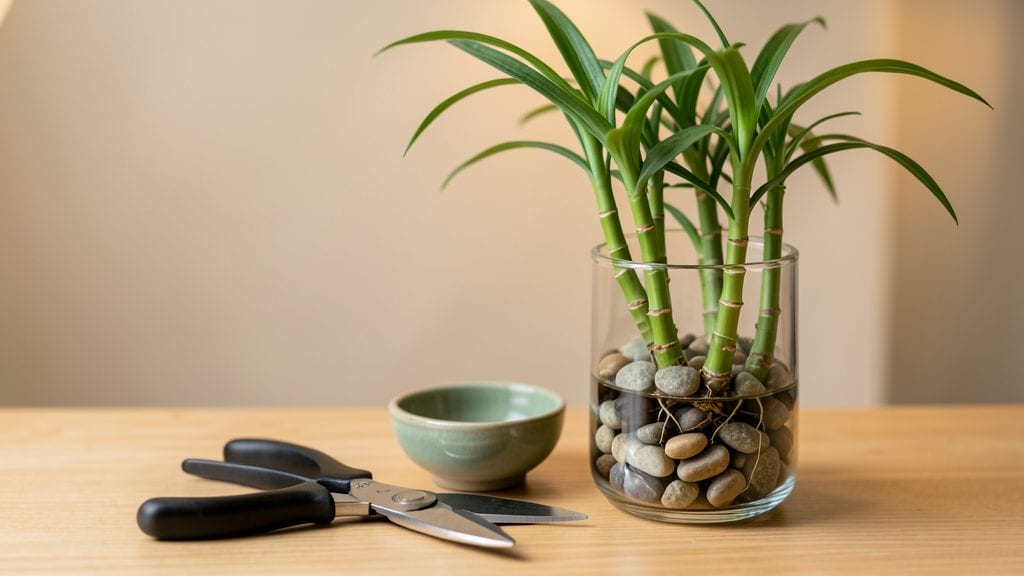
Pruning bamboo plants keeps them from turning your yard into a jungle. ✨ I’ve wrestled with bamboo’s relentless growth—until I learned these three strategic cuts that transform it from a nuisance into a lush, manageable feature.
The key isn’t just cutting back; it’s timing, technique, and knowing whether your bamboo spreads by clumps or runners.
You’ll need sharp pruners, gloves, and a clear day to work. For running bamboo, the first cut comes in early spring to contain rhizomes; clumping types need pruning after flowering to redirect energy.
Most mistakes happen when people cut too late in the season or hack at the wrong stems—both leave plants stressed and uneven.
By mid-summer, your bamboo will look intentional, not invasive. New shoots emerge thicker, and the plant focuses energy on upward growth instead of spreading. The aesthetic shift is immediate: instead of a wild tangle, you’ve got a structured screen or privacy hedge that actually enhances your landscape.
This method works for both sunny borders and shaded corners, though tropical varieties may need adjustments. Start with one section to test your approach—once you see how quickly it responds, you’ll wonder why you waited so long.
📚 In This Guide
- What you need
- Instructions
- Tips and common mistakes
- Wrapping up and next steps
What you need
- ● Pruning shears – Bypass pruners (for clean cuts on smaller stems, 4–6 inches long) or loppers (for thicker stalks, 8–12 inches with long handles). Quantity: 1–2 pairs.
- ● Pruning saw – Curved-tooth saw (for large, woody stalks >1 inch thick). Quantity: 1.
- ● Gloves – Heavy-duty, cut-resistant (e.g., leather or reinforced fabric) to protect against sharp edges and sap. Quantity: 1 pair.
- ● Disinfectant – 70% isopropyl alcohol or bleach solution (1 part bleach : 9 parts water) to sterilize tools and prevent disease. Quantity: Small bottle or spray.
- ○ Sharpie or marker – For labeling cuts (optional but helpful for tracking regrowth). Quantity: 1.
- ● Garden twine or zip ties – To secure heavy branches post-pruning (prevents snapping).
- ● Wheelbarrow or tarp – For hauling debris (especially for large clumps).
- ● Rake or leaf blower – To clear away pruned material efficiently.
- ● Root barrier saw – If removing running bamboo rhizomes (for invasive species control).
- ○ Pruning sealant – Optional for large cuts to reduce sap oozing (e.g., tree wound paint).
- ● Check local regulations—some areas restrict bamboo removal due to its invasive nature.
- ● Wear long sleeves and pants to avoid sap burns or scratches from sharp edges.
- ● Work on a dry, calm day to avoid slipping or spreading sap.
- ● Have a plan for debris disposal—compost, mulch, or trash, depending on local rules.
Instructions for pruning bamboo plants: year-round control with 3 key cuts
Here’s how I keep bamboo contained and healthy—no matter the season.
✂️ Step 1: Cut Back New Shoots in Early Spring
Bamboo grows aggressively in spring, so I start pruning as soon as new shoots emerge—usually in late February or March when temperatures hit 50°F or warmer. Look for the thick, green growth pushing up from the ground; these are the most invasive culprits. Use clean, sharp pruners to cut them at the base, just above the soil line.
Don’t pull them out—this can damage the rhizome system. Instead, snip them cleanly to prevent disease. If you miss a shoot, it’ll quickly outpace the rest of the plant. I like to do this in the morning when the plant is hydrated, making cuts easier and cleaner.
✂️ Step 2: Trim Overgrown Canes in Late Summer
By mid-to-late August, bamboo canes often grow too tall or spread too wide. I focus on removing thin, weak canes first—these won’t survive winter and take energy from stronger growth. Cut these at the base, then step back to assess the plant’s shape. If any canes are leaning or crossing, trim them back to 1/3 of their height to encourage bushier growth.
This is also the time to remove any dead or yellowing canes—they’ll only weigh down the plant. Use your pruners to make a clean, angled cut just above a node (the bump where leaves grow). Avoid leaving stubs, as they can rot and attract pests.
✂️ Step 3: Prune for Shape and Health in Early Fall
As temperatures drop in September or October, I do a final pruning to prep the bamboo for winter. Focus on thinning out dense areas—this improves airflow and reduces disease risk. Cut back any canes that are too close together or growing in unwanted directions. For running bamboo, dig up and remove any underground runners that have escaped the barrier.
If your bamboo is clumping-type, you can also trim back 1/4 to 1/2 of the height to encourage new, stronger growth next spring. Just avoid heavy pruning too close to winter—you don’t want to stress the plant before dormancy.
⏰ Step 4: Clean Up Debris in Late Fall
After pruning, remove all cuttings and debris from the area. Leaving old canes or leaves can harbor pests and diseases over winter. I rake up everything and dispose of it in the trash—not the compost—since bamboo debris can spread pathogens. This keeps your plant healthy and your garden tidy.
Now’s also a good time to check your bamboo’s barrier (if you have running types). Ensure it’s still intact and buried deep enough to prevent rhizomes from escaping. A little maintenance now saves a lot of work later!
Tips & tricks for perfect bamboo pruning
Keeping bamboo under control takes strategy—here's how to avoid common mistakes and get professional results every time.
Timing is Everything: I can't stress enough how important the 50°F temperature threshold is for spring pruning. If you prune too early when nights are still cold, you'll stress the plant. Wait until mornings consistently stay above 50°F—this ensures the plant has enough energy to recover and grow strong new shoots. I usually check my local weather forecast for the first 50°F+ morning in late February or March.
Tool Selection Matters: Don't use dull pruners—they crush stems instead of making clean cuts. Invest in a good pair of bypass pruners for clean cuts through thick bamboo shoots. For larger canes, I use loppers to avoid damaging the plant. Always sterilize your tools with rubbing alcohol between cuts to prevent spreading disease from one part of the plant to another.
Pruning Technique for Healthy Growth: When trimming back to 1/3 of height in Step 2, always cut just above a node (the bump where leaves grow). This encourages new growth from that point rather than leaving a bare stem. For clumping bamboo, I make the cut at a 45-degree angle to help water run off and prevent rot. This simple technique makes all the difference in how your bamboo recovers.
Seasonal Prep Strategy: In early fall, focus on thinning out dense areas rather than just cutting back height. Dense growth traps moisture and invites fungal diseases. I space out canes so air can circulate freely—this keeps your bamboo healthier through winter. For running bamboo, I check my barrier system after fall pruning to ensure no rhizomes have escaped during the growing season.
Pro Tips for Pruning Bamboo Plant
- Keeping bamboo under control takes strategy—here's how to avoid common mistakes and get professional results every time.
- Timing is Everything: I can't stress enough how important the 50°F temperature threshold is for spring pruning.
- Tool Selection Matters: Don't use dull pruners—they crush stems instead of making clean cuts.
Frequently asked questions
Got questions about keeping your bamboo under control? You’re not alone—pruning can feel tricky! Here are answers to the most common concerns, from timing to troubleshooting, so you can tackle your bamboo like a pro.
When is the best time of year to prune bamboo?
The ideal time depends on your goals: spring (just before new growth) is best for shaping, while late fall or winter helps reduce energy reserves. For running bamboo, prune aggressively in early spring to curb spread. Avoid heavy cuts in summer—it stresses the plant!
What if my bamboo keeps growing back after pruning?
Running bamboo is stubborn—it regrows from rhizomes (underground stems). To stop it, dig up all rhizomes (yes, even the tiniest ones!) or install a rhizome barrier. Clumping bamboo is easier; just trim canes at the base in early spring. Patience is key!
Can I prune bamboo in summer? If so, how?
Light pruning in summer is fine—focus on dead, diseased, or crossing canes to improve airflow. Avoid heavy cuts, as it can shock the plant. Water thoroughly after pruning, and never remove more than 20-30% of the foliage at once. Think of it as a quick trim, not a haircut!
Do I need special tools to prune bamboo?
Not necessarily! A sharp pair of loppers or pruning shears works for small canes, while a pruning saw handles thicker stems. For running bamboo, a shovel is essential for rhizome removal. Sterilize tools with rubbing alcohol to prevent disease spread.
What if my bamboo looks sad after pruning?
Don’t panic! Yellowing leaves or slow regrowth are normal. Ensure your bamboo gets full sun to partial shade and consistent water (but not soggy soil). Avoid fertilizing right after pruning—wait until new growth appears. Most bamboo bounces back in 4-6 weeks!
Still stumped? Drop your question below—we’ve got your back!
Wrapping up and next steps
Mastering the art of pruning bamboo plants is all about timing, technique, and consistency—and you’ve got the tools to do it right! Whether you’re tackling running or clumping varieties, the three key cuts (spring, summer, and seasonal maintenance) will keep your bamboo lush, controlled, and thriving. 🌿✂️
Now that you’re armed with knowledge, roll up your sleeves and schedule your next pruning session—your bamboo (and your garden!) will thank you. Pro tip: Snap a photo of your bamboo’s growth pattern before cutting to track progress over time!