
Planting
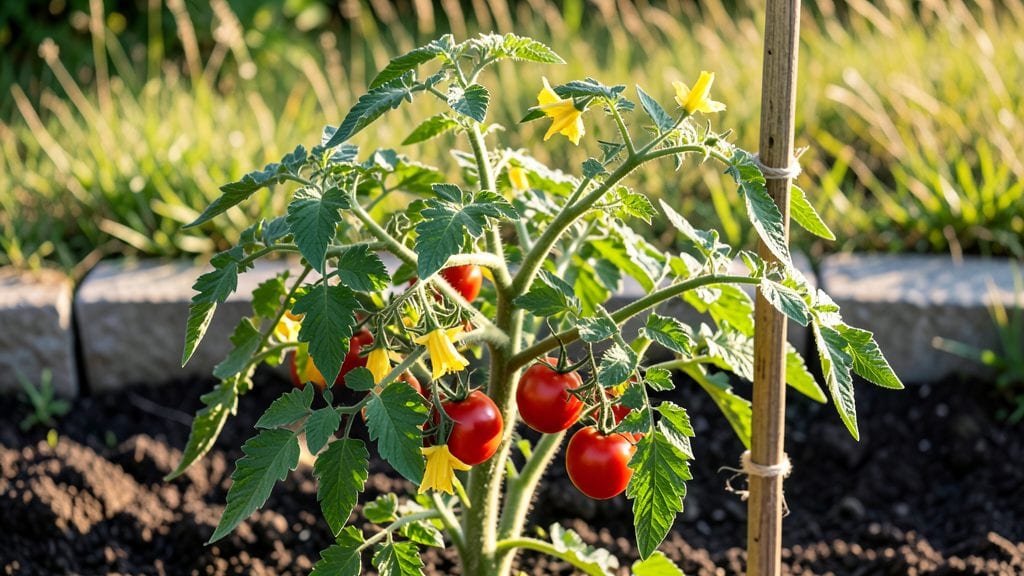
Mastering tomato plant identification by their leaves and stems saves you from buying the wrong variety at the nursery—here’s how to spot the differences before you plant. 🌱 I’ve spent years growing tomatoes and can tell you that a quick leaf check at the seedling stage prevents costly mistakes. later.
Some plants look identical until you see the first fruit—then you realize you’ve got cherry tomatoes when you wanted beefsteaks.
The key is learning three simple traits: leaf shape, stem hairiness, and how the plant grows. Roma tomatoes have deep lobes and fuzzy stems, while beefsteaks sprawl wide with broad, smooth leaves.
Cherry tomatoes often have smaller, serrated leaves and grow in bushy clusters. Once you train your eye, you’ll spot the differences in seconds—no guessing games.
You’ll avoid the heartbreak of harvesting the wrong size or flavor, and you’ll know exactly which plants to keep when seedlings arrive. Even better, you’ll catch early signs of disease before they spread.
A quick exam of the leaves and stems tells you whether that plant is healthy or fighting something serious.
This works for seedlings, mature plants, and even those mystery plants that show up in your garden. Master these visual clues, and you’ll never second-guess your tomato choices again. Here’s how to start telling them apart today.
📚 In This Guide
- What you need
- Instructions
- Tips and common mistakes
- Wrapping up and next steps
What you need
- ● Healthy tomato plants (2–5 plants for comparison, ideally from different varieties like Roma, Cherry, or Beefsteak).
- ● Magnifying glass (1–2x magnification) – for inspecting leaf veins and fine details.
- ● Ruler or measuring tape (12-inch minimum) – to measure leaf size and stem diameter.
- ● Notebook & pen – to record observations (leaf shape, hairiness, color, etc.).
- ● Pruning shears (sterilized) – for safely snipping leaves or stems if needed.
- ○ Camera or smartphone – to capture close-ups of key features (optional but helpful!).
- ● Field guide or tomato ID app (e.g., PlantNet or iNaturalist) – for cross-referencing findings.
- ● Gloves (gardening or nitrile) – to protect hands from prickly stems or sap.
- ● White tray or sheet of paper – for pressing leaves to preserve samples.
- ● Grow light or sunny windowsill – if examining plants indoors.
How to identify tomato plants by leaf shape and stem characteristics
Here's how to decode tomato varieties just by looking at their leaves and stems—no labels needed.
🌿 Step 1: Examine Leaf Shape for Basic Variety Clues
Start by holding a leaf between your fingers and tracing its outline. Indeterminate tomatoes (the vining types that grow continuously) have deeply lobed, jagged leaves with 3-7 pointed serrations along each edge. Think of them as the "fancy" leaves—almost fern-like in their complexity. Determinate tomatoes (the bush varieties that stop growing) have smoother, broader leaves with 3-5 rounded lobes that look more like maple leaves.
Run your thumb along the leaf's edge. If it feels rough and toothy, you're likely dealing with an indeterminate variety like 'Sungold' or 'Brandywine'. Smooth edges suggest determinate types such as 'Roma' or 'Celebrity'. This is the first big clue—don't skip it.
🌱 Step 2: Check Stem Hairiness and Color for Hidden Variety Traits
Look closely at the new growth stems—not the woody main trunk, but the tender, green shoots. Hairy stems (covered in fine, soft hairs) are common in heirloom varieties, while smooth stems often indicate hybrid or modern cultivars. The color matters too: Deep green stems suggest classic varieties, while reddish or purple-tinged stems often point to cherry tomatoes or currant types.
Gently pinch a stem between your fingers. If it feels velvety, you're likely dealing with a heirloom tomato. Smooth stems usually belong to commercial hybrids bred for disease resistance. This trait alone can tell you whether the plant will produce large, flavorful fruits (hairy stems) or uniform, disease-resistant ones (smooth stems).
☀️ Step 3: Compare Leaf Arrangement and Growth Pattern
Observe how the leaves attach to the stem. Indeterminate tomatoes grow in a spiral pattern, with leaves emerging at irregular intervals along the vine. Determinate tomatoes have opposite or alternate leaves that form a more structured, bushy shape. This is your best clue for distinguishing between the two main growth habits.
Watch how the plant branches. Indeterminate varieties send out long, trailing vines with secondary stems that grow continuously. Determinate varieties stay compact, with shorter, sturdier branches that stop growing once they reach a certain size. This difference affects how you'll train and prune the plant—indeterminates need trellises or cages, while determinates thrive in bushy clusters.
✂️ Step 4: Identify Common Hybrid vs. Heirloom Traits
Hybrid tomatoes often have smaller, darker green leaves with thicker stems, while heirlooms tend to have larger, lighter green leaves with thinner, hairier stems. Flip a leaf over and check the underside—hybrids frequently have smooth or slightly waxy undersides, whereas heirlooms often show fuzzy or downy textures. This is a dead giveaway for breeders.
Look for leaf markings too. Yellow or brown spots on the leaves often indicate disease resistance in hybrids, while uniform, vibrant green leaves suggest heirloom varieties that may need more careful pest management. If the plant has large, deeply veined leaves, it's likely an heirloom—these varieties often prioritize flavor and size over disease resistance.
🌱 Step 5: Confirm with Fruit Shape (If Available)
If the plant has already set fruit, this is your final confirmation. Indeterminate tomatoes (the vining types) produce fruits in clusters along the stem, often with irregular shapes and deep colors. Determinate tomatoes (the bush types) bear fruits in tight, compact clusters at the ends of branches, usually with more uniform shapes. This step is optional but gives you the most accurate ID.
Even without fruit, you can often predict the tomato type based on leaf and stem traits. Large, lobed leaves with hairy stems usually mean heirloom slicing tomatoes, while smaller, smoother leaves with thick stems often indicate hybrid cherry or Roma varieties. Once you've mastered these visual cues, you'll never need a label again.
Tips & tricks for perfect tomato plant identification
These practical tips will help you become a tomato plant detective—no labels required!
Leaf Edge Texture Trick: In Step 1, when examining leaf edges, take it a step further by running your thumb along the serrations. Indeterminate tomato leaves should feel like gently brushing your finger along a saw blade—those jagged edges are your first clue. For determinate varieties, the edges should feel smoother, almost like tracing a maple leaf's outline. This tactile difference is often more reliable than just visual inspection, especially in low light.
Stem Texture Test: Don't just look at the stems in Step 2—actually touch them! The velvety texture of heirloom stems is unmistakable when you pinch between your fingers. I've found that holding the stem up to a bright light can also reveal subtle hair patterns that aren't visible to the naked eye. This simple test can tell you more about the plant's heritage than any label ever could.
Growth Pattern Observation: When comparing leaf arrangement in Step 3, pay special attention to the youngest leaves at the top of the plant. The growth pattern there is most indicative of the plant's true nature. I've seen many gardeners misidentify plants by looking at mature leaves—always check the newest growth for the most accurate clues.
Leaf Underside Secret: Flip leaves over in Step 4—this is where many identification secrets hide! Heirloom varieties often have fuzzy or downy undersides that feel almost powdery to the touch. I've used this trick to identify plants in my garden that looked similar from the top but had completely different undersides, revealing their true variety.
Pro Tips for Tomato Plant Identification
- These practical tips will help you become a tomato plant detective—no labels required!
- Leaf Edge Texture Trick: In Step 1, when examining leaf edges, take it a step further by running your thumb along the serrations.
- Stem Texture Test: Don't just look at the stems in Step 2—actually touch them!
Frequently asked questions
Got questions about spotting tomato plants or keeping them thriving? Here are some of the most common ones—and their answers!
How can I tell if a tomato plant is healthy vs. diseased?
A healthy tomato plant has deep green, glossy leaves with no yellowing or spots. Check for strong stems (not mushy or discolored) and white roots when pulled gently. Diseased plants may show brown/black spots (fungus), curled leaves (viral), or wilted stems (blight). Act fast!
When is the best time to identify tomato seedlings vs. weeds?
Identify seedlings 2–4 weeks after planting when true leaves (not cotyledons) appear. Use a magnifying glass to spot serrated leaf edges (tomatoes) vs. smooth or lobed leaves (weeds). Morning light is best—avoid midday heat, which can stress young plants.
Can I grow tomatoes from grocery store tomatoes?
Yes! Save seeds from heirloom or organic tomatoes (avoid hybrids like "Better Boy"). Rinse seeds, dry them, and plant in soil. Note: Store-bought seeds may not match the parent plant’s traits. For guaranteed results, buy seed packets labeled "open-pollinated."
What if my tomato plant looks like a potato plant?
Easy mix-up! Tomato leaves are hairy, deeply serrated, and grow in a staggered pattern. Potato leaves are smooth-edged, broader, and often grow in clusters. Stems also differ: tomatoes are hollow; potatoes are solid when cut.
My tomato plant has strange leaves—what could it be?
| Symptom | Likely Cause | Fix |
|---|---|---|
| Yellow leaves (bottom-up) | Overwatering or nutrient deficiency | Adjust watering; add compost or fertilizer |
| Brown spots with yellow halos | Early blight fungus | Remove infected leaves; use copper fungicide |
| Curled, crinkled leaves | Tomato mosaic virus | Remove plant; disinfect tools; rotate crops |
Pro tip: Snap a photo and compare with local extension guides for a second opinion!
Wrapping up and next steps
Identifying tomato plants by their leaf shape, stem traits, and growth patterns doesn’t have to be a guess—it’s a skill you can master with practice! Whether you’re a gardening newbie or a seasoned green thumb, recognizing these key features helps you nurture the right varieties for your harvest.
Now that you’re armed with these secrets, why not take the next step?
🌱 Ready to Grow?
Start by planting a few varieties side by side and observe their differences firsthand. Keep a journal to track growth, leaf changes, and fruit development—you’ll be surprised how quickly you’ll spot the unique traits you’ve learned! Happy gardening! 🌿