
Pruning
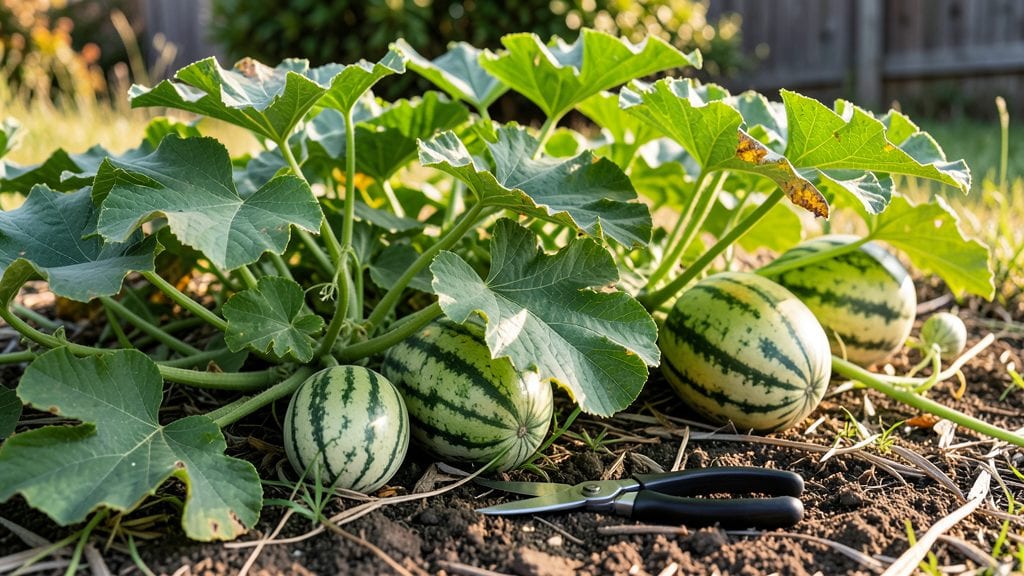
Trimming watermelon plants isn’t just about shaping vines—it’s the secret to bigger, sweeter fruit and vines that don’t collapse under their own weight. I’ve learned the hard way that skipping this step means smaller melons and more disease pressure.
The right cuts redirect energy where you want it: straight into those juicy, heavy fruits.
You only need three things: sharp pruning shears, a pair of gloves (trust me, watermelon vines have thorns), and about 30 minutes on a sunny afternoon. The goal is simple: remove the right growth at the right time, and your plants will reward you with fewer but much larger melons.
Most gardeners overlook this, but it’s the difference between dinner-table conversation pieces and sad, shriveled store-bought rejects.
After just a few strategic cuts, you’ll notice thicker vines, more flowers, and fruit that actually ripens before the birds get to it. The air moves better between leaves, so diseases like powdery mildew stay away.
It’s not rocket science—just smart gardening that turns a good harvest into an embarrassingly productive one.
This works whether you’re growing on the ground, in raised beds, or even in containers. The key is timing: start when vines hit 3-4 feet and keep at it until flowering slows down.
Too late, and you’ll stunt your plant’s growth. Too early, and you’ll sacrifice yield. Let’s get those shears out and make this season your best yet.
📚 In This Guide
- What you need
- Instructions
- Tips and common mistakes
- Wrapping up and next steps
What you need
- ● Clean, sharp pruning shears or bypass pruners – Choose 5- to 6-inch blades with a comfortable grip (avoid dull tools—they crush stems).
- ● Garden gloves – Durable, preferably with a textured grip (protects against thorns and blisters).
- ● Disinfectant (70% isopropyl alcohol or bleach solution) – 1 part bleach to 9 parts water (sterilizes tools between cuts).
- ○ Small pruning saw (optional but helpful) – For thicker vines over ½-inch in diameter.
- ● Mulch (straw, grass clippings, or wood chips) – 2-3 inches thick (reduces soil-borne diseases and retains moisture).
- ● Watering can or hose with a gentle spray nozzle – For post-pruning hydration.
- ● Plant tie-downs or soft twine – To secure vines to a trellis or support structure.
- ● Garden twine or clips – For training vines upward (if trellising).
- ● Compost or fertilizer (balanced 10-10-10) – Small handful per plant after trimming (boosts recovery).
- ● Handheld fan or spray bottle – For quick cooling if trimming on a hot day.
How to trim watermelon plants for stronger growth
Pruning watermelon vines might seem tricky, but this simple approach boosts fruit size and plant health.
Identify and Remove Weak Growth Early
Start trimming as soon as the vines begin spreading. Look for thin, leggy stems that grow upward instead of outward—these compete with fruit production. Use clean, sharp pruning shears to cut these stems back to a strong leaf node, about 2 inches below where they branch. This redirection forces energy into the main vines and developing fruits.
I always check for yellowing or diseased leaves first. Remove those immediately, cutting at the base rather than tearing the stem. Healthy leaves should be deep green and firm to the touch. Avoid pruning during wet conditions—wet cuts invite fungal infections that spread quickly in watermelon plants.
Prune Side Shoots to Encourage Fruit Development
Once the main vines reach 3-4 feet long, focus on side shoots growing from the main stem. These smaller branches often produce flowers but rarely develop full-sized fruit. Pinch off or cut these side shoots when they're 6-8 inches long, just above a leaf node. This prevents overcrowding and ensures the plant directs resources to fewer, larger fruits.
Here's the thing—don't remove all side shoots. Leave 2-3 strong side shoots per main vine to balance growth. You'll know you're doing it right when you see new leaves emerging along the main stem after pruning. These fresh leaves indicate the plant is redirecting energy toward stronger growth.
Thin Fruits and Monitor Vine Health
When small watermelons begin forming, thin them so only 2-4 fruits remain per plant. Cut the smaller or misshapen ones at the stem with your pruners. This might feel wasteful, but it guarantees larger, sweeter melons. Leave the healthiest-looking fruit—the one with the most uniform shape and darkest green rind.
After thinning, give the plant a light watering to help it recover. Check the vines weekly for any new weak growth or yellowing leaves. If you notice powdery mildew or spots, remove affected leaves immediately and consider applying a fungicide. Healthy vines should have thick stems, dark green leaves, and firm, plump fruits developing.
Maintain Through Fruit Development
As the melons grow, continue monitoring the vines. Prune any new side shoots that appear after the initial thinning—these will only divert energy from the fruit. Stop all pruning 4-6 weeks before the first frost in your area, as new growth won't have time to harden off before winter.
Watch for signs of stress, like wilting or curled leaves. These often indicate either too much sun or not enough water. Watermelons need 1-2 inches of water per week, delivered at the base of the plant. Mulch around the base to retain moisture and keep roots cool. By following these steps, you'll end up with fewer but much larger, sweeter watermelons come harvest time.
Tips & tricks for trimming watermelon plants
Watermelon plants reward careful trimming with bigger, sweeter fruit—here's how to get it right every time.
Timing is Everything: Start pruning as soon as you notice those first leggy stems in Step 1, not when they've already taken over. I've seen gardeners wait too long, and by then the plant has wasted energy on weak growth that never produces fruit. The key is to act early—within the first 2 weeks after vines begin spreading. This gives your plant the best chance to redirect energy to where it matters most: the main vines and developing fruits.
Tool Selection Matters: Using clean, sharp pruning shears is non-negotiable. Dull tools crush stems instead of making clean cuts, which stresses the plant and invites disease. I keep a pair of bypass pruners specifically for watermelons and disinfect them with rubbing alcohol between cuts. For side shoots in Step 2, you can pinch them off with your fingers if they're small enough—no tools needed. Just be gentle to avoid damaging the main vine.
Visual Cues for Healthy Growth: When deciding what to trim in Step 3, focus on these visual signals: healthy leaves should be deep green and firm, while weak growth appears yellowish or limp. For fruits, look for uniform shape and dark green rinds—these are your winners. I've learned the hard way that ignoring these signs leads to smaller, less flavorful melons. The plant's natural growth patterns give you all the clues you need if you know what to look for.
Seasonal Considerations: Remember that final note about stopping pruning 4-6 weeks before frost? This is crucial for northern gardeners. Watermelon vines need time to harden off before winter. If you're in a warmer climate, you can extend this window, but don't prune too close to harvest—you want those vines focused on ripening the fruit, not producing new growth. Check your local frost dates and work backward from there.
Pro Tips for Trimming Watermelon Plants
- Watermelon plants reward careful trimming with bigger, sweeter fruit—here's how to get it right every time.
- Timing is Everything: Start pruning as soon as you notice those first leggy stems in Step 1, not when they've already taken over.
- Tool Selection Matters: Using clean, sharp pruning shears is non-negotiable.
Frequently asked questions
Got questions about trimming watermelon plants?
You’re not alone! Here are answers to the most common concerns—so you can prune like a pro and enjoy juicier harvests.
When is the best time to trim watermelon plants?
Trim watermelon vines early in the season (when plants are 6–12 inches tall) to encourage bushier growth. Avoid pruning after flowering—this can reduce fruit production. Focus on removing suckers (small shoots at leaf junctions) and damaged leaves to redirect energy to fruit development.
How often should I trim watermelon plants?
Check plants weekly for suckers or yellowing leaves. Remove unwanted growth as soon as you spot it—especially in the first 4–6 weeks. Once flowers appear, trim only dead or diseased foliage to avoid stressing the plant. Think of it like a quick maintenance task, not a marathon!
What if I don’t trim my watermelon plants?
Skipping trims won’t kill your plants, but you’ll likely get smaller, fewer fruits and more disease risks. Overgrown vines compete for nutrients, leaving less for sweet, plump watermelons. Plus, crowded foliage traps moisture, inviting powdery mildew. A little pruning = bigger payoff!
Can I trim watermelon plants too much?
Yes! Over-trimming (removing more than 25% of foliage) stresses the plant, reducing photosynthesis and fruit set. Rule of thumb: Never prune more than 1/3 of the plant at once. Focus on selective trimming—keep 3–5 main vines per plant to balance growth and yield.
What should I do with the trimmed leaves and suckers?
Toss them in your compost bin only if they’re disease-free. If you spot spots, wilting, or pests, dispose of them in the trash to prevent spreading issues. Avoid adding watermelon clippings to compost if your garden has had fungal problems—better safe than sorry!
Wrapping up and next steps
Trimming your watermelon plants might seem like extra work, but it’s the secret to a bountiful, high-quality harvest! 🌱 By removing suckers, pruning vines, and managing leaves, you’re not just tidying up—you’re directing your plant’s energy toward bigger, sweeter fruits and stronger growth.
With the right tools and a little patience, you’ll be well on your way to a garden that’s the envy of the neighborhood.
Ready to put your new skills to work? Grab your pruners, head outside, and start trimming—your future watermelon feast is waiting! 🍉✨ Happy gardening!