
Watering
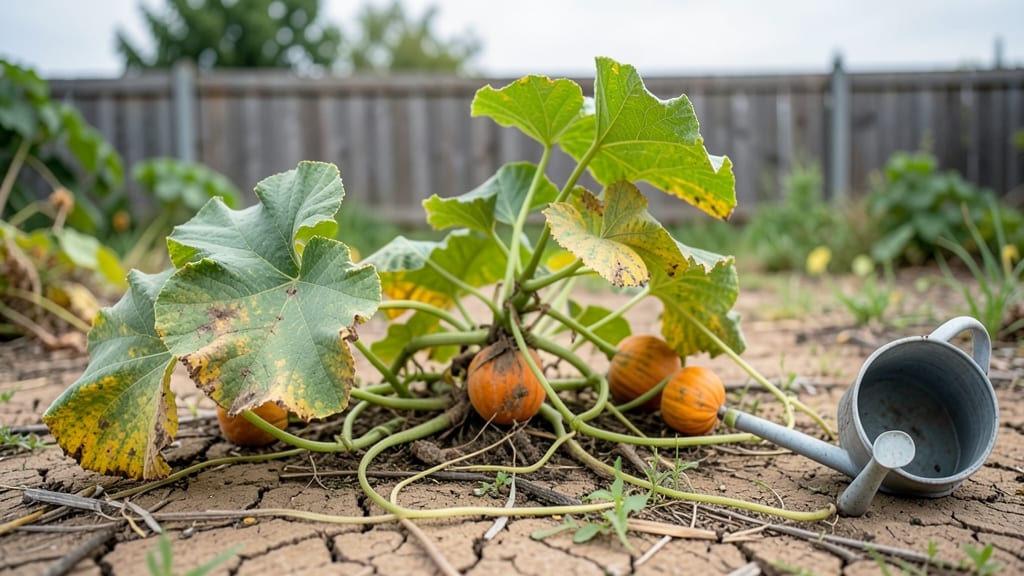
When your pumpkin vines look more like sad spaghetti than thriving vines, it’s time to act fast. 🌱 I’ve revived more underwatered pumpkin plants than I can count, and the secret isn’t just dumping water—it’s checking the roots and fixing the real problem first.
The wilting, dry soil, and crispy edges you’re seeing? That’s your plant screaming for help, but not in the way you think.
Most gardeners water more when they should water smarter. Pumpkins need 1-2 inches of water per week, but heavy, clay soil or hot afternoons can dry them out in half that time.
The first step is a quick root check—gently dig around the base to see if the soil is bone dry or if roots are shriveled. If the roots look like overcooked noodles, you’ve got a bigger issue than just missed waterings.
Within 24 hours of proper watering and soil fixes, you’ll see leaves perk up and new growth push out. Mulch helps lock in moisture, and watering in the early morning keeps roots happy without fungal trouble.
The key is consistency—pumpkins hate dry spells, but they also hate soggy roots. You’ll know it’s working when those vines start stretching toward the sky again.
Prevention is easier than revival: test soil moisture weekly, group pumpkins with thirsty companions like squash, and use drip irrigation if your garden gets hot. Once you’ve got the rhythm, your pumpkins will go from struggling to exploding with growth by harvest time. Let’s turn those sad vines around.
Root Causes Of Wilting Pumpkins
Understanding why your pumpkin plants are underwatered starts with digging deeper—literally. Pumpkins thrive with consistent moisture, and when their roots struggle, the whole plant suffers. Here’s a breakdown of the most common reasons, explained in clear, actionable terms.
Pumpkin plants have deep, sprawling root systems that can extend 3–4 feet into the soil—far deeper than most gardeners realize. 🌱 If you’re watering lightly or only at the surface, the roots below won’t get the hydration they need.
- Why it happens: Pumpkins are heavy drinkers, especially during fruiting. A shallow watering session (like a quick sprinkle) only wets the top 1–2 inches of soil, leaving the lower roots thirsty. - Science behind it: Roots absorb water via osmosis, pulling moisture from the soil.
If the lower roots are dry, the plant can’t transport enough water to the leaves—leading to wilting, even if the soil looks damp. - Actionable fix: Water deeply 2–3 times per week (not daily!). Use a soaker hose or drip irrigation to deliver moisture directly to the root zone.
If your soil is clay-heavy, rocky, or overly compacted, water pools on the surface instead of soaking in—or drains away too fast, leaving roots parched.
- Why it happens: - Clay soil holds water but also smothers roots, cutting off oxygen and preventing deep water penetration. - Compacted soil (from foot traffic or heavy machinery) creates hardpan layers, blocking water from reaching lower roots. - Science behind it: Roots need both water and oxygen.
Waterlogged or compacted soil suffocates roots, forcing them to grow shallowly where they can’t access enough moisture. - Actionable fix: - Test your soil: Stick a screwdriver in—if it resists after 2 inches, your soil is compacted. - Amend with compost (2–3 inches mixed into the top 6 inches) to improve drainage and aeration. - Mulch heavily (4–6 inches of straw or wood chips) to retain moisture and prevent evaporation.
Rain is great—until it’s unpredictable. Pumpkin plants can’t survive on hit-or-miss downpours, especially during drought spells or heatwaves.
- Why it happens: - Evaporation rates skyrocket in hot weather, drying out soil faster than rain can replenish it. - Uneven rainfall (e.g., a single heavy storm followed by weeks of dryness) leaves roots in a cycle of feast-or-famine hydration. - Science behind it: Pumpkins are Cucurbitaceae, meaning they’re sensitive to soil moisture fluctuations.
Sudden drought stress triggers abscisic acid (a plant hormone) that causes wilting as a survival mechanism. - Actionable fix: - Install a rain gauge to track weekly rainfall.
If you get less than 1 inch per week, supplement with irrigation. - Use a moisture meter (cheap and game-changing!) to check soil moisture at 2-inch and 6-inch depths—both should stay consistently damp.
If your pumpkin seedlings or young plants struggled early on (due to transplant shock, pests, or poor starter soil), their roots may never grow deep enough to support the plant’s needs.
- Why it happens: - Transplant shock (common in nursery-bought seedlings) can stunt root growth for weeks. - Pest damage (like squash vine borers or root-knot nematodes) chews up roots before they can expand. - Cold soil (planting too early in cool climates) slows root development. - Science behind it: Roots grow best in warm soil (70°F+) and with undisturbed access to nutrients.
Stress in early stages = weak, shallow roots that can’t sustain the plant’s later growth. - Actionable fix: - Hardening off seedlings properly (gradually exposing them to outdoor conditions) reduces transplant shock. - Soak roots in a fungal inoculant (like mycorrhizae) before planting to boost early growth. - Side-dress with compost mid-season to encourage deeper root branching.
Pumpkins in pots, raised beds, or small garden plots dry out 3–5 times faster than in-ground plants because their roots have limited soil volume to explore.
- Why it happens: - Containers (even large ones) heat up faster, increasing evaporation. - Raised beds drain quickly, especially if not mulched. - Crowded roots (from over-planting) compete for water, leaving some roots dehydrated. - Science behind it: The root-to-soil ratio is critical.
In small spaces, roots can’t spread out, so they over-extract water quickly, leading to wilting even if you water daily. - Actionable fix: - Upgrade to a 55-gallon container minimum (or bury pots halfway in the ground for stability and moisture retention). - Water containers twice daily in extreme heat (morning and late evening). - Use water-retentive crystals (like hydroponic clay pellets) mixed into potting soil.
Revive Your Pumpkin Plants Fast
Now that you know the signs and causes of an underwatered pumpkin plant, it’s time to take action! Pumpkins are thirsty plants, and once they’re struggling, they need a strategic rescue plan. Below are practical, step-by-step solutions tailored to the most common causes—plus prevention tips to keep your vines thriving.
Fix It:
- Deep Watering Is Key 🌱
- Stick your finger 2-3 inches into the soil. If it’s dry, it’s time to water.
- Use a soaker hose or drip irrigation to deliver water slowly to the roots (avoid overhead sprinklers—they waste water and encourage disease).
- Water early in the morning so the leaves dry quickly, reducing fungal risks.
- Check Your Soil Type 🏺
- Sandy soil drains too fast? Add compost or coconut coir to retain moisture.
- Clay soil holds water but can suffocate roots? Mix in perlite or vermiculite for better aeration.
- Mulch Like a Pro 🌿
- Spread 2-3 inches of organic mulch (straw, wood chips, or grass clippings) around the base (but not touching the stem).
- Mulch locks in moisture, cools roots, and suppresses weeds—win-win!
Prevent Future Droughts: ✅ Water consistently—pumpkins hate dry spells. Aim for 1-2 inches of water per week (more in extreme heat). ✅ Monitor weather forecasts—adjust watering before dry spells hit. ✅ Group plants together to create a microclimate that retains humidity.
Fix It:
- Shade Relief ☀️🛡️
- If temperatures soar above 90°F (32°C), provide partial shade with a lightweight shade cloth (30-50% coverage).
- Avoid full shade—pumpkins still need 6-8 hours of sunlight daily.
- Boost Soil Moisture Retention 💧➕
- Amend the soil with well-rotted manure or compost to improve water-holding capacity.
- For container-grown pumpkins, use a moisture-retentive potting mix (like one with peat or coconut coir).
- Hydrate + Feed 🍃💪
- After watering deeply, fertilize with a balanced liquid fertilizer (10-10-10 or 5-5-5) to revive growth.
- Avoid over-fertilizing—this can burn roots when soil is dry.
Prevent Heat Stress: ✅ Water deeply in the morning to help plants cool down. ✅ Use black plastic mulch (absorbs heat) if your climate is hot—it warms the soil and speeds up growth. ✅ Choose heat-tolerant varieties like ‘Howden’ or ‘Cinderella’ if you live in a hot zone.
Fix It:
- Gentle Root Revival 🌿🔄
- Loosen compacted soil around the base with a hand fork—be careful not to damage roots!
- If roots look black or mushy, they’re rotting. Trim the bad parts with sterilized scissors and replant in fresh soil.
- Encourage New Root Growth 🌱💡
- Water lightly for 3 days, then deep-water to flush out stress.
- Add a root booster like kelp meal or mycorrhizal fungi to jumpstart recovery.
- Adjust Your Watering Routine ⏰💧
- Overwatering can suffocate roots. Let the top 1 inch of soil dry out between waterings.
Prevent Root Problems: ✅ Avoid walking on soil near plants—it compacts roots. ✅ Use raised beds if your soil is heavy clay or sandy. ✅ Test your soil’s drainage—if water pools, amend with sand or grit.
If your plant is wilted, yellow, and not recovering after basic fixes:
- Submerge the Pot (For Container Plants) 🏊♂️
- Place the pot in a tub of water for 15-30 minutes to fully hydrate roots.
- Drain well afterward to avoid root rot.
- Prune Damaged Foliage ✂️🌿
- Cut back yellow or crispy leaves to redirect energy to healthy growth.
- Move to a Cooler Spot ❄️🌳
- If heat is the culprit, relocate temporarily to a shadier area until it recovers.
💡 Morning Watering > Evening Watering – Reduces fungal diseases like powdery mildew. 🌡️ Use a Moisture Meter – No more guessing!
These cheap tools tell you exactly when to water. 🚜 Drip Irrigation > Hose – Saves water and delivers it straight to the roots where it’s needed most. 🍂 Harvest Early if Needed – If your plant is beyond revival but has small pumpkins, pick them early—they’ll still be edible!
With these fixes, your pumpkin plant should perk up within 3-7 days. Keep an eye on soil moisture, adjust your care routine, and soon you’ll be feasting on homegrown pumpkins instead of struggling with a sad, thirsty vine! 🎃💦
Frequently asked questions
How do I know if my pumpkin plant is truly underwatered and not just wilting from heat?
Check the soil 2-3 inches deep—if it's dry, that's underwatering. Heat wilting usually happens in the afternoon, while underwatering wilting starts in the morning and worsens all day. Also, heat-wilted leaves often recover at night, while underwatered leaves stay limp.
Can I save my pumpkin plant if the leaves are already crispy and brown?
Trim the damaged leaves immediately to save energy, then give the roots a deep soak. If the stems are still firm and the plant responds within 3-5 days, it can recover. For severely damaged plants, focus on reviving any healthy vines or baby pumpkins that may still form.
Why does my pumpkin plant wilt even after I water it?
Shallow watering only wets the top layer. Pumpkins need deep watering (6+ inches) to reach their extensive root systems. Use a soaker hose or check moisture at 6-inch depth—if it's still dry, you're not watering enough.
Is it better to water pumpkins daily or less frequently but deeply?
Deep watering 2-3 times per week is far better than daily shallow watering. Daily light watering encourages shallow roots that can't support the plant's needs. Aim for 1-2 inches of water weekly, adjusting for heat and soil type.
How can I tell if my pumpkin plant is recovering from underwatering?
Look for new leaf growth at the stem base and leaves that perk up by midday. Within 3-7 days of proper care, you should see vines stretching upward again. The soil should stay consistently moist but not soggy.