
Flowers
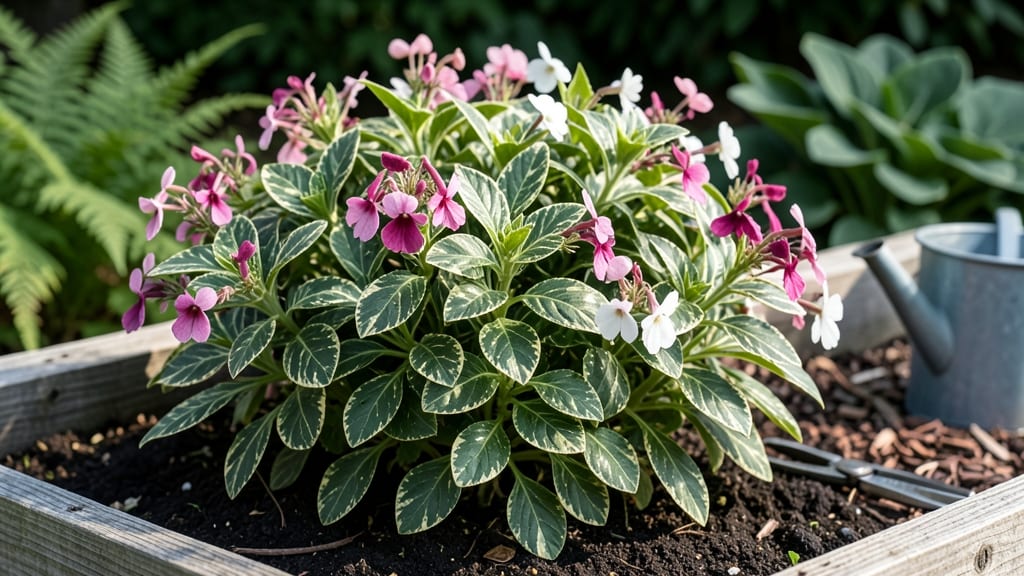
Variegated impatiens plants bring shockingly lush color to shady spots where most flowers give up. 🌿 I’ve grown them in everything from hanging baskets to woodland garden edges, and they never fail to deliver that jewel-toned punch—pink, white, or purple blooms with foliage striped in cream and deep green.
The best part? They thrive where nothing else will.
These shade-lovers demand almost no effort beyond keeping soil moist and roots cool. A 5-gallon container or a spot under trees works perfectly, and they’ll reward you with blooms from early summer straight through fall.
Just avoid full sun—it scalds their delicate leaves—and you’ll get four months of effortless color.
Watch how they fill gaps in your garden like a living watercolor. The variegated leaves catch light differently than solid foliage, creating dappled patterns that make even dull corners feel magical.
And if you snip a stem, you can root it in water for free new plants—no green thumb required.
Perfect for beginner-friendly shade gardens, patios, or even office spaces with indirect light. Once you try them, you’ll wonder how you ever lived without these neighbor-jealousy bloomers in your darkest spots.
📚 In This Guide
- What you need
- Instructions
- Tips and common mistakes
- Wrapping up and next steps
What you need
- ● Variegated Impatiens Plants: 3–5 plants (depending on desired coverage; choose Impatiens walleriana or Impatiens hawkeri varieties with variegated foliage like 'Jungle Flame' or 'Celebrity').
- ● Well-draining potting mix: 1–2 bags (5–10 cubic feet) of a moisture-retentive, peat-based mix (e.g., African violet mix or a 50/50 blend of peat moss and perlite).
- ● Containers or garden beds: Containers: 6–12-inch pots with drainage holes (1–2 pots per plant, or shared planters for grouping).
- ● Garden beds: A shaded area with loose, fertile soil (amend with compost if needed).
- ● Slow-release fertilizer: 1–2 tablespoons of balanced 10-10-10 or 20-20-20 granules (or liquid fertilizer for feeding).
- ○ Mulch (optional but recommended): 1–2 inches of shredded bark or pine straw to retain moisture and suppress weeds.
- ● Gloves: A pair of lightweight gardening gloves (to protect hands from soil and thorns).
- ● Trowel or hand fork: For transplanting or amending soil.
- ● Watering can or hose with a gentle spray nozzle: Variegated impatiens love consistent moisture!
- ● Pruning shears (small, sharp pair): For trimming leggy stems or deadheading spent blooms.
- ○ Spray bottle (optional): For misting leaves on hot days (especially for Impatiens hawkeri).
- ○ Shade cloth (optional): 30–50% coverage if growing in partial sun to prevent leaf scorch.
- ● 🌡️ Temperature: Ensure your growing zone is USDA Zones 10–11 (or start indoors in cooler climates).
- ● ✨ Lighting: Bright, indirect light is ideal—avoid harsh afternoon sun!
- ● 💧 Watering: Keep soil consistently moist (not soggy) for best variegation and blooms.
Step-by-Step guide to planting and maintaining variegated impatiens
Here's how to grow these stunning shade lovers into a nonstop floral display with almost no effort.
🌱 Step 1: Choose the Perfect Planting Location
Variegated impatiens thrive in partial to full shade, making them ideal for areas where other plants struggle. Look for spots receiving 2-6 hours of morning sun or dappled shade all day—direct afternoon sun will scorch their delicate leaves. I always test locations by observing how much light they get between 10 AM and 2 PM, when UV intensity peaks.
These plants despise wind, so position them where they'll be sheltered by trees, fences, or walls. The ideal spot stays humid naturally—think under deciduous trees or near water features. If your yard is dry, you'll need to water more frequently, but the variegated foliage will still shine.
🪴 Step 2: Prepare the Soil and Plant Correctly
Amend your garden soil with 2-3 inches of compost to create loose, well-draining conditions—impatiens hate soggy roots. Work the compost into the top 6 inches of soil, breaking up any compacted layers. These plants prefer slightly acidic soil (pH 6.0-6.5), so if your soil tests higher, mix in 1 cup of peat moss per planting hole to adjust the pH.
Dig holes twice as wide as the root ball but only as deep as the container they came in. Gently remove the plant from its pot, tease apart any circling roots, and place it in the hole so the top of the root ball sits level with the surrounding soil. Press the soil firmly around the roots to eliminate air pockets, then water deeply to settle everything.
💧 Step 3: Water Consistently for Lush Growth
Variegated impatiens demand consistent moisture—never let them dry out completely. Water every 1-2 days during hot weather, aiming for 1 inch of water per week. You'll know you're doing it right when the top inch of soil feels cool and slightly damp to the touch. Mulch around the plants with 2-3 inches of organic mulch (like shredded bark) to retain moisture and suppress weeds.
Here's the thing—overhead watering can cause the variegated leaves to develop unsightly brown spots. Instead, water at the base of the plant using a soaker hose or drip irrigation. If you must use a sprinkler, water early in the morning so leaves have time to dry before evening humidity sets in.
✂️ Step 4: Prune and Fertilize for Continuous Blooms
Pinch back the tips of new growth when plants are 6-8 inches tall to encourage bushier, more compact growth. This simple step prevents leggy stems and ensures a fuller display. I also remove any spent blooms regularly—this isn't deadheading for impatiens, but it keeps them producing new flowers nonstop. Variegated varieties are particularly generous with their blooms, so you'll see constant color if you stay on top of this.
Feed plants every 4-6 weeks during the growing season with a balanced liquid fertilizer (10-10-10 or 20-20-20). Dilute it to half-strength to avoid burning the tender roots. I always fertilize after watering to prevent salt buildup in the soil. Stop fertilizing 6 weeks before your first frost—this helps harden off the plants for winter.
🌿 Step 5: Overwintering for Year-Round Color
Variegated impatiens are tender perennials, meaning they'll die back in frost but can often be brought back with care. Before temperatures drop below 32°F, cut back the foliage to 2-3 inches above the ground. Mulch heavily with 4-6 inches of straw or leaves to insulate the roots. In Zone 8 and warmer, they may survive winter outdoors with this protection.
For colder climates, dig up the plants before hard freezes, pot them in 4-inch containers, and overwinter indoors under grow lights (12-14 hours daily). Keep them in a cool room (50-60°F) and water sparingly—just enough to keep the soil from drying out completely. You'll see new growth in 4-6 weeks, and they'll bloom again by spring.
Tips & tricks for perfect variegated impatiens care
These simple yet game-changing strategies will help your variegated impatiens thrive with minimal effort and maximum impact.
Light Observation Tip: The 2-6 hours of morning sun mentioned in Step 1 is critical, but don't just guess—use a simple test. Place a white piece of paper in potential planting spots between 10 AM and 2 PM. If the paper shows clear shadows for more than 6 hours, that area gets too much direct sun. I've seen impatiens with crispy edges from afternoon sun exposure, and it's heartbreaking to watch.
Soil pH Secret: That 6.0-6.5 pH range in Step 2 is non-negotiable for vibrant variegation. If your soil tests higher, don't just add peat moss—mix in 1 tablespoon of sulfur per square foot of planting area along with the peat moss. This creates a more gradual pH adjustment over time, preventing root shock. Test your soil again after 4-6 weeks to confirm you've hit that sweet spot.
Watering Technique: The consistent moisture requirement in Step 3 is about more than just frequency—it's about method. Use a moisture meter to check that top inch of soil between waterings. I've found that variegated varieties actually prefer slightly more frequent watering than regular impatiens because their lighter foliage can't retain moisture as efficiently. The key is even moisture distribution—never let the soil dry out completely, but avoid soggy conditions that cause root rot.
Pruning Precision: When pinching back those tips at 6-8 inches in Step 4, don't just snip randomly. Use clean, sharp scissors and make cuts just above a leaf node where new growth will emerge. This encourages bushier growth while maintaining the plant's natural shape. I've seen gardeners create dense, almost shrub-like impatiens by consistently applying this technique every 4-6 weeks during the growing season.
Pro Tips for Variegated Impatiens Plants
- These simple yet game-changing strategies will help your variegated impatiens thrive with minimal effort and maximum impact.
- Light Observation Tip: The 2-6 hours of morning sun mentioned in Step 1 is critical, but don't just guess—use a simple test.
- Soil pH Secret: That 6.0-6.5 pH range in Step 2 is non-negotiable for vibrant variegation.
Frequently asked questions
Got questions about keeping your variegated impatiens thriving? You’re not alone! Here are the most common queries—and their easy solutions.
How do I keep variegated impatiens blooming all season?
Variegated impatiens love consistent moisture and partial shade. Deadhead spent blooms regularly to encourage new flowers. Avoid letting soil dry out completely—these beauties wilt fast! Feed with a balanced liquid fertilizer every 4–6 weeks for extra color.
Can variegated impatiens survive winter?
Unfortunately, no—these tender annuals cannot tolerate frost. Treat them as summer/fall favorites. In mild climates, they may linger until temperatures drop below 40°F. For next year, save seeds or start fresh from nursery plants in spring!
Why are my variegated impatiens’ leaves turning yellow?
Yellow leaves usually signal overwatering or poor drainage. Check soil moisture—it should stay damp but not soggy. Ensure pots have drainage holes, and avoid soggy roots. Too much sun can also cause stress; move them to dappled shade if leaves scorch.
What are good alternatives if variegated impatiens don’t thrive?
Try these shade-loving, low-maintenance picks:
- Coleus – Bold foliage, thrives in heat.
- Fuchsia – Long blooms, loves humidity.
- Caladiums – Stunning leaves, great for containers.
- Begonias – Drought-tolerant, comes in variegated varieties.
Are variegated impatiens toxic to pets?
Yes! These plants contain insoluble calcium oxalates, which can irritate pets’ mouths or stomachs if ingested. Keep them out of reach of curious cats and dogs. Opt for pet-safe alternatives like African violets or spider plants if you have furry friends.
Pro Tip:
For extra vibrancy, pinch back leggy stems early in the season. This encourages bushier growth and more blooms—plus, it keeps your variegated impatiens looking lush and full!
Wrapping up and next steps
Variegated impatiens bring a burst of color and life to shady spots with their low-maintenance charm—perfect for gardeners who love effortless beauty! 🌿 Whether you’re a beginner or a seasoned plant parent, these cheerful blooms thrive with just a little attention to soil, light, and water.
Ready to transform your garden? Start by selecting your favorite variegated variety and plant it this weekend—your shade garden will thank you!
🌱 Next Steps:
- Pick your spot: Find that cozy, dappled shade area where they’ll shine.
- Grab supplies: Soil, pots (if needed), and a watering can—you’re all set!
- Plant and enjoy: Follow the care tips, and watch your variegated impatiens bloom like magic.