
Watering
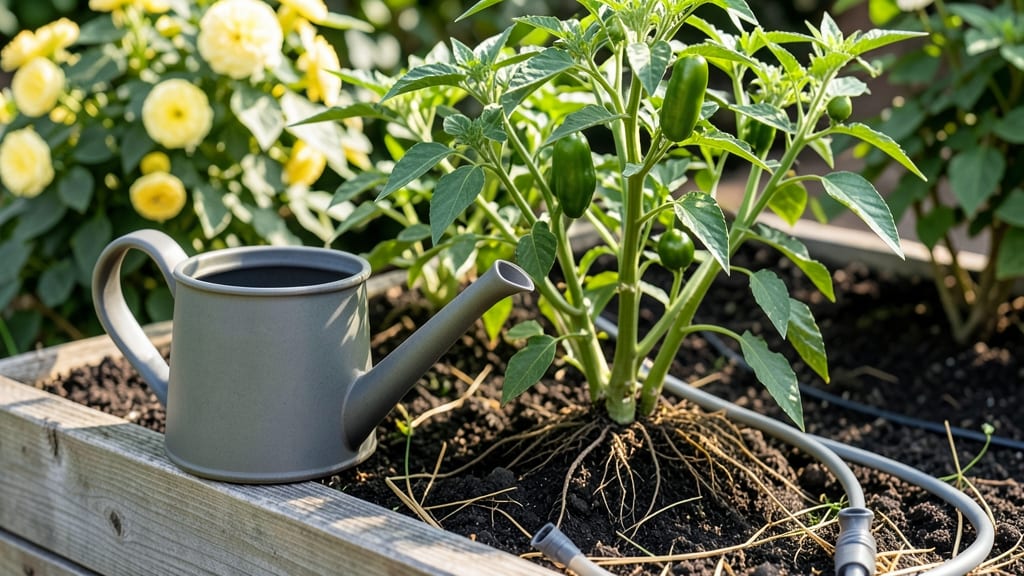
Watering jalapeño plants in hydroponics isn’t just about keeping roots wet—it’s about precision timing and consistency to grow peppers that pack real heat. 🌱 I’ve learned the hard way that too much or too little water throws off the whole system, but the right approach turns those plants into spice factories.
The key lies in matching your water schedule to the system’s needs, not just guessing based on soil experience.
Hydroponic jalapeños need 1-2 gallons of water per plant daily, delivered in short bursts every 2-3 hours through a quality drip system. Check your reservoir levels twice a day—low water means nutrient starvation, while overflow can drown roots.
Mulching (even in hydroponics) helps retain moisture and keeps temperature stable, which is especially critical when summer heat spikes above 85°F.
You’ll know you’ve got it right when plants stay vibrant green with firm stems and no yellowing leaves. Overwatering shows up as limp, mushy growth, while underwatering causes crispy edges and stunted flowers.
The goal is steady, even moisture—never soggy, never dry. With this system, you’ll harvest peppers that are bold, consistent, and packed with flavor every season.
This method works for both soilless hydroponic setups and deep-water culture systems, though container hydroponics may need slightly more frequent checks. Once you master the rhythm, your jalapeños will reward you with heavy yields and fewer pests. Let’s get those plants thriving!
📚 In This Guide
- What you need
- Instructions
- Tips and common mistakes
- Wrapping up and next steps
What you need
- ● Hydroponic System: Choose a deep water culture (DWC), nutrient film technique (NFT), or Kratky method setup (beginner-friendly!).
- ● Jalapeño Seeds or Seedlings: 3–5 seeds or 3–5 healthy seedlings (look for ‘Early Jalapeño’ or ‘Big Jim’ varieties for hydroponics).
- ● Hydroponic Nutrients: A balanced vegetable-specific nutrient mix (e.g., General Hydroponics Flora Series or Fox Farm Trio). Follow label instructions for dilution (usually 1–2 tsp per gallon).
- ● pH Test Kit & Adjusters: Maintain pH between 5.5–6.5 (use pH Up or pH Down solutions as needed).
- ● Grow Lights: Full-spectrum LED (12–16 hours/day; 6000K–7000K color temperature).
- ● Air Pump & Air Stone: Oxygenate water (critical for roots! Aim for 20+ bubbles per second).
- ● Net Pots (for DWC/NFT): 2–3 inch diameter (1–2 per plant).
- ● Rockwool or Hydroton: 1–2 cubic feet (for root support in DWC or Kratky).
- ● Reservoir: Food-grade plastic bucket (5–10 gallons, depending on system size).
- ○ Timer (Optional but Helpful): For automating lights and pumps.
- ● Scissors or Pruners: For trimming plant debris.
- ● Spray Bottle: With water for occasional leaf misting (humidity control).
- ● Thermometer: Monitor water temp (ideal: 65–75°F).
- ● Support Stakes or Trellis: Jalapeños can get bushy—add stakes early!
- ● Calcium Nitrate or Epsom Salt: Boosts plant health if leaves show deficiencies.
Step-by-step hydroponic watering for jalapeño plants
Mastering the hydroponic watering routine transforms jalapeños from finicky to prolific.
💧 Step 1: Establish a Consistent Watering Schedule
Jalapeños in hydroponics demand precision—water every 12-16 hours during active growth, adjusting for 65-75°F room temperatures. I use a timer-controlled nutrient solution reservoir to deliver 1-2 gallons per plant daily, splitting doses into morning and evening cycles. This mimics natural rainfall patterns while preventing root suffocation.
Check the reservoir level before each cycle—never let it drop below 25% capacity, or the pump will pull air into the system. You’ll notice slightly damp but not soggy root mats after each cycle; if they stay glistening, reduce flow by 10%. Overwatering here leads to root rot within 48 hours, while underwatering causes bud drop and stunted growth.
☀️ Step 2: Monitor Nutrient Solution Strength
Jalapeños in hydroponics need balanced 16-18-36 NPK with calcium and magnesium to prevent blossom-end rot. I test the solution weekly using a TDS meter, aiming for 1,800-2,200 ppm during flowering. Dilute the hydroponic nutrient concentrate according to the packet’s flushing schedule—never exceed 2,500 ppm, or you’ll burn roots.
Watch for yellowing lower leaves (nutrient burn) or purple stems (phosphorus deficiency). If you see either, flush the system with pH-balanced water for 24 hours before reintroducing diluted nutrients. The key is consistency: jalapeños respond to gradual changes—never shock them with sudden strength adjustments.
🌱 Step 3: Adjust for Growth Stages
Vegetative growth (first 4-6 weeks) thrives on higher nitrogen—keep TDS at 1,800-2,000 ppm and water every 12 hours. When you spot flower buds, switch to lower nitrogen (12-14%) and increase phosphorus to 18% while maintaining the same watering frequency. This shift triggers fruit set within 7-10 days.
During fruiting, reduce water slightly to 1.5 gallons per cycle—overhydration here dilutes flavor and causes splitting. You’ll know you’ve got it right when peppers plump evenly without cracking. If they stay small or drop prematurely, increase potassium by 10% and check for root oxygen levels—stagnant water smothers roots.
⏰ Step 4: Implement a Flushing Routine
Two weeks before harvest, flush the system with pure, pH-balanced water for 48 hours. This removes excess salts that dull heat and flavor. I do this every 3-4 weeks during peak production, watching for crisp, glossy leaves—a sign of clean roots. If you skip flushing, you’ll end up with bitter, waterlogged peppers that lack the bright green heat jalapeños are known for.
After flushing, reintroduce nutrients at 50% strength for 24 hours before returning to full strength. This gradual reintroduction prevents osmotic shock, where roots struggle to absorb nutrients after a salt-free period. Your plants will bounce back within 3-5 days, showing new growth at the stem tips.
🌿 Step 5: Troubleshoot Common Watering Issues
Leggy stems? Your light’s too far—move it within 12 inches of the canopy and reduce water to 1 gallon per cycle until they compact. White crust on roots? Flush immediately and check your TDS meter calibration. Yellow leaves with green veins? Iron deficiency—add chelated iron to the reservoir and monitor for new growth in 5-7 days.
Real talk: hydroponic jalapeños will test you. The system rewards patience—consistent watering, precise nutrients, and stage-specific care deliver hotter, sweeter peppers than soil-grown plants. Keep a growth journal to track adjustments; you’ll spot patterns before they become problems.
Tips & tricks for perfect hydroponic jalapeño watering
Between us, hydroponic jalapeños reveal their secrets only to those who pay attention to the details. These are the precise adjustments that separate thriving plants from struggling ones.
The Temperature Factor: The 65-75°F range isn't just arbitrary—it's the sweet spot where jalapeños absorb nutrients most efficiently. If your space runs cooler, consider using a small space heater near the reservoir during watering cycles. I've seen plants in 60°F environments struggle with nutrient uptake, even when following all other steps perfectly.
Root Mat Inspection: After each 12-16 hour watering cycle, lift the net pot to check your root mat. It should feel like a damp sponge—not dripping wet, not bone dry. The subtle difference between "slightly damp" and "glistening" determines whether you're growing peppers or breeding algae. I keep a small notebook by my setup to track root mat conditions after each cycle.
Nutrient Transition Strategy: When you spot those first flower buds (around week 4-6), don't just change your nutrient mix—adjust gradually over 3 days. Mix 75% flowering formula with 25% vegetative for the first day, then 50/50 the second, and full flowering by day three. This mimics natural plant development and prevents the shock that causes bud drop.
Flushing Timing: That 48-hour flush before harvest isn't just about cleaning the system—it's about flavor development. Start your flush when peppers are still firm but beginning to color. The final 24 hours of full-strength nutrients after flushing give them that signature bright green heat. I mark my calendar two weeks before expected harvest to never miss this critical window.
Pro Tips for Water Jalapeno Plants
- Between us, hydroponic jalapeños reveal their secrets only to those who pay attention to the details.
- The Temperature Factor: The 65-75°F range isn't just arbitrary—it's the sweet spot where jalapeños absorb nutrients most efficiently.
- Root Mat Inspection: After each 12-16 hour watering cycle, lift the net pot to check your root mat.
Frequently asked questions
Got questions about keeping your jalapeño plants thriving in hydroponics?
You’re not alone! Here are the most common queries—and their spicy solutions.
How often should I water my jalapeño plants in hydroponics?
Hydroponic jalapeños need consistent moisture, but not soggy roots. Check water levels daily—top off the reservoir when it’s 10-20% depleted. Most systems thrive with 15-30 minutes of recirculation every 2-4 hours, depending on the setup. Pro tip: Use an EC/PH meter to adjust nutrient solution daily for peak health!
Can I reuse the water/nutrient solution for my jalapeños?
Yes, but with caution! Recirculate the nutrient solution for up to 2-3 weeks before refreshing it fully. Over time, salts and microbes build up, harming roots. Drain and replace if the solution looks cloudy or smells foul. Warning: Never reuse stagnant water—it breeds algae and bacteria!
How long does it take for hydroponic jalapeños to bear fruit?
Patience pays off! Under ideal conditions, jalapeños grow from seed to harvest in 80-120 days. With hydroponics, you’ll often see faster growth (as early as 60-90 days) because of optimized nutrients and light. Pro tip: Keep temps between 70-85°F (21-29°C) for speedy fruiting!
What do I do if my jalapeño leaves turn yellow?
Yellow leaves usually mean overwatering, nutrient burn, or root stress. First, check your EC/PH levels—they might be off. Reduce watering frequency and flush the system with plain water. If roots look mushy or black, prune the damaged parts and adjust your hydroponic setup. Quick fix: Add a pinch of iron or magnesium if leaves are pale!
Are there alternatives to hydroponics for growing jalapeños?
If hydroponics feels overwhelming, try soilless mixes (coco coir + perlite) or container gardening with well-draining soil. For small spaces, aeroponics or DWC (Deep Water Culture) are great low-maintenance options. Bonus: Vertical gardening saves space while boosting yields!
Wrapping up and next steps
Growing jalapeños hydroponically is a rewarding journey that blends precision with patience—and you’ve got all the secrets to succeed! 🌱 By mastering water balance, nutrient timing, and environmental care, you’re well on your way to a bountiful harvest of fiery peppers.
Whether you’re a seasoned gardener or a curious beginner, these hydroponic techniques will help you level up your green thumb.
Ready to take the next step? Start by monitoring your plants weekly—adjust water pH, nutrient ratios, and lighting as needed. And don’t forget to celebrate small wins along the way! Every healthy leaf and blossom is a victory. Happy growing—your spicy success story is just beginning! 🔥