
Planting
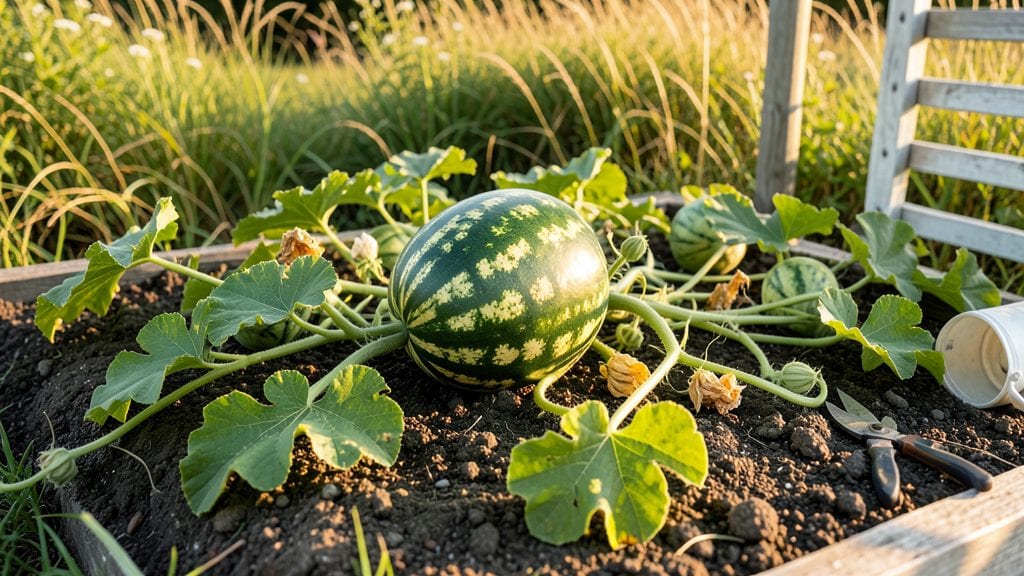
Watermelon plant size can reach 10 feet of sprawling vines 🍉—far more than most gardeners realize when planning their summer harvest.
If you’ve ever dreamed of growing your own juicy watermelons but hesitated due to space concerns, understanding how much room these vines need is the first step to success.
A single plant can spread 6 to 10 feet in all directions, turning a small patch into a jungle of leaves and tendrils if not managed properly.
This sprawling habit isn’t just about space—it directly impacts how you plant, water, and even fertilize your watermelons. Without the right setup, you could end up with crowded vines that struggle to produce fruit, or worse, a tangled mess that’s impossible to maintain.
In this guide, I’ll break down exactly how tall and wide watermelon plants grow, the best spacing for different varieties, and proven tricks to maximize your harvest—even in small gardens.
How tall and wide do watermelon vines grow? Exact dimensions by variety
Watermelon vines are famous for their aggressive sprawl, often surprising gardeners with their rapid growth rate and massive leaf canopies. While some varieties stay compact, most watermelon plants can stretch 10-20 feet long in a single season, with vines spreading 6-8 feet wide when left unchecked.
Understanding these dimensions helps you plan garden layouts and support structures to maximize yields without sacrificing space.
I’ve grown dozens of varieties over the years, and the differences between dwarf, semi-dwarf, and standard vines are dramatic. For example, a Sugar Baby might stay under 3 feet tall while a Charleston Gray can sprawl 15 feet or more.
Below, I’ve broken down the exact dimensions for popular categories so you can choose the right fit for your garden.
📏 Pro Tip: Always account for vine length and leaf spread separately—these vines don’t just grow outward, they climb vertically on trellises or trail along the ground, competing for space with neighboring plants.
If you’re growing dwarf varieties like Sugar Baby or Tiny Tim, their 3-6 foot vines make them perfect for containers or small gardens. These compact plants need minimal space—just 1-2 feet apart—and produce
Optimal spacing for watermelon plants: avoid crowding and boost yields
Watermelon plants are notorious for their aggressive vining habits, and proper spacing isn't just about preventing chaos—it directly impacts your fruit yield and plant health. When vines are too close, they compete for sunlight and nutrients, leading to smaller, underripe melons.
My first harvest taught me this lesson the hard way when my crowded plants produced bitter, misshapen fruit. The key? Science-backed spacing that balances airflow, light exposure, and root development.
Most watermelon varieties need 3-6 feet of horizontal space per plant, but this varies dramatically based on your climate and growing method. In hot, humid regions like Florida, you’ll need more space to prevent fungal diseases, while cooler climates like California can handle slightly tighter spacing.
The right spacing also determines whether you’ll use trellises, hills, or flat beds—each method has its own spacing rules to maximize efficiency.
Spacing Method
Plant Spacing
Row Spacing
Best For
Flat Ground
4-6 ft apart
6-8 ft between rows
Large gardens, warm climates
Hills/Mounds
3-4 ft apart
5-6 ft between hills
Poor soil drainage, cooler areas
Trellis/Vertical
2-3 ft apart
4-5 ft between rows
Small spaces, urban gardens
Container/Grow Bag
1 plant per 15+ gallon container
N/A
Balconies, patios, dwarf varieties
For flat-ground planting, the standard 4-6 feet between plants and 6-8 feet between rows ensures vines have room to sprawl without shading each other. This method works best in warm climates where watermelons thrive with plenty of sunlight.
If you’re in a cooler region, like Zone 5 or 6, consider hills or mounds—elevating the soil warms the roots faster and improves drainage, while reducing spacing to 3-4 feet between plants.
One of my favorite space-saving techniques is trellising, which cuts horizontal space needs by 50%. By training vines vertically, you can place plants just 2-3 feet apart while still achieving full sun exposure.
This method is perfect for small gardens or urban balconies, but it requires sturdy trellises (at least 6 feet tall) to support the weight of 6-10 pound melons. Just be warned—trellised watermelons may need extra fruit support like slings to prevent breakage.
Soil type also plays a critical role in spacing. In sandy soils, which drain quickly, you can space plants slightly closer (4 feet apart) because roots won’t compete as fiercely for moisture.
Conversely, clay soils—which hold water but suffocate roots—require 6 feet of spacing to prevent root rot. Always amend your soil with compost or aged manure before planting to improve structure and drainage, regardless of your spacing method.
Proper spacing isn’t just about the numbers—it’s about observing your plants. If you notice yellowing leaves or stunted growth near the base, your vines are likely competing for resources. Thin out crowded plants early to give remaining vines room to thrive.
My biggest yield boost came when I adjusted spacing mid-season after seeing signs of stress—don’t wait until harvest time to address crowding!
With the right spacing, you’ll enjoy larger melons, healthier vines, and fewer pests (since airflow reduces humidity). Start with these guidelines, then tweak based on your local climate and soil conditions—your future watermelon harvest will thank you. 🍉