
Plants
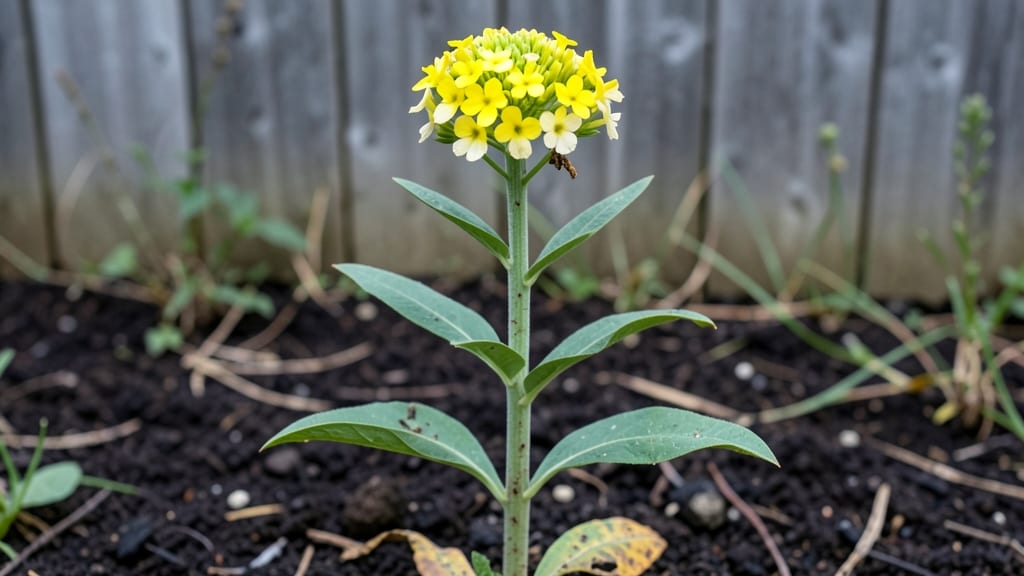
Images of canola plants clearly illustrate their development from seedling to full maturity, showcasing bright yellow blossoms, lobed green leaves, and upright stems that grow between 3 and 5 feet tall. Young plants feature cotyledons, while mature specimens develop seed pods ready for harvesting.
Canola plants go through dramatic transformations as they grow, making each stage visually distinct. 🌱 The seedling phase starts with small, rounded leaves that gradually develop into the characteristic lobed shape as the plant matures.
Flowering is the most photogenic stage, with clusters of bright yellow blooms that attract pollinators and create stunning golden fields. These visual cues help farmers and gardeners track progress and determine optimal harvest times.
For photographers documenting canola growth, timing is everything. Morning light enhances the vibrant colors, while a macro lens captures intricate details of the leaves and flowers. I always recommend using a tripod to stabilize shots during windy conditions, which can blur the delicate petals.
Storing high-quality images helps track growth patterns year after year.
💡 In This Article
- Visual Guide to Canola Plant Growth Stages
- Best Tools for Capturing High-Quality Canola Plant Photos
Visual guide to canola plant growth stages
Canola plants progress through four distinct growth phases, each with unique visual markers that make them easy to identify in photographs. The journey begins with the seedling stage, where young plants emerge with two small, rounded cotyledons (seed leaves) measuring about 0.5-1 inch wide.
These initial leaves lack lobes and appear smooth-edged, providing a stark contrast to the deeply lobed leaves that develop later. 🌱
During the vegetative stage (typically 30-50 days after emergence), plants grow rapidly, reaching heights of 1-2 feet with leaves developing 3-5 lobes that resemble maple leaf shapes. The stems become more rigid, and you'll notice a waxy coating that helps conserve moisture.
This stage is crucial for establishing a strong root system, which can extend 2-3 feet deep into the soil to support the plant's eventual height of 3-5 feet.
The flowering stage transforms the plant dramatically, with bright yellow blossoms appearing in clusters along the upper stem. Each flower measures about 0.25-0.5 inches wide and contains four petals arranged in a cross pattern.
This stage lasts 10-14 days, during which the plant's height peaks at 3-5 feet, and the field takes on a striking golden hue that's perfect for photography. 🌼
Finally, the pod development stage begins as flowers fade, revealing small green pods that eventually turn brown and dry. These pods contain the canola seeds, and their presence signals harvest readiness. Mature pods measure about 0.75-1.5 inches long and contain 8-12 seeds each.
The entire growth cycle typically spans 90-120 days depending on climate and variety, with each stage offering distinct photographic opportunities.
Understanding these visual cues helps distinguish between healthy plants and those facing stress. For example, stunted growth or pale leaves may indicate nutrient deficiencies, while irregular flower patterns could signal disease.
Photographers can use these markers to document growth progress, with close-ups of leaves showing the transition from smooth-edged cotyledons to deeply lobed mature leaves being particularly striking visuals. ✨
For optimal documentation, focus on capturing the transition points between stages—like the first appearance of lobes on leaves or the initial yellow flowers—when the plants exhibit the most dramatic changes. These moments create the most visually compelling images for tracking growth patterns over time. 💫