
Blooming
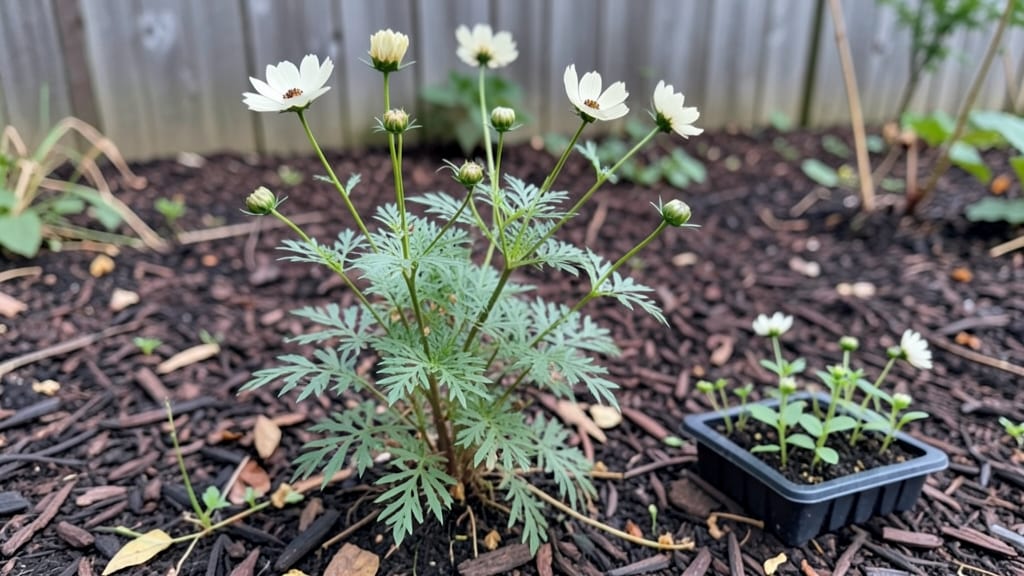
The secret to a riot of cosmos blooms lies in their cosmos planting distance—too close, and you’ll drown in foliage, not flowers, but just right, and you’ll get a sky-high explosion of color by midsummer. 🌻 I learned the hard way—crowding them too close means fewer flowers and more mildew, while giving them room lets each plant shine.
The perfect distance depends on your variety, but most cosmos thrive when spaced 12-18 inches apart in garden beds.
Here’s the thing—cosmos aren’t fussy about soil, but they do need good airflow to prevent those dreaded brown spots on leaves.
If you’re growing dwarf varieties (like 'Sensation Mix'), you can squeeze them 8-12 inches apart, but taller types (like 'Bright Lights') need that full 18 inches to avoid flopping over. Well-draining soil and full sun make all the difference.
When you thin seedlings, don’t rip them out—snip at the base with clean scissors. This keeps the roots intact for transplants and gives you extra plants to share or pot up.
By late summer, your cosmos will reward you with nonstop blooms that attract butterflies and hummingbirds, all because you gave them the space to grow.
Works just as well in containers (use 5-gallon pots for 2-3 plants) or mixed borders. The key is consistency—whether you’re planting in rows or clusters, stick to those spacing guidelines. Your garden will thank you with bold, vibrant blooms that last until frost.
📚 In This Guide
- What you need
- Instructions
- Tips and common mistakes
- Wrapping up and next steps
What you need
- ● Cosmos seeds: Choose from Cosmos bipinnatus (garden cosmos) or Cosmos sulphureus (yellow/orange cosmos). Start with 1-2 seed packets (about 50-100 seeds) for a small garden or 3-5 packets for larger beds.
- ● Well-draining potting mix or garden soil: 1-2 cubic yards (for in-ground planting) or 10-20 lbs of high-quality potting mix (for containers). Amend with compost (5-10 lbs) to enrich soil fertility.
- ○ Planting containers (optional but helpful): 5-7-inch diameter pots (1-2 per plant) if starting indoors or using containers outdoors.
- ● Watering can or hose with a gentle spray nozzle: Ensure even moisture without disturbing seeds.
- ● Measuring tape or ruler: For precise 12-24 inch spacing between plants (adjust based on variety and desired fullness).
- ● Garden gloves: Protect your hands while handling soil and seeds.
- ○ Fertilizer (optional but recommended): Balanced granular fertilizer (10-10-10): ½ cup per 10 sq ft at planting time.
- ● Slow-release organic fertilizer: 1 lb per 25 sq ft (e.g., fish emulsion or composted manure).
- ● Row markers or stakes: Label spacing rows to avoid overcrowding.
- ● Mulch (straw or shredded leaves): 1-2 inches to retain moisture and suppress weeds.
- ● Plant support (for tall varieties): Bamboo stakes or tomato cages if your cosmos grow over 3 feet tall.
- ● Seedling heat mat (for early starts): If sowing indoors 6-8 weeks before last frost.
- ● Drip irrigation system: For large gardens to maintain consistent moisture.
Instructions for cosmos flowers planting distance
Perfect spacing ensures cosmos thrive with minimal competition and maximum air circulation.
🌱 Step 1: Understand Cosmos Growth Habits
Cosmos flowers grow 2-4 feet tall and 1-2 feet wide, depending on the variety. Dwarf cosmos stay compact, while tall varieties can reach 5 feet with proper spacing. The key is balancing their natural spread with airflow to prevent fungal diseases like powdery mildew.
I always check the seed packet or plant tag for specific variety recommendations—some cosmos, like 'Bright Lights,' grow in clumps while others spread more freely. This ensures I don’t crowd plants that need more room to breathe.
🌿 Step 2: Plan Your Planting Layout
For a standard cosmos planting distance, space plants 12-18 inches apart in rows that are 18-24 inches apart. This gives roots room to establish without competing for nutrients or water. If you’re planting in a border or mixed bed, increase spacing to 24 inches to allow for fuller growth and easier maintenance.
Sketch a simple grid on paper first. Cosmos look best when planted in loose clusters rather than rigid rows, so I often stagger plants in a diagonal pattern. This creates a natural, flowing look while still allowing airflow between stems.
✂️ Step 3: Prepare the Soil and Plant
Before planting, loosen the soil to a depth of 12 inches to encourage root penetration. Cosmos thrive in well-draining soil with a pH between 6.0 and 7.0. Mix in 2-3 inches of compost to enrich the soil without compacting it—cosmos hate soggy roots.
Plant seeds ¼ inch deep and ½ inch apart if sowing directly, or transplant seedlings with roots spread evenly. Press the soil gently around the base to eliminate air pockets, but don’t pack it down. Water lightly to settle the soil without disturbing the seeds or seedlings.
☀️ Step 4: Monitor Growth and Adjust Spacing
After 4-6 weeks, when seedlings reach 3-4 inches tall, thin them to your planned spacing. Use sharp scissors to cut unwanted seedlings at soil level—this prevents disturbing the roots of nearby plants. If you’re growing cosmos in containers, space them 6-12 inches apart depending on pot size.
Watch for signs of overcrowding: yellowing leaves, stunted growth, or excessive wilting. These are red flags that your cosmos need more space. If you see these, gently transplant some to a new location or remove them entirely to protect the rest of the plants.
💧 Step 5: Maintain Airflow and Light Exposure
Cosmos need full sun (6-8 hours daily) to produce abundant blooms, but proper spacing ensures they don’t shade each other out. If you notice stems leaning or flowers facing one direction, it’s a sign they’re competing for light. Thin or prune to open up the center of the cluster.
Water at the base to keep soil evenly moist but not waterlogged. Overhead watering can spread fungal spores, so I always water early in the day to allow foliage to dry. Mulch around plants with 2-3 inches of organic mulch to retain moisture and suppress weeds without smothering the cosmos.
Tips & tricks for perfect cosmos planting distance
Perfect spacing transforms cosmos from scattered blooms to a thriving, disease-resistant garden showstopper. Here's how to elevate your planting game beyond the basics.
Variety-Specific Spacing: The 12-18 inch spacing in Step 2 works for standard cosmos, but dwarf varieties like 'Purity' can thrive at 10-12 inches apart. For towering types like 'Sensation,' stretch to 24 inches—this prevents stems from toppling under their own weight. I learned this the hard way when my 5-foot cosmos leaned dramatically in a crowded bed!
Soil Prep Secret: When loosening soil to 12 inches in Step 3, add a handful of perlite to the compost mix. This improves drainage without altering the pH, which is crucial since cosmos hate soggy roots. The perlite creates tiny air pockets that help roots breathe while the compost provides nutrients.
Thinning Strategy: In Step 4, don't wait until 4-6 weeks to thin—start checking at 3 weeks. Early thinning gives remaining plants more space to develop strong root systems before they compete for sunlight. I use clean pruning shears dipped in rubbing alcohol between cuts to prevent disease spread.
Container Planting Hack: For container cosmos, use the 6-12 inch spacing but choose pots with drainage holes at least 12 inches deep. The extra depth lets roots grow downward instead of circling, which prevents stunted growth. I always add a 1-inch layer of gravel at the bottom before planting to improve drainage further.
Pro Tips for Cosmos Planting Distance
- Perfect spacing transforms cosmos from scattered blooms to a thriving, disease-resistant garden showstopper.
- Variety-Specific Spacing: The 12-18 inch spacing in Step 2 works for standard cosmos, but dwarf varieties like 'Purity' can thrive at 10-12 inches apart.
- Soil Prep Secret: When loosening soil to 12 inches in Step 3, add a handful of perlite to the compost mix.
Frequently asked questions
Got questions about spacing cosmos flowers for the best blooms?
You're not alone! Here are answers to the most common queries about cosmos planting distance—from spacing secrets to troubleshooting tips.
What’s the ideal planting distance for cosmos flowers?
For Cosmos bipinnatus (garden cosmos), plant seeds or seedlings 12–18 inches apart in rows spaced 18–24 inches apart. This gives them room to grow tall (3–4 feet) without overcrowding. If growing in containers, space them 6–12 inches apart.
Can I plant cosmos too close together? What happens if I do?
Yes, but expect stunted growth, fewer blooms, and increased disease risk from poor airflow. Overcrowded cosmos may also flop over or develop powdery mildew. If you’ve already planted them too close, thin seedlings to the recommended spacing or transplant extras to another spot.
Do cosmos need different spacing if grown from seeds vs. transplants?
No! Whether you’re direct-sowing seeds or transplanting seedlings, the 12–18 inch spacing rule applies. Seeds germinate quickly, so thin seedlings early to avoid competition. Transplants can go straight into the ground at the correct distance.
What if my cosmos are growing in shade? Should I adjust spacing?
Cosmos thrive in full sun (6+ hours/day), but if planted in partial shade, you can reduce spacing to 8–12 inches since they’ll grow slightly shorter. However, blooms may be less abundant. Always prioritize sunlight over tighter spacing!
Can I interplant cosmos with other flowers or veggies?
Cosmos make great companion plants—try pairing them with tomatoes, peppers, or herbs (they repel pests). Avoid planting near dwarf varieties that need more space. For a pollinator-friendly garden, mix them with marigolds, zinnias, or sunflowers!
Pro Tip:
Use a simple spacing trick for large gardens: Drop seeds in a grid pattern (e.g., every 18 inches in all directions) to ensure even growth. Mark rows with sticks or string for precision!
Wrapping up and next steps
Mastering the cosmos planting distance is your secret weapon for a vibrant, low-maintenance garden! 🌸 By spacing your cosmos just right—whether in clusters or rows—you’ll ensure stunning blooms, better airflow, and fewer pests. Now’s your moment to shine: grab those seeds, mark your spots, and let nature do the rest!
Ready to take it further? Experiment with companion plants like marigolds or borage to boost growth and beauty—your garden’s next masterpiece starts with a single seed! 🌱