
Pruning
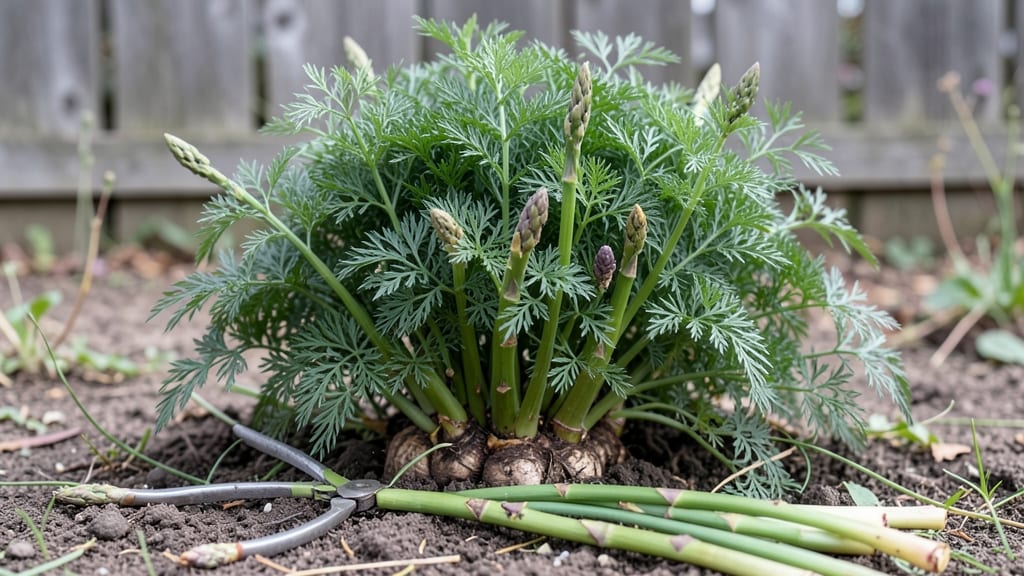
Trimming asparagus plants isn’t just about maintenance—it’s the secret to bigger harvests next season. I’ve learned the hard way that skipping this step means smaller spears and weaker crowns over time. The right cuts at the right time feed the roots while protecting the plant from disease.
First-year plants need zero trimming—let those feathery fronds grow all season to build strong roots. But after year two, you’ll cut back every frond at ground level once they turn yellow, usually by late summer.
This might seem counterintuitive, but it’s what sends nutrients back into the crown for next year’s spears.
You’ll notice a difference immediately: plants trimmed properly produce thicker, longer spears the following spring. The key is patience—rushing cuts or trimming too early starves the roots. Even a small mistake can set you back a full growing season, so timing matters more than anything else.
This method works for all asparagus varieties, whether you’re growing in rows, raised beds, or containers. The only real rule? Never cut spears before they’re at least 6 inches tall, and always use clean, sharp shears to avoid damaging the crown.
Let’s get those plants prepped for next year’s harvest.
📚 In This Guide
- What you need
- Instructions
- Tips and common mistakes
- Wrapping up and next steps
What you need
- ● Pruning shears or sharp garden scissors – Choose bypass-style shears (not anvil) to avoid crushing stems. A 6- to 8-inch blade works best for precision.
- ○ Gloves (optional but recommended) – Heavy-duty gardening gloves protect your hands from thorns (if your variety has them) and dirt.
- ● Watering can or hose with a gentle spray nozzle – Keep your plants hydrated before and after trimming.
- ○ Compost or mulch (optional but helpful) – A 2- to 3-inch layer of organic mulch (like straw or shredded leaves) helps retain moisture and suppress weeds.
- ● Stake or support (for young plants) – If your asparagus is in its first year, lightweight bamboo stakes can help guide new shoots.
- ● Identify mature vs. new shoots – Only trim mature stalks (thicker than a pencil) in Years 2-3+. Never harvest from first-year plants!
- ● Check the weather – Trim on a cool, overcast day to reduce stress on the plant. Avoid trimming after heavy rain.
- ● Know your asparagus variety – Some types (like Purple Passion) may require slightly different trimming techniques.
Step-by-Step guide for trimming asparagus plants
Here’s exactly how to trim asparagus for a healthier, more productive harvest year after year.
Identify Mature Fern-Like Growth
Wait until late summer—after your asparagus has finished spearing—before trimming. By now, the plants should have grown into tall, feathery ferns. These ferns are the plant’s energy factories, storing nutrients for next year’s harvest. If you cut them too early, you’ll weaken the roots and reduce next season’s yield.
Look for ferns that have fully unfurled and turned a deep green. They’ll be about 3-4 feet tall, depending on your variety. This is your signal that the plant has completed its growth cycle and is ready for trimming. Avoid cutting any spears that haven’t fully emerged yet—those are next year’s harvest.
Cut Back to Ground Level
Use clean, sharp pruners or shears to cut the ferns back to within 1 inch of the ground. This removes dead foliage and allows sunlight to reach the crown, which prevents disease and encourages new growth. If you leave stubble taller than 1 inch, it can trap moisture and lead to rot.
I like to trim on a dry morning when the plants are fully hydrated. This makes the cut cleaner and reduces the risk of spreading any fungal spores that might be hiding in the old foliage. After trimming, rake away the cut fronds to keep your garden bed tidy and reduce pests.
Apply a Light Layer of Mulch
Spread a 2-3 inch layer of mulch around the base of the asparagus crown. This protects the roots from freezing temperatures in winter and keeps the soil moist during dry spells. Use organic mulch like straw or shredded leaves—avoid fresh grass clippings, as they can draw nitrogen away from the roots.
Gently pull the mulch away from the center of the plant to avoid smothering the crown. The goal is to insulate the soil while still allowing water to penetrate. Over-mulching can suffocate the roots, so keep it light but consistent. This step is especially important in colder climates where asparagus needs extra protection.
Monitor for New Growth in Spring
In early spring, asparagus crowns will send up new shoots. These are your spears, and they’ll emerge in clusters. Wait until they’re 4-6 inches tall before harvesting—this ensures the roots have enough energy to support both growth and harvest. If you harvest too early, you’ll stunt the plant’s development.
Watch for the tips of the spears to unfurl slightly. When they’re still tightly closed at the top, that’s your cue to start harvesting. Cut spears at ground level with a sharp knife or shears, leaving the crown intact. This encourages the plant to produce more spears over time, rather than sending energy into fern growth.
Fertilize Lightly for Next Year’s Harvest
In early spring, before new spears emerge, apply a balanced, slow-release fertilizer around the base of the plants. Asparagus doesn’t need heavy feeding—too much nitrogen will promote fern growth over spears. Instead, use a 10-10-10 or 5-10-10 formula at half the recommended rate to avoid overstimulating the plant.
Water the fertilizer into the soil to help it dissolve and reach the roots. Avoid getting fertilizer directly on the spears or ferns, as this can cause burn. After fertilizing, keep the soil consistently moist but not soggy. This sets the stage for a strong, productive harvest in years to come.
Tips & tricks for perfect asparagus plant trimming
Trimming asparagus plants might seem simple, but these key details make all the difference for a thriving garden next season.
Timing is Everything: The late summer timing in Step 1 is crucial because it allows the ferns to fully mature and store energy for next year's harvest. If you cut too early, you'll miss this energy storage phase. I've learned this the hard way—after cutting too soon one year, my harvest was noticeably smaller the following spring. Look for those fully unfurled, deep green ferns reaching 3-4 feet tall as your clear signal.
Clean Cuts Prevent Problems: When you cut back to within 1 inch of the ground in Step 2, use clean, sharp pruners to avoid damaging the crown. I've seen many gardeners leave taller stubble, which traps moisture and can lead to rot. Also, trim on a dry morning—this makes the cut cleaner and reduces the spread of any fungal spores hiding in the old foliage. After trimming, always rake away the cut fronds to keep your garden bed tidy and reduce pests.
Mulching Made Right: The 2-3 inch layer of mulch in Step 3 is essential for winter protection, but proper application matters. I've found that pulling mulch away from the center prevents smothering the crown while still insulating the soil. For colder climates, this step is particularly important—it can mean the difference between a healthy spring harvest and struggling plants. Organic mulch like straw works best, as fresh grass clippings can draw nitrogen away from the roots.
Spring Harvest Cues: Waiting until spears reach 4-6 inches tall in Step 4 ensures your plants have enough energy for both growth and harvest. I've noticed that when spears are still tightly closed at the top, that's the perfect time to start harvesting. This simple visual cue has helped me avoid harvesting too early and stunting plant development. Always cut spears at ground level to encourage more growth.
Pro Tips for Do You Trim Asparagus Plants
- Trimming asparagus plants might seem simple, but these key details make all the difference for a thriving garden next season.
- Timing is Everything: The late summer timing in Step 1 is crucial because it allows the ferns to fully mature and store energy for next year's harvest.
- Clean Cuts Prevent Problems: When you cut back to within 1 inch of the ground in Step 2, use clean, sharp pruners to avoid damaging the crown.
Frequently asked questions
Got questions about asparagus trimming? You’re not alone—this perennial favorite can be tricky if you’re new to it! Here are the most common questions (and answers) to help you grow like a pro:
Do you trim asparagus plants every year?
Yes! Trimming is essential for healthy growth and bigger harvests. After the first 2–3 years (when the crown establishes), cut back all foliage in late fall or early winter. This helps the plant store energy for next year’s spears. Pro tip: Use clean shears to avoid disease.
When is the best time to trim asparagus?
Timing matters! Trim dead foliage in late fall or winter (after the first hard frost). For fertilizer cuts, snip spears to 6–8 inches tall in early spring before new shoots emerge. Never trim during harvest season—this stresses the plant.
How do you trim asparagus plants correctly?
Start by cutting all brown or yellowed fronds at ground level. For fertilizer cuts, leave 6–8 inches of green growth. Avoid cutting spears shorter than 6 inches—they won’t regrow properly. Warning: Never pull spears from the ground; always cut them cleanly.
What if I skip trimming asparagus?
Skipping trims can lead to weaker harvests, crowded crowns, and even disease. Over time, untrimmed plants may produce fewer spears and struggle to recover. Think of it like a haircut—your asparagus needs regular maintenance to thrive!
Can I trim asparagus in the summer?
Nope! Summer trimming (unless harvesting) can hurt the plant. Only trim dead fronds in late fall/winter. If you must prune in summer, remove only diseased or pest-ridden leaves. Key rule: Never cut more than ⅓ of the foliage at once.
Still unsure? Bookmark this guide—your asparagus will thank you with years of juicy harvests!
Wrapping up and next steps
Trimming asparagus plants correctly is the secret weapon for a bountiful harvest year after year! 🌱 By following the right timing, technique, and aftercare, you’ll encourage thicker spears and healthier roots. Don’t let fear of over-trimming hold you back—just remember: patience and precision pay off in the long run.
Ready to level up your garden game? Start by marking your asparagus bed and planning your first trim this season. And if you’re eager to dive deeper, explore organic fertilizer tips or companion planting strategies to maximize your asparagus patch’s potential!