
Fertilization
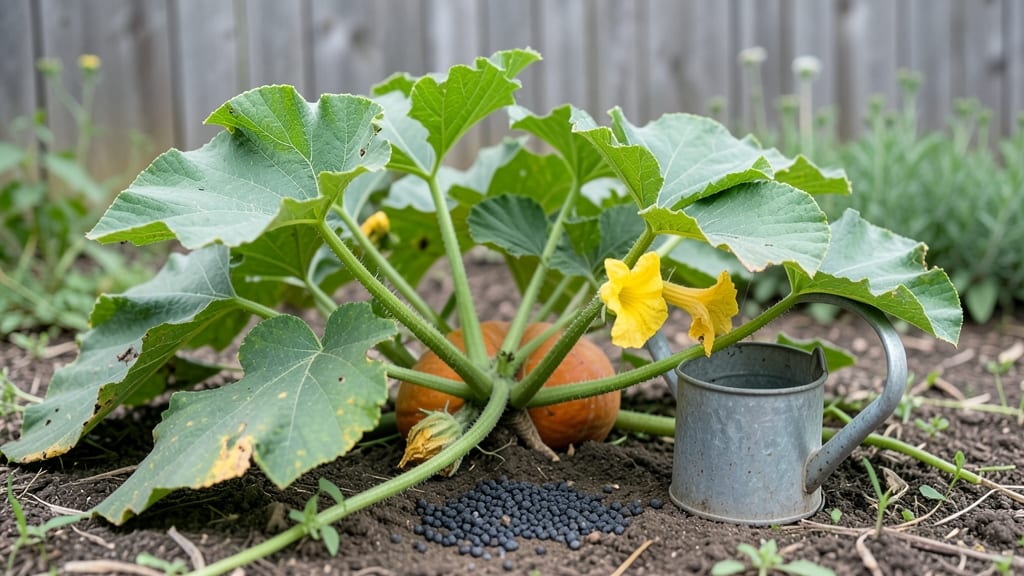
Fertilizing pumpkin plants 🎃 is the secret weapon behind those 50-pound monsters you see at county fairs—when done right.
Growing giant pumpkins isn’t just about space and sunlight—it’s a nutrient race where timing and balance make all the difference. Learn how to fertilize pumpkin plants for explosive growth and massive fruit yields without burning your vines.
Skip the guesswork and feed your pumpkins exactly what they need: a burst of nitrogen to kickstart those sprawling vines, then a shift to phosphorus and potassium as flowers appear. Get the schedule wrong, and you’ll end up with lush leaves and tiny fruit—or worse, blossom-end rot.
Below, I break down the exact fertilizer types, application windows, and organic hacks that’ll turn your patch into a pumpkin powerhouse—no chemistry degree required.
When and what to fertilize pumpkin plants for maximum growth
Pumpkins are heavy feeders, and their growth stages demand different nutrients at precise times. Skipping this nutrient race means smaller fruits or weak vines. Start with a soil test to check pH (ideal: 6.0–6.8) and nutrient levels before planting.
Amend clay soil with compost or sandy soil with organic matter to retain moisture and nutrients.
Pumpkins need three key nutrient phases: early vine growth (nitrogen-heavy), flowering (phosphorus boost), and fruiting (potassium focus). Organic options like compost or manure release nutrients slowly, while synthetic fertilizers provide immediate results. I’ll break down the exact timing and ratios for each phase to avoid over- or under-feeding.
| Growth Stage | Primary Nutrient Needs | Recommended Fertilizer | Timing & Frequency | Signs of Success |
|---|---|---|---|---|
| Pre-Planting Soil Prep | Balanced NPK (5-5-5) | Compost + 5-10-10 synthetic | 2-4 weeks before planting | Dark, crumbly soil |
| Early Vine Growth (2-3 weeks post-germination) | High nitrogen (N) | Fish emulsion (5-1-1) or blood meal | Every 2 weeks, 1 tbsp per plant | Rapid vine elongation |
| Flowering Stage (4-6 weeks post-planting) | Phosphorus (P) + Potassium (K) | Bone meal (3-15-0) + kelp meal (0-0-2) | Every 3 weeks, 1 tbsp each | Abundant yellow flowers |
| Fruiting Stage (6-8 weeks post-planting) | High potassium (K) | Banana peel tea or 0-0-52 synthetic | Every 4 weeks, 1 tbsp per plant | Fruit swelling, dark green leaves |
| 4-6 Weeks Before Harvest | Stop fertilizing | None | N/A | Fruit hardens, stem dries |
For organic options, I swear by compost tea (1:10 ratio) sprayed on foliage every 2 weeks during flowering. It’s packed with micronutrients like magnesium and calcium, which prevent blossom-end rot. Synthetic fertilizers like 10-10-10 work faster but require precise measurements—overdoing it burns roots.
Watch for yellowing leaves (nitrogen deficiency) or weak stems (potassium lack). If vines grow but flowers drop, switch to a phosphorus-rich fertilizer immediately. I’ve seen pumpkins double in size just by adjusting the NPK ratio at the right stage!
Pro tip: Side-dress with fertilizer 6 inches from vines to avoid root damage. Water thoroughly after application to distribute nutrients evenly. Mulch with straw to retain moisture and slow nutrient release—this is a game-changer for consistent growth.
Timing is everything. Fertilize in the evening to prevent leaf burn from midday sun. Avoid fertilizing when soil is waterlogged or dry, as nutrients won’t absorb properly. I’ve lost count of how many pumpkins I’ve saved by adjusting my schedule based on weather!
For giant pumpkin growers, split applications into smaller doses. A single heavy feeding can cause salt buildup in soil, harming roots. Instead, use a slow-release fertilizer like osmocote granules for steady nutrition without risk.
Remember: Less is more when it comes to potassium during fruiting. Too much can lead to <
Common fertilizer mistakes that stunt pumpkin growth (and how to fix them)
Pumpkins are hungry plants, but feeding them wrong can backfire fast. Too much of the wrong fertilizer leads to stunted vines, blossom-end rot, or even leaf burn—all signs your pumpkins are crying for help.
The key is balance: too little slows growth, but too much can be just as deadly. Let’s diagnose the most common mistakes and fix them before your harvest shrinks.
First, let’s tackle the biggest offender: over-fertilizing with nitrogen. While nitrogen fuels leafy growth, pumpkins need a shift toward phosphorus and potassium once flowers appear. Without this adjustment, your plants might look lush but produce tiny, rot-prone fruits.
Even worse, excess nitrogen attracts pests like aphids, turning your garden into a buffet for bugs instead of a pumpkin patch.
⚠️ callout warning
Excess nitrogen causes blossom-end rot (black, mushy spots on pumpkins) and weak vines. If your pumpkins are growing leaves but no fruit, you’re likely feeding too much nitrogen. Fix it now: Switch to a 5-10-10 or 10-20-20 fertilizer to boost phosphorus and potassium.
Next, watch for micronutrient deficiencies like magnesium or calcium. Yellowing leaves between veins? That’s often magnesium deficiency, a classic sign your soil lacks this essential mineral. For calcium issues, check for blossom-end rot—a telltale black, sunken spot on the pumpkin’s bottom.
Both problems stem from imbalanced soil, but fixing them is simple: add Epsom salt (for magnesium) or crushed eggshells (for calcium) to the soil around your plants.
Don’t overlook soil pH imbalances either. Pumpkins thrive in slightly acidic to neutral soil (pH 6.0–7.0). If your soil is too alkaline (pH >7.0), nutrients like iron and manganese become locked away, causing yellowing leaves even when you’re fertilizing regularly.
Test your soil’s pH with a kit—if it’s off, amend it with sulfur (to lower pH) or lime (to raise pH), then re-test before planting.
Here’s how to recover if you’ve already overdone it: flush the soil with water to leach excess salts, then switch to a low-nitrogen, high-potassium fertilizer like 0-0-50. For micronutrient deficiencies, use chelated micronutrients or compost tea to gently restore balance.
And always water deeply after fertilizing to help nutrients reach the roots without burning them.
Remember, pumpkins are marathon runners, not sprinters. Focus on consistent, balanced feeding—not quick fixes. A little prevention now means bigger, healthier pumpkins come harvest time. 🎃