
Diseases
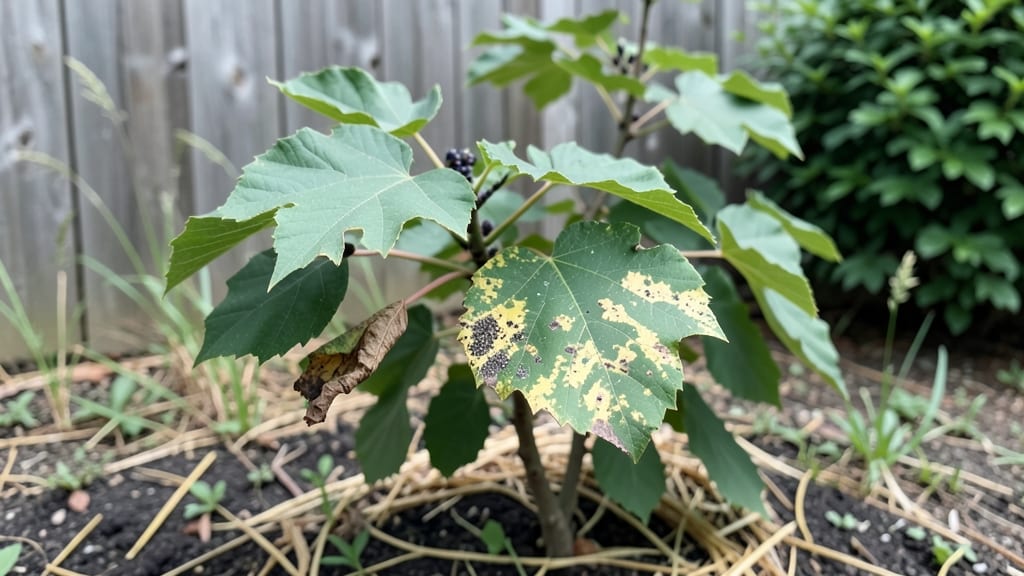
Mulberry plant diseases can turn your thriving harvest into a deflated mess if you don’t catch them early. 🌿 I’ve seen powdery white spots spread across leaves in a single week, or blackened cankers girdle branches until the whole tree looks like it’s dying.
The good news? Most mulberry problems have clear warning signs—and once you know what to look for, you can stop them before they ruin your crop.
Powdery mildew, anthracnose, and root rot are the top three culprits, each leaving behind distinct clues. Powdery mildew starts as fuzzy white patches on undersides of leaves, while anthracnose shows up as sunken, dark spots with yellow halos.
Root rot? Your tree will wilt even when the soil is damp, with mushrooms sprouting at the base. The key to saving your mulberry is acting fast—once these diseases take hold, they move from treatable to irreversible.
You’ll learn how to identify each disease by its unique symptoms, then use targeted treatments—from copper fungicides to organic neem oil sprays—to knock them out. Prevention is easier than cleanup: proper spacing, airflow, and watering habits can cut your risk by 80%.
By the end, you’ll spot trouble before it starts and keep your mulberry producing sweet, juicy berries for years.
Whether you’re growing Morus nigra, Morus alba, or a hybrid, these strategies work for all mulberry varieties. The same principles apply to young trees and mature ones, so you’ll protect your investment no matter how big your harvest gets. Let’s get your mulberry back to healthy and productive!
Root Causes Behind Mulberry Troubles
Understanding why mulberry plants fall prey to diseases is the first step in preventing them. These issues rarely appear out of nowhere—they’re often the result of environmental stress, poor growing conditions, or even tiny, unseen invaders.
Let’s break down the real culprits behind mulberry plant diseases, so you can tackle them head-on.
Fungi are the #1 cause of mulberry plant diseases, thriving in damp, humid conditions. Here’s why they strike:
- Excess Moisture 💧 Fungi like Botrytis (gray mold) and Anthracnose love soggy leaves and soil. Overwatering, poor drainage, or heavy dew create the perfect breeding ground. Actionable fix: Water at the base (not overhead) and ensure soil drains well—mulberry roots hate "wet feet."
- Poor Air Circulation 🌬️ Dense foliage or crowded plants trap humidity, giving fungi a foothold. Actionable fix: Prune for airflow and space plants 6–8 feet apart.
- Weakened Plants 🌿 Stressed mulberries (from drought, nutrient deficiency, or transplant shock) are easier fungal targets. Actionable fix: Fertilize with balanced NPK (10-10-10) and mulch to retain moisture without suffocating roots.
Insects don’t just eat leaves—they carry diseases like Mulberry Leaf Spot (caused by Cercospora). Here’s how pests enable trouble:
- Sap-Sucking Bugs 🐜 (e.g., aphids, scale insects) These pests inject toxins and create wounds where fungi/bacteria enter. Actionable fix: Spray with neem oil or introduce ladybugs (natural predators).
- Boring Beetles 🪲 (e.g., Scolytus species) They tunnel into stems, weakening the plant and inviting secondary infections. Actionable fix: Remove infested branches immediately and treat with Bt (Bacillus thuringiensis).
Extreme conditions suppress mulberry immunity, making them vulnerable. Key triggers:
- Temperature Swings ❄️🔥 Sudden cold snaps or heatwaves shock plants, opening doors for pathogens. Actionable fix: Choose cold-hardy varieties (e.g., Morus alba) and mulch in winter.
- Nutrient Imbalances 🧪 Too much nitrogen = soft, disease-prone growth; too little phosphorus = weak roots. Actionable fix: Test soil annually and amend with compost + bone meal.
- Contaminated Tools/Soil 🔪 Pruners or compost with old mulberry debris can harbor latent diseases. Actionable fix: Sterilize tools with 70% rubbing alcohol and rotate planting spots every 3–4 years.
The foundation of healthy mulberries is clean, well-aerated soil. Common offenders:
- Compacted Soil 🏗️ Restricts root growth, making plants starve for oxygen—a fungal buffet. Actionable fix: Loosen soil with a broadfork and add perlite for drainage.
- Contaminated Water 💦 Irrigation water from ponds or untreated sources may carry bacterial pathogens. Actionable fix: Use rainwater or filtered sources and avoid overhead watering at dusk.
Even well-meaning gardeners accidentally invite diseases with these habits:
- Over-Pruning ✂️ Heavy cuts in late summer stunt healing, leaving wounds open to infections. Actionable fix: Prune in early spring (before new growth).
- Ignoring Leaf Debris 🍃 Fallen leaves harbor fungal spores over winter. Actionable fix: Rake and compost (not reuse!) old leaves.
- Planting Too Close to Trees 🌳 Mulberries compete with root systems for nutrients, weakening defenses. Actionable fix: Keep 10+ feet away from large trees.
Pro Tip: 💡 The best defense is offense! Healthy mulberries resist diseases naturally. Start with disease-free nursery stock, rotate crops, and monitor regularly for early signs (yellowing, spots, or wilting). Catch problems before they spread!
Quick Fixes for Mulberry Plant Ailments
When your mulberry plants show signs of stress, acting fast can save your harvest—and your sanity! Below are practical, step-by-step solutions tailored to the most common mulberry plant diseases, along with prevention tips to keep future problems at bay.
Think of this as your emergency repair kit for leafy greens gone wrong.
🔥 Cause: Too much humidity, poor airflow, or wet foliage 🍳 Fix It Fast:
- Prune for Better Airflow 🌬️
- Remove crowded branches and thin out leaves to let sunlight and air circulate.
- Pro Tip: Aim for a "open canopy"—imagine sunlight kissing every leaf!
- Fungicide Spray (DIY or Store-Bought) 💧 - Neem Oil Mix: Combine 1 tbsp neem oil + 1 tsp baking soda + 1 quart water.
Spray early morning (avoid direct sun). - Commercial Option: Use copper fungicide (follow label rates) for stubborn cases. - Repeat: Every 7–10 days until symptoms fade.
- Prevent Future Outbreaks ✨
- Water at the base (never overhead).
- Space plants 12–18 inches apart for airflow.
- Rotate crops if growing mulberries in containers—don’t reuse soil without sterilizing it!
🔪 Cause: Dry conditions, weak plants, or overcrowding 👨🍳 Treat It Like a Pro:
- Blast Them Off with Water 💦
- Aphids: Knock them off with a hose nozzle or dish soap spray (1 tsp soap per quart water).
- Natural Predators to the Rescue 🐞
- Release ladybugs or lacewings (buy online or from garden centers). They love eating aphids!
- Bonus: Plant marigolds nearby—they repel pests naturally.
- Prevent a Comeback 🛡️
- Mulch with straw or wood chips to retain moisture (mites thrive in dryness).
- Interplant with basil or mint—their scent confuses pests.
- Inspect new plants before adding them to your garden (quarantine for 2 weeks if possible).
⏰ Cause: Contaminated water, wounds, or humid weather 🚨 Act Now Before It Spreads:
- Remove Infected Leaves Immediately 🗑️
- Snip off
- Do NOT compost them—dispose in a sealed bag.
- Copper-Based Bactericide 🛡️
- Spray copper hydroxide (like Kocide) every 10–14 days. It stops bacteria in its tracks.
- Alternative: Hydrogen peroxide spray (1 tbsp per quart water) for mild cases.
- Sanitize Everything 🧼
- Clean pruners with bleach water (1 part bleach to 9 parts water).
- Avoid overhead watering—use drip irrigation instead.
- Pro Tip: If soil is infected, replace the top 6 inches with fresh, sterile mix.
💡 Cause: Overwatering, poor drainage, or soggy soil 🔄 Revive Your Plant in 3 Steps:
- Stop Watering & Check Drainage 🚰
- Let the soil
- If in pots, drill drainage holes if missing.
- Fungal Treatment (If Needed) 🍄
- Mix
- For severe cases, use mycorrhizal fungi (available at nurseries) to boost root health.
- Prevent Future Drowning 🌧️
- Raise containers on bricks or use saucers with drainage holes.
- Avoid: Planting mulberries in low-lying areas where water pools.
Want to never deal with these issues again? Bookmark these tips: ✅ Rotate crops—don’t plant mulberries in the same spot yearly. ✅ Choose disease-resistant varieties (ask at local nurseries). ✅ Harvest regularly—stressed plants get sick faster! ✅ Keep tools clean—wipe pruners between cuts with rubbing alcohol. ✅ Monitor weather—cover plants if rain is forecasted for >3 days.
💬 Final Thought: Most mulberry diseases are preventable with good hygiene and smart watering. Once you spot a problem, act fast—your future harvest depends on it! 🌿🚀
Frequently asked questions about mulberry plant diseases
What are the first signs my mulberry tree might have a fungal disease?
Look for white powdery coatings (powdery mildew), dark sunken spots with yellow halos (anthracnose), or blackened cankers on branches. Early stages often show up on younger leaves first—check undersides where moisture lingers. Act within 3–5 days to prevent spread.
Can I still harvest berries from a diseased mulberry tree?
Only if the disease is localized (like a few leaves) and hasn't reached the fruit. Remove all infected leaves immediately, then monitor for 2 weeks. If branches show cankers or roots appear mushy, avoid harvesting—those berries may carry pathogens. Always wash fruit thoroughly before eating.
How often should I spray my mulberry tree to prevent diseases?
Apply preventative sprays (neem oil or copper fungicide) every 2–3 weeks during growing season, or after heavy rain. For high-risk areas, do a weekly check in humid months. Early morning applications work best—avoid spraying when leaves are wet or in direct sun.
Will pruning help my mulberry tree recover from disease?
Remove infected branches (cut 6 inches below visible damage) and thin crowded areas to improve airflow. Sterilize tools between cuts with 70% rubbing alcohol. Prune in early spring before new growth starts—never during active disease outbreaks.
Are there organic ways to treat mulberry plant diseases?
Yes! Try these natural remedies:
- Baking soda spray (1 tbsp + 1 quart water + 1 tsp oil)
- Garlic/chili pepper spray (blend 2 cloves garlic + 1 tsp cayenne + 1 quart water)
- Milk spray (1 part milk to 9 parts water) for powdery mildew Reapply every 7–10 days until symptoms disappear.