
Diseases
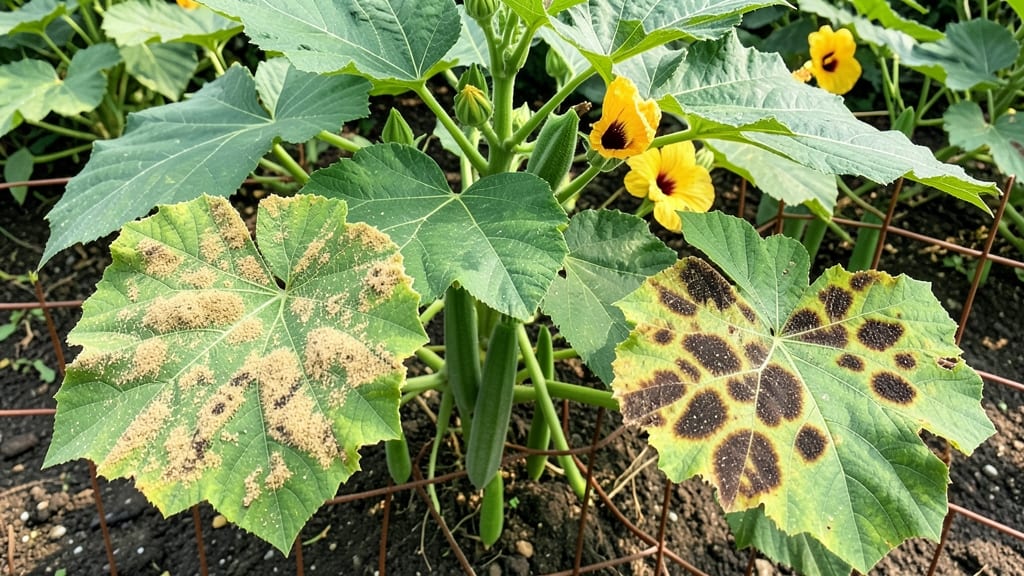
Okra plant diseases can turn your thriving crop into a sad, wilted mess if you don’t catch them early. 🌿 I’ve seen powdery mildew turn lush green pods into gray, powdery ghosts and bacterial blight turn healthy leaves into ragged, yellowed messes—both before harvest.
The good news? You can stop these problems before they ruin your garden.
Most okra diseases start with poor airflow, overwatering, or dirty tools spreading fungal spores. Powdery mildew loves humid mornings, while bacterial blight thrives when leaves stay wet too long.
The key is spacing plants 18-24 inches apart, watering at the base (not overhead), and sanitizing pruners with rubbing alcohol between cuts. Simple changes, big results.
Once you spot the first signs—white powder, dark spots, or wilting—act fast with organic fixes. Neem oil spray (1 tablespoon per gallon of water) tackles mildew, while copper fungicide stops bacterial blight in its tracks.
Remove infected leaves immediately to prevent spread, and rotate crops next season to break disease cycles.
With these methods, you’ll protect your okra plants naturally and keep your harvest vibrant. The secret? Vigilance and quick action—don’t wait until it’s too late. Your garden (and your dinner table) will thank you.
Why it happens
Okra plants, like any other crop, are vulnerable to diseases due to a mix of environmental, biological, and cultural factors. Understanding why these issues arise is the first step to prevention.
Below, we break down the most common culprits behind okra plant diseases—so you can nip them in the bud before they wreak havoc on your garden. 🌱🔍
🌡️ Fungal Infections: The Silent Invaders
Fungi thrive in warm, humid conditions—making them a major threat to okra. The most common fungal diseases include:
- Powdery Mildew: Caused by Erysiphe cichoracearum, this fungus spreads rapidly in high humidity (70%+) and poor air circulation. It coats leaves with a white, powdery film, blocking sunlight and stunting growth.
- Leaf Spot Diseases: Fungi like Cercospora and Phyllosticta create dark, irregular spots on leaves, often with yellow halos. These thrive in wet foliage and overcrowded plants, where moisture lingers.
- Root Rot (Phytophthora, Pythium): Waterlogged soil creates the perfect breeding ground for these soil-borne fungi. They attack roots, cutting off nutrient uptake and leading to wilting, even in well-watered plants.
Why it happens: Fungal spores are always present in soil and air, but they only become aggressive when conditions favor them—excess moisture, stagnant air, or stressed plants. Overhead watering (which keeps leaves damp) and dense planting accelerate outbreaks.
🦠 Bacterial Blights: Fast-Spreading Menaces
Bacteria like Xanthomonas campestris and Pseudomonas syringae cause bacterial leaf spot and blight, identifiable by:
- Water-soaked lesions that turn yellow or brown.
- Oozing bacterial slime (especially in humid conditions).
- Rapid wilting and dieback in severe cases.
Why it happens: Bacteria hitchhike on contaminated tools, wind, or splashing water. They exploit open wounds (like from hail or pruning) and stressed plants. Unlike fungi, bacteria multiply exponentially in 24–48 hours, making early intervention critical.
🐛 Viral Threats: The Sneaky Spreaders
Viruses like Okra Mosaic Virus or Cucumber Mosaic Virus cause:
- Mottled or distorted leaves.
- Stunted growth and reduced pod formation.
- Yellowing veins (a classic symptom).
Why it happens: Viruses don’t survive long outside a host, but they spread via:
- Sap-sucking insects (aphids, whiteflies, beetles).
- Contaminated pruning tools or hands.
- Seed-borne transmission (if using infected seeds).
Once a plant is infected, there’s no cure—so prevention (like removing infected plants immediately) is key.
🌦️ Environmental Stressors: Weakening Defenses
Okra plants under stress are far more susceptible to diseases. Common triggers include:
| Factor | How It Weakens Plants | Diseases It Invites |
|---|---|---|
| Poor Soil Drainage | Roots suffocate, leading to root rot and nutrient deficiencies. | Phytophthora, Pythium |
| Nutrient Deficiencies | Lack of nitrogen/phosphorus stunts growth, making plants easy targets. | Fungal leaf spots, bacterial blights |
| Extreme Temperature Swings | Cold snaps or heat stress shock the plant’s immune system. | Powdery mildew, viral infections |
| Overcrowding | Reduces airflow, trapping moisture and spores on leaves. | Powdery mildew, fungal leaf spots |
Why it happens: Healthy okra plants have natural defenses (like waxy leaf coatings and antimicrobial compounds). But when they’re nutrient-starved, waterlogged, or cramped, pathogens exploit their weakened state. Think of it like a person with a cold—stress lowers their resistance.
🌱 Cultural Mistakes: Human Errors That Help Diseases
Even the best-intentioned gardeners can accidentally create disease-friendly conditions. Common slip-ups include:
- Overhead Watering: Wet leaves = fungal buffet. 🍽️
- Ignoring Plant Debris: Old leaves or pods harbor spores over winter.
- Reusing Contaminated Soil: Fungal/bacterial pathogens persist in old garden beds.
- Skipping Crop Rotation: Planting okra in the same spot yearly builds up soil-borne diseases.
Why it happens: Diseases don’t appear out of nowhere—they’re invited by habits. For example, watering at dawn (instead of early morning) lets foliage dry faster, reducing fungal risk. Similarly, removing diseased plants immediately stops spores from spreading.
Quick Fixes for Common Okra Ailments
When your okra plants show signs of distress, acting fast can save your harvest. Below are practical, organic solutions tailored to the most frequent issues—from fungal infections to pest invasions—along with prevention tips to keep your plants thriving. No harsh chemicals needed!
Fungal diseases thrive in humid, crowded conditions, but you can fight back with these steps:
🔥 Step 1: Prune & Improve Airflow
- Remove infected leaves immediately (don’t compost them—dispose in a sealed bag).
- Space plants 18–24 inches apart to reduce humidity buildup.
- Avoid overhead watering—use a drip irrigation system or water at the base in the morning.
🍳 Step 2: Apply Organic Fungicides
Mix one of these DIY sprays and apply every 7–10 days until symptoms fade:
- Baking soda spray: 1 tsp baking soda + 1 tsp horticultural oil + 1 tsp soap per quart of water.
- Neem oil solution: 1 tbsp neem oil + 1 tsp mild soap per gallon of water (shake well).
- Copper-based fungicide (like Copper Soap): Follow label instructions for outdoor use.
👨🍳 Step 3: Boost Plant Immunity
- Add compost tea to the soil to strengthen roots.
- Interplant with marigolds or garlic—they repel fungi naturally.
💡 Pro Tip: If humidity is the issue, use a fan on low for 10–15 mins daily to circulate air around plants.
Pests can sap energy from your okra, but these non-toxic methods work fast:
🔪 Step 1: Manual Removal (For Aphids & Mites)
- Blast off aphids with a strong stream of water (early morning works best).
- Wipe spider mites off leaves with a damp cloth dipped in neem oil.
- Handpick fruit borers (look for tiny holes in pods) and drop them in soapy water.
🥘 Step 2: Natural Sprays & Traps
- Insecticidal soap: Spray directly on pests (reapply every 3–5 days).
- Spinosad spray (organic, derived from soil bacteria)—safe for edibles after 48 hours.
- Yellow sticky traps for whiteflies and aphids (place near plants).
⏰ Step 3: Prevent Future Infestations
- Introduce beneficial insects: Ladybugs, lacewings, and parasitic wasps eat pests naturally.
- Plant companion crops: Basil, thyme, or okra itself (when spaced well) deters some pests.
- Rotate crops yearly to disrupt pest life cycles.
🌡️ Pro Tip: If mites are bad, increase humidity slightly (they hate moisture)—mist plants lightly in dry climates.
Okra loves heat but wilts fast when thirsty. Here’s how to revive it:
💧 Step 1: Deep Watering Techniques
- Water deeply 2–3 times per week (1–1.5 inches per session) instead of daily shallow watering.
- Mulch heavily with straw or grass clippings to retain moisture and cool roots.
- Use shade cloth (30–50%) if temps exceed 95°F (35°C) for prolonged periods.
🎯 Step 2: Adjust Fertilizer for Recovery
- Switch to a balanced organic fertilizer (like 5-5-5) to replenish nutrients.
- Avoid nitrogen-heavy feeds—they encourage leafy growth over pods in stress.
✨ Pro Tip: Okra is drought-tolerant once established—let the soil dry slightly between waterings to encourage deep roots.
The best cure? A healthy plant. Follow this monthly maintenance routine: ✅ Rotate crops every 2–3 years to prevent soil-borne diseases. ✅ Test soil pH (okra prefers 6.0–6.8)—amend with lime or sulfur if needed. ✅ Sanitize tools with rubbing alcohol before pruning to avoid spreading pathogens. ✅ Plant disease-resistant varieties like ‘Clemson Spineless’ or ‘Emerald.’ ✅ Monitor plants weekly—catch issues early when they’re easiest to treat.
Final Note: Most okra diseases and pests can be managed organically with consistency. If a problem persists, reassess watering, spacing, or soil health—often, the fix is simpler than you think! 🌿
Frequently asked questions
What are the first signs of powdery mildew on okra leaves?
Look for a white, powdery coating on the top or bottom of leaves—like dust—but it won’t wipe off easily. Early symptoms start as small white spots that spread rapidly in humid weather. If ignored, the mildew blocks sunlight, causing yellowing and stunted pod growth.
Can I still harvest okra pods if the plant has bacterial blight?
Yes, but only from healthy-looking pods. Remove any pods with dark, water-soaked spots or oozing bacteria immediately. The bacteria spreads through sap, so avoid harvesting when leaves are wet. Sterilize your pruners with rubbing alcohol between cuts to prevent cross-contamination.
Why does my okra plant keep getting root rot despite good drainage?
Root rot thrives when soil stays damp for too long, even with drainage. Check if your soil is clay-heavy—it holds moisture longer than sandy soil. Amend with compost or perlite to improve aeration, and water only when the top 2 inches of soil are dry. Mulch helps too!
How do I prevent viral infections in my okra plants?
Viruses spread via insects or contaminated tools, so focus on prevention. Remove infected plants immediately, control aphids with neem oil, and sanitize pruners between cuts. Buy certified disease-free seeds and rotate crops yearly to break virus cycles.
Is it safe to compost okra leaves with fungal diseases?
No—composting infected plant material spreads spores. Place diseased leaves in a sealed trash bag instead. Fungal spores survive composting and can reinfect your garden. For bacterial infections, double-bag and dispose of them in yard waste.