
Diseases
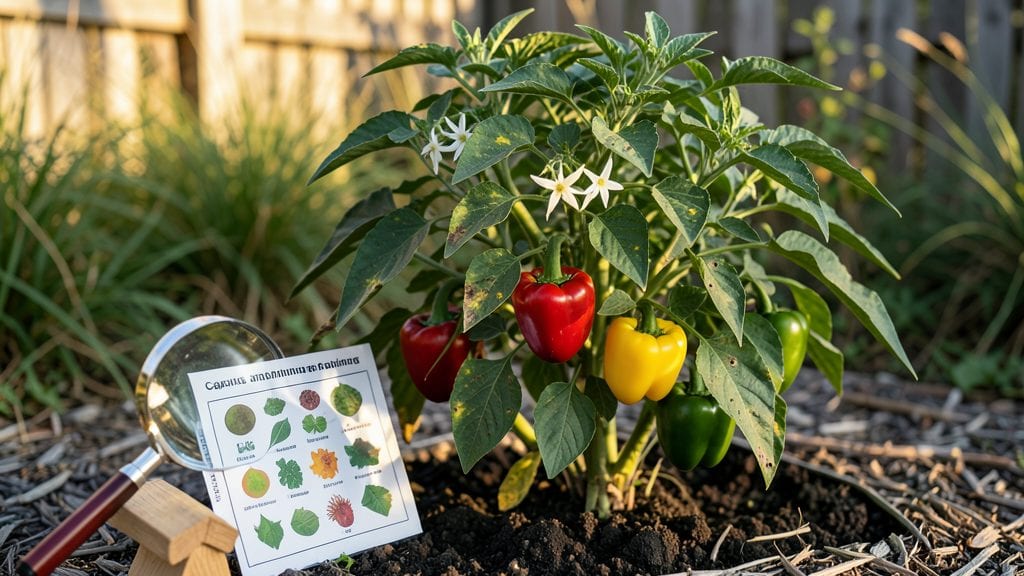
Pepper plant diseases can turn your thriving garden into a sad, spotty mess if you don’t catch them early. 🌱 I’ve seen healthy plants go from vibrant green to wilted and spotted in just a few weeks, and the key to saving them is knowing what to look for—and acting fast.
The good news? Most common pepper diseases have clear warning signs, and with the right approach, you can stop them before they ruin your harvest.
From powdery mildew’s white dust to bacterial spot’s dark lesions, each disease leaves a distinct fingerprint on your plants. I’ve treated everything from my backyard raised beds to container-grown peppers on my patio, and the first step is always the same: inspect leaves, stems, and fruit regularly.
Once you spot the problem, you’ll need to isolate affected plants, clean your tools, and choose treatments that match the disease—whether that’s a simple baking soda spray or a targeted fungicide.
By the time you finish reading, you’ll recognize the early signs of 10 common pepper diseases and know exactly how to respond. We’re talking faster recovery, fewer lost plants, and a harvest that stays healthy from first bloom to last pepper.
The secret? Spotting trouble before it spreads—and I’ll show you how to do it in under 5 minutes a week.
This works for both outdoor gardens and indoor setups, whether you’re growing in soil or hydroponics. The principles stay the same: early detection, quick action, and keeping your plants healthy so they can fight back. Let’s get those peppers thriving again!
Root Causes Behind Pepper Plant Ailments
Understanding why pepper plants fall prey to diseases starts with recognizing their vulnerabilities. These resilient plants can succumb to infections, pests, and environmental stress when certain conditions align—often due to human or natural factors.
Below, we break down the key triggers that turn your thriving peppers into a battleground for pathogens.
Pepper plants thrive in specific climates, and when conditions stray too far from their ideal range, diseases exploit the weakness. Here’s how:
- Extreme Heat or Cold Stress - Peppers originate from tropical and subtropical regions, so sudden temperature swings (below 50°F or above 95°F) weaken their cell walls, making them susceptible to fungal infections like Phytophthora blight or powdery mildew. - Actionable fix: Use row covers in spring/fall and shade cloth during heatwaves.
Mulch with straw to regulate soil temperature.
- High Humidity Without Airflow - Fungal spores love damp, stagnant air—think of it as a buffet for pathogens.
Diseases like early blight and downy mildew flourish when humidity stays above 75% for prolonged periods. - Pro tip: 🌡️ Space plants 18–24 inches apart and use oscillating fans to improve airflow. Avoid overhead watering.
- Waterlogged Soil - Peppers hate soggy roots.
Overwatering or poor drainage creates the perfect breeding ground for root rot (caused by Phytophthora or Pythium fungi), which cuts off nutrient uptake. - Signs to watch: Yellowing leaves, mushy stems, or a foul odor near the base. - Solution: Amend soil with perlite or sand and ensure pots/drainage beds have exit holes.
Diseases don’t just appear—they hitch a ride or wait in ambush. Here’s how pathogens invade:
- Contaminated Tools or Soil - Pruners, gloves, or even reused pots can carry fungal spores or bacterial cells from infected plants.
Even old compost might harbor Fusarium or Verticillium wilt pathogens. - Prevention: 🔪 Sterilize tools with 70% isopropyl alcohol or bleach water (1 part bleach to 9 parts water). Test soil for pathogens before planting.
- Insect Vectors - Some diseases, like tobacco mosaic virus (TMV), spread via sap-sucking insects (aphids, thrips) or even human touch (contaminated fingers). Others, like bacterial leaf spot, thrive when wounds (from hail or pruning) provide entry. - Defense strategy: 🐜 Inspect plants weekly for pests.
Remove infected leaves immediately and dispose of them in sealed bags.
- Seed-Borne or Soil-Borne Pathogens - Some diseases, such as damping-off (a fungal kill-for-hatchlings), lurk in seeds or nursery soil.
Others, like Southern blight, survive in soil for years as sclerotia (hard, dormant fungal bodies). - Smart move: Buy certified disease-free seeds and rotate crops annually to break pathogen cycles.
Pepper plants need balance—too little or too much of certain nutrients can cripple their immune response.
- Nitrogen Deficiency
- While nitrogen fuels leafy growth, too little weakens plant vigor, making them easy targets for anthracnose or bacterial spot. Too much? It promotes soft, succulent tissue that fungal pathogens love.
- Fix: Use a balanced fertilizer (10-10-10 or 5-5-5) and side-dress with compost mid-season.
- Potassium or Calcium Shortages
- Potassium strengthens cell walls, while calcium prevents blossom end rot (a bacterial/fungal entry point). Deficiencies leave peppers prone to cracks, wilting, and infections.
- Boost levels: Add wood ash (for potassium) or crushed eggshells (for calcium) to soil.
- Over-Fertilization
- Excess salts or synthetic fertilizers burn roots, stressing plants and inviting root rot or leaf scorch. Always water thoroughly after fertilizing to leach excess salts.
Even the best gardeners slip up. Here’s how common habits create disease hotspots:
- Ignoring Crop Rotation
- Planting peppers (or nightshades like tomatoes/eggplants) in the same spot yearly lets soil-borne diseases like Verticillium wilt build up. These pathogens persist for years in infected debris.
- Rule of thumb: Rotate with non-nightshade crops (e.g., beans, carrots) every 3 years.
- Overhead Irrigation
- Watering leaves keeps them wet for hours, turning them into fungal spore launchpads. This is how late blight (the potato famine’s villain) spreads.
- Upgrade your system: Use drip irrigation or soaker hoses to deliver water at the base.
- Planting Too Close Together
- Crowded peppers can’t dry out fast enough, trapping moisture and spreading diseases like powdery mildew via splashing water.
- Spacing guide: 18–24 inches apart for bush types, 36 inches for trellised peppers.
Key Takeaway: Most pepper plant diseases are opportunistic—they exploit stress, poor practices, or environmental mismatches. By addressing these root causes, you’ll starve pathogens of their foothold and keep your peppers healthy and productive. 🌿🔥
Fixing Pepper Plant Problems Step-by-Step
Now that you’ve identified the issue plaguing your peppers—whether it’s fungal spots, bacterial blights, or pesky pests—it’s time to take action. The good news? Most pepper plant diseases and issues can be managed (or even prevented) with the right approach.
Below, we’ll map out practical, step-by-step solutions tailored to each common problem, along with prevention tips to keep your plants thriving.
Cause: High humidity, poor airflow, or wet foliage. Fix It:
🔥 Remove Infected Leaves Immediately
- How: Snip off yellowed or spotted leaves with sterilized scissors (wipe with rubbing alcohol between cuts).
- Why: Fungi spread fast—don’t compost infected plant material (it can reinfect your garden).
🌡️ Boost Airflow & Reduce Humidity
- How:
- Space plants 12–18 inches apart for better airflow.
- Use a fan (set to low) to circulate air around plants, especially in greenhouses or shaded areas.
- Water early in the day so foliage dries by evening.
💡 Fungicide Treatments (Natural & Chemical)
| Solution | How to Use | Frequency |
|---|---|---|
| Baking Soda Spray | Mix 1 tsp baking soda + 1 tbsp oil + 1 gallon water + a drop of soap. Spray undersides of leaves. | Every 7–10 days until cured. |
| Neem Oil | Spray 2% neem oil solution (follow label) on dry leaves at dusk. | Every 5–7 days for 2–3 weeks. |
| Copper Fungicide | Apply liquid copper fungicide (e.g., Bonide Copper Fungicide) per instructions. | Every 7–14 days as needed. |
🌱 Prevention Tips
- Rotate crops—don’t plant peppers in the same spot yearly.
- Mulch with straw or wood chips to reduce soil splashing onto leaves.
- Avoid overhead watering—use drip irrigation or water at the base.
Cause: Wet leaves, contaminated tools, or infected seeds. Fix It:
🔪 Prune Aggressively
- How: Cut off all infected leaves and stems (including the 1-inch margin around spots).
- Pro Tip: Disinfect pruners with bleach (1 part bleach : 9 parts water) between cuts.
🚰 Sanitize Everything
- Tools: Sterilize pruners, trellises, and stakes with rubbing alcohol or bleach solution.
- Soil: If bacterial spot is severe, replace top 2–3 inches of soil (bacteria linger in the soil).
🛡️ Copper-Based Bactericides
- How: Use copper hydroxide (e.g., Cueva, Champ, or Copper Soap) as a preventative spray every 7–10 days.
- When: Apply at first sign of disease or before rainy seasons.
🌧️ Adjust Watering Habits
- Water deeply but infrequently—peppers hate soggy roots.
- Water in the morning so leaves dry quickly.
- Avoid wetting foliage—use a soaker hose or drip system.
🌱 Prevention Tips
- Buy disease-resistant varieties (e.g., ‘Aristotle,’ ‘Carmen,’ or ‘Corno di Toro’).
- Rotate crops—don’t plant peppers, tomatoes, or eggplants in the same bed for 3+ years.
- Remove volunteer plants (wild peppers can harbor bacteria).
Cause: Weak plants, overcrowding, or lack of beneficial insects. Fix It:
👨🍳 Manual Removal (Best for Small Infestations)
- Aphids/Spider Mites: Spray off with a strong jet of water or wipe leaves with soapy water (1 tsp mild soap per quart of water).
- Hornworms: Handpick them (they’re huge and easy to spot!) and drop them in soapy water.
🌿 Natural Pest Control
| Pest | Solution | How to Apply |
|---|---|---|
| Aphids | Ladybugs or Lacewings | Release beneficial insects (buy online or at garden centers). |
| Spider Mites | Neem Oil or Insecticidal Soap | Spray every 5–7 days until mites disappear. |
| Hornworms | Bacillus thuringiensis (Bt) | Mix Bt powder with water and spray only on affected leaves (safe for bees). |
💡 Prevention Tips
- Encourage predators: Plant marigolds, basil, or dill near peppers to attract ladybugs and lacewings.
- Use row covers for early planting to block pests before they arrive.
- Inspect plants weekly—catch pests early before they multiply.
Cause: Over/under-fertilizing, poor soil, or pH imbalances. Fix It:
📊 Diagnose the Problem First
| Symptom | Likely Cause | Solution |
|---|---|---|
| Yellow lower leaves | Nitrogen deficiency | Add balanced fertilizer (10-10-10) or compost. |
| Purple stems/leaves | Phosphorus deficiency | Use a high-phosphorus fertilizer (e.g., 5-10-10) or bone meal. |
| Brown leaf edges | Potassium deficiency | Apply potassium-rich fertilizer (e.g., banana peel tea or greensand). |
| Slow growth | Over-fertilizing | Flush soil with water to leach excess salts; reduce fertilizer. |
🌡️ Test & Adjust Soil pH
- Ideal pH for peppers: 6.0–6.8
- How to test: Use a soil pH test kit (available at garden centers).
- How to adjust:
- Too acidic (below 6.0)? Add lime (follow package instructions).
- Too alkaline (above 6.8)? Add sulfur or peat moss.
🌱 Prevention Tips
- Mulch heavily to retain moisture and nutrients.
- Fertilize lightly—peppers prefer less fertilizer than tomatoes.
- Rotate crops to prevent nutrient depletion.
Final Pro Tip: 🎯 Act fast! The sooner you treat a problem, the easier it is to save your plants. Prevention is always cheaper than cure—so stay vigilant, keep your garden clean, and your peppers will reward you with bountiful, disease-free harvests!
Frequently asked questions
What are the first signs my pepper plants have a disease?
Look for leaf spots, yellowing between veins, or unusual growths like powdery white coatings. Early symptoms often appear as small brown/black spots on leaves, wilting despite proper watering, or stunted growth. Check both upper and lower leaf surfaces—many fungal diseases start on undersides.
Can I save a pepper plant already showing severe disease symptoms?
It depends on the disease. For fungal issues like powdery mildew, aggressive pruning and fungicide treatments can save the plant if caught early. However, bacterial infections (e.g., bacterial spot) or viral diseases (like mosaic virus) are usually fatal—remove infected plants immediately to prevent spread.
How often should I spray preventive treatments on my pepper plants?
Apply preventative sprays like neem oil or baking soda every 7-10 days during humid seasons. For copper fungicides, follow label instructions (typically every 2-3 weeks). The key is consistency—don't wait until you see symptoms to start protecting your plants.
Are some pepper varieties more disease-resistant than others?
Yes! Varieties like 'Aristotle', 'Carmen', and 'Corno di Toro' have better resistance to common diseases. Always check seed packets for disease resistance ratings when selecting varieties. Even resistant types need proper care to stay healthy.
What's the best way to dispose of infected pepper plant material?
Never compost diseased plants—put them in sealed plastic bags and throw them in the trash. This prevents spores from reinfecting your garden. For severe cases, burn infected material (if local regulations allow) or use municipal yard waste pickup services.