
Shrubs
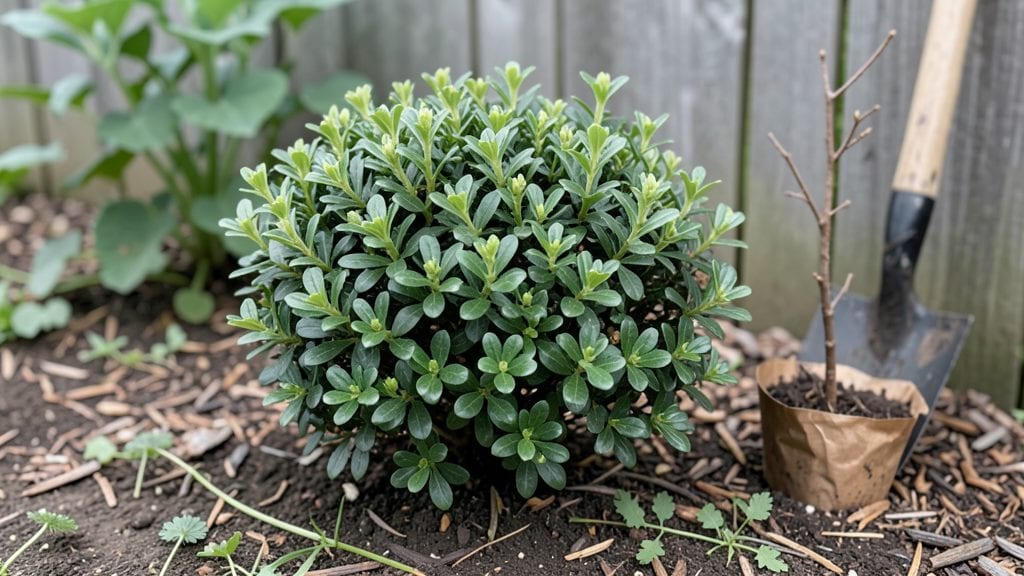
Planting evergreen bushes right means your yard stays vibrant year-round, not just in summer. 🌿 I learned the hard way that cramming bushes too close leads to stunted growth and disease—now I space them like a pro for full, healthy foliage that lasts decades.
The secret isn’t just digging a hole; it’s matching plant size, sunlight needs, and soil prep to each type of evergreen.
Start with the right location—most evergreens thrive in full sun to partial shade, but junipers love heat while rhododendrons prefer dappled light. Amend heavy clay soil with compost or sand to improve drainage, and test pH (acid-loving plants like azaleas need 5.0-6.0).
Choose 2-3 year-old nursery stock with firm roots and no yellowing needles—they establish faster than mature bushes.
Dig holes twice as wide as the root ball but only as deep—evergreens hate sitting too low. Space dwarf varieties 3-4 feet apart, medium bushes 5-6 feet, and large ones 8-10 feet to prevent overcrowding.
Water deeply after planting, then mulch with 2-3 inches of shredded bark to lock in moisture and keep roots cool.
For long-term success, prune lightly in late winter to shape new growth, and fertilize only if soil tests show deficiencies. Junipers tolerate drought once established, but boxwoods need consistent moisture. The payoff? A foundation planting that stays lush through snowstorms and summer heat—without the constant maintenance headaches.
📚 In This Guide
- What you need
- Instructions
- Tips and common mistakes
- Wrapping up and next steps
What you need
- ● Evergreen bushes: 3–5 healthy nursery-grown plants (size depends on desired maturity height—e.g., 1–3 ft for dwarf varieties, 4–6 ft for standard types).
- ● Shovel or spade: 1 medium-sized (18–24 inches) for digging holes.
- ● Garden gloves: 1 pair (heavy-duty for protection).
- ● Measuring tape or ruler: 1 (for spacing accuracy).
- ● Mulch (pine bark, shredded wood, or compost): 2–3 bags (3–4 cubic feet each).
- ● Watering can or hose with nozzle: 1 (with adjustable spray for gentle watering).
- ● Pruning shears: 1 pair (for trimming roots or shaping after planting).
- ○ Soil amendment (optional but recommended): 1 bag peat moss or coconut coir (for drainage).
- ● 1 bag slow-release fertilizer (10-10-10 or 20-20-20 NPK ratio).
- ● Planting hole marker sticks: 3–5 (to label varieties or track spacing).
- ● Soil pH tester kit: 1 (to check acidity—evergreens prefer slightly acidic to neutral soil, pH 5.0–7.0).
- ● Drip irrigation system or soaker hose: 1 (for efficient watering post-planting).
- ● Epsom salt (magnesium sulfate): 1 small bag (boosts green foliage if soil is deficient).
- ● Landscape fabric: 1 roll (to suppress weeds around mulch).
Step-by-step instructions for planting evergreen bushes
Here's how to plant evergreens with precision—spacing, soil prep, and sunlight all matter for long-term health.
🌱 Step 1: Choose the Right Location and Prepare the Soil
Evergreens thrive where they get 6+ hours of sunlight daily, but avoid harsh afternoon sun in hot climates. Test the spot by observing how sunlight moves across it throughout the day—you want dappled light if your region gets intense heat. Before digging, loosen the soil to a depth of 12 inches with a shovel or tiller, breaking up any compacted layers.
Amend the native soil with 2-3 inches of compost mixed into the top 6 inches. Evergreens prefer slightly acidic soil (pH 5.0-6.5), so if your soil tests higher, add sulfur or peat moss to adjust. Work the amendments in thoroughly—this ensures roots spread easily rather than struggling against dense earth.
🪴 Step 2: Dig Holes with Proper Spacing and Depth
Dig holes twice as wide as the root ball and just deep enough so the top of the root ball sits 1 inch above ground level. This prevents root rot from sitting water. For 4 evergreen bushes, space them 6-10 feet apart, depending on the mature size of the variety—check the tag for guidance. I always mark the hole centers with stakes to ensure even spacing before digging.
Loosen the roots of container-grown bushes by gently teasing them apart at the bottom of the root ball. If the roots are circling tightly, make a few vertical cuts with pruners to encourage outward growth. Place the bush in the hole and fill the gap with the amended soil, pressing lightly to remove air pockets but not compacting too firmly.
☀️ Step 3: Water Thoroughly and Mulch for Retention
Water each bush deeply until the soil 6 inches down feels moist. Use a garden hose with a slow setting or a watering can to avoid dislodging the soil around the roots. After watering, apply 2-3 inches of mulch (like pine straw or shredded bark) around the base, keeping it 3 inches away from the trunk to prevent rot. Mulch locks in moisture and regulates soil temperature, which is critical for evergreens in both winter and summer.
Check the soil moisture weekly by sticking your finger 2 inches down—if it feels dry, water again. Overwatering is the fastest way to kill evergreens, so resist the urge to keep the soil soggy. A soaker hose or drip irrigation system delivers water evenly without splashing needles.
✂️ Step 4: Prune for Shape and Encourage Full Growth
Wait 4-6 weeks before pruning to let the bushes establish new roots. Then, trim any broken or crossing branches with clean, sharp pruners to encourage an open, airy shape. Remove no more than 25% of the foliage in one season—evergreens grow slowly, and heavy pruning stresses them. I always prune in late winter or early spring, just as new growth begins.
Fertilize lightly in early spring with a slow-release, balanced fertilizer (10-10-10) to support new growth. Avoid high-nitrogen fertilizers, which can burn roots and lead to weak, leggy growth. Water the area first to help the fertilizer spread evenly into the soil.
Tips & tricks for planting evergreen bushes
Perfect spacing and soil prep make all the difference for evergreens that thrive for decades—not just years. Here's what I've learned after planting dozens of varieties.
Sunlight Strategy: Evergreens need 6+ hours of sunlight daily, but the type matters. Test your spot by observing sunlight patterns throughout the day—what looks like full sun in summer might become dappled in winter. For hot climates, position bushes where they get morning sun and afternoon shade to prevent needle scorch. I always mark potential locations with stakes for a week to track the light before digging.
Root Ball Rescue: When loosening container-grown roots, focus on the bottom third of the root ball where circling roots often form. Use your fingers or a butter knife to gently separate roots without tearing them. If roots are tightly bound, make 2-3 vertical cuts through the center—this encourages outward growth instead of the roots continuing to circle. Never force the bush into the hole; the amended soil should settle naturally around it.
Mulch Mastery: The 2-3 inches of mulch we apply isn't just decoration—it's a thermal regulator. In summer, it keeps roots cool; in winter, it insulates against freezing. I use pine straw because it mimics natural forest conditions, but shredded bark works too. The key is keeping mulch 3 inches away from the trunk to prevent moisture buildup that causes rot. Refresh mulch annually as it breaks down.
Watering Wisdom: Watering evergreens is all about consistency, not quantity. After planting, water until soil 6 inches down feels moist, then check weekly by sticking your finger 2 inches down. If it feels dry, water again—but never let water pool around the base. A soaker hose delivers moisture evenly without disturbing the soil, which is especially important during the critical first year when roots establish.
Pro Tips for Planting Evergreen Bushes
- Perfect spacing and soil prep make all the difference for evergreens that thrive for decades—not just years.
- Sunlight Strategy: Evergreens need 6+ hours of sunlight daily, but the type matters.
- Root Ball Rescue: When loosening container-grown roots, focus on the bottom third of the root ball where circling roots often form.
Frequently asked questions
Got questions about planting evergreen bushes? You’re not alone! Here are some common concerns—and their answers—to help you grow a thriving, sun-drenched landscape with confidence.
When is the best time to plant evergreen bushes?
Plant evergreens in early spring or fall when temperatures are mild (50–70°F). Avoid extreme heat or frost—roots need time to establish without stress. Spring planting lets them grow into summer, while fall gives them a head start for winter resilience. Pro tip: If planting in summer, water deeply daily for the first 2 weeks to prevent shock!
How far apart should I space evergreen bushes?
Spacing depends on the variety and mature size. Dwarf evergreens (like Dwarf Alberta Spruce) need 3–5 feet apart, while larger types (e.g., Leyland Cypress) require 8–12 feet. Check the tag for mature width—crowding leads to competition for sunlight, water, and nutrients. Rule of thumb: Plant them as far apart as their mature spread!
How often should I water newly planted evergreen bushes?
Water deeply 2–3 times per week for the first month, then taper to once a week (unless it’s extremely dry). Evergreens have shallow roots, so soak the soil (not just the surface) to encourage deep growth. Mulch around the base (2–3 inches) to retain moisture and protect roots. Watch for: Yellowing needles = overwatering; brown tips = underwatering.
Can I plant evergreen bushes in full shade?
Most evergreens thrive in full sun to partial shade (4+ hours of sunlight daily). Shade-tolerant varieties like Inkberry Holly or Emerald Green Arborvitae can handle 3–4 hours of sun, but growth may be slower and leggy. If your yard is shady, choose low-light evergreens or supplement with grow lights for healthier foliage.
Why are my evergreen bushes losing needles?
Needle loss is often due to underwatering, overwatering, or pests. Check for:
- Brown needles: Too much sun, drought, or salt buildup (flush soil with water).
- Yellow needles: Overwatering, poor drainage, or root rot (amend soil with compost).
- Holes or webbing: Spider mites or bagworms (treat with neem oil or insecticidal soap).
Wrapping up and next steps
Planting evergreen bushes is a rewarding way to add year-round greenery and structure to your landscape! 🌿 By mastering sunlight-soaked spacing and proper techniques, you’ll ensure lush, healthy growth that thrives for seasons to come.
Whether you’re a beginner or a seasoned gardener, the key is patience—watch your bushes flourish as they mature into stunning focal points.
Ready to take the next step? Start small:
- Pick one or two bushes to plant this season.
- Monitor their progress and adjust care as needed.
- Expand your evergreen collection with confidence!