
Transplanting
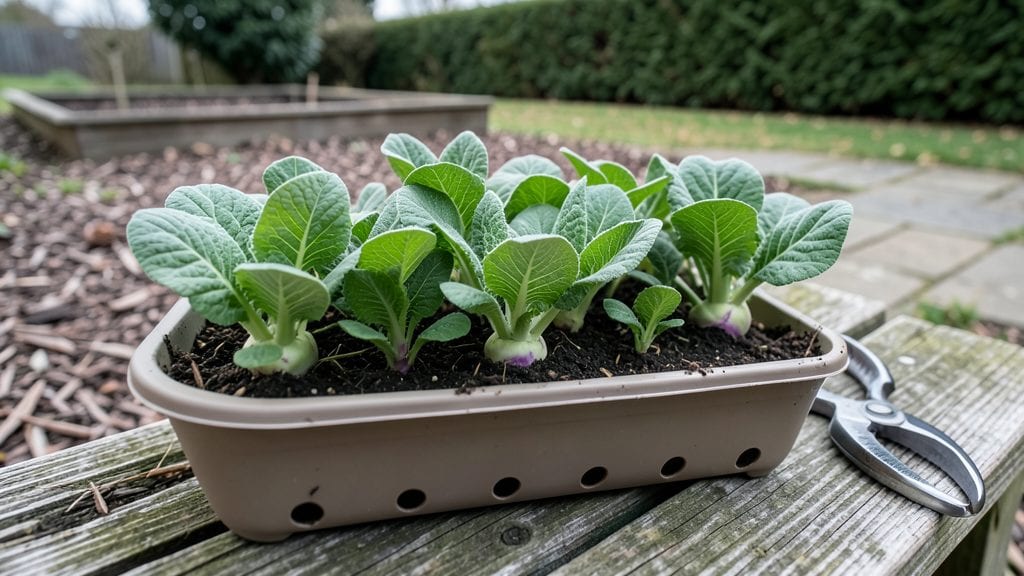
Planting kohlrabi seedlings gives you a head start on crisp, sweet harvests that beat store-bought any day. 🌱 I learned the hard way that these cold-hardy starts need the right soil, spacing, and care to thrive—otherwise, you end up with tough stems instead of the tender bulbs we all crave.
The secret isn’t just dropping them in the ground; it’s about timing, soil prep, and a few tricks to keep them happy through transplant shock.
You’ll need well-draining soil mixed with compost, a sunny spot with at least 6 hours of light daily, and a way to protect young plants from late frosts. Most gardeners start seedlings indoors 4-6 weeks before the last frost, but you can also direct-sow in cooler climates.
The key is keeping them moist but not soggy—kohlrabi hates wet feet. Once planted, a simple row cover can extend your growing season by weeks, giving you earlier harvests and fewer pests to battle.
Within 4-6 weeks, you’ll see those bulbs swelling under the soil, ready for harvest when they’re about the size of a tennis ball. The flavor? Sweet, crisp, and packed with vitamin C—nothing like the mealy store versions.
Plus, the leaves are edible too, so you’re not wasting a thing. With the right approach, you’ll go from seedlings to harvest in under two months, and that’s a victory for any gardener.
Works in containers too—just use a 12-inch-deep pot for one plant. Whether you’re in Zone 3 or Zone 9, these tips keep kohlrabi productive. Let’s get those starts in the ground right!
📚 In This Guide
- What you need
- Instructions
- Tips and common mistakes
- Wrapping up and next steps
What you need
- ● Kohlrabi seedlings: 12–24 healthy, disease-free seedlings (check for sturdy stems and vibrant leaves).
- ● Garden space: Full sun (6+ hours/day) or partial shade (4–6 hours).
- ● Well-draining, fertile soil with a pH of 6.0–7.0 (test or amend with compost if needed).
- ● Transplanting tools: Garden trowel or transplanting knife.
- ● 5-gallon bucket or watering can (with a gentle spray nozzle).
- ● Fertilizer: Balanced organic fertilizer (e.g., 10-10-10) or compost (1–2 cups per plant).
- ○ Mulch (optional but recommended): Straw or shredded leaves to retain moisture and suppress weeds.
- ● Row covers or frost cloth (for early transplants in cool climates).
- ● Drip irrigation system (to keep soil consistently moist).
- ● Plant markers (to label rows and track varieties).
- ● Epsom salt (1 tbsp per gallon of water) for magnesium boost if leaves look yellow.
Step-by-Step instructions for planting kohlrabi seedlings
Here's how to get your cold-hardy kohlrabi thriving with minimal fuss—no fancy tools needed.
🪴 Step 1: Prepare the Planting Site
Kohlrabi loves cool weather and fertile soil, so start by choosing a spot that gets full sun to partial shade—at least 4-6 hours of sunlight daily. Work the soil to a depth of 12 inches using a garden fork or tiller to loosen it. Kohlrabi roots spread wide but not deep, so breaking up compacted soil prevents stunted growth.
If your soil feels heavy or clay-like, mix in a 2-inch layer of compost to improve drainage and fertility. Kohlrabi hates soggy roots, so avoid planting in low spots where water pools. I always rake the area smooth afterward—this creates a fine seedbed that helps young seedlings establish quickly.
🌱 Step 2: Harden Off Seedlings Before Transplanting
If you started kohlrabi indoors, harden off seedlings over 7-10 days by gradually exposing them to outdoor conditions. Begin with 1-2 hours of shade on the first day, then increase exposure by 1 hour daily. By day 5, they should tolerate 4-6 hours of morning sun without wilting.
Watch for signs of stress—yellowing leaves or limp stems mean you're moving too fast. Kohlrabi seedlings are tough, but they still need time to adjust. On the last day, plant them outdoors in the late afternoon when temperatures are cooler. This reduces transplant shock and helps them recover faster.
🌿 Step 3: Plant Seedlings at the Right Depth
Dig holes just deep enough to bury the seedlings up to their first true leaves—this ensures the stem stays sturdy as the bulb swells. Space plants 12-18 inches apart in rows that are 24 inches apart. Kohlrabi bulbs grow large, so crowding leads to small, misshapen harvests.
Gently firm the soil around each seedling with your fingers to remove air pockets. Water immediately after planting to settle the soil and eliminate gaps. I like to add a 1-inch layer of straw mulch afterward—this keeps moisture in and weeds out while protecting young plants from temperature swings.
💧 Step 4: Water and Maintain Through Early Growth
Keep the soil consistently moist but never soggy—kohlrabi roots rot quickly in waterlogged conditions. Water 1 inch per week, more often if your area gets hot or dry. The key is steady moisture; let the top 1 inch of soil dry out between waterings to prevent fungal diseases like downy mildew.
After 2-3 weeks, when seedlings show 4-6 leaves, side-dress with a light application of compost to boost nutrients. Kohlrabi is a heavy feeder, so regular feeding encourages crisp, sweet bulbs. Avoid over-fertilizing with nitrogen—this leads to leafy growth at the expense of the bulb.
⏰ Step 5: Monitor for Pests and Harvest at Peak
Check plants weekly for cabbage worms or aphids—common pests that chew on leaves. If you spot holes or sticky residue, spray with neem oil or insecticidal soap. Kohlrabi matures quickly, so harvest when bulbs reach 2-3 inches in diameter—they turn woody and bitter if left too long.
Twist bulbs gently at the base to remove them; don’t pull, or you might damage the roots. Store harvested kohlrabi in the fridge for 1-2 weeks or use it fresh in salads and stir-fries. I always plant a second crop 4-6 weeks later for a continuous harvest—kohlrabi’s short growing season makes it perfect for succession planting.
Tips & tricks for planting kohlrabi seedlings
Here's what I've learned to help your kohlrabi seedlings thrive from day one—these tricks make all the difference in getting that crisp, sweet harvest.
Soil Preparation Secret: In Step 1, when you're working that 12-inch depth of soil, take a moment to feel the moisture level. Kohlrabi roots need consistent moisture but hate being waterlogged. If your soil feels compacted or heavy, mix in that 2-inch layer of compost and add a handful of coarse sand or perlite to improve drainage. This prevents root rot and helps those bulbs swell properly. I've seen kohlrabi plants double in size when the soil drains well!
Harden Off Like a Pro: The 7-10 day hardening process in Step 2 is non-negotiable if you started indoors. Here's my trick: place seedlings in a sheltered spot that gets dappled shade for the first few days. This mimics natural light conditions and prevents shock. On day 3, I start moving them to slightly sunnier spots for 30 minutes at a time. Watch for those first signs of stress—yellowing leaves or limp stems—and you'll know you're moving too fast.
Planting Depth Matters: When you're planting those seedlings up to their first true leaves in Step 3, here's a visual tip: the soil line should be just below the first set of leaves that look fully developed. This ensures the stem stays sturdy as the bulb grows. I like to use a small stick to mark the planting depth if I'm doing multiple rows—it keeps everything consistent. And remember, that 12-18 inch spacing gives those bulbs room to grow without competing for nutrients.
Watering Wisdom: The 1 inch per week guideline in Step 4 is perfect, but timing matters too. Water in the morning so leaves have time to dry before evening. I use a rain gauge to measure exactly 1 inch—it's amazing how much difference precise watering makes. And when you see those 4-6 leaves appear after 2-3 weeks, that's your cue to add a little compost. The bulbs will thank you with their sweetness!
Pro Tips for Planting Kohlrabi Seedlings
- Here's what I've learned to help your kohlrabi seedlings thrive from day one—these tricks make all the difference in getting that crisp, sweet harvest.
- Soil Preparation Secret: In Step 1, when you're working that 12-inch depth of soil, take a moment to feel the moisture level.
- Harden Off Like a Pro: The 7-10 day hardening process in Step 2 is non-negotiable if you started indoors.
Frequently asked questions
Got questions about planting kohlrabi seedlings?
You’re not alone! Here are answers to the most common queries to help you grow a thriving crop with ease.
When is the best time to transplant kohlrabi seedlings?
Plant kohlrabi seedlings after the last frost when soil temperatures reach at least 45°F (7°C). For cooler climates, start seedlings indoors 4–6 weeks before the last frost and transplant outdoors in early spring or late summer (they tolerate light frost!). Avoid extreme heat—kohlrabi thrives in 55–75°F (13–24°C).
How long does it take for kohlrabi seedlings to mature?
Kohlrabi is a fast grower! From transplanting, expect harvest-ready bulbs in 50–60 days for smaller varieties or 60–70 days for larger ones. Leaves are edible earlier, so don’t wait—start harvesting greens when they’re 4–6 inches tall for a double harvest!
Can I plant kohlrabi seedlings too close together?
Yes, but spacing matters! Plant seedlings 12–18 inches apart in rows spaced 18–24 inches apart. Overcrowding leads to small, tough bulbs and poor air circulation (which invites pests). If you’re short on space, opt for compact varieties like ‘Purple Vienna’ or ‘White Vienna.’
Why are my kohlrabi seedlings wilting or turning yellow?
Wilting or yellowing can signal overwatering, underwatering, or nutrient deficiencies. Check soil moisture—kohlrabi likes consistently moist (not soggy) soil. Yellow leaves? Test for nitrogen deficiency (add compost or balanced fertilizer). Pests like cabbage worms or flea beetles can also stress plants—inspect undersides of leaves and use row covers if needed.
Are there alternatives if I can’t find kohlrabi seedlings?
No problem! Grow from seeds instead—sow directly into the garden ¼ inch deep, 1 inch apart, and thin to 12–18 inches. Kohlrabi seeds germinate in 7–14 days at 60–70°F (15–21°C). For a head start, start seeds indoors 4–6 weeks before the last frost. Bonus: Try companion planting with beans, celery, or onions to deter pests!
Wrapping up and next steps
Planting kohlrabi seedlings is a rewarding way to grow a crisp, sweet, and versatile vegetable that thrives even in cooler climates.
By following the right steps—choosing healthy starts, preparing nutrient-rich soil, and spacing them properly—you’ll set yourself up for a bountiful harvest. Don’t wait for perfect conditions; kohlrabi’s cold-hardy nature means you can get a head start (pun intended!) in early spring or late summer.
Now that you’re ready to plant, grab those seedlings and get growing! Next up: Learn how to care for your kohlrabi plants—watering, fertilizing, and pest control tips to keep them thriving until harvest. Happy gardening! 🌱