
Diseases
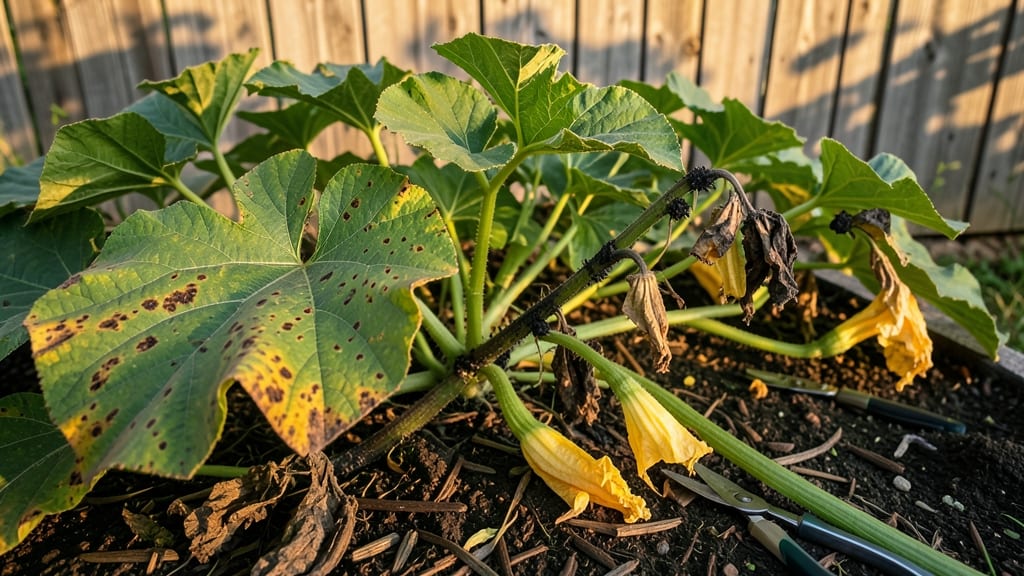
Pumpkin plant diseases can turn your thriving vines into a sad, wilted mess if you don't catch them early. 🌱 I've lost entire patches of pumpkins to powdery mildew and downy mildew, but I learned the warning signs—and how to stop them before they spread.
The key is acting fast, whether you spot fuzzy white spots or yellowing leaves that look like they've been scorched.
Most diseases start with too much moisture or poor air circulation—common problems in dense pumpkin patches. Powdery mildew thrives in humid conditions, while downy mildew needs wet foliage to take hold. Even healthy-looking plants can get infected if last year's debris lingers in the soil.
The good news? Organic sprays like neem oil or baking soda mixtures can save your plants if you catch the issue early.
You'll save your harvest by removing infected leaves immediately and spacing plants properly. A simple copper fungicide spray every two weeks keeps diseases at bay, and mulching helps dry the soil faster. The goal is to keep your pumpkins growing strong—no more shriveled vines or rotting fruit by harvest time.
If the problem spreads despite your best efforts, don't hesitate to call a local extension office. Some diseases, like bacterial wilt, need professional help. But in most cases, these practical steps will keep your pumpkins disease-free and your garden productive all season long.
Root Causes Of Pumpkin Ailments
Pumpkin plants, like all crops, are vulnerable to diseases due to a mix of environmental stressors, microbial invaders, and poor growing conditions. Understanding why these issues arise is the first step to prevention.
Below, we break down the key culprits behind pumpkin plant diseases—from fungal spores lurking in soil to pests that weaken defenses.
Pumpkin vines thrive when they have space to spread, but when plants grow too close together, humidity rises and airflow stalls. This creates the perfect breeding ground for fungal diseases like powdery mildew and downy mildew.
Without proper ventilation, spores can spread rapidly, smothering leaves in white or yellowish patches.
Why it happens:
- Stagnant air traps moisture, increasing humidity—fungi love damp conditions.
- Leaf wetness (from dew or irrigation) gives spores a foothold, accelerating infection.
- Thick canopies block sunlight, weakening plant immunity and making them more susceptible.
Actionable fix: Space vines 3–4 feet apart and prune overgrowth to improve airflow. Avoid overhead watering; opt for drip irrigation instead.
Pumpkins hate soggy roots. Overwatering or poorly drained soil leads to root rot, bacterial wilt, and Phytophthora blight—all of which can kill plants quickly. Even excess surface moisture from rain or improper irrigation sets the stage for fungal infections.
Why it happens:
- Waterlogged soil cuts off oxygen to roots, causing them to suffocate and rot.
- Fungal spores thrive in wet conditions, especially in heavy clay or compacted soil.
- Bacterial pathogens spread faster in standing water, entering through wounds or natural openings.
Actionable fix: Test soil drainage before planting—amend with compost or sand if needed. Water deeply but infrequently, and ensure raised beds or containers have drainage holes.
Insects like cucumber beetles, aphids, and squash bugs don’t just nibble leaves—they introduce harmful bacteria and viruses while stressing plants. A weakened pumpkin is far more likely to succumb to diseases like mosaic virus or bacterial leaf spot.
Why it happens:
- Beetles and bugs transmit pathogens as they feed, acting like tiny disease carriers.
- Physical damage from chewing creates entry points for infections.
- Stressed plants produce fewer defensive compounds, making them easier targets.
Actionable fix: Use row covers early in the season to block pests. Introduce beneficial insects (like ladybugs) or apply neem oil as a preventive spray. Remove and destroy heavily infested plants immediately.
Pumpkins prefer warm, stable conditions, but sudden temperature drops (especially at night) shock the plant, lowering its resistance. Cold stress opens doors for Alternaria leaf spot and gray mold, while excessive heat can cause sunscald, leaving plants vulnerable to secondary infections.
Why it happens:
- Cold snaps slow metabolism, weakening cell walls and making tissues more susceptible to pathogens.
- Heat stress (above 90°F) damages leaves, creating wounds where fungi or bacteria can invade.
- Frost damage kills foliage, forcing the plant to divert energy to recovery instead of defense.
Actionable fix: Choose heat-tolerant varieties if your climate swings wildly. Use mulch to regulate soil temperature and provide shade cloth during extreme heat. Avoid planting too early in cool seasons.
Pumpkins need a balanced diet of nitrogen, phosphorus, and potassium to stay healthy. Deficiencies—especially in magnesium (causing yellowing leaves) or calcium (leading to blossom-end rot)—weaken plants, making them prime targets for diseases like Fusarium wilt.
Why it happens:
- Nitrogen deficiency stunts growth, leaving plants unable to outgrow infections.
- Phosphorus shortages hinder root development, reducing the plant’s ability to absorb water and nutrients.
- Compacted or acidic soil locks out essential minerals, while poor organic matter reduces beneficial microbial activity.
Actionable fix: Conduct a soil test before planting and amend with compost or balanced fertilizer (e.g., 10-10-10). Avoid over-fertilizing with nitrogen, which promotes leafy growth at the expense of disease resistance.
Reusing pruners, shovels, or gloves between pumpkin patches can spread diseases like cucumber mosaic virus or powdery mildew from one plant to another. Leftover plant material in the soil also harbors overwintering pathogens, ready to reinfect the next crop.
Why it happens:
- Dirty tools carry spores or bacteria from infected plants to healthy ones.
- Old crop residue in soil releases pathogens when new plants are introduced.
- Monocropping (growing pumpkins in the same spot yearly) depletes soil health and builds up disease pressure.
Actionable fix: Sterilize tools with rubbing alcohol or bleach between uses. Practice crop rotation, avoiding the cucurbit family (pumpkins, squash, cucumbers) in the same bed for at least 3 years. Remove and compost (or burn) all plant debris after harvest.
Pumpkin Plant Disease Fixes
Now that you’ve identified the issue plaguing your pumpkin patch, it’s time to take action! The key to saving your crop lies in quick response, targeted treatment, and smart prevention.
Below, we’ve mapped out practical solutions for each common pumpkin disease, along with pro tips to keep your plants thriving. Let’s get those vines back in fighting shape! 🌱💪
Cause: Fungal spores love humid, crowded conditions. Fix: 🔥 Remove infected leaves – Snip off heavily powdered foliage (don’t compost it—toss it in the trash). 🍳 Spray with baking soda mix – Combine 1 tbsp baking soda, 1 tbsp vegetable oil, and 1 tsp dish soap in 1 gallon of water. Spray undersides of leaves weekly. 👨🍳 Improve airflow – Space plants 3–4 feet apart and prune vines to let sunlight and air circulate. 🥘 Prevent recurrence – Apply neem oil or sulfur-based fungicide every 7–10 days during humid spells.
💡 Pro Tip: Water in the morning so leaves dry fast—fungi hate dry conditions!
Cause: Overwatering + poor drainage = fungal feast. Fix: 🔥 Pull mulch back – Let soil dry between waterings; aim for 1 inch of water per week. 🍳 Fungicide spray – Use copper fungicide or a hydrogen peroxide solution (1 tbsp per gallon of water) every 5–7 days. 👨🍳 Rotate crops – Avoid planting pumpkins in the same spot next year (fungus lingers in soil). 🥘 Resistant varieties – Opt for ‘Jack Be Little’ or ‘Howden’—they tolerate downy mildew better.
🌡️ Pro Tip: If humidity is high, mist leaves in the morning (not evening) to reduce overnight dampness.
Cause: Bacteria spread via water splashes or tools. Fix: 🔥 Remove and destroy infected leaves – Burn or trash them immediately (don’t compost). 🍳 Copper-based bactericide – Spray every 5–7 days (follow label instructions). 👨🍳 Sterilize tools – Clean pruners with rubbing alcohol between cuts. 🥘 Water at the base – Avoid overhead sprinkling; use drip irrigation instead.
✨ Pro Tip: Silica spray (like Silicare) can strengthen plant cell walls and reduce bacterial entry.
Cause: Aphids or contaminated tools spread this viral nightmare. Fix: 🔥 Remove infected plants – Dig up and dispose of entire plants (don’t compost). 🍳 Insecticidal soap – Spray to eliminate aphids (repeat weekly). 👨🍳 Disinfect tools – Soak pruners in bleach solution (1:10 ratio) for 10 minutes. 🥘 Prevent spread – Rotate crops and avoid planting susceptible plants (like squash) nearby.
🎯 Pro Tip: Ladybugs and lacewings are natural aphid predators—encourage them with dill or marigolds!
Cause: Soil-borne fungi clog plant vessels, cutting off water. Fix: 🔥 Replace infected soil – Dig out 6–12 inches deep and replace with fresh, sterile mix. 🍳 Solarize the soil – Cover with clear plastic for 4–6 weeks in summer to kill fungi. 👨🍳 Resistant varieties – Choose ‘Waltham Butternut’ or ‘Cocozelle’ squash. 🥘 Crop rotation – Wait 3–4 years before replanting pumpkins in the same spot.
💡 Pro Tip: Compost tea (aerobic, not anaerobic) can boost beneficial microbes to outcompete pathogens.
No matter the disease, these habits keep pumpkins healthy: ✅ Rotate crops – Never plant in the same family (Cucurbits) in consecutive years. ✅ Test soil – Aim for pH 6.0–6.8 (use lime or sulfur to adjust). ✅ Sanitize everything – Tools, gloves, and containers between uses. ✅ Monitor early – Check leaves daily during humid weather.
Final Thought: A little vigilance + quick action goes a long way! With these fixes, your pumpkin patch will be back to thriving in no time. 🎃🚀 Now go save those squashes!
Frequently asked questions
What are the first signs of powdery mildew on pumpkin leaves?
Look for white, powdery spots on the upper leaf surfaces—like dust but won't wipe off. These spots spread quickly to yellow patches if humidity stays high. Check undersides too; mildew loves hiding there. Act fast by removing infected leaves and spraying with a baking soda mix (1 tbsp baking soda + 1 tsp dish soap per gallon of water).
Can I still harvest pumpkins if the leaves have disease?
Yes, but only if the fruit itself is healthy! Diseased leaves won’t affect the pumpkins already on the vine. Focus on removing infected foliage to protect new growth. If the vines show severe wilting or rot, harvest what’s ready and destroy the rest to prevent spread. Always wash pumpkins before storing.
How do I tell if my pumpkin plants have bacterial wilt vs. fungal root rot?
Bacterial wilt causes sudden wilting (even in cool weather) with yellowing leaves that stay upright—like they’re "limp but not dead." Root rot shows mushy, dark roots and wilting that worsens in heat. Check stems: bacterial wilt oozes yellow/brown fluid when cut, while fungal rot smells foul. For both, remove infected plants immediately.
Will neem oil prevent pumpkin diseases, or just treat them?
Neem oil works best as a preventive spray (every 7–10 days) to stop fungal spores from settling. It disrupts spore germination and strengthens plant defenses. For active infections, combine it with copper fungicide. Apply in the morning on dry leaves—never when rain is forecasted. Always mix fresh (neem loses potency after 24 hours).
Why do my pumpkin plants keep getting diseases every year?
Monocropping (planting pumpkins in the same spot yearly) builds up pathogens in the soil. Other culprits: poor airflow, contaminated tools, or ignoring crop rotation. Fix it by rotating to non-cucurbit crops (like beans or corn) for 3 years, sterilizing tools with bleach, and improving drainage. Test soil pH too—aim for 6.0–6.8.