
Watering
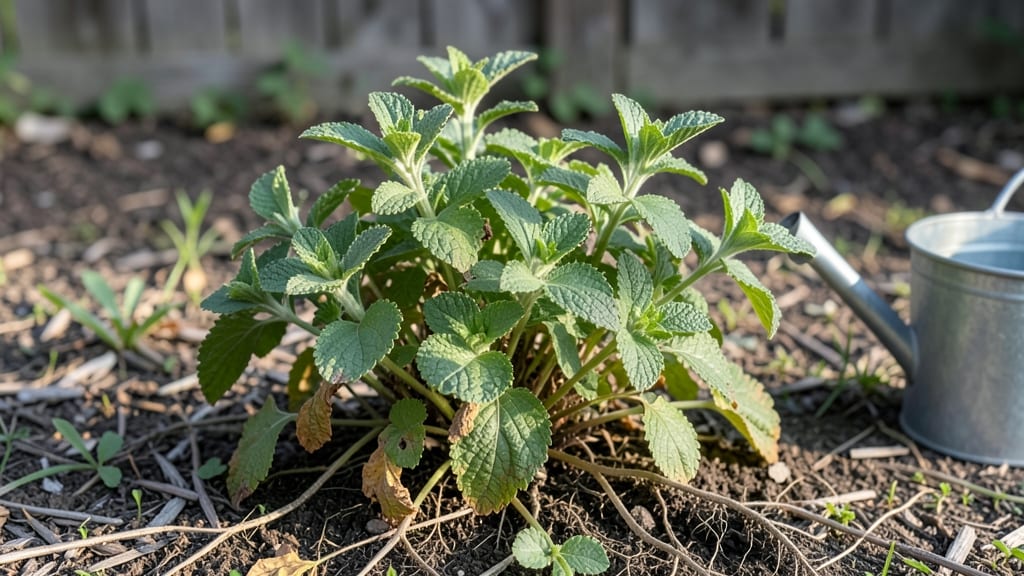
Is this your sad, underwatered mint plant—what you thought was ruined for good? You can bring it back in 3 quick steps—no replanting required. I’ve nursed back more than a few sad-looking mint plants by addressing the root cause: thirsty roots screaming for moisture.
The key isn’t just watering more, but watering right—deep enough to reach where the roots actually live.
First, check the soil: if it’s dry 2 inches down, your mint’s been crying for help. Stick your finger in—if it feels like sandpaper, it’s time to hydrate. Mint thrives when the top 1-2 inches of soil stay consistently damp, not soggy.
Overwatering is a whole different disaster, but underwatering? That’s the silent killer most gardeners miss until the leaves curl like old parchment.
Within 24 hours of proper watering, you’ll see those limp stems perk up, and new growth will tell you the crisis is over. The secret weapon? A terracotta pot (if you’re potted) lets moisture escape slowly, while mulching the soil surface keeps humidity where it counts.
By day 3, your mint will look like it’s never missed a drop.
Long-term, keep a watering schedule tied to your climate—every 2-3 days in summer, every 5-7 days in winter. And here’s the pro tip: mint’s aggressive roots mean it’ll outgrow its pot fast.
If you’re still seeing dry soil between waterings, it’s time to upgrade that container. Trust me, your future pesto will thank you.
Root Causes Of Thirsty Mint
Underwatered mint isn’t just a case of forgetting to water—it’s often a mix of environmental, soil, and human factors working against your plant’s needs. Let’s break down the real reasons your mint is crying out for hydration, so you can fix the problem at its source.
Mint thrives in well-draining soil that lets excess water flow away, but heavy or clay-rich soils can suffocate roots, trapping moisture where it shouldn’t be.
When soil compacts (from foot traffic, poor aeration, or over-potting), water pools instead of seeping down, leaving the root zone too wet at the top but bone-dry deeper down.
This creates a false sense of moisture—you might think the plant is hydrated, but the roots are actually starved for oxygen and fresh water.
Why it matters:
- Anaerobic roots (roots deprived of oxygen) can’t absorb water efficiently, even if the soil feels damp.
- Salt buildup from poor drainage can further stress roots, making them less able to uptake moisture.
- Fungal growth (like Pythium) thrives in soggy, compacted soil, rotting roots and blocking water absorption.
🔍 Quick test: Stick your finger 2–3 inches deep into the soil. If it feels like a damp sponge or smells musty, drainage is the issue.
Mint has shallow, fibrous roots that spread widely but don’t dive deep. This means it relies on frequent, light watering rather than deep soaks.
If you: - Water only when the soil is bone-dry (instead of keeping the top 1–2 inches moist), - Use a sprinkler or overhead watering (which evaporates quickly and doesn’t reach roots), - Water sporadically (e.g., deep soaks once a week instead of daily shallow drinks),
…your mint’s roots can’t keep up, leading to wilting, yellowing, or crispy edges.
Why it matters:
- Mint is a thirsty herb—it prefers consistent moisture (like a swampy garden bed) but hates drought stress.
- Fluctuating moisture levels cause osmotic stress, where roots struggle to absorb water efficiently.
- Overhead watering can also wash away soil nutrients, leaving roots malnourished.
💡 Pro tip: Use a moisture meter or the finger test (insert your finger knuckle-deep; if dry, water). For potted mint, bottom-watering (placing the pot in a tray of water for 10–15 mins) ensures even hydration.
Mint loves humidity (60%+ is ideal) and hates drying winds or scorching sun.
When temperatures rise or airflow increases: - Water evaporates faster from the soil surface before roots can absorb it. - Transpiration (water loss through leaves) spikes, draining the plant’s moisture reserves overnight. - Root activity slows in extreme heat (above 90°F/32°C), reducing water uptake even if soil is moist.
Why it matters:
- Wilting in the afternoon is often a sign of heat stress, not necessarily underwatering.
- Young or tender leaves suffer first because they’re more sensitive to moisture loss.
- Container-grown mint dries out 3x faster than in-ground plants due to exposed roots.
✨ Fix it fast:
- Mulch heavily (with straw or peat moss) to retain soil moisture.
- Move pots to partial shade during peak heat (10 AM–4 PM).
- Mist leaves in the morning to boost humidity (but avoid evening misting to prevent fungal issues).
If your mint is root-bound (roots circling the pot) or in a shallow container, it can’t access enough soil moisture to sustain growth.
Common mistakes: - Small pots (under 6–8 inches in diameter) dry out too quickly. - Terracotta pots wick moisture away faster than plastic or glazed ceramic. - No drainage holes trap excess water, leading to root rot (which then masks dehydration symptoms).
Why it matters:
- Root-bound plants develop fewer new roots, reducing their ability to absorb water.
- Shallow pots mean roots stay near the surface, where evaporation is highest.
- Overcrowded roots compete for water, leaving some strands completely dehydrated.
🔧 Solution:
- Repot into a wider container (not just taller) with fresh potting mix.
- Use self-watering pots or add hydrogel crystals to retain moisture.
- Upgrade to fabric grow bags for better airflow and moisture balance.
Too much fertilizer (especially high-salt varieties like synthetic blends) can disrupt the soil’s water-holding capacity.
Here’s how: - Excess salts create a hypertonic solution in the soil, making it harder for roots to absorb water (like drinking saltwater—your plant gets dehydrated). - Over-fertilized mint grows lush top growth but weak roots, so it can’t support its own thirst. - Chemical burn from fertilizers can damage root hairs, which are crucial for water uptake.
Why it matters:
- Wilting after fertilizing is a classic sign of osmotic stress.
- Yellowing leaves with crispy edges (not just wilting) often mean salt toxicity.
- Slow recovery after watering because roots are damaged or clogged.
💡 Reset the soil:
- Flush the soil with 5x the pot’s volume of water to leach out salts.
- Switch to organic fertilizer (like fish emulsion or compost tea) for gentler nutrition.
- Let the soil dry slightly between fertilizations (mint doesn’t need much—feed every 6–8 weeks max).
Revive Your Mint Plant Fast
Now that you know why your mint plant might be underwatered, it’s time to take action! With the right care, you can nurse it back to health—and even prevent future wilting.
Below are practical, step-by-step solutions tailored to the most common causes of underwatering, plus pro tips to keep your mint thriving.
If your mint’s soil is bone-dry or the roots are shriveled, deep watering is your first line of defense.
How to do it:
- 🔥 Check the soil depth – Stick your finger 2–3 inches into the soil. If it feels dry, it’s time to water.
- 🍳 Fill a watering can or basin – Use room-temperature water (cold water can shock roots).
- 👨🍳 Water slowly at the base – Pour water directly into the soil (not the leaves) until it drains from the bottom of the pot.
- ⏰ Wait 10–15 minutes – Let excess water seep out to prevent root rot.
- 🌱 Empty the saucer – If your pot has a drainage tray, tip it out to avoid soggy roots.
Prevention tip: 💡 Water before the soil dries out—mint prefers consistently moist (not soggy) soil. A moisture meter can help track soil hydration.
Mint is a thirsty herb, but overwatering is just as harmful as underwatering. A consistent routine is key.
How to adjust:
- 📊 Water every 2–3 days in warm weather (or daily if in full sun).
- 🌡️ Reduce in cooler months—mint grows slower in winter, so water every 4–5 days.
- 🎯 Test the soil – Press your finger in; if the top 1 inch feels dry, water again.
- ✨ Use a self-watering pot – If you travel often, try a wicking system or a pot with a reservoir.
Pro tip: 🔥 Morning watering is best—it gives leaves time to dry, reducing fungal risks.
Compacted or poor-quality soil can strangle roots, making it hard for water to reach them.
How to upgrade:
- 🔪 Loosen the soil – Gently fluff the top 2 inches with a fork to improve airflow.
- 🌿 Mix in perlite or sand – Add 20% perlite/sand to potting mix for better drainage.
- 🥗 Choose the right pot – Ensure it has drainage holes (no exceptions!).
- 🍎 Repot if needed – If roots are circling or soil is waterlogged, upgrade to a slightly larger pot with fresh, well-draining soil.
Prevention tip: 💡 Use a mix of potting soil + compost (60/40 ratio) for optimal moisture retention.
If your mint is completely limp with crispy edges, act fast!
Emergency steps:
- 🚿 Submerge the pot – Place it in a basin of water for 10–15 minutes to rehydrate roots.
- 🌿 Trim dead leaves – Snip off yellow/brown foliage to redirect energy.
- 🌱 Move to shade – Keep it out of direct sun for 3–5 days to recover.
- 💧 Resume normal watering – Once perky, return to your adjusted schedule.
Warning: ❌ Never let mint sit in standing water—this causes root rot!
Final Thought: With these fixes, your mint should bounce back in 3–7 days. Keep an eye on soil moisture, and soon you’ll have lush, vibrant leaves ready for teas, cocktails, or cooking! 🍃💚
Frequently asked questions
How can I tell if my mint plant is truly underwatered?
Check for these signs: drooping stems that don’t bounce back when watered, crispy brown edges on leaves, and soil that’s dry 2+ inches deep. Also look for small, wilted leaves or a dull, grayish-green color. If the stems snap easily, that’s a red flag for severe dehydration.
Can I save my mint plant if the stems are completely limp?
Yes! Place the pot in a basin of room-temperature water for 10–15 minutes to rehydrate the roots. Then trim any mushy or brown leaves and move it to partial shade for 3–5 days. Most mint recovers within 24–48 hours if the roots are still healthy. Just avoid direct sun until it perks up.
Why does my mint plant wilt even after I water it?
This usually means the roots can’t absorb water efficiently—often due to compacted soil, root damage, or over-fertilization. Try bottom-watering (soaking the pot from below) or flushing the soil with 5x the pot’s volume of water to remove excess salts. If the pot is too small, repotting into a wider container with fresh soil may help.
How often should I water mint in different seasons?
In summer, water every 2–3 days (or daily in full sun). In spring/fall, aim for every 3–4 days. During winter, reduce to once a week since growth slows. Always check the top 1 inch of soil—if it’s dry, water again. A self-watering pot helps maintain consistency.
Will pruning help my underwatered mint recover faster?
Prune 1/3 of the plant to remove damaged leaves and encourage new growth. Focus on yellow or brown foliage and any stems that feel mushy. This redirects energy to healthier parts and prevents fungal issues. Just avoid cutting more than 20% at once—mint bounces back best with gradual trimming.