
Picking
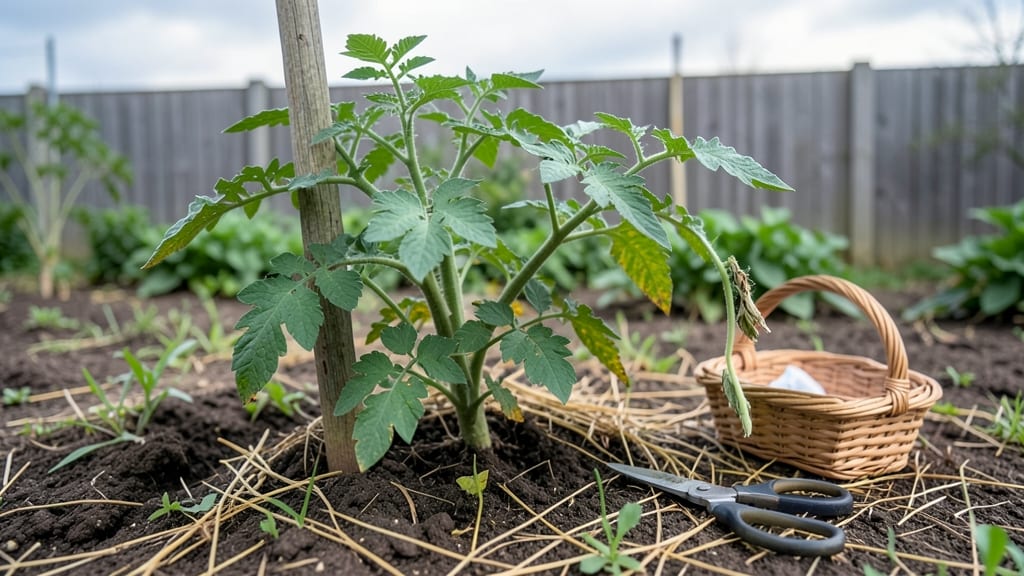
Knowing when to pick tomatoes off the plant ensures peak flavor and productivity: harvest fully ripe ones (deep red, slightly soft) immediately, while green or partially ripe varieties can be picked early for indoor ripening or yield control. Always avoid overcrowding clusters to keep plants productive.
Timing your harvest directly impacts both flavor and plant health. 🌱 Fully ripe tomatoes develop maximum sweetness and lycopene (the antioxidant that gives them their vibrant color) when left on the vine until they're deep red and slightly yielding to gentle pressure.
Meanwhile, picking green or partially ripe tomatoes lets you control ripening indoors or prevent overburdening the plant, which can reduce future yields. I’ve found that morning harvests often yield the freshest fruit, as cooler overnight temperatures help preserve their firmness.
Environmental factors like temperature and sunlight also play a role—hotter climates can accelerate ripening, while cooler weather may slow it down. If you notice clusters getting overcrowded, thinning them out (removing some fruit) can actually encourage the remaining tomatoes to grow larger and ripen more evenly.
This simple adjustment can make a big difference in your harvest’s quality and quantity over the season.
💡 In This Article
- Tomato Ripeness Stages and Color Indicators
- Best Practices for Harvesting Tomatoes Without Damaging Plants
Tomato ripeness stages and color indicators
Here's what's actually happening inside that tomato as it ripens: chlorophyll (the green pigment) breaks down while lycopene (the red pigment) develops. Ethylene gas, produced naturally by the tomato, triggers this transformation—think of it as the fruit's internal timer.
The stages progress from green (unripe, high chlorophyll) to breaker (first blush of color), then turning, pink, and finally fully ripe (deep red). Each stage offers distinct flavor and texture profiles, with peak sweetness occurring only at full ripeness.
The color shift isn't just visual—it's biochemical. A green tomato contains about 10-20 mg of lycopene per 100g, while a fully ripe one jumps to 20-50 mg, explaining why red tomatoes have superior antioxidant benefits.
Temperature affects this process too: tomatoes ripen 30-50% faster in 85°F+ conditions than in 65°F weather. The stem separation test (gently twisting) works because ethylene weakens the stem attachment as ripening progresses.
What most people don't realize is how texture changes stage-by-stage. A breaker tomato feels firm but slightly yielding at the blossom end, while pink stage shows softening near the stem.
Fully ripe tomatoes develop a slightly soft yet resilient flesh—press too hard, and you'll see the classic "dimple" where the stem was attached. This is your cue that sugars have fully converted from starches, creating that signature sweet-tart balance.
Environmental factors create variations worth noting. Tomatoes grown in partial shade may develop uneven coloration (green shoulders), while those in full sun ripen more uniformly but can overripen faster.
The pH of the soil also plays a role—acidic soils (pH 5.5-6.5) enhance lycopene production, while alkaline conditions can lead to pale, less flavorful fruit. For home gardeners, this means testing soil and providing afternoon shade during heatwaves can optimize both color and taste.
Consider these key ripeness indicators when harvesting:
- Color: Progress from green to deep red (some heirlooms stay pink or yellow)
- Firmness: Starts firm, ends slightly soft with gentle give
- Stem Separation: Twists easily at full ripeness (no force needed)
- Temperature Impact: Warmer days speed ripening; cooler nights preserve firmness
- Cluster Management: Remove overcrowded fruit to prevent disease spread
The science behind this ripening process explains why store-bought tomatoes often taste bland—they're frequently picked green and ripened with ethylene gas, which never fully develops the complex flavors achieved through natural vine ripening.
For homegrown tomatoes, patience pays off: waiting for full ripeness can increase sugar content by up to 40% compared to early harvesting.