
Watering
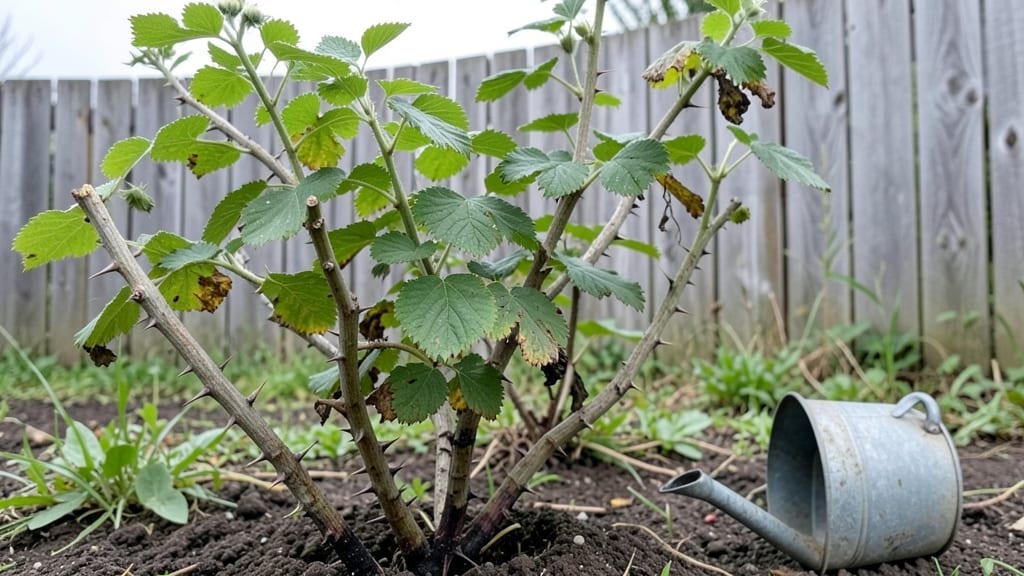
Overwatered raspberry plants look sad—yellow leaves, wilted canes, and roots drowning in soggy soil. 🌱 I’ve seen this too many times, including my own patch after a week of heavy rain and automatic sprinklers running overtime.
The good news? Raspberries are resilient, and with the right moves, you can bring them back to life.
First, stop watering immediately and let the soil dry out. Check the roots—if they smell rotten or look mushy, you’ve got root rot, and that needs urgent attention.
Amend the soil with compost or perlite to improve drainage, and consider moving potted plants to a container with better airflow if they’re in one.
Once the roots recover, adjust your watering routine. Raspberries prefer 1-1.5 inches of water per week, but they hate soggy feet. Stick your finger in the soil—if the top 2 inches are dry, it’s time to water. Mulch helps too, keeping moisture steady without suffocating the roots.
With these changes, your raspberries should bounce back in 2-4 weeks, producing stronger canes and sweeter berries. The key is consistency—now you’ll know exactly when to water and when to hold back. Let’s get those plants thriving again!
Root Causes Of Overwatering
Overwatering your raspberry plants can feel like a mystery—one day, your berries are thriving, and the next, the roots are drowning in soggy soil. But don’t worry, this isn’t just bad luck.
Understanding the why behind overwatering helps you fix the problem and keep your plants happy. Let’s break down the most common culprits.
Raspberry plants need well-draining soil to thrive. If your garden bed or pots retain too much water—whether from clay-heavy soil, compacted dirt, or a lack of organic matter—the roots suffocate. Here’s why it happens:
- Clay soil acts like a sponge, holding onto moisture for days, preventing oxygen from reaching roots.
- No amendments (like compost or perlite) mean water pools around roots instead of draining away.
- Container gardening without drainage holes turns pots into water traps.
Pro Tip: Test your soil’s drainage by digging a hole, filling it with water, and timing how long it takes to drain. If it’s slower than 4 hours, your soil is too dense. 💡 (Learn how to improve drainage here.)
Raspberries are resilient, but they hate soggy feet. Many gardeners water on a strict schedule—like every morning at 8 AM—without checking soil moisture. Here’s the science:
- Raspberry roots need oxygen to absorb nutrients. Too much water displaces oxygen, leading to root rot (a fungal infection that turns roots mushy).
- Young plants or those in pots dry out faster than mature ones in the ground, but even they can’t handle daily soakings.
- Rainfall + irrigation can double the moisture, drowning roots without you realizing it.
Key Insight: Raspberries prefer consistent moisture, not constant wetness. The top 1–2 inches of soil should dry out between waterings. Use your finger as a gauge! ✨
Mulch isn’t just for looks—it’s a water regulator. Without it, soil evaporates quickly in heat or stays waterlogged after rain. Here’s how mulch fails (or is missing):
- No mulch = soil crusts over, trapping water at the surface and preventing roots from breathing.
- Too much mulch (over 4 inches) can suffocate roots by blocking airflow and trapping excess moisture.
- Wrong material: Dense mulches like thick cardboard or plastic sheets trap moisture against roots.
Fix It Fast: Use 2–3 inches of organic mulch (straw, wood chips, or shredded leaves) to balance moisture and temperature. 🌡️ (See our mulching checklist.)
Growing raspberries in pots? Big mistake if you skip drainage. Here’s why containers cause overwatering:
- No drainage holes = water sits at the bottom, rotting roots within days.
- Too-small pots dry out fast, so you overcompensate by watering daily—but the roots can’t handle it.
- Cheap, non-breathable materials (like plastic without ventilation) trap humidity and promote fungal growth.
Container Hack: Elevate pots on feet to improve airflow, and use terracotta or fabric pots for better drainage. 🏺 (More container care tips.)
Rain, humidity, and temperature shifts can turn your watering routine into a disaster. For example:
- Heavy rainfall + your usual watering = double the moisture. Roots can’t keep up.
- High humidity (common in summer) slows evaporation, making soil stay wet longer.
- Cold, rainy seasons reduce water absorption, so roots stay waterlogged even if you cut back.
Smart Move: Adjust watering based on weather forecasts. Skip watering if rain is predicted, and reduce frequency in humid climates. 🌧️ (Seasonal watering calendar.)
Revive Your Overwatered Raspberry Plant
Now that you understand why your raspberry plant might be drowning in too much water, let’s roll up our sleeves and get it back on track! The good news?
Overwatering is often reversible with the right care. Below, we’ll break down practical fixes based on the most common causes—plus tips to keep your plant thriving long-term.
Cause: Soggy soil cuts off oxygen to roots, leading to rot and leaf discoloration.
How to Fix It:
- 🔥 Stop Watering Immediately
- Pause all watering for 3–5 days to let the soil dry out. This prevents further damage while roots recover.
- 🍳 Drain the Excess Moisture - If the soil is muddy or smells foul, gently lift the plant (if in a pot) and place it in a dry, shaded spot for 24–48 hours.
This helps evaporate excess water. - For in-ground plants: Avoid compacting soil further—focus on improving drainage (see next steps).
- 👨🍳 Prune Damaged Foliage
- Snip off yellow, mushy, or blackened leaves with clean scissors. This redirects energy to healthy growth.
- Pro Tip: 💡 Sterilize your tools with rubbing alcohol to avoid spreading disease.
- 🥘 Improve Soil Drainage - For pots: Add a 1–2 inch layer of perlite, sand, or gravel to the bottom before repotting. Use a well-draining potting mix (raspberry plants hate soggy feet!). - For garden beds: Amend the soil with compost + coarse sand (50/50 mix) to loosen texture.
Consider raising beds if drainage is chronically poor.
- ⏰ Gradually Resume Watering - Wait until the top 1–2 inches of soil are dry before watering again. Use the "finger test"—stick your finger in the soil; if it’s damp past 1 inch, wait longer. - Water deeply but infrequently (1–2 times per week, depending on climate).
Aim for 1–1.5 inches of water per week, delivered slowly to encourage root absorption.
Cause: Overwatering weakens the plant’s structure, causing canes to flop or fail to produce berries.
How to Fix It:
- 🌡️ Check for Root Stress
- Gently tug on a cane—if it pulls out easily, roots are rotting. Repot immediately (see above).
- If roots feel firm but the plant is still wilted, it may be nutrient-deficient from poor oxygen uptake.
- 🎯 Support the Plant
- Install stakes or trellises to prop up weak canes. Raspberry plants need support to dry quickly and avoid fungal issues.
- Pro Tip: ✨ Use soft ties (like old T-shirts) to avoid damaging canes as they grow.
- 💪 Boost Nutrients
- Feed with a balanced fertilizer (10-10-10 or 5-5-5) 4–6 weeks after pruning to encourage recovery.
- Add aged compost to the soil for organic nutrients. Avoid fresh manure—it can burn roots.
- 🌞 Optimize Light & Airflow
- Ensure the plant gets 6–8 hours of sunlight daily. Overwatered plants often struggle in shaded spots.
- Thin out crowded canes to improve airflow, reducing humidity-related stress.
Long-Term Solutions:
- 📊 Upgrade Your Watering Routine:
- Use drip irrigation or soaker hoses for slow, targeted watering.
- Water in the early morning to allow foliage to dry before evening.
- 🌡️ Monitor Soil Moisture:
- Invest in a moisture meter or terracotta pot (check weight—lighter = drier).
- Quick Test: Press your finger into the soil—if it springs back slowly, it’s too wet.
- 🌱 Choose the Right Container:
- Pots must have drainage holes. If repotting, go 1–2 inches larger than the current container.
- Elevate pots on feet or saucers to prevent water pooling.
- 🍎 Mulch Like a Pro:
- Apply 2–3 inches of organic mulch (straw, wood chips) around the base to retain moisture without suffocating roots.
- Avoid wet mulch—keep it 1–2 inches away from the stem to prevent rot.
- 🔄 Rotate Your Care Seasonally:
- Spring/Summer: Water deeply but less frequently (raspberries are drought-tolerant once established).
- Fall/Winter: Reduce watering by 50%—overwatering in cold months accelerates rot.
Remember: Patience is key! It may take 2–4 weeks for your raspberry plant to bounce back, but with these fixes, it’ll be back to producing juicy, plump berries in no time. 🍓✨
Frequently asked questions
How do I know if my raspberry plant is overwatered vs. underwatered?
Check the leaves and soil: overwatered plants show yellowing leaves (especially lower ones), mushy stems, and soil that smells sour or stays soggy for days. Underwatered plants have crispy brown edges, dry soil pulling away from the pot, and wilted leaves that don’t bounce back when watered. Stick your finger in—if the top 2 inches are bone dry, it’s thirsty!
Can I save my raspberry plant if the roots are rotting?
Yes, but act fast! Trim away all black, mushy roots with clean scissors, then repot in fresh, well-draining soil with perlite or sand. Let it dry out completely for 3–5 days before watering lightly. If over 50% of roots are rotted, the plant may not recover—but give it a try!
Why does my raspberry plant keep getting overwatered even when I stop?
Poor drainage is the culprit! Clay soil, compacted dirt, or pots without holes trap moisture. Fix it by amending soil with compost + coarse sand (50/50 mix) and elevating containers. For in-ground plants, consider a raised bed to improve airflow. Mulch with straw or wood chips to regulate moisture without suffocating roots.
How often should I water raspberries after fixing overwatering?
Once recovered, water deeply 1–2 times per week, aiming for 1–1.5 inches of water total. Always check soil moisture first—the top 1–2 inches should dry out between waterings. In summer heat, you might need daily shallow watering (early morning only), but avoid soggy soil. A moisture meter helps!
Will my raspberry plant produce fruit if it was overwatered?
Possibly, but recovery takes time. Overwatering stresses the plant, delaying fruiting by 2–4 weeks. Focus on reviving roots first—once established, raspberries bounce back strong. Prune damaged canes to redirect energy, and fertilize lightly (10-10-10) after 4–6 weeks of recovery. Patience pays off with juicy berries!