
Diseases
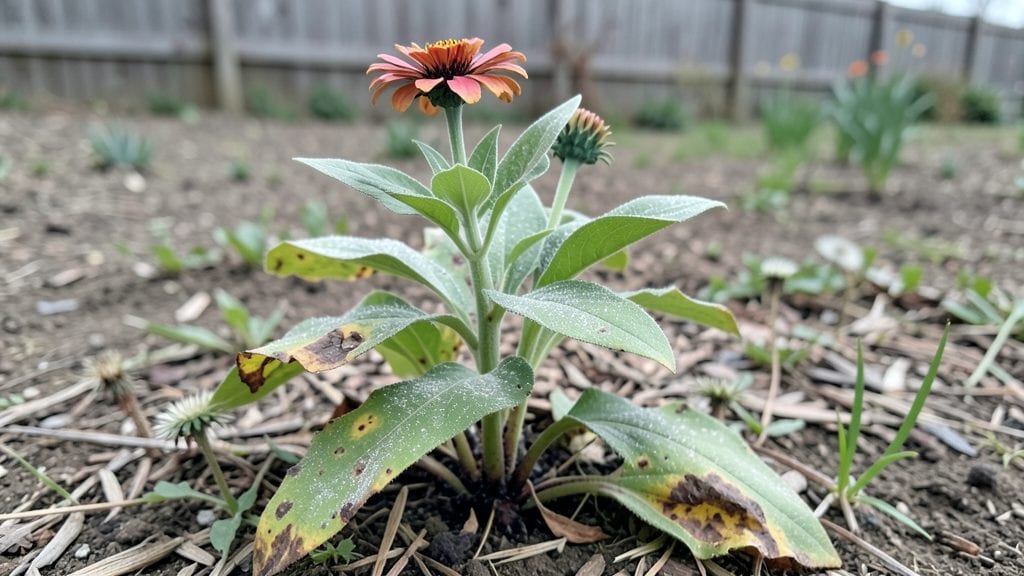
Zinnia plant diseases can turn your vibrant blooms into a sad, wilted mess if you don’t catch them early. I’ve seen powdery mildew turn my zinnias into ghostly white skeletons—and trust me, you’ll spot the signs before they ruin your garden.
The key is knowing what to look for and acting fast with simple fixes.
Most zinnia diseases start with damp leaves or crowded plants, creating the perfect breeding ground for fungi and bacteria. Powdery mildew leaves a chalky white coating, while leaf spot shows up as brown or black splotches.
Bacterial wilt? Your stems will ooze a yellowish goo when cut open—game over if you ignore it. The good news? All three respond to basic care tweaks.
With the right mix of airflow, fungicide sprays, and resistant varieties, you’ll keep your zinnias thriving all season. I’ll walk you through organic sprays (like neem oil) and when to pull the plug on a sick plant.
No more guessing—just clear steps to save your garden before the damage spreads.
Whether you’re dealing with a single stem or a full bed outbreak, this guide gives you the tools to diagnose and treat fast. No more helplessly watching your zinnias fade—let’s get them back to their bold, cheerful best.
Root Causes of Zinnia Struggles
Zinnia plants are resilient, but they’re not invincible. When diseases strike, it’s usually because of a mix of environmental stress, poor growing conditions, or unseen invaders.
Understanding why these problems happen is the first step to prevention—and keeping your zinnias blooming strong. Let’s break down the science behind the most common culprits.
Zinnias thrive in sunlight but hate being smothered. When plants grow too close together, moisture lingers on leaves and stems, creating the perfect damp, warm environment for fungal spores to take hold.
- Why it happens: Fungal diseases like powdery mildew and gray mold (Botrytis cinerea) spread rapidly in stagnant air.
Overcrowding also weakens plants by competing for nutrients, making them more susceptible to stress-related issues. - Actionable fix: Space zinnias 12–18 inches apart and prune regularly to improve airflow. Avoid watering overhead—stick to drip irrigation or soaker hoses to keep foliage dry.
Zinnias are drought-tolerant once established, but inconsistent watering throws their defenses off balance. Overwatering leads to root rot (Phytophthora or Pythium), while underwatering stresses plants, making them vulnerable to pests and diseases.
- Why it happens: - Excess moisture: Soggy soil cuts off oxygen to roots, inviting fungal pathogens.
Weak roots can’t absorb nutrients, leading to yellowing leaves and stunted growth. - Drought stress: Underwatered zinnias develop thick, waxy leaves—ideal hiding spots for aphids and whiteflies, which then spread viral diseases like zinnia mosaic virus. - Actionable fix: - Water deeply 1–2 times per week (adjust for clay vs. sandy soil). - Use mulch (straw or shredded leaves) to retain moisture and prevent soil splashing onto leaves.
Diseases don’t just appear—they’re often carried in by wind, water, tools, or even infected plant debris. Zinnias are particularly prone to fungal infections (like Alternaria leaf spot) and bacterial wilts (Ralstonia solanacearum), which thrive in warm, humid conditions.
- Why it happens:
- Fungal spores (e.g., Alternaria, Septoria) survive in soil or old plant material, waiting for the right conditions to infect new growth.
- Bacterial pathogens enter through wounds (like pruning cuts) or via sap-sucking insects (e.g., thrips).
- Viruses (e.g., tomato spotted wilt virus) spread through infected insects (like aphids or thrips) or contaminated tools.
- Actionable fix:
- Rotate crops annually to starve soil-borne pathogens.
- Sterilize tools with 70% rubbing alcohol between uses.
- Remove infected plants immediately (don’t compost them—bag and trash them!).
Zinnias prefer warm days (70–80°F) and cool nights (55–65°F), but heatwaves or sudden temperature drops can shock them, lowering their resistance to disease.
- Why it happens: - High humidity + heat = fungal blooms.
Powdery mildew, for example, thrives when nights stay above 60°F with poor airflow. - Cold snaps weaken plants, making them susceptible to bacterial leaf spot or damping-off in seedlings. - Actionable fix: - Provide afternoon shade in extreme heat (use shade cloth if temps hit 90°F+). - Avoid evening watering to let foliage dry before nighttime humidity spikes.
Zinnias need balanced fertility, but too much (or too little) of certain nutrients can weaken their immune response.
- Why it happens:
- Nitrogen overload = lush foliage but weak stems (prone to splitting and fungal entry points).
- Phosphorus/potassium deficits = poor root development, making plants more susceptible to root rot and wilting diseases.
- Magnesium deficiency (yellowing between leaf veins) weakens cell walls, inviting pathogens.
- Actionable fix:
- Test soil before planting (ideal pH: 6.0–7.0).
- Use a balanced fertilizer (e.g., 10-10-10) at planting, then switch to low-nitrogen, high-potassium (e.g., 5-10-10) during blooming.
Insects like aphids, whiteflies, and thrips don’t just damage leaves—they transmit viruses and create sticky honeydew (a breeding ground for sooty mold).
- Why it happens:
- Aphids inject toxins and spread zinnia yellow mosaic virus.
- Whiteflies excrete honeydew, which fosters black sooty mold (a fungal growth that blocks sunlight).
- Thrips puncture cells, creating wounds for bacterial infections.
- Actionable fix:
- Inspect undersides of leaves weekly for pests.
- Blast off pests with a strong spray of water (early morning).
- Use neem oil or insecticidal soap as a preventative spray.
Old garden beds or shared tools can harbor dormant pathogens waiting to infect new zinnias.
- Why it happens:
- Reused soil may contain fungal spores (e.g., Fusarium) from previous crops.
- Dirty pruners can transfer bacterial leaf spot from one plant to another.
- Actionable fix:
- Solarize soil (cover with clear plastic for 4–6 weeks in summer) to kill pathogens.
- Disinfect tools with bleach water (1 part bleach to 9 parts water) or rubbing alcohol.
Seedlings or newly transplanted zinnias are extremely vulnerable to disease while adjusting to their new home.
- Why it happens:
- Root damage during transplanting slows nutrient uptake, weakening defenses.
- Sudden environmental changes (e.g., moving from shade to full sun) cause stress, inviting damping-off (Pythium) in seedlings.
- Actionable fix:
- Hardening off seedlings (acclimating them to outdoor conditions over 7–10 days).
- Water deeply after transplanting to reduce shock.
- Avoid fertilizing for the first 2 weeks—let roots establish first.
Quick Fixes for Common Zinnia Ailments
When your zinnias start looking less vibrant and more wilted, don’t panic—most issues can be tackled with simple, targeted solutions. Below, we’ll break down the most effective ways to diagnose and treat common zinnia diseases, plus preventive steps to keep your garden thriving.
Think of these as your go-to troubleshooting guides for a healthy, blooming zinnia patch!
If you spot a white, powdery coating on leaves, powdery mildew is likely the culprit. This fungal disease thrives in humid conditions but can be managed with these steps:
- 🔥 Prune the Problem Remove heavily infected leaves and stems immediately. Dispose of them in the trash (not your compost bin) to prevent spores from spreading.
- 🍳 Homemade Fungicide Spray Mix 1 tablespoon of baking soda, 1 tablespoon of vegetable oil, and a drop of dish soap into 1 quart of water. Spray this solution on both sides of the leaves every 7–10 days until the mildew disappears.
- 🌡️ Improve Airflow Space plants 12–18 inches apart to reduce humidity. Consider pruning nearby plants to allow sunlight and air to circulate freely.
💡 Pro Tip: Water zinnias at the base in the morning to keep foliage dry. Avoid overhead watering, especially in the evening, as damp leaves invite fungal growth.
Brown or black spots with yellow halos? Leaf spot diseases (like Septoria or Alternaria) can mar your zinnias, but they’re beatable:
- 🔪 Remove Infected Leaves Snip off and discard any leaves with spots. Sterilize your pruners with rubbing alcohol between cuts to avoid cross-contamination.
- 🍳 Copper Fungicide Treatment Apply a store-bought copper fungicide (like Bordeaux mixture) or a homemade solution of 1 teaspoon of copper sulfate per gallon of water. Spray every 10–14 days.
- 🌱 Crop Rotation Avoid planting zinnias (or other susceptible plants like marigolds or impatiens) in the same spot next year. Rotate to a different area of your garden to break the disease cycle.
✨ Prevention Hack: Mulch around zinnias with straw or pine needles to reduce soil splashing onto leaves, which spreads spores.
Tiny pests like aphids or spider mites can suck the life out of zinnias, causing stunted growth and distorted leaves. Here’s how to evict them:
- 💦 Blast Them Off Spray plants with a strong stream of water from your hose to dislodge aphids. For spider mites, wipe leaves with a damp cloth.
- 🍳 Soapy Water Spray Mix 2 tablespoons of mild liquid soap (like Castile soap) with 1 quart of water. Spray directly on pests, focusing on the undersides of leaves. Repeat every 3–4 days until they’re gone.
- 🐞 Introduce Beneficial Insects Ladybugs and lacewings are natural aphid predators. Purchase them online or attract them by planting companion flowers like dill or yarrow nearby.
🎯 Long-Term Defense: Install fine mesh netting over young zinnia seedlings to block pests before they take hold.
If your zinnias wilt suddenly—even with moist soil—root rot (often caused by overwatering or poor drainage) may be the issue. Act fast:
- ⏰ Stop Watering Immediately Let the soil dry out completely for 2–3 days. Check moisture by sticking your finger 1 inch into the soil; if it’s damp, wait longer.
- 🏡 Repot or Improve Drainage If the plant is in a container, repot it into fresh, well-draining soil mixed with perlite or sand. For in-ground zinnias, amend the soil with compost to improve aeration.
- 🌱 Fungal Treatment Drench the soil with a beneficial fungus like Trichoderma or a hydrogen peroxide solution (1 tablespoon per gallon of water) to combat rot-causing pathogens.
💡 Soil Savvy: Plant zinnias in raised beds or mounds to ensure excess water drains away quickly. Avoid heavy clay soils.
An ounce of prevention is worth a pound of cure! Follow these tips to minimize disease risks:
- ✅ Choose Resistant Varieties Opt for disease-resistant zinnia types like ‘Benary’s Giant’ or ‘Profusion,’ which are bred to fight off common ailments.
- 🌞 Full Sun is Key Zinnias need 6–8 hours of sunlight daily. Poor sunlight weakens plants, making them more susceptible to diseases.
- 🌱 Healthy Soil Matters Test your soil’s pH (zinnias prefer 6.0–7.0) and amend it with compost for nutrients. Healthy plants resist pests and diseases better.
- 🗓️ Regular Monitoring Inspect your zinnias weekly for early signs of trouble. Catch issues before they spread!
With these solutions, your zinnias will bounce back stronger—and your garden will stay a showstopper. Happy growing! 🌸
Frequently asked questions about zinnia plant diseases
What are the most common signs of fungal infections in zinnias?
Watch for white powdery coatings (powdery mildew), brown/black spots with yellow halos (leaf spot), or gray fuzzy growth (Botrytis). These appear on leaves and stems when humidity is high and airflow is poor. Always check undersides of leaves first—fungi love hiding there!
Can I save a zinnia plant already showing bacterial wilt symptoms?
Unfortunately, once bacterial wilt sets in (yellowing, wilting, and oozing stems), there's no cure. Remove the infected plant immediately and dispose of it in the trash—not compost—to prevent spreading. Sterilize your tools with rubbing alcohol afterward. Prevention is key: improve drainage and avoid overhead watering.
How often should I spray my zinnias with neem oil to prevent diseases?
Apply neem oil every 7-10 days during warm, humid weather as a preventive measure. Mix 1 tablespoon of neem oil with 1 teaspoon of mild soap per quart of water. Early morning applications work best—avoid spraying when flowers are open to protect pollinators. For active infections, increase to weekly sprays for 2-3 weeks.
Are some zinnia varieties more disease-resistant than others?
Yes! 'Benary's Giant' and 'Profusion' series are bred for better disease resistance. Look for varieties labeled "disease-resistant" when shopping. For extra protection, choose early-blooming types that finish before summer humidity peaks. Avoid susceptible varieties like 'Crystal' in hot, damp climates.
Why do my zinnias get diseases even when I follow all the care tips?
Diseases can still strike due to weather factors (like sudden rain after drought) or hidden soil pathogens from previous crops. Test your soil for pH (zinnias prefer 6.0-7.0) and consider solarizing your garden bed before planting. Sometimes, even resistant varieties get stressed by extreme heat—provide afternoon shade during heatwaves to help them recover.