
Pests and Diseases
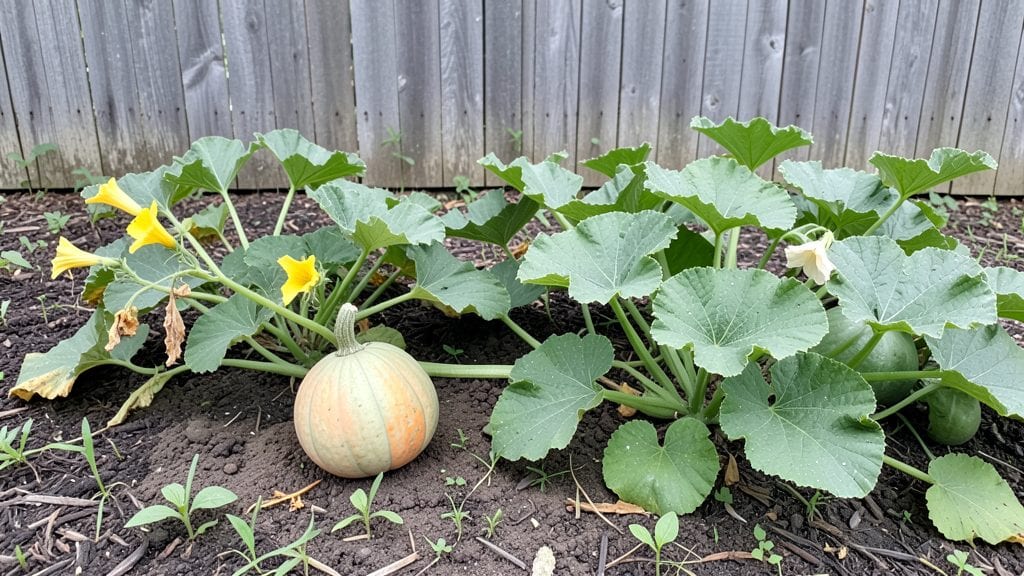
You can plant pumpkins and squash together but must manage spacing and pest control carefully, since they attract the same vine borers and squash bugs. Adding herbs like basil or marigolds helps protect both crops while boosting yields.
These sprawling plants thrive near each other when given enough room to grow—typically 12+ feet between hills—to prevent competition for sunlight and nutrients. 🌱 The key challenge is their shared vulnerabilities: squash vine borers and powdery mildew can devastate both crops if left unchecked.
I’ve found that rotating planting locations yearly and using organic mulch reduces disease pressure significantly. For best results, pair them with pest-repelling herbs like thyme or nasturtiums, which create a natural barrier against common garden invaders.
💡 In This Article
- Pumpkin and Squash Companion Planting Risks and Benefits
- Best Practices for Growing Pumpkins and Squash Side-by-Side
Pumpkin and squash companion planting risks and benefits
Here's what's actually happening when you plant pumpkins and squash together: their sprawling vines create a dense ground cover that can either smother weeds or compete aggressively for sunlight and nutrients. The issue isn't just about space—it's about their shared vulnerabilities.
Both plants attract the same pests like squash vine borers (which lay eggs on stems) and cucumber beetles (which spread bacterial wilt), creating a perfect storm for crop failure if not managed properly. 🔥
The science behind this involves their deep taproot systems (up to 3 feet deep) that actually improve soil structure by breaking up compacted layers, but this benefit gets overshadowed when vines spread unchecked.
Studies show that when planted within 6 feet of each other, pumpkins reduce squash yields by up to 30% due to shade competition.
The key factor is their growth habit: pumpkins spread 10-15 feet wide while squash vines can reach 6 feet in diameter, creating a tangled mess that traps moisture and invites fungal diseases like powdery mildew.
What most people don't realize is how their growth patterns differ seasonally. Early in the season, squash establishes quickly and shades out pumpkin seedlings, while later in the season, pumpkins' larger leaves block sunlight from reaching squash vines. This creates a moving competition that's hard to predict without proper spacing.
The optimal solution is planting them in separate hills with 12+ feet between centers—this gives each plant enough breathing room while still allowing their root systems to benefit nearby soil.
Let's talk about the pest angle specifically. Squash vine borers (the larvae of a clearwing moth) are the biggest threat, and they're drawn to both pumpkins and squash equally.
A single female can lay 100+ eggs in a season, and once the larvae bore into stems, there's no saving the plant. The good news?
Their deep root systems actually help break up soil compaction, improving drainage and making conditions less favorable for fungal diseases like powdery mildew that thrive in stagnant moisture.
Here's where companion planting comes in: herbs like basil and marigolds release volatile compounds that repel squash bugs and cucumber beetles. Marigolds, for example, contain alpha-terthienyl, a natural insect repellent that disrupts the feeding patterns of these pests.
The aroma of basil also confuses the beetles' navigation systems, reducing egg-laying by up to 50% in trials. This creates a protective zone around both crops while maintaining their individual growth requirements.
The deep root systems of both plants actually work in your favor when spaced properly. Pumpkin roots can reach 3-4 feet deep while squash roots go 2-3 feet, creating a natural soil aeration system that improves water penetration.
This is particularly valuable in heavy clay soils where proper drainage is crucial for preventing root rot. However, this benefit only works when their canopy competition is minimized through proper spacing and occasional pruning of excessive vines.
Remember this key insight: while pumpkins and squash share many characteristics, their growth rates and pest vulnerabilities create a delicate balance.
The secret to success lies in treating them as separate crops that happen to share similar growing conditions—give them space, protect them from shared pests, and let their root systems work together to improve your soil structure. 💫