
Plants
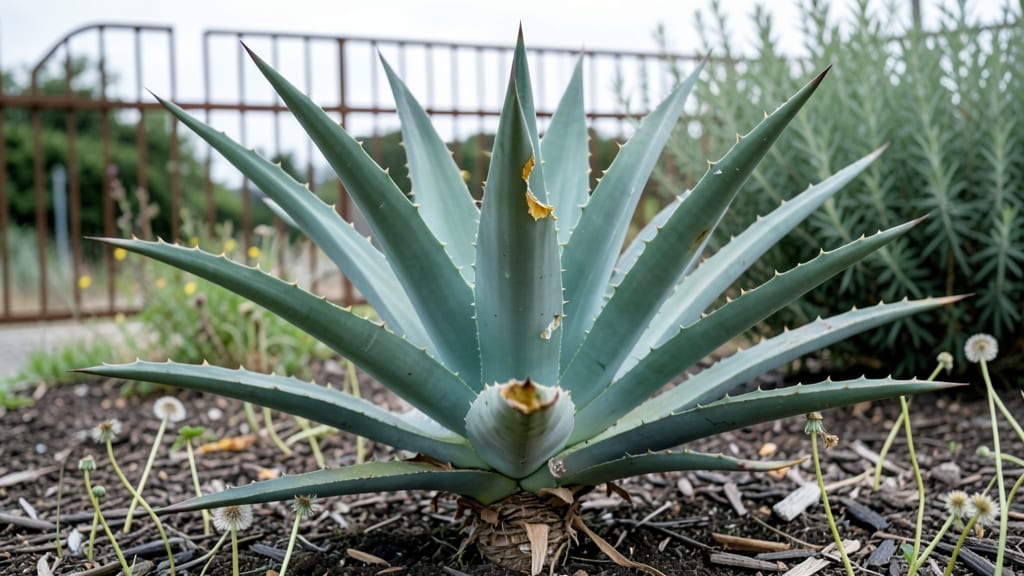
Century plant poison contains saponins and calcium oxalate crystals, causing mild to severe irritation in pets and children upon contact or ingestion. Symptoms include drooling, vomiting, and skin rashes, requiring immediate medical attention for severe reactions.
Understanding century plant toxicity starts with recognizing its two main irritants: saponins trigger mouth and throat inflammation, while calcium oxalate crystals cause painful mouth ulcers and digestive upset. 🌵 The severity depends on exposure—ingestion is far riskier than skin contact, but even minor contact can lead to drooling and skin irritation in sensitive pets.
I always recommend wearing gloves when handling the plant, especially if you have curious kids or pets roaming nearby.
What makes this particularly concerning is how quickly symptoms can escalate. For instance, a small bite might cause only mild drooling, but swallowing even a tiny piece could trigger vomiting and swelling within minutes. The good news?
Most cases resolve with basic first aid—rinse the mouth with water and avoid giving milk (it can worsen symptoms). Still, if you notice labored breathing or persistent vomiting, seek emergency care immediately.
💡 In This Article
- Toxic Compounds in Century Plant: Saponins and Calcium Oxalate Risks
- Safe Handling and Emergency Care for Century Plant Exposure
Toxic compounds in century plant: saponins and calcium oxalate risks
The century plant's toxicity stems from two primary chemical compounds: saponins and calcium oxalate crystals. Saponins act as natural detergents, creating soapy bubbles when mixed with water and irritating mucous membranes upon contact. These compounds are concentrated in the plant's sap, which oozes from broken leaves or stems.
When ingested, saponins trigger an immediate inflammatory response in the mouth and throat, causing excessive salivation and painful swelling within 5-15 minutes of exposure.
Calcium oxalate crystals are the more dangerous component, forming sharp needle-like structures that physically damage tissue. These crystals are particularly abundant in the plant's sap and can cause severe mouth irritation, vomiting, and even difficulty swallowing.
In extreme cases, they may lead to kidney damage if ingested in large quantities. The crystals' microscopic size—typically measuring 0.001-0.01 millimeters—allows them to penetrate deep into tissues, making their effects both immediate and persistent.
The severity of symptoms depends entirely on the type of exposure. Skin contact usually results in mild irritation or rashes, while ingestion can cause systemic reactions.
For example, a dog chewing on century plant leaves might experience drooling and pawing at its mouth within 10-30 minutes, whereas a child ingesting sap could develop more severe symptoms like abdominal pain and vomiting within 1-2 hours.
The plant's sap contains both compounds, so even minimal contact can trigger reactions in sensitive individuals or pets.
What most people don't realize is how these compounds interact with biological systems. Saponins disrupt cell membranes, causing them to leak their contents—a process called cytolysis. Meanwhile, calcium oxalate crystals physically puncture cells, creating micro-tears that trigger the body's inflammatory response.
This dual mechanism explains why symptoms can escalate rapidly, especially in young animals or children with developing immune systems. The combination makes century plant particularly hazardous compared to other ornamental plants.
Interestingly, the plant's toxicity varies by part. The sap is most concentrated in the leaves and stems, while the flowers contain lower levels of these compounds. However, even the flowers can cause irritation if ingested in large quantities.
The plant's defensive chemicals serve as a natural deterrent to herbivores, making it particularly dangerous for curious pets and children who might mistake it for a harmless succulent. 💫
Understanding these mechanisms helps explain why veterinary professionals often recommend immediate intervention. The body's reaction to these compounds isn't just chemical—it's physical damage at the cellular level.
This is why rinsing with water is only the first step; medical attention becomes crucial when symptoms progress beyond simple irritation to systemic effects like labored breathing or persistent vomiting.