
Diseases
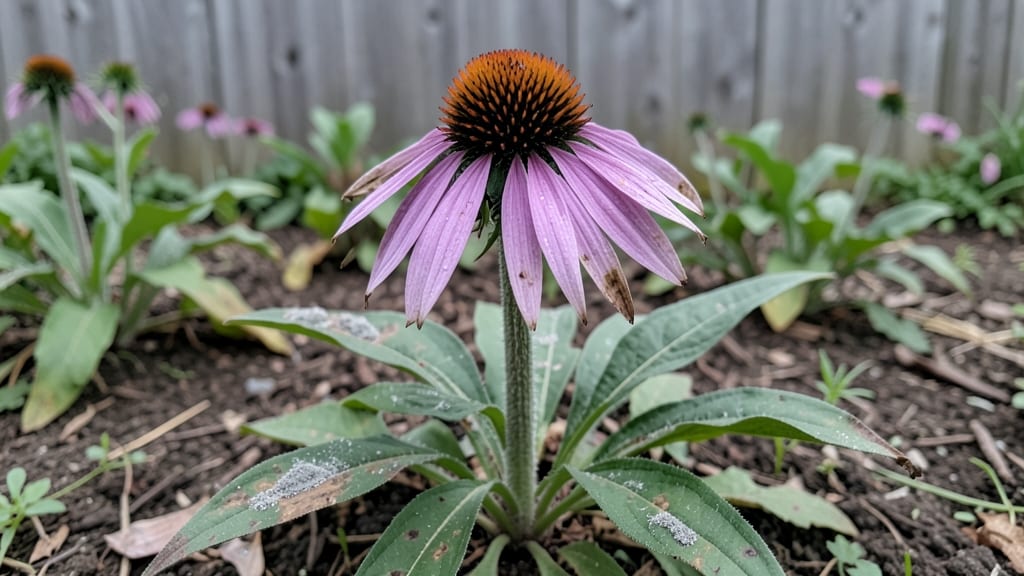
Echinacea plant diseases like powdery mildew, rust, and bacterial leaf spot can devastate your coneflowers if left unchecked, causing stem weakness and leaf yellowing. Catching these issues early through careful leaf inspection is your best defense against spreading problems.
These common echinacea afflictions often appear when humidity spikes or airflow is poor, creating perfect conditions for fungal spores to thrive. 🌱 For instance, powdery mildew shows up as white, powdery patches on leaves during warm, damp springs, while rust creates orange pustules that spread rapidly in summer.
Bacterial leaf spot, on the other hand, leaves dark, water-soaked marks that can turn crispy over time. The key to saving your plants lies in acting fast—removing infected foliage and improving garden airflow can make all the difference in stopping these diseases before they take over.
Once you spot the symptoms, the next step is choosing the right treatment. Organic options like neem oil work well for fungal issues, while copper-based sprays can help combat bacterial infections.
I always recommend spacing your echinacea plants properly and avoiding overhead watering to keep the foliage dry, which significantly reduces the risk of these problems in the first place.
💡 In This Article
- Identifying Echinacea Fungal and Bacterial Infections
- Preventing and Treating Echinacea Plant Diseases
Identifying echinacea fungal and bacterial infections
Here's what's actually happening when your echinacea shows signs of trouble: powdery mildew appears as a white, flour-like coating on leaves and stems, typically emerging in late spring when temperatures hover between 60-80°F and humidity rises above 70%.
This fungal infection thrives on the surface, blocking sunlight and causing leaves to yellow and curl. The spores spread via wind or water splashes, often starting on lower leaves before creeping upward.
The key factor distinguishing powdery mildew from rust is color and texture. Rust infections produce bright orange or reddish-brown pustules on the undersides of leaves, usually appearing in summer when warm, humid conditions persist. These pustules eventually burst, releasing spores that can turn entire leaves brown and brittle.
Unlike powdery mildew, rust affects the leaf tissue internally, causing premature leaf drop. 🌿 What most people don't realize is that rust often starts on older leaves first, then spreads to new growth if unchecked.
Bacterial leaf spot presents differently—look for dark, water-soaked spots with yellow halos that appear suddenly, often after heavy rain or overhead watering. These spots can merge into larger lesions, creating irregular patches that may develop a grayish center.
This bacterial infection thrives in warm, wet conditions (above 75°F with high humidity), and unlike fungal diseases, it can spread through contaminated tools or even splashing water. The spots may eventually dry out and become papery, but the damage is already done to that leaf.
Timing matters for each disease: powdery mildew peaks in May-June, rust dominates July-August, and bacterial leaf spot flares up after heavy summer rains. Early morning inspections after dew has dried are ideal for spotting these issues before they spread.
The science behind this involves fungal spores germinating at specific temperature/humidity thresholds, while bacteria multiply rapidly in standing water on leaf surfaces.
Consider these visual clues when diagnosing: powdery mildew feels like dust when rubbed between fingers, rust pustules have a velvety texture when young, and bacterial spots often have a slightly raised, crispy edge.
The location also helps—powdery mildew loves crowded plants, rust prefers shady spots, and bacterial leaf spot appears randomly but often near water sources. 🔍 These distinctions let you target treatments precisely, saving time and preventing further damage.
What most gardeners overlook is that early symptoms often appear on the lowest leaves first. By the time you see widespread damage, the disease may already be systemic.
Regularly removing fallen leaves and debris reduces spore populations by up to 70%, while proper spacing (at least 18-24 inches apart) improves airflow, making plants 30% less susceptible to these infections.