
Watering
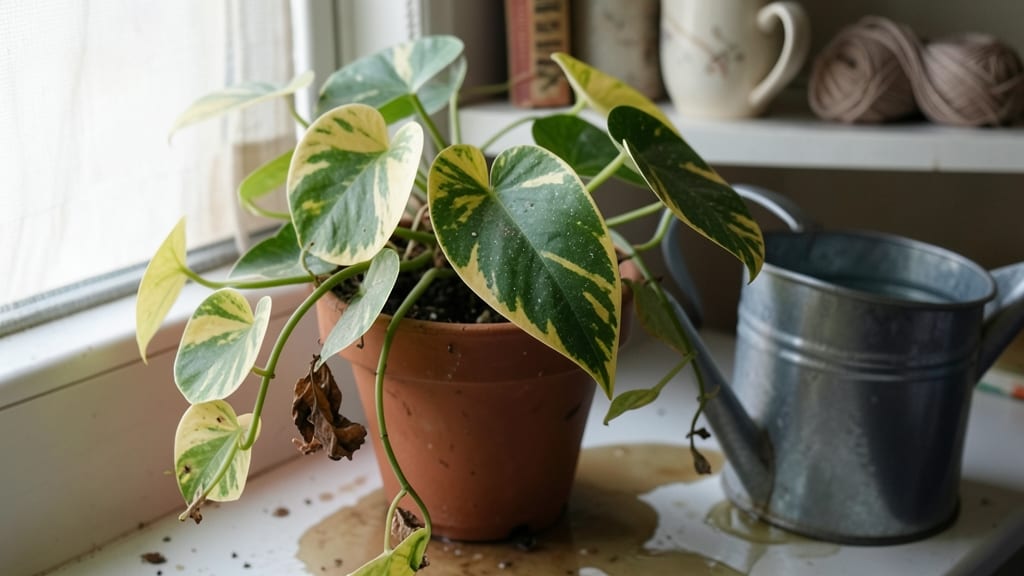
An overwatered pothos plant looks like a sad, droopy mess—but here’s the good news: it’s almost always fixable. I’ve revived more than a dozen of these by following the same three simple steps, and the best part?
You’ll see improvement within days. The key is catching it early when the stems are still firm, not mushy.
Most people overwater because they think pothos need constant moisture, but these plants thrive on neglect. Yellow leaves and wilting stems? That’s your plant begging for a break from soggy soil.
I check soil moisture with my finger—if it’s damp more than an inch down, it’s time to hold off on watering. A well-draining mix with perlite or orchid bark makes all the difference.
By the end of the process, your pothos will bounce back with fresh green leaves and a sturdy stem. The recovery takes patience, but it’s worth it—these plants are nearly indestructible once they’re back on track.
You’ll be pinching off new growth in no time, and your plant will look better than ever.
This works for both potted pothos and those growing in hanging baskets. The same principles apply whether you’re dealing with a single plant or a whole collection. Let’s get those leaves perking up!
Root Causes Of Overwatering
When your pothos plant starts looking sad with yellowing leaves, drooping vines, or even root rot, the issue often boils down to too much water. But why does this happen in the first place? Let’s break down the science and common mistakes that lead to an overwatered pothos.
Pothos plants thrive in well-draining soil, but many growers unknowingly create a waterlogged environment. Here’s why:
- Compacted or heavy soil: Clay-heavy or poorly amended potting mixes retain moisture like a sponge, suffocating roots. Without air pockets, oxygen can’t reach the roots, leading to anaerobic conditions—a root’s worst nightmare.
- Lack of drainage holes: If your pot has no exit for excess water, every drop stays trapped. Even if you water lightly, the soil stays soggy for days, promoting Pythium or Phytophthora fungi, which attack roots.
- Self-watering pots: While convenient, these pots often keep soil moist for extended periods. Pothos roots prefer drying out slightly between waterings, not a constantly damp environment.
Pro Tip: 💡 Mix your potting soil with perlite, orchid bark, or coco coir (20-30%) to improve aeration. Always use pots with drainage holes—even if you’re repotting into a cache pot.
One of the biggest myths in plant care is sticking to a rigid watering schedule. Pothos plants don’t follow calendars—they follow soil moisture levels. Here’s how timing backfires:
- Ignoring soil dryness: Watering every 7 days (or whatever you read online) assumes your plant’s environment is identical to someone else’s. Factors like humidity, temperature, and pot size drastically change how fast soil dries.
- Overcompensating after neglect: If you skip water for a week, some growers drown the plant the next day. This shocks the roots, causing osmotic stress as they struggle to adjust to sudden moisture changes.
- Seasonal changes: Winter slows root activity, so watering the same amount as summer leads to soggy soil. Pothos in low-light conditions also need less frequent watering because they photosynthesize slower.
Pro Tip: ✨ Stick your finger 1-2 inches into the soil. If it feels dry, water; if it’s still moist, wait. Use a moisture meter for precision—it’s a game-changer!
Your pothos isn’t just reacting to water—it’s responding to its entire ecosystem. These environmental factors often lead to overwatering:
- Low light + high humidity: In dim conditions, pothos transpires (releases moisture) slowly. If humidity is also high (e.g., bathroom or kitchen), the soil stays damp longer, mimicking a rainforest—except roots can’t breathe.
- Cold drafts or temperature swings: Roots are sensitive to sudden chills. If your pothos sits near a drafty window or AC vent, it stops absorbing water efficiently, leaving excess moisture in the soil.
- Overpotting: A pot that’s too large holds more water, keeping the soil wet for weeks. Roots in a 10-inch pot won’t dry out as fast as those in a 6-inch one, even if you water the same amount.
Pro Tip: 🌡️ Keep your pothos in bright, indirect light (like an east-facing window) and maintain temps between 65–85°F. If humidity drops below 40%, use a pebble tray or humidifier to balance moisture levels.
Not all pots and soils are created equal—and some are downright deadly for pothos roots. Here’s what goes wrong:
| Problem | Why It Causes Overwatering |
|---|---|
| Glazed or plastic pots | Traps moisture against roots, preventing evaporation. Plastic also doesn’t “breathe,” leading to root suffocation. |
| Peat-heavy soil | Retains water like a swamp. Once saturated, it takes weeks to dry, even in warm conditions. |
| No aeration additives | Compacted soil blocks oxygen, forcing roots to ferment (yes, like beer!) and release toxic byproducts. |
Pro Tip: 🔥 Use terracotta pots (they wick away moisture) or fabric grow bags (breathable and self-aerating). For soil, blend 50% potting mix + 30% perlite + 20% orchid bark for the perfect balance.
Revive Your Pothos in 3 Steps
If your pothos is looking more like a soggy noodle than a lush, trailing beauty, don’t panic! With the right care, you can nurse it back to health. The key is acting fast and adjusting your watering habits.
Below, we’ll break down the best ways to fix an overwatered pothos based on the root cause—plus tips to keep it thriving long-term.
Before you do anything else, halt all watering immediately. Overwatering is often a habit, not a one-time mistake, so breaking the cycle starts with patience.
How to check if your pothos is truly overwatered:
- 👆 Lift the pot: A soggy, heavy pot means it’s waterlogged. If it feels light, the soil may be drying out.
- 🌱 Inspect the leaves: Yellowing, mushy leaves (especially at the bottom) or brown, crispy edges are classic overwatering signs.
- 🕵️♂️ Stick your finger in the soil: If the top 1–2 inches are damp, wait before watering again.
Pro Tip: If the soil smells like rot or mold, your pothos is in distress. Time to take action!
If the roots are waterlogged, they can’t absorb oxygen, leading to rot. Here’s how to revive them:
🔥 Method 1: Let the Soil Dry Out (Mild Cases)
- 📅 Move to a dry spot: Place your pothos in a well-ventilated area away from direct sunlight.
- ⏳ Wait 1–2 weeks: Let the soil dry completely before watering again.
- 💧 Water lightly next time: Use the "finger test"—only water if the top inch of soil is bone dry.
🍳 Method 2: Repot in Fresh Soil (Moderate Cases)
If the roots are mushy or black (a sign of rot), repotting is your best bet.
- 🔪 Gently remove the plant from its pot and 🧼 rinse the roots with lukewarm water to wash away excess soil.
- 🪒 Trim any black, mushy roots with clean scissors (healthy roots are firm and white).
- 🌿 Repot in fresh, well-draining soil (a mix of potting soil + perlite or orchid bark works well).
- 🏺 Choose a pot with drainage holes—no exceptions! Terracotta pots help wick away moisture faster.
Pro Tip: After repotting, 🌡️ avoid watering for 3–5 days to let the roots recover.
🥘 Method 3: Root Soak (Severe Cases)
If your pothos is beyond repotting but still has some green leaves, a root soak can help.
- 🚿 Fill a clean container with room-temperature water.
- 🌱 Submerge the roots (not the leaves!) for 10–15 minutes, then remove and let excess water drain.
- 🌿 Return to a pot with fresh soil and hold off on watering for a few days.
Now that your pothos is on the mend, prevent future overwatering with these habits:
| Mistake | Fix It | Prevent It |
|---|---|---|
| Watering on a schedule | Water only when the top 1–2 inches of soil are dry. | Use a moisture meter or the finger test to check soil dryness. |
| No drainage holes | Repot in a container with drainage holes immediately. | Always choose pots with drainage—no exceptions! |
| Overly dense soil | Mix in perlite, orchid bark, or sand to improve aeration. | Use a well-draining potting mix (50% potting soil + 50% perlite). |
| Poor airflow | Move to a bright, indirect spot with good air circulation. | Prune leaves to improve airflow and mist occasionally (but don’t sog it!). |
| Using cold water | Water with room-temperature or slightly warm water. | Let tap water sit out for 24 hours if it’s hard or cold. |
Pro Tip: Pothos are drought-tolerant—underwatering is less risky than overwatering! Err on the side of dryness.
- 🌿 Trim damaged leaves to redirect energy to healthy growth.
- 💡 Use a grow light if natural light is weak (pothos thrive in bright, indirect light).
- 🍃 Propagate healthy cuttings—even if the main plant is struggling, you can grow new plants from stem cuttings!
With these steps, your pothos should bounce back in 2–4 weeks. The key is patience and consistency—once you adjust your watering routine, your plant will thank you with lush, happy growth! 🌿💚
Frequently asked questions
How do I know if my pothos is overwatered vs. underwatered?
Check the leaves and soil: overwatered pothos show yellowing, mushy leaves (especially at the bottom) and may have a foul smell from the soil. Underwatered pothos have crispy, brown edges and dry, pulling soil. Lift the pot—if it feels heavy, it’s likely waterlogged.
Can I save a pothos with black, mushy stems?
Yes, but act fast! Trim off the black, mushy sections with clean scissors, then repot in fresh, well-draining soil. Healthy stems should be firm and green. Avoid watering for 3-5 days to let roots recover before resuming the finger test.
Why does my pothos keep getting overwatered even when I stop?
Check your pot and soil mix. Plastic or glazed pots trap moisture, while dense soil holds water too long. Switch to terracotta pots and amend your soil with 30% perlite or orchid bark. Also, avoid using self-watering containers—they keep soil too moist.
How often should I water my pothos after recovery?
Wait until the top 1-2 inches of soil are completely dry—usually every 1-2 weeks, depending on your home’s humidity. Use the finger test: stick your finger in the soil to check moisture levels before watering.
Can I propagate my pothos while it's recovering?
Take healthy stem cuttings (4-6 inches long) with at least one leaf node. Place in water or moist soil. The parent plant will focus energy on recovery, while the cuttings grow roots. This works even if the main plant is still weak.