
Pruning
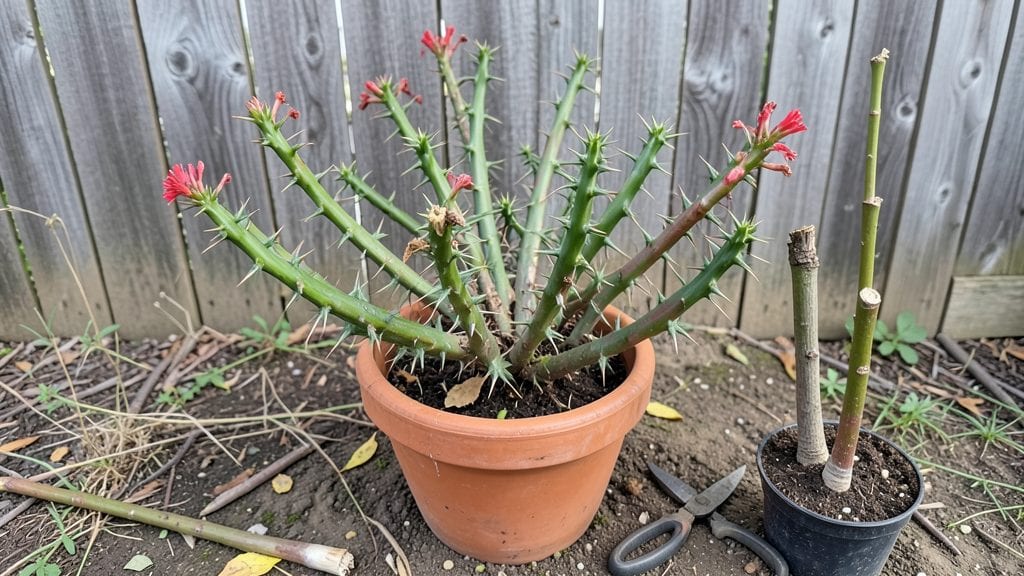
Pruning euphorbia plants transforms leggy stems into dense, bushier growth—but the sticky white sap makes it feel like handling a science experiment.
I’ve pruned everything from spiky Euphorbia tirucalli to trailing Euphorbia milii without turning my hands into glue traps, and I’m sharing the exact method that keeps plants thriving while keeping you safe.
Timing is everything: cut back after flowering or in late winter when the plant’s energy shifts toward new growth.
You’ll need sharp bypass pruners (dull blades crush stems and invite rot), rubber gloves, and a bucket of soapy water to neutralize the sap—because once it dries, it’s nearly impossible to remove.
The key is working in stages: never remove more than one-third of the plant at once, or you’ll shock it into dormancy.
What you’ll end up with is a euphorbia that looks like it belongs in a conservatory, not a neglected corner. New shoots emerge within 2-4 weeks, and with each pruning, the plant becomes denser, more compact, and packed with those signature colors—deep greens, fiery reds, or even variegated stripes.
The best part? Proper pruning extends the life of your plants by years, turning them from seasonal accents into permanent staples.
This works for both succulent types (like Euphorbia trigona) and shrub varieties (like Euphorbia characias), though larger species may need a saw for thick stems. For those nervous about the sap, I’ll show you how to work with it—no lab coat required. Let’s get those shears ready.
📚 In This Guide
- What you need
- Instructions
- Tips and common mistakes
- Wrapping up and next steps
What you need
- ● Pruning shears: Bypass pruners (for clean cuts) or sterilized bypass loppers (for thicker stems). Size: 6-8 inches for precision.
- ● Gloves: Heavy-duty, latex-free gloves (nitrile or leather). Why? Euphorbia sap is toxic—protect your skin!
- ○ Disposable masks: N95 or surgical-grade (optional but recommended for dusty or large-scale pruning).
- ● Rubbing alcohol (70%+): Small bottle for sterilizing tools between cuts.
- ● Plastic bags or newspaper: 1-2 large bags for disposing of cuttings (seal tightly!).
- ● Sharpie or marker: Permanent, fine-tip (for labeling cuttings if propagating).
- ● Rooting hormone: Powder or gel (if you plan to propagate cuttings).
- ● Small pots or trays: 4-6 inch pots (for rooting new cuttings).
- ● Horticultural soap or mild detergent: For cleaning tools if alcohol isn’t available.
- ● Pruning saw: Only for very thick stems (rare in most Euphorbia varieties).
Pruning Euphorbia plants: Step-by-Step for healthier, more compact growth
Euphorbias reward precise pruning with fuller shapes and fewer toxic sap spills—here’s how to do it safely.
Time the Prune for Optimal Regrowth
Prune euphorbias in early spring, just as new growth begins to push from the stem. This timing ensures you cut back before the plant’s active growing season, allowing it to redirect energy into bushier, denser foliage rather than leggy stems. Avoid pruning in late summer or fall, as the plant won’t have enough time to recover before dormancy sets in.
I always wait until the plant has at least 2-3 inches of fresh green growth—this signals it’s ready to handle stress. If you prune too early, you risk stunting new shoots entirely. Wear thick gloves and long sleeves at all times, as the milky sap can cause skin irritation. Work outdoors or in a well-ventilated area to minimize exposure.
Cut Back Leggy Stems and Shape the Plant
Use clean, sharp pruning shears to make 45-degree cuts just above a leaf node or lateral branch. This angle encourages faster healing and directs new growth in the right direction. Never cut into old, woody stems—euphorbias rarely regrow from these, and you’ll just create unsightly scars. Focus on overly elongated stems or those growing away from the plant’s natural shape.
For bushier varieties like Euphorbia characias, trim back one-third of the longest stems to encourage branching. For columnar types like Euphorbia tirucalli, prune the top 1-2 inches to maintain a tidy form. Immediately discard pruned stems in a sealed plastic bag—never compost them, as the sap can harm other plants and pets.
Clean and Protect the Plant After Pruning
Wipe down the shears with rubbing alcohol between cuts to prevent sap from clogging the blades or spreading to healthy parts of the plant. Euphorbia sap dries quickly, but residual droplets can irritate skin or attract pests. After finishing, rinse the shears thoroughly with soapy water and dry them completely to prevent rust.
Water the plant lightly 24 hours after pruning—just enough to keep the soil slightly moist but not soggy. Overwatering stressed euphorbias can lead to root rot, especially in the days following a major trim. Place the plant in bright, indirect light for a week to reduce stress, then gradually reintroduce it to its usual sun exposure. You’ll notice new growth emerging from the cut nodes within 3-4 weeks—that’s your reward for precise pruning.
Monitor for New Growth and Adjust as Needed
Check the pruned euphorbia weekly for signs of new shoots. Healthy regrowth appears as small, plump buds along the stem, often within 2-3 inches of the cut. If no new growth appears after 6 weeks, the cuts may have been too severe or made in poor locations. In this case, prune again in the following spring, but this time focus on shorter stems or different nodes.
Euphorbias respond well to light annual pruning, so repeat this process each spring to maintain shape and density. Over time, you’ll develop a sense of how much to trim—some varieties like Euphorbia amygdaloides tolerate aggressive pruning, while others, like Euphorbia milii, prefer only minimal shaping. Always err on the side of caution with toxic plants like these.
Tips & tricks for pruning Euphorbia plants
Precision is everything when pruning euphorbias—these small adjustments make the difference between leggy stems and a full, healthy plant.
Timing is Everything: The early spring timing in Step 1 is critical because euphorbias need their full growing season to recover. If you notice your plant has already developed 2-3 inches of fresh growth by late winter, don't wait—prune immediately. Delaying beyond early spring risks stunted regrowth, especially in varieties like Euphorbia milii that are more sensitive to pruning stress. I've learned the hard way that fall pruning often results in plants that never fully recover before winter dormancy.
Cutting Technique Matters: That 45-degree angle in Step 2 isn't just aesthetic—it creates a larger surface area for faster healing. When making cuts, visualize slicing just above a leaf node where new buds will emerge. For columnar types like Euphorbia tirucalli, never cut more than 1-2 inches from the top unless you're prepared to wait months for regrowth. I recommend practicing on non-toxic plants first to get comfortable with the angle before working with euphorbias.
Post-Pruning Care Prevents Stress: The 24-hour watering window in Step 3 is your safety net for preventing root rot. After pruning, euphorbias are particularly vulnerable to overwatering as they redirect energy to new growth. I've seen plants develop brown, mushy stems within days when given too much water immediately after pruning. Instead, think of this period as a recovery phase—your plant needs time to seal its wounds before receiving any significant moisture.
Monitoring Growth Reveals Success: Those weekly checks in Step 4 aren't just busywork—they help you identify exactly where new growth is emerging. If you notice buds forming within 2-3 inches of your cuts, you're on the right track. But if you see no new growth after 6 weeks, it's time to reassess. I've found that sometimes the issue isn't the pruning itself but rather the location of the cuts—sometimes moving just an inch higher or lower makes all the difference for varieties like Euphorbia characias.
Pro Tips for Pruning Euphorbia Plants
- Precision is everything when pruning euphorbias—these small adjustments make the difference between leggy stems and a full, healthy plant.
- Timing is Everything: The early spring timing in Step 1 is critical because euphorbias need their full growing season to recover.
- Cutting Technique Matters: That 45-degree angle in Step 2 isn't just aesthetic—it creates a larger surface area for faster healing.
Frequently asked questions
Got questions about pruning your euphorbia plants? You’re not alone!
Whether you're a beginner or a seasoned gardener, these answers will help you keep your euphorbia thriving—safely and stylishly. Let’s dive in!
When is the best time to prune euphorbia plants?
Prune euphorbia in early spring or late winter (just before new growth starts) to avoid disturbing the plant during its dormant phase. If you notice leggy stems or overgrowth in summer, a light trim is fine—but avoid heavy pruning then. Pro tip: Wait until the plant finishes flowering to prune, as cutting back blooms can reduce next year’s display!
How do I handle the toxic sap when pruning?
Euphorbia sap is highly irritating—wear gloves, long sleeves, and safety goggles! Work outdoors or in a well-ventilated area. If sap touches your skin, wash immediately with soapy water. For cuts, clean with rubbing alcohol. Never smoke or eat/drink near the plant while pruning—sap can cause severe reactions.
Can I propagate euphorbia from cuttings after pruning?
Euphorbia cuttings root easily. Let cuttings dry for 1–2 hours to seal the sap, then dip in rooting hormone (optional) and plant in well-draining soil. Keep soil moist (not soggy) and place in bright, indirect light. Roots form in 4–6 weeks—perfect for expanding your collection!
What’s the difference between pruning for shape vs. rejuvenation?
| Shape Pruning | Rejuvenation Pruning |
|---|---|
| Trim selective branches to maintain form (e.g., removing leggy stems). | Cut back 1/3 of the plant to encourage bushier growth—ideal for overgrown or woody euphorbias. |
| Do this year-round (lightly). | Best in early spring before active growth. |
Pro tip: Rejuvenation pruning works best on mature plants—avoid it on young euphorbias, as they may struggle to recover.
What if my euphorbia doesn’t grow back after pruning?
If your euphorbia doesn’t regrow after pruning, it might be due to over-pruning, poor soil, or root issues. Check for yellowing leaves (overwatering) or brown, mushy stems (root rot). Adjust care: reduce watering, ensure bright light, and fertilize lightly in spring. If the plant is still dormant after 6–8 weeks, it may be beyond saving—but start fresh with a cutting!
Wrapping up and next steps
Pruning your euphorbia plants doesn’t have to be intimidating—just follow these simple steps to keep them thriving! Remember, timing, safety, and patience are key. With the right tools and technique, you’ll enjoy lush, toxin-free growth that’s both beautiful and low-maintenance.
Ready to take the next step? Monitor your plant’s response after pruning and adjust your approach as needed. Soon, your euphorbia will reward you with vibrant blooms and sturdy stems—you’ve got this! 🌱✨